Nature vs. Nurture: Consider the Spragues, Part 2

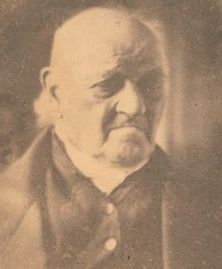
A rare photo of a Revolutionary War veteran [courtesy of findagrave.com]

William Sprague’s line of the family achieved prominence in the arts—from botanical illustration to poetry.

In this “Rev 250” period of commemoration of the War for Independence, I need to first mention that William’s great-great grandson, Samuel Sprague, born in Hingham in 1753, was a Revolutionary War Patriot who also participated in the Boston Tea Party, as discussed in a 2020 post on this blog.  Samuel’s pension states that he crossed the Delaware with George Washington!  (That tidbit is courtesy of the recently published book, Revolutionary War Patriots of Hingham, Ellen Stine Miller & Susan Garrett Wetzel, 2024, copies of which are available from the Hingham Historical Society.
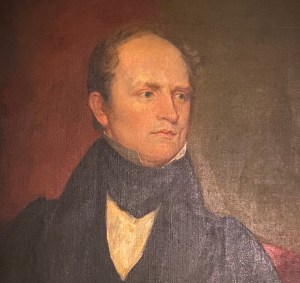
Portrait of Charles Sprague, the “Banker Poet,” by Matthew Sprague (Hingham Historical Society)

Charles Sprague (1791-1875) —Samuel’s son, Charles, was born in Boston, where his father Samuel earlier had relocated as an apprentice mason.  Charles had success both in the banking business and as a poet and became well known as the “Banker Poet of Boston.” He is considered one of America’s earliest native-born poets. Some of his poems suggest an affinity for transcendentalism, a movement associated with Charles’ contemporaries Ralph Waldo Emerson, Henry David Thoreau, and Margaret Fuller, all of Massachusetts. One example of Charles’ poetry can be read here.

This portrait of Charles hangs in the hallway of the Hingham Historical Society’s General Benjamin Lincoln House (Charles’ granddaughter Helen Amelia Sprague married Lauriston Scaife, a Lincoln descendant).  A modern notation on the back of the canvas attributes the painting to “Matthew Sprague”–another talented Sprague?

Charles James Sprague (1823-1903), like his father, was a banker and a poet but he left his mark in the field of botany.  His portrait,  looking very much like a respectable banker, also hangs in the Benjamin Lincoln House.  It was painted by his nephew, Charles Sprague Pearce, a well-known painter of the 19th century.
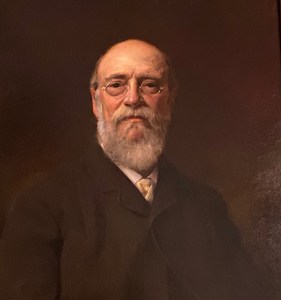
Portrait of Charles James Sprague by Charles Sprague Pearce (Hingham Historical Society)

Charles James Sprague was known for his study and illustrations of lichens. More info about the Sprague Herbarium of Fungi can be found here.

Based on his scientific and literary contributions, Charles James Sprague was elected to the American Academy of Arts and Sciences in 1856.

Hosea Sprague (1779-1843) — A grandson of Isaac Sprague, Sr. (1709-1789) another Revolutionary War Patriot of Hingham, Hosea first trained as a printer in Boston. He then returned to Hingham where he worked as a bookseller and became known as a wood engraver.

A few of his engravings from the Hingham Historical Society archives are shown here.

Hosea also was the compiler of The Genealogy of the Spragues in Hingham, published in 1828, an excerpt from which is show here.    The Hingham Library also has an original edition in its Sprague family archive. This genealogy is notable as it was published well-before the popularity of genealogies in the late 19th/early 20th century, following the 1876 U.S. centennial and the 1890 launch of the Daughters of the American Revolution, when charting colonial ancestry became quite popular.
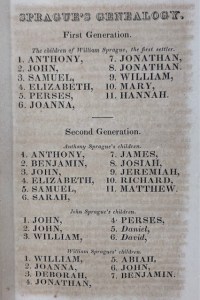
In the 1840s, Hosea published several issues of a periodical of his observations about life, history, and weather: “Hosea Sprague’s Chronicle.” In an October 18, 1888, feature story, published in the Hingham Journal, Hingham’s Luther Stephenson (a Civil War general, who had both maternal and paternal Sprague grandmothers) wrote about his cousin Hosea:  “He had great respect for the first settlers of Hingham, and spent much time in deciphering and copying in his bold hand the early records of the town…”

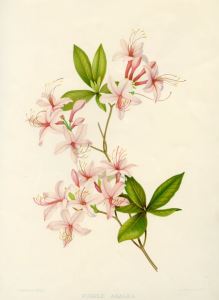
Isaac Sprague (1811-1895)—A great grandson of Isaac the Revolutionary War Patriot, Isaac was born in Hingham. He became an Artist Assistant to the well-known illustrator John James Audubon, joining Audubon’s expedition to Montana in 1843. Isaac then began his successful career in Cambridge as a botanical illustrator, working with influential botanist Asa Gray and others. In recognition of Isaac’s Hingham roots, the Hingham Heritage Museum treasures its collection of several of Isaac’s beautiful artworks and the Society sponsored an exhibit of his work in 2016.

Here are some of the prints in our collection:

Isaac’s work has been the subject of two posts on this blog, —in 2016 and 2017:

In addition to poets and artists, the William Sprague line includes skilled craftsmen known as coopers—artisans in woodenware-making including boxes, buckets, and wooden toys, during the long period when Hingham was known to many as “Bucket Town.” This history is documented and beautifully illustrated in the book Bucket Town, Woodenware and Wooden Toys of Hingham, Massachusetts, 1635-1945, written by Derin T. Bray and published by the town’s Hingham Historic Commission in 2014.

In 2014-15, Old Sturbridge Village featured an exhibit titled “Bucket Town: Four Centuries of Toy-Making and Coopering in Hingham.” The Hingham Heritage Museum’s inaugural exhibition in 2017 was Boxes, Buckets, and Toys: the Craftsmen of Hingham.”

Among the Hingham Sprague family members who were coopers/ woodenware makers are:

  • Isaac Sprague, Sr. (1709-1789), the Revolutionary War Patriot, by trade a set-work (or bucket/barrel making) cooper; his son Isaac (1743-1800) also a set-work cooper; and Isaac Sprague, Jr.’s sons Peter (1773-1859) and Isaac (1782-1826) both of whom were box coopers. Peter’s son, Peter (1801-1868) also worked as a box cooper.
  • Amos Sprague (1747-1838) a box cooper; and his son Amos (1774-1830) also a box cooper.
  • Blossom Sprague (1784-1860), a carriage painter who was also an award-winning maker of wooden toys.
  • Reuben Sprague (1785-1852), whose son Reuben O. Sprague (1811-1898) used his woodworking skills as a stair builder with a shop in Boston.
  • Adna Sprague (1790-1860) a box cooper who also served in town government as a Selectman.
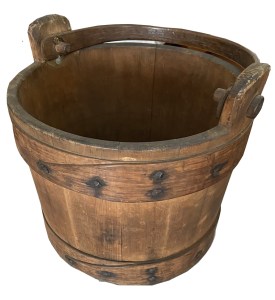
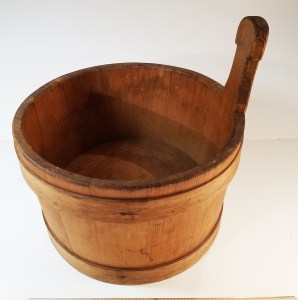
  • Bela Sprague (1804-1878), a brother of engraver Hosea, a “white cooper,” or maker of buckets, pails, and other household containers. Bela’s work is featured in the Bucket Town book. We have some examples of Bela’s work in our Hingham Historical Society collection, including this bail-handled pail and a small pail with a handle, known as a “piggin.”
  • Samuel Sprague (1809-1882), cooper, whose son Samuel (1833-1900) was a stair builder; and
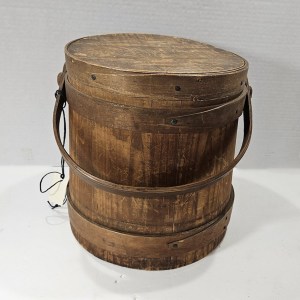
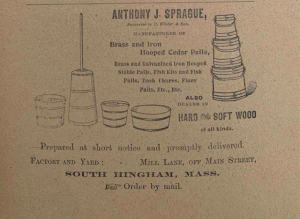
  • Anthony J. Sprague (1855-1921), who ran the ad shown here for his woodenware business in the 1894 Hingham-Hull Directory. One of Anthony J. Sprague’s buckets is this firkin from the Historical Society’s collection.

Women of the 18th-mid 20th century were generally less recognized for their contributions to the arts, but we are fortunate to have examples of the illustrations of Lydia Sprague (1832-1907), a cousin of Isaac, and a daughter of box cooper Adna Sprague. Several examples of Lydia’s artistry are included in Joan Brancale’s two-part post on our blog from 2014:

Also in our collection are some wonderful samplers by Sprague women – created when they were in school.

  • First, this sampler where nature and a structure (perhaps Derby Academy) are prominently featured, embroidered by Mary Sprague (1804-1871.) Mary was a daughter of Peter Sprague and Mary Whiton. She married Elijah Burr in 1828.
  • Next, a genealogical sampler, which tells us in embroidery that the creator is a then 8-year-old Jane Sprague, who stitched it on May 1, 1820. As spelled out in stitches, Jane is a daughter of David Sprague and Mary Leavitt Gardner. Jane (1811-1878) married Thomas Cushing in 1836.

Before concluding this short visit with members of the William Sprague family line, a note about descendants who are an important part of the history of Rhode Island. William’s son William, born in Hingham in 1650, moved to Rhode Island around 1710. His grandson William, born in Cranston in 1795, started
a grist and sawmill in Cranston along the Pocasset River. The next generation built on that foundation, and much wealth was created in the process due to the success of A & W Sprague, which grew to become, for a time, the largest cotton textile manufacturer in the country. Their business success made members of this line quite wealthy and propelled some of the family into politics: two became Governors of Rhode Island in the 19th century. One of these, another William, born in 1830, also became a US Senator, and built an enormous estate in Narragansett, RI in the 1860s, named Canonchet.

Part 3 of this blog will focus on the descendants of Raph Sprague, older brother of Charlestown and Hingham settler William, — and this line’s lasting contributions to science, technology and related businesses.

Nature vs. Nurture: Consider the Spragues

While doing research for the Hingham Historical Society’s 2023-24 lecture series, Suburbia: The American Dream, I learned of the important contribution of late 19th/early 20th century electrical engineer and inventor Frank Julian Sprague to the electric streetcar—an engine critical to early suburban development in the U.S.  The name Sprague caught my attention.

In his landmark book, Crabgrass Frontier: The Suburbanization of the United States, Kenneth Jackson pointed to the importance of the contributions of Franklin Julian Sprague:

By the turn of the century, half the streetcar systems in the United States were equipped by Sprague, and 90 percent were using his patents.

The Brothers Ralph and William Sprague (Hingham Historical Society archives)

Could this engineer and inventor, born in Connecticut and for most of his life a New Yorker, be part of the same family that produced the 19th century botanical illustrator Isaac Sprague and other notable Sprague family members here in Hingham? I needed to know more.

What my research revealed was a fascinating multi-generational story of an innovative, creative family. I was struck by the significant contributions made to both the arts and sciences by the descendants of the two-family lines–those of Ralph and William Sprague–that began with brothers who were among the original settlers of Charlestown in the Massachusetts Bay Colony. The impressive examples of creativity and innovation in these two Sprague lines got me thinking about the influences of both nature and nurture, as well as the close relationship between the creative arts and scientific inquiry and invention. Perhaps the story of this family will get you pondering too.

The Story Begins Along the Wey River in England

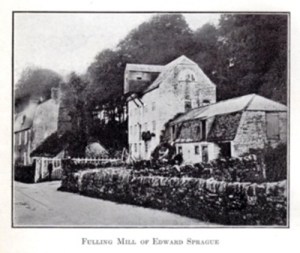
Brothers Ralph (1599-1650), Richard (1605-1668) and William Sprague (1609-1675), were sons of Edward Sprague (1576-1614), who operated a fulling mill on the river Wey, in Upwey, located between Dorchester and Weymouth, in the county of Dorset, England. (Edward’s mill, shown here, no longer exists.) After their father’s death, the three brothers joined a party of colonists emigrating for the Mass Bay Company to settle what became Charlestown, Massachusetts. It is unclear if religion was part of the Sprague brothers’ motivation to leave England. They arrived in Salem in 1628, then soon traveled on to Charlestown.

Fulling mills (“fulling” is part of the cleansing and thickening process when making cloth from sheep’s wool) were also common in the New England colonies, and there were three fulling mills in Hingham in 17th and 18th centuries: one on Crooked Meadow River in South Hingham, at what became known as Fulling Mill Pond; one off South Pleasant Street (near present-day Fulling Mill Road); and one at what was known as Beechwoods River or Mill River, flowing northeast from Accord Pond. As detailed in the 1893 History of the Town of Hingham, Massachusetts, these mills were operated by the Jacob and Cushing families, closely aligned through marriage.

Ralph Sprague emigrated, at 25, with his wife, Joanne Warren, and 4-year-old son John. He had trained as a fuller with his father in England, but apparently took up farming here. He also became a Selectman of Charlestown in 1637 and was elected Representative that same year, serving in both positions for several years. (Source: The History of Charlestown.) Just before Ralph died in 1650, he joined with others to petition successfully with for their own lands on the Mystic River side of Charlestown, later to  be known as Malden.  Ralph and his wife had several children. For generations, Ralph’s descendants lived in and around Charlestown and Malden.

The Spragues of Malden, Massachusetts (Hingham Historical Society archives)

In the early 20th century, two books, both focused on documenting the genealogy, were written about Ralph Sprague’s family line:

  • The Ralph Sprague Genealogy, written by descendant Edward George Sprague and published in 1913, covered 10 generations who had lived by that time.
  • The Spragues of Malden, written by the then-Secretary of the Malden Historical Society, George Walter Chamberlain, M.S., in 1928. A copy of this book, originally “printed for private circulation only” is in the collection of the Hingham Historical Society.

Richard Sprague, 23 at the time they left England, married in Charlestown in 1632. Richard became a merchant and owned a considerable amount of farmland and salt marsh and had shares in a couple of ships. He was a founding member of the church in Charlestown and a Selectman, Overseer of Highways, and Captain of the Military (local militia then.) Richard and his wife Mary Sharp had no children.

William Sprague, just 19 when he emigrated, married in 1635, while still in Charlestown, and moved to Hingham with his wife Millicent Eames 1636.  There they joined others from England who were just one year into founding a town here. William and Millicent would have 11 children, 8 of whom would survive into adulthood. Some descendants stayed in Hingham for generations.

Genealogy of the Spragues in Hingham (Hingham Historical Society archives)

The book Sprague Families in America, written by descendant Warren Vincent Sprague, M.D., and published in 1913, includes a section on the genealogy of William Sprague and his descendants up to that time. The author credits The Ralph Sprague Genealogy, published the same year, for providing valuable family data; he apparently had not seen the earlier Genealogy of Spragues in Hingham, published in 1828 by Hingham’s Hosea Sprague (1779-1843), about whom you’ll learn more in the next part of this blog.

The connection between colonists in Charlestown and the early settlers of Hingham was established at the time of the town’s founding. In the 1827 History of the Town of Hingham, Plymouth County, Massachusetts, author Solomon Lincoln, after listing inhabitants who started to arrive in Hingham as early as 1633, noted:

. . . The others settled at Charlestown, and in 1635 removed to this place. . . .  It was in June of that year that Rev. Peter Hobart arrived at Charlestown, and soon after settled in this place.

. . . In 1636, [there arrived] John Beal, senior, Anthony Eames, Thomas Hammond, Joseph Hull, Richard Jones, Nicholas Lobdin, Richard Langer, John Leavitt, Thomas Lincoln, Jr., miller, Thomas Lincoln, cooper, Adam Mott, Thomas Minard, John Parker, George Russell, William Sprague, George Strange, Thomas Underwood, Samuel Ward, Ralph Woodward, John Winchester, William Walker.

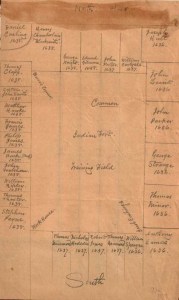
Division of Land Plots to Early Settlers (Hingham Public Library History Collection)

The Anthony Eames in this latter group was the father of William Sprague’s wife Millicent, and they would soon be granted adjacent parcels of land for their homes—as shown in the lower right corner of this 19th century plot chart created by local historian George Lincoln in his “Sketch of the Division of Land Plots to the Early Settlers of Hingham.”

From Ralph Sprague, of Charlestown and Malden, and William Sprague, of Charlestown and Hingham, descended a remarkably talented collection of 18th, 19th and 20th scientists/inventors/industrial innovators and artists/poets/craftsmen. The family lines have distinctions—with Ralph’s line most prominent as scientists and inventors while Wiliam’s descendants stand out as artists and poets and craftsmen.

Part 2 of this blog will focus on William’s line—and its noteworthy creators:  poets, a maker of woodcut engravings, a botanical illustrator, several woodenware craftsmen and more.  

Joshua Winslow “Out of The Frying Pan and Into the Fire”

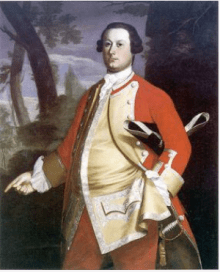
Portrait of Joshua Winslow (1755) by John Singleton Copley

A letter in our archives, written almost exactly 250 years ago today, provides a personal account of events leading up to the famous Boston Tea Party,  whose semiquincentennial will be widely celebrated next month.  The letter is from Joshua Winslow, a merchant and member of an ancient Plymouth County family, to Jotham Gay, son of Hingham, Massachusetts, pastor Ebenezer Gay, and himself a merchant.  In his November 18, 1773, letter to Gay, Winslow describes his appointment as one of six “consignees” authorized to receive (and pay the duty on) East India Company tea to be brought into the colonies under the newly enacted Tea Act of 1773; Boston’s resistance to the importation of that tea; and his growing sense that he might be heading “out of the frying pan and into the fire.”  Winslow and Gay were in business together and good friends, their families linked by several marriages.  When he wrote to Gay, Winslow had just returned to Massachusetts after a number of years in Cumberland, Nova Scotia.  This is only one letter in a long-standing correspondence between Winslow and Gay, but it is both evocative and timely.

Winslow first provides a clear explanation of the economic and political factors at play as a result of the Tea Act:

[M]y time has been much engaged of late in a New Affair, which, whether it has reached you or not I can’t tell, but I have said just now something of my going out of the frying pan into the fire.  This was meant to allude to a New Measure of the East India Company for introducing their teas into the several Governments in America at a lower Rate than ordinary, in order to prevent the vast Importation of Dutch Teas, which, as they do not pay the duty, are sold at a lower rate than that from England, by which means the India Company’s Teas have been accumulating upon their hands & the great door for vending the same into the Colonies in a manner Shut up.  By the Interest of my Friends I was appointed one of the Companies Agents in Boston, & if the thing is Effected, it will afford a handsome commission.  But the Country seems to be all up in arms again, & as great a Commotion at last is made about it, as there was about the Stamp Act–nay, they seem to carry opposition much higher than they did then.  All the provinces seem determined that it shall never be landed in America . . . .

Even if being sold directly from the East India Company, the tea remained subject to taxation under the Townshend duties, and thus the Americans supporting the Patriot cause did not want this lower-priced tea landing in the colonies.  The six consignees–Governor Thomas Hutchinson and two of his sons, Benjamin Faneuil, Richard Clarke, and Winslow–would be responsible for paying the duties before selling the tea on to New Englanders.

Winslow’s letter then turned to a description of some alarming events of November 3, 1773–what may be thought of as the opening chapter in the Tea Party story:

[T]o so great a height had [opposition to the East India Company tea] got in Boston, the beginning of this month, that I had an Express from my associate Mr. Faneuil on the evening of the 2nd Inst. to be in Town next day by 11 o Clock.  I set out at Midnight and rode till 9 o Clock Next Morning.  When I got to town I found the Flag up at Liberty Tree, & the inhabitants had been notified by hand bills Stuck up the day before to appear at the Tree at 12 o Clock that day to hear the Consignees resign their Commissions, & swear that they would return the Tea by the ships which brought it out.  We met at Mr. Clark’s Store, who with the Governor’s Two Sons are the other Consignees & determined that we would not go. Whereupon a Committee of the whole house came down from the Tree thro: King Street (at about 1 o Clock) to Mr. Clark’s store, where Mollineux at the head of a number demanded of us to Resign our Commissions & swear that we would Return the Tea — &c &c.  He was told we had no answer to make thereto, whereupon we were declared Enemies to the Country, & notified that we were to expect the Resentment of the People.  Accordingly soon after he left the Store, an Attack began by breaking the Doors, Pelting Stones, Dirt, &c, upon those within and attempted to break in upon us, but having a number of resolute Friends we sustained the attack & after about one hour’s siege they marched off , the chief of them at least, & we being Reinforced by a number of Friends, quitted the Store . . . .

 “Next day was pretty quiet,” Winslow continued,

but a Town Meeting was ordered for the day following — Which met accordingly but it being 5th Nov: and no small intimations of another attack that night under the sanction of its being Pope’s Night, I not being desirous of another Amusement of that Nature ordered my Chaise & left Town — nor have I been there since.

(Pope Night, a New England descendant of England’s Guy Fawkes Day, was a raucous and sometimes violent celebration; a consignee of English tea might reasonably be concerned about additional trouble.)

Back in Marshfield, Winslow expanded on his frustration:

There have been other Meetings since for the same purpose & one attack upon Mr. Clark’s House, but as the Tea is not yet arrived and until it is we are in Manner Ignorant of the Nature of the Instructions which may accompany it.  We cannot resign in Honor or Conscience; for this we are abused and stigmatized as Enemies of the Country & what not — but I need not enlarge as you will see the proceedings in the Publick Prints.

He closed on a somewhat hopeful note:

How the matter will end must be left to time.  Meanwhile, I don’t intend to go to Town again until [the tea] arrives, when perhaps there may be such Instructions therewith as may make our own way Clear, either to Resign or to Accommodate matters in such a manner as may prove Satisfactory to the People. 

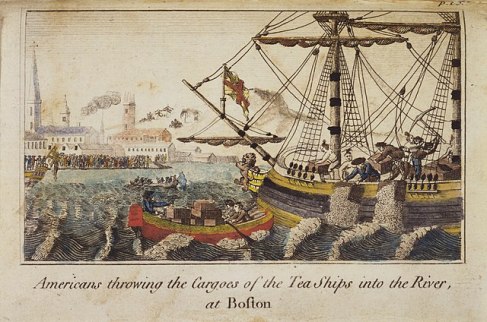
We can’t be accused of a spoiler if we suggest that Winslow’s optimism was misplaced.  In his next letter to Gay, dated January 3, 1774 (also in our archives), he recounts what has become one of the most familiar stories of the Revolution:

Whether you have received my former letter or not, it is most probable you have heard by the way of Halifax of the violent lengths to which they have proceeded in Boston, with the Tea ship’t by the India Company to that port.  That when it arrived in that Harbour the people Seized upon it, & put a guard on board the Several Ships to prevent it being landed, with a determination that it should be returned from whence it came.  That the Agents, apprehensive of further ill treatment from the People, retired to the Castle for the safety of their persons sometime about the beginning of December, where they yet remain.  That the People finding the measure of returning the Tea impracticable to be accomplished had destroyed all that came in these vessels, to the amount of 342 chests, by cutting them to pieces and turning the whole of it into the Dock. whereby a Loss of about L16,000 must fall upon some body or other. 

Hingham’s Men in Massachusetts’ Black Civil War Regiments

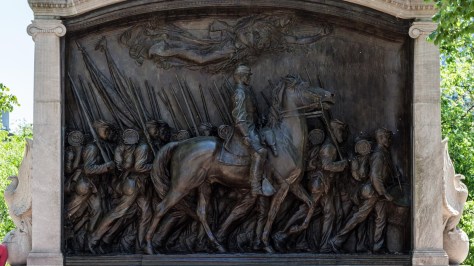
After the Emancipation Proclamation issued in January 1863, some of the Northern states, followed by the federal government, started to recruit and train regiments of Black troops to support the Union effort.  One of the first, and indisputably the most storied of the Black regiments, was the Massachusetts 54th Volunteer Infantry.  It was raised and trained between February and late May 1863. On May 28, 1863, it marched through Boston to a transport ship at the harbor, with thousands lining the streets to watch it go.  The story is told that as the regiment marched past the Old State House—site of the Boston Massacre, where the first to fall was a Black man—they sang “John Brown’s Body.”

Massachusetts 54th Memorial, Boston Common [Courtesy of National Park Service]

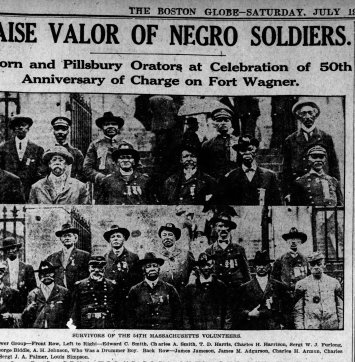
The 54th first experienced combat on July 16, 1863, at Grimball’s Landing, South Carolina, outside of Charleston, followed closely by a bloody assault on Fort Wagner, in Charleston Harbor. The 54th suffered a catastrophic 270 casualties out of the 600 men who participated and lost its commanding officer, Col. Robert Shaw. Although the assault was unsuccessful, the bravery of the 54th in battle was widely recognized and helped spur the formation of additional Black regiments. By the end of the war almost 200,000 men of color had served, comprising roughly 10% of the soldiers who served in the Union forces during the Civil War.

Boston Globe, July 18, 1863. Louis L. Simpson, born and raised in Hingham, appears in the bottom photo, top left.

Six Black men who were born or lived in Hingham served in the Civil War:  David Henry Champlin,  Jason Prince, Lewis Legare Simpson, and Richard C. Winslow served in the Mass. 54th; Samuel F. Beach served in the Massachusetts 55th Volunteer Infantry; and Augustus Tuttle served in the 5th Colored Cavalry.  Here is a little more about each of them.

 David Henry Champlin (1835-1886)

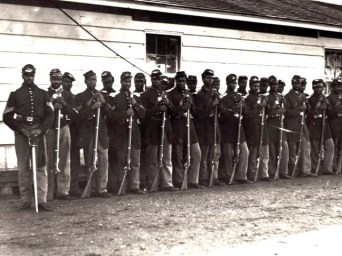
Troops from the Mass. 54th or 55th before the Battle of Honey Hill, GA. [Photo courtesy of the Town of Ridgeland, SC]

David H. Champlin was born in Norwich, Connecticut on April 18, 1835 to Prince and Mary Champlin.  We know little about his family except that Champlin’s father was “foreign.”  By 1850, when Champlin was 15 years old, he was living with the family of James Chandler, a white shoemaker in Duxbury.  Champlin himself went on to become a shoemaker, so he may have been apprenticed to Chandler.  In any event, by 1860, Champlin was living in Hingham with a first wife, Hannah, and working as a shoemaker.

Champlin enlisted in the Massachusetts 54th on August 25, 1863. Thus, like Lewis L. Simpson, Jason Prince, and Richard Winslow, he joined after the momentous assault on Fort Wagner.  He served as a Private in its Company B until March 1864, when he was promoted to the rank of Corporal. (Black men were eligible to become non-commissioned officers only, with the higher ranks open only to white men.)  During this period, Company B participated in a significant campaign in Florida, including the Battle of Olustee, and also at the Battles of Honey Hill, Georgia, and Boykin’s Mill, South Carolina.  The Battle of Honey Hill marked the first time a majority-Black Union Army force engaged with Confederate forces.

Champlin was mustered out with the rest of the regiment on August 20, 1865, at Mount Pleasant, South Carolina.   After the war, Champlin returned to Hingham, his family, and his work as a shoemaker.  His second wife, Phebe, was the daughter of John and Margaret Quackow and the step-daughter of James Tuttle, founder of Hingham’s eponymous Tuttleville neighborhood, where Champlin and his wife settled:  the 1880 federal census shows them living at 76 Ward Street.  Champlin continued working in the shoe industry; in later records, he is listed an “operative,” meaning that he was no longer making shoes by hand but rather operating shoe-making machinery in a local factory.

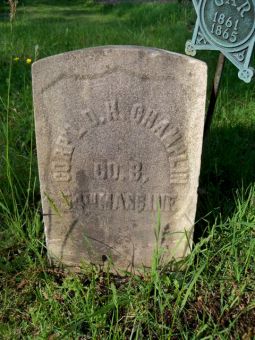
Champlin died at age 50 of “dropsy,” a term sometimes used in the 19th century to describe what we would call congestive heart failure.  He is buried in Fort Hill Cemetery; his grave is marked by a government-issued gravestone marked, “Corp. D. H. Champlin.”

Lewis Legare Simpson (1843-1918)

Lewis L. Simpson attired in his GAR uniform. [ancestry.com]

Born in Hingham on April 16, 1843, Lewis L. Simpson was one of the 14 children of George Whitney Simpson and Eliza (Freeman) Simpson.  He was, on his mother’s side, the great-grandson of a Black Revolutionary War soldier, Asher Freeman, who served in the Continental Army from 1777 to 1781. Simpson’s sister Henrietta married James King Tuttle, becoming a matriarch of Hingham’s families of color in the Tuttleville neighborhood.
Simpson enlisted in the Massachusetts 54th on November 29, 1863, aged 20, and served as a Private in Company G.  One year after enlisting, on November 30, 1864, he was wounded at the Battle of Honey Hill, Georgia, an attempt to disable the Charleston and Savannah Railroad in support of General William T. Sherman’s “March to the Sea.” After six months in military hospitals in Beaufort, South Carolina; David’s Island, New York; and Worcester, Massachusetts, Simpson was discharged from service on May 25, 1865.  A bullet lodged in his ankle was never removed and bothered him for the rest of his life.

After the war, Simpson resumed his trade as a bootmaker.  He had married Maria D. Johnson before the war, and they settled in Bridgewater, raising four daughters and six sons.  He was active in GAR activities and reunions of soldiers of the Mass. 54th, including one held in Boston in 1913 to celebrate the 50th anniversary of Fort Wagner.  Simpson died in Bridgewater in 1918 and is buried in Mount Prospect Cemetery.

Jason Prince, 1842-1881

Jason Prince was born in Marshfield in 1842, the son of Sylvester Prince of Marshfield and Nancy Simpson of Hingham.  He spent his childhood in Marshfield with his family but by 1855, as a teenager, he was living with the Copeland family in South Scituate (now Norwell).  William Copeland was a Black shipwright and perhaps Prince was apprenticed to learn this trade; however, by 1863, when he enlisted, Prince was identified in his enlistment papers as a “farmer.”

Battle of Olustee. Llithograph, 1894, Kurz & Allison

Prince enlisted for a three-year term in the 54th on August 25, 1863—the same day as David Champlin.  He was 21 years old and served as a Private in Company G for his entire tour of duty. He joined his regiment at Morris Island, South Carolina, on Nov. 29, 1863; was injured at the Battle of Olustee, Florida, on Feb. 20, 1864; and was discharged owing to disability from the Union Army Hospital at Beaufort, SC, on June 8, 1865.

Prince returned to Massachusetts and in 1865 was living in South Scituate.  At the time of his death, however, he resided in Hingham. The Hingham Journal of April 22, 1881 reported a workplace accident at the J. W. Kimball lumber yard: Jason Prince of South Hingham had fallen from a pile of lumber.  While the prognosis at first was hopeful, he had injured his spine.  Paralysis set in and he died on May 1, 1881.  The death notice in the May 13, 1881 Hingham Journal noted that Prince had been “a solder of the 54th Reg Mass Vol.”  Prince is buried in High Street Cemetery.

Richard S. Winslow (1831-1904)

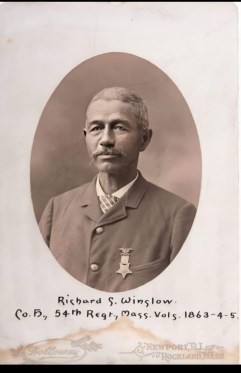
Richard S. Winslow was born on July 9, 1831 to Harvey and Clarissa Winslow, who resided at the time at 15 Ship Street, Hingham.  Like Lewis Simpson, Winslow was descended from a Revolutionary War soldier—his great-grandfather Benjamin Ward of Hingham served with the militia in the early years of the Revolution.  Winslow married Almira Franks, who was also born in Hingham, in 1851; she died in 1860.  His second wife was Prudence Celia Lee of South Scituate, with whom he had twelve children.

Winslow was 33, married, and the father of three when he enlisted in the 54th on December 10, 1863. His enlistment papers describe him as 6’2” and a shoemaker by trade.  During his service as a private in Company H, Winslow saw action at Olustee, Florida and Boykin’s Mill, South Carolina —the last battle in South Carolina and one of the last of the war.  After hostilities ceased, Winslow was “accidentally wounded in the foot” at Sumpterville, South Carolina and was mustered out of service on September 1, 1865 in New York City.

After the war, Winslow and his family lived in Hanover, where he died at age 73 in 1904.  His obituary mentioned his service with the Mass. 54th , his later active involvement with Hanover and Plymouth GAR posts, and his membership in Hanover’s Methodist Church.  Winslow is buried in the Hanover Center Cemetery.
Samuel F. Beach (1836-1871)

Samuel F. Beach was born in Hingham in 1835, the son of Michael and Harriet (Simpson) Beach. As a young man, his family moved around the area; he lived in South Scituate in 1850, Plymouth in 1855, and Duxbury in 1860.  In the 1860 federal census, he is listed as a “farm laborer.”

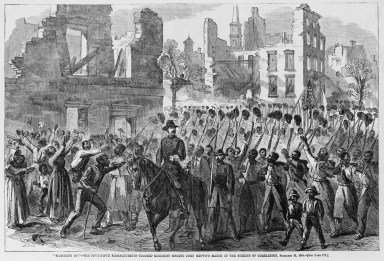
The Mass. 55th enters Charleston. Harper’s Weekly, Mar 18, 1865.

Beach enlisted in the Massachusetts 55th Volunteer Infantry (the second Black infantry unit raised by the Commonwealth) on January 9, 1865.  In February 1865, the Mass. 55th was one of the Union regiments that entered Charleston, where they were met with enthusiasm by crowds of newly-liberated Black slaves and free Black Charlestonians. The 55th remained in South Carolina for the rest of the war, largely engaged in occupying Charleston, before returning to Massachusetts in September 1, 1865.

After the war, Beach settled in Salem, where he married Ann Thompson, and had a daughter, Emma, who was born in 1866.  He continued to work as a general laborer, living to age 86.  Beach died of pneumonia in 1871.

Augustus Tuttle (1835-1911) 

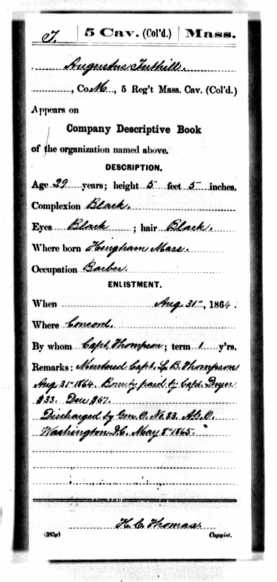
Augustus Tuthill enlistment record, August 31, 1864

Augustus Tuttle was born in Hingham in 1835, the son of John Tuttle and Harriet N. (Davis) Tuttle, but raised by his mother in Salem.  In 1858, he married Mary Elizabeth Pitts Lewis of Lowell, who died the following year.

On August 31, 1864, Tuttle enlisted in the 5th Massachusetts Colored Cavalry, the only Black cavalry regiment mustered in Massachusetts.  Company M, in which Tuttle served as a Private, was the last company of the 5th Colored Cavalry to be formed and the last to be mustered out, having been sent to Texas after the war was over.

Tuttle’s military records render his last name as “Tuthill” and provide his occupation as “barber.”  After the war, on May 1, 1866, he married Elizabeth Ann Lew.  The couple lived in Charlestown and then Cambridge.  He was listed in an 1883 Boston City Directory as a “hairdresser” with a shop at 25 Derne Street, on Beacon Hill, and a home in Cambridgeport.  Twice a widower, Tuttle died in Chelsea in 1911.

[A prior version of this article appeared in the Hingham Anchor.]

Get out the Vote!

Election day is upon us! We’ve all received numerous mailings and seen countless ads; now it’s time to make our way to the polls to perform our civic duty and receive the iconic (and much desired) “I Voted” sticker. Filling out our individual ballots and sliding them into the ballot box seems routine to us, but this was not the original voting practice of the Commonwealth. A dive into the archives can help us look into the history of voting in Massachusetts and the integral role our state played in establishing our voting practices today.

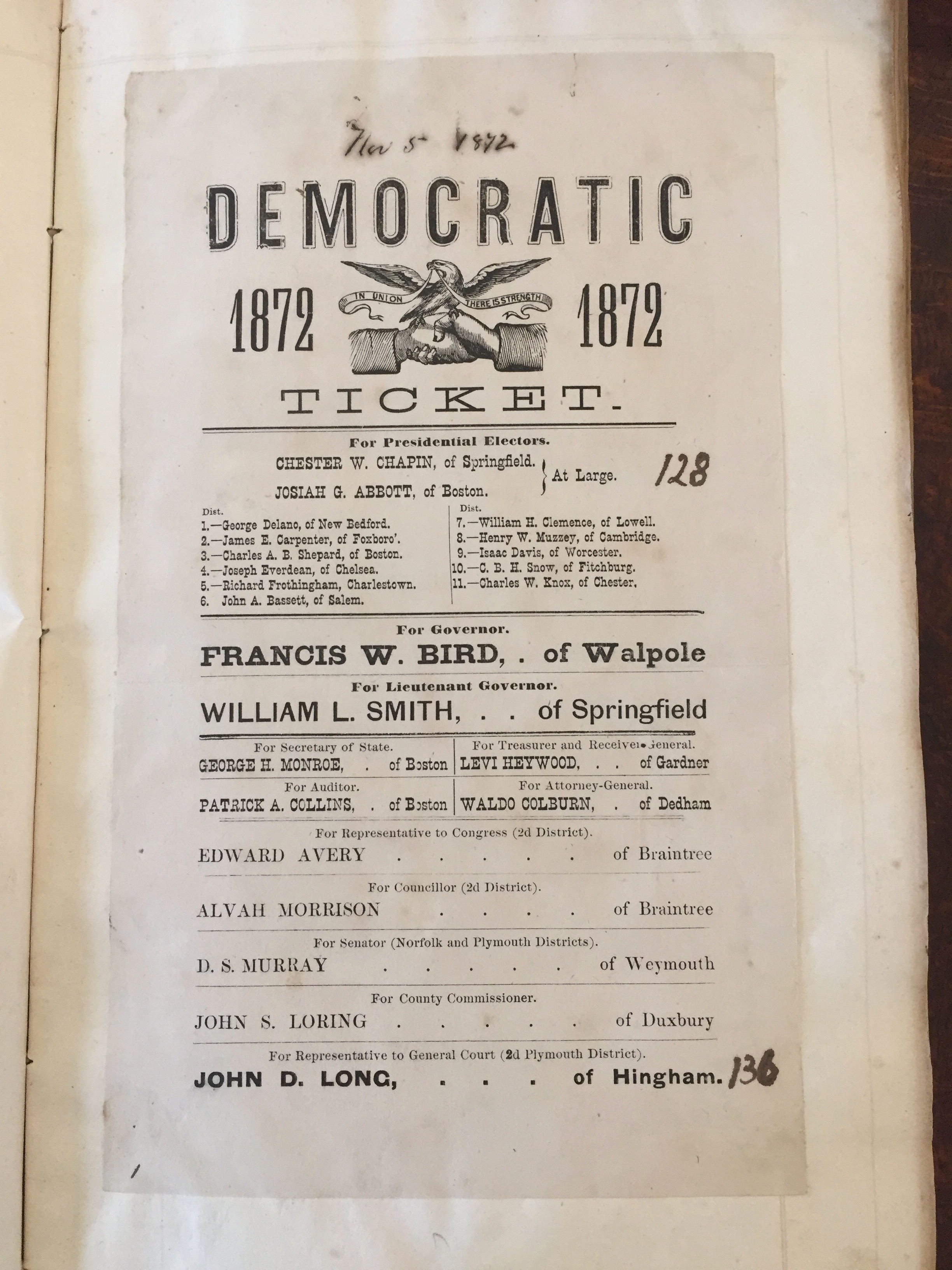
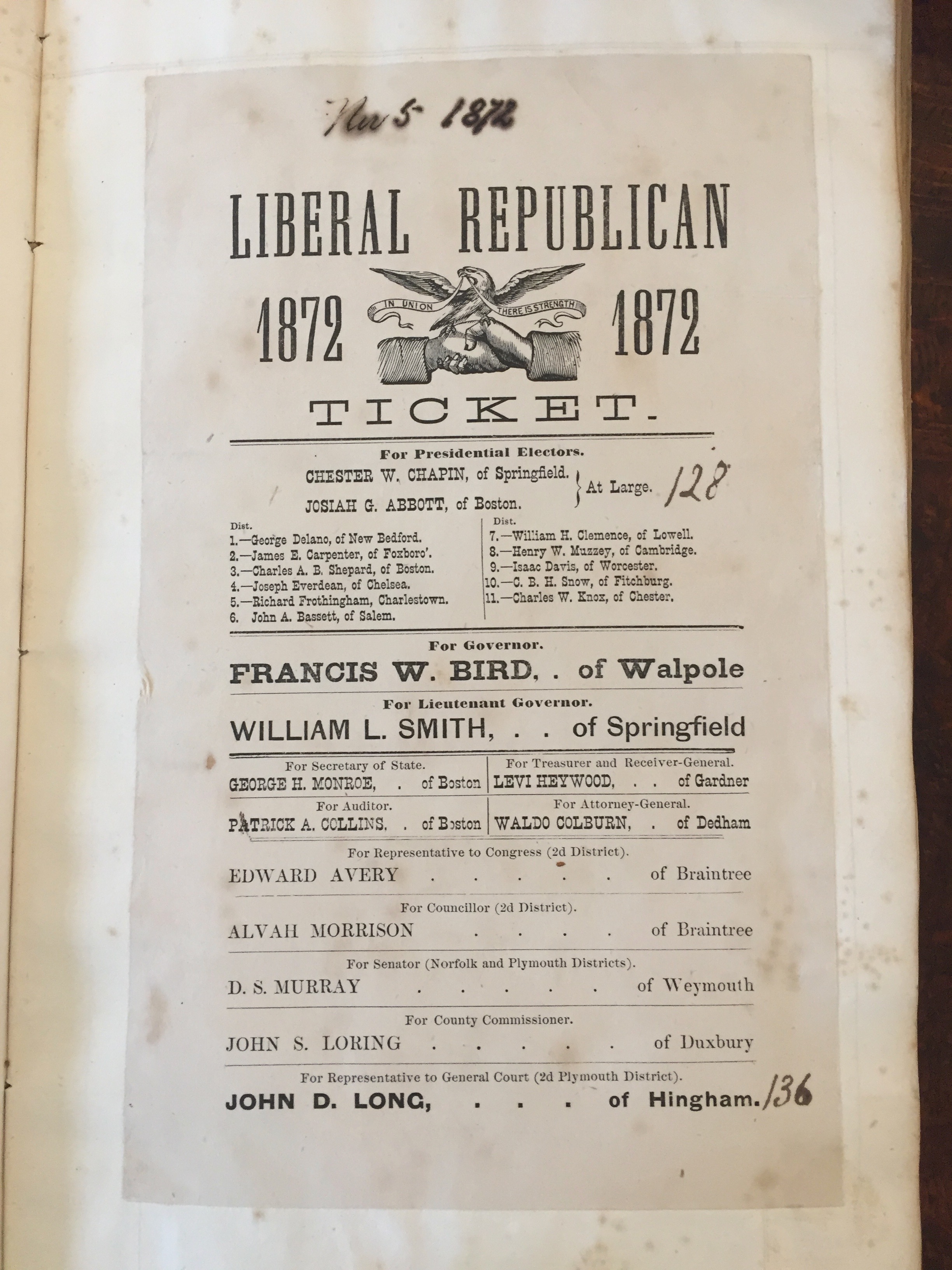
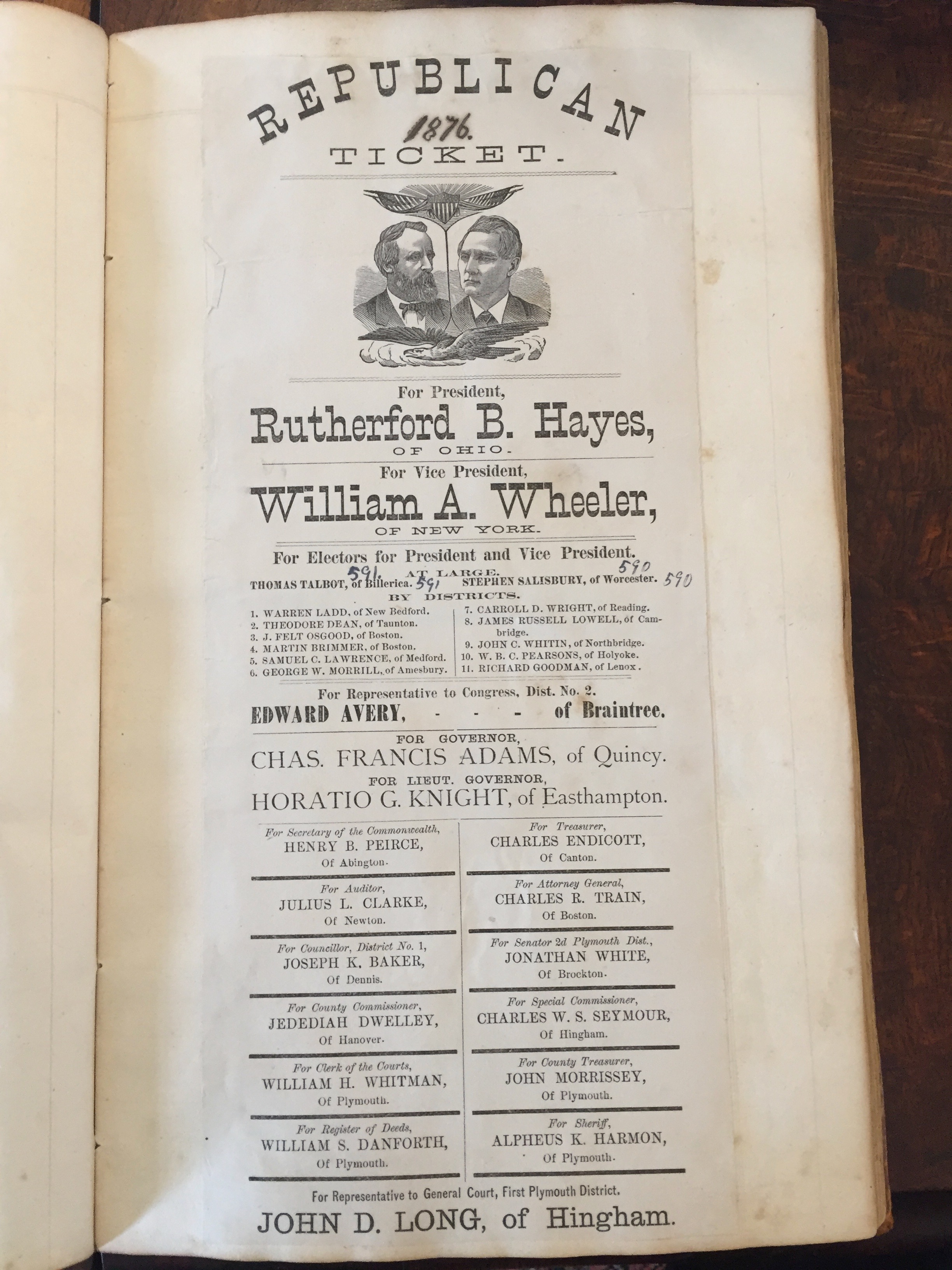
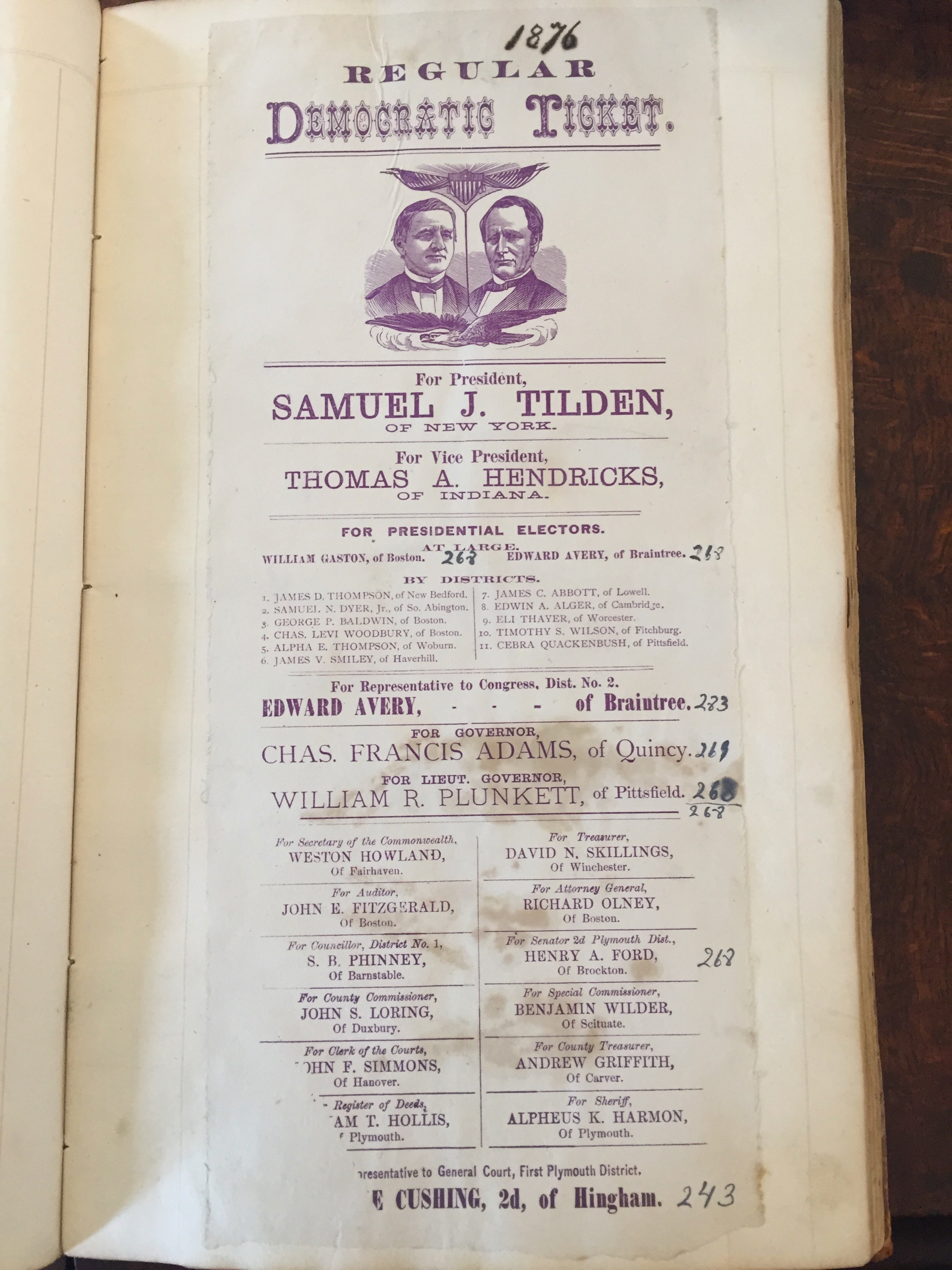
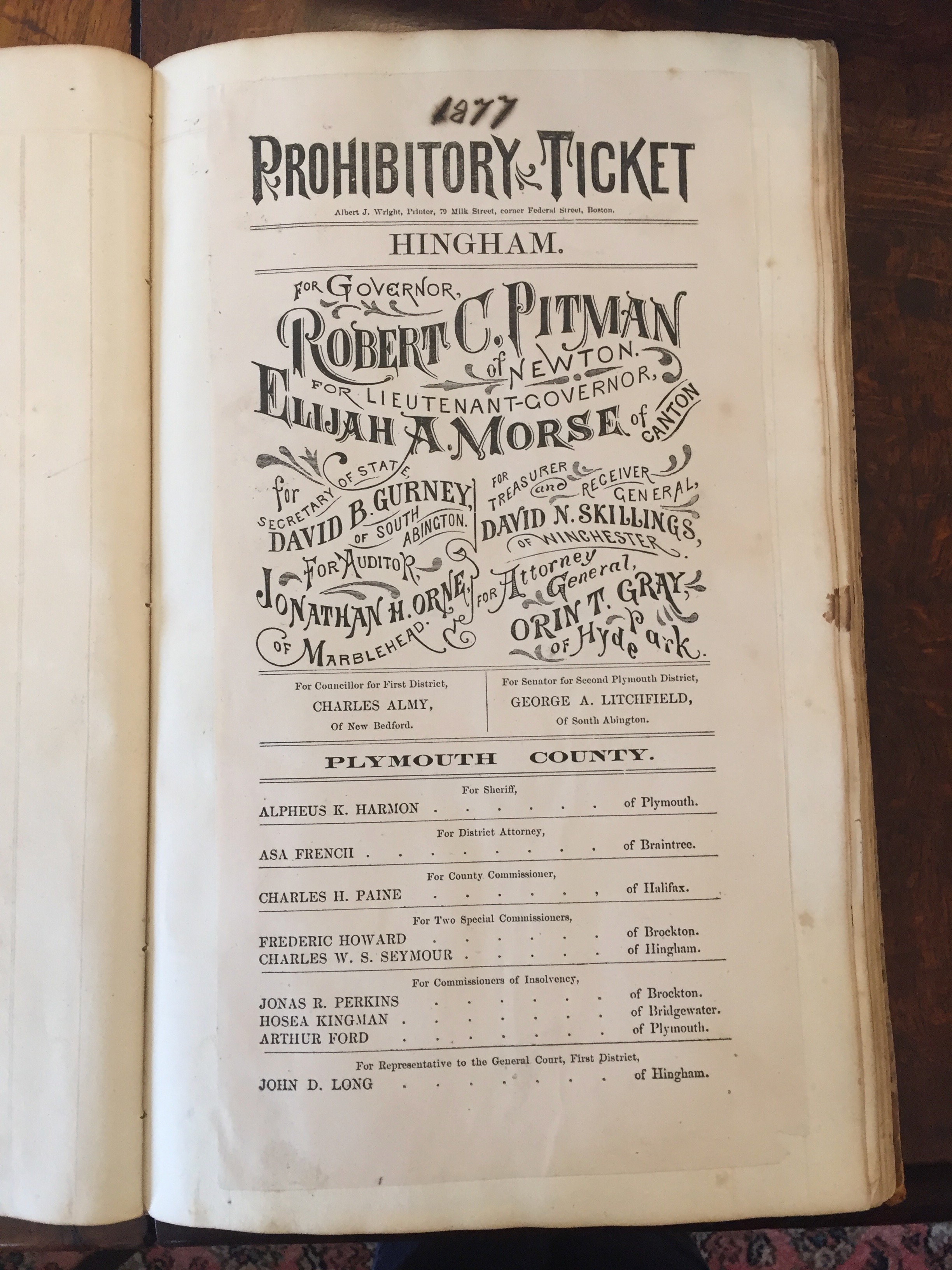
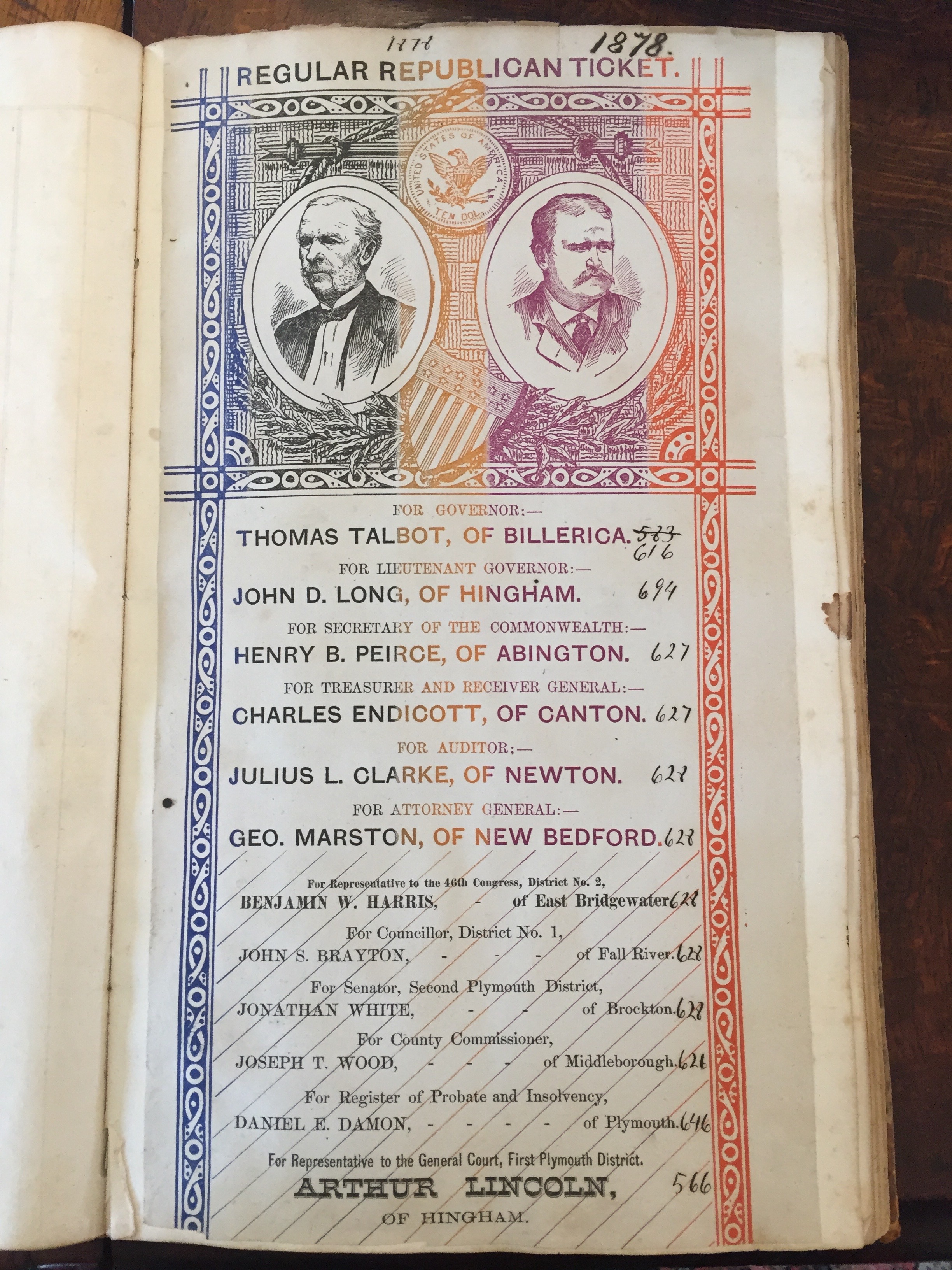
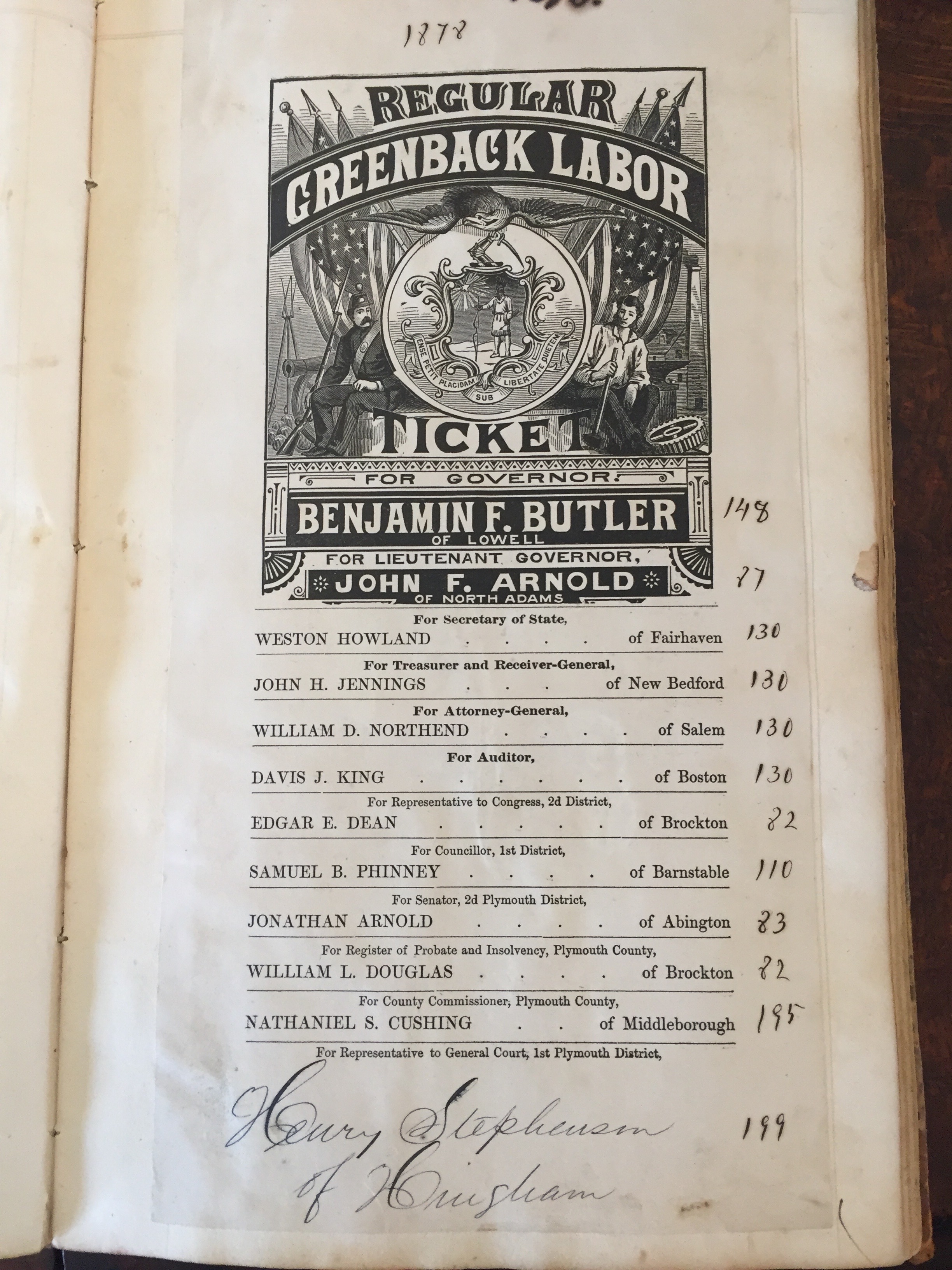
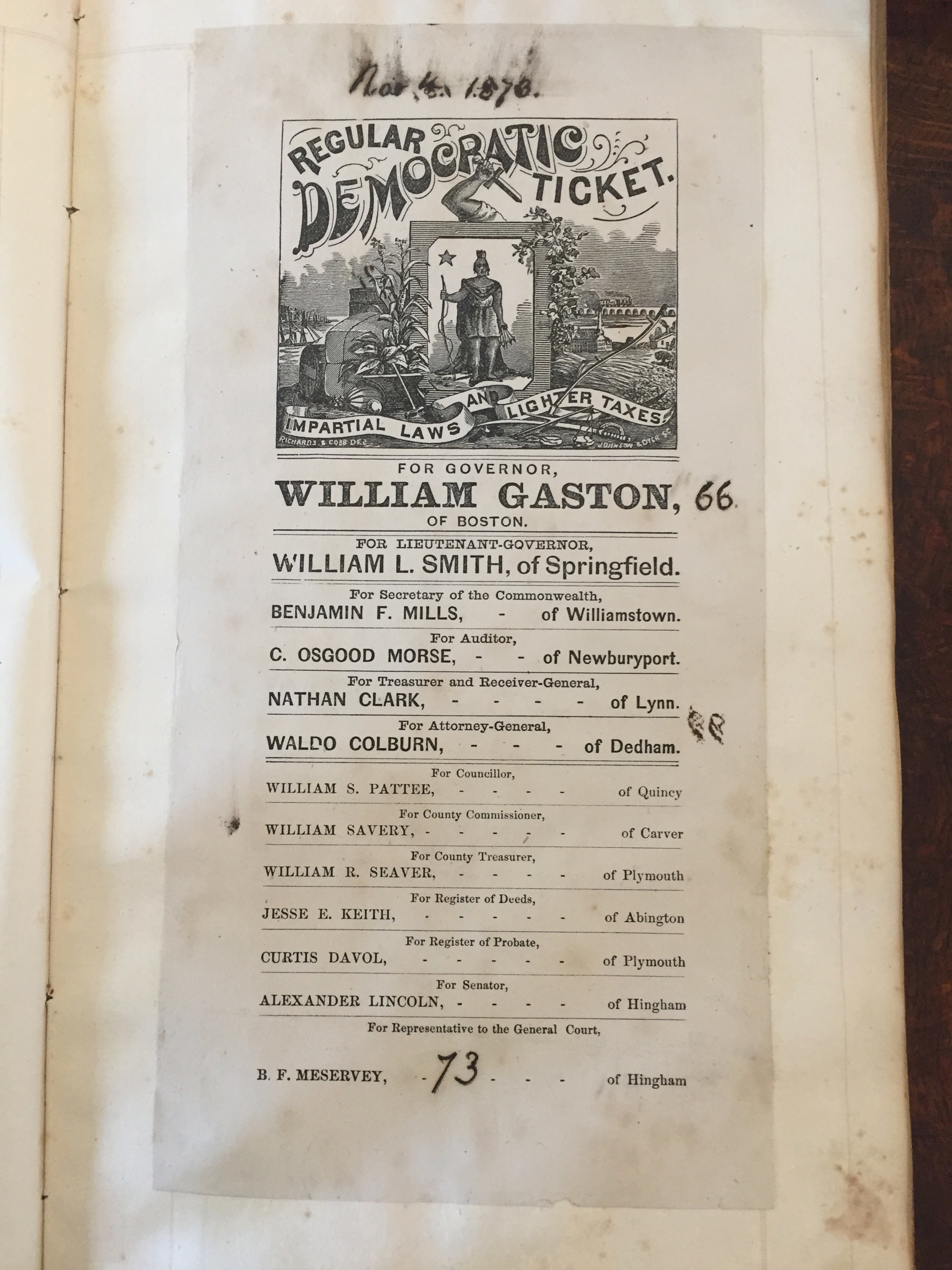
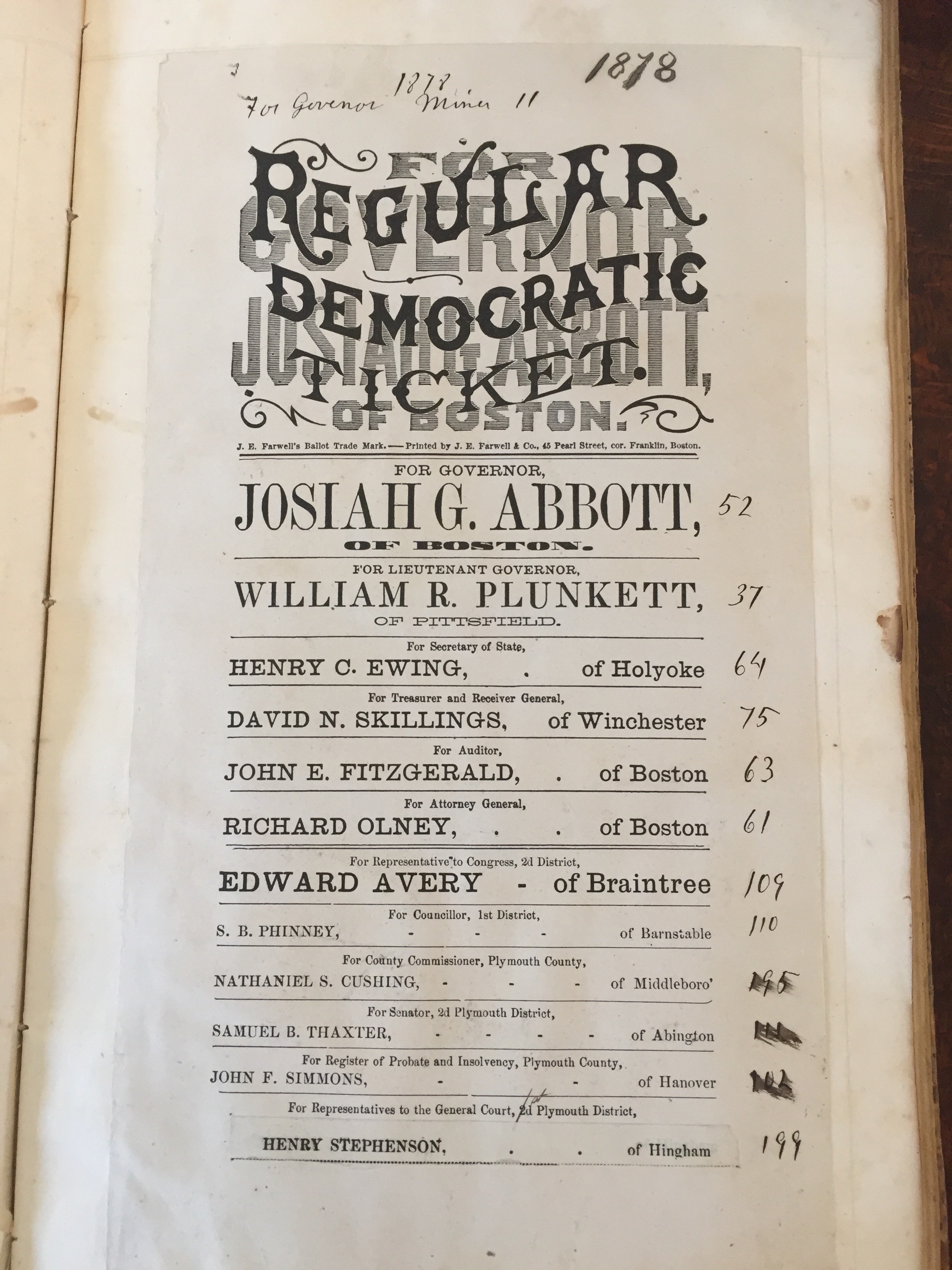
Pasted on the pages of one of the many bound books in our collection is a series of political ballots from the 1870s and 1880s. You can see these ballots belong to both familiar and unfamiliar parties – from the “Regular Republican Ticket” and the “Regular Democratic Ticket” to the “Liberal Republican Ticket” and the “Regular Greenback Labor Ticket.”


Political ballots, or party tickets, were created in the 19th century to make it easier for people to vote. Prior to these ballots, Massachusetts voters had to write down who they wished to elect. This meant voters had to not only remember the names of their desired candidates, but also the spelling of the names to avoid the possibility of the vote being thrown out. While early voters could remember the few names of elected officials within the small colony, as Massachusetts’s state government grew, this task became much more challenging.  Enter David Henshaw.

Henshaw, a Bostonian, decided to take a printed list of 55 candidate names and submit it as his ballot in 1829. For over one hundred years, Massachusetts law had required voters to handwrite their vote, but Henshaw challenged this practice. His act led to a Massachusetts Supreme Judicial Court case: Henshaw v. Foster. The Supreme Judicial Court ultimately recognized that the original law did not foresee how large the government would grow and how many candidates voters would have to elect; therefore, the Court determined that printed ballots were acceptable. And so began the mass production of party tickets in Massachusetts, and, soon, the nation.

Party members printed these ballots in newspapers or distributed them on the streets. Party leaders soon realized that by incorporating party symbols, elaborate designs, and vivid colors in their ballots, they could appeal to more voters, both literate and illiterate. Below you can see how parties in Massachusetts sought to visually appeal to voters. You may even notice the names of a few Hinghamites: John D. Long, Charles W.S. Seymour, Arthur Lincoln, and Alexander Lincoln.


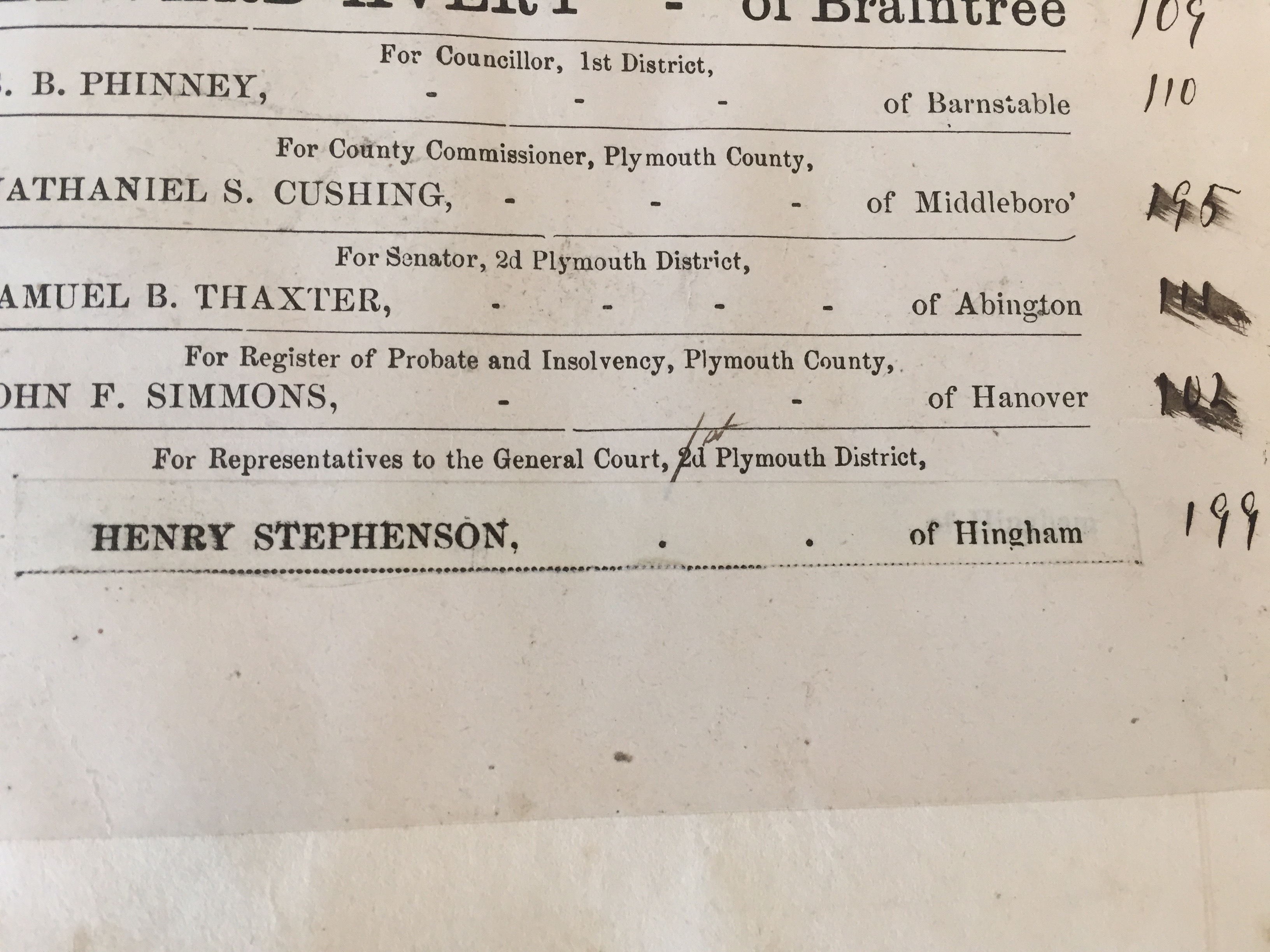
If politicians disagreed with the candidates chosen to be on their party’s ballot, they sometimes chose to rebel by creating their own party ballot. If there was just one candidate a voter didn’t like on the ballot, the voter could cut out the name of a desired candidate and paste it over the name of the original candidate. You can see on the ballot below that one voter preferred “Henry Stephenson of Hingham”.


Over the years, parties found ways to intimidate voters into taking their ballots or stuffed the ballot boxes themselves, resulting in a cry for reform. In 1888, Massachusetts became the first state to pass legislation requiring the creation and use of state-issued ballots which listed all candidates of all parties on one ballot, a practice Australia had already used effectively. Massachusetts once again began a voting system that the whole nation would eventually adopt, a system that is currently in practice today.

So as you make your way to the polls, remember how far we’ve come as a state and a nation to ensure our democratic experiment is a success!

To learn more about party tickets and voting, check out these articles/sites referenced:

“19th Century Political Ballots” by the Boston Athenæum http://cdm.bostonathenaeum.org/cdm/landingpage/collection/p16057coll29

“Rock, Paper, Scissors: How we used to vote” by Jill Lepore https://www.newyorker.com/magazine/2008/10/13/rock-paper-scissors

“Vote: The Machinery of Democracy – Paper Ballots” by the Smithsonian National Museum of American History http://americanhistory.si.edu/vote/paperballots.html

“Archaeology Month” Opens Door to Hingham Archaeology Exhibit in 2019

The Commonwealth of Massachusetts is immersed in celebration.  Planning is well underway for the 400th anniversary of the arrival of the Mayflower in 1620,  the 250th Anniversary of the occupation of Boston by the British in 1768 and eventual evacuation in 1776, and the 400th Anniversary of the arrival of the Puritans in 1630. Hingham’s next big celebration–commemorating the landing of Peter Hobart and his group of settlers in 1635–is a way off, with the Town’s 400th anniversary just over the horizon.

Arch_Month_Poster_18Meanwhile, as we celebrate Massachusetts Archeology Month this October, the Hingham Historical Society is happy to announce that it plans to stretch the frame of celebration in the Commonwealth beyond centuries to eons, or at least to a myrieteris (a period of 10,000 years).  An exciting new exhibit, based on archeological discoveries found along the right-of-way during the construction of the MBTA Greenbush rail line in Hingham, will open at the Hingham Heritage Museum in the Fall of 2019.  Ancient artifacts representing the earliest recorded life and culture in what we now call Hingham, some dating back 7000 years, will offer visitors a very different understanding of who first lived here, and how they lived. Educational materials will play a prominent role as well.

Thousands of artifacts were uncovered and inventoried by Public Archeological Laboratory (PAL) and UMass/Amherst Archeology during several years of excavation by the Massachusetts Bay Transportation Authority and are now stored in Rhode Island and Amherst. The archeological work was required as a condition of gaining permits to proceed with construction of the commuter rail line.

p. 22_Page_22

From “Roads, Rails, and Trails: Transportation-Related Archaeology in Massachusetts,” by Eric S. Johnson, Massachusetts Historical Commission, 2012.

What are the finds?  One discovery near Foundry Pond was an anvil stone which provided a surface used to chip and create spearheads and arrowheads for millenia. Found adjacent to the rock in a pile of chips was a Neville projectile point, a type of point known to date to the Middle Archaic period 8000 to 6000 years before the present era (BP).

Native American fire circles and post holes found near the corner of Central and South
Street, remnants of a tannery, including pieces of shoe leather and the sole of a shoe, information about which roads in town were originally native trails, a shiny belt buckle from the 1800s, clay pipe pieces, early redware and colonial pottery pieces–each of these has a story to tell, and all are part of the Town’s rich history.

Greenbush_Main

Archaeologists at work in Hingham Square.  Photo courtesy of Public Archaeology Laboratory.

Review and selection of artifacts and story lines are among steps underway in preparation for this new exhibit.  Michael Achille of the Hingham Historical Society has formed an Advisory Committee which includes Jim Peters, Executive Director of the Massachusetts Commission on Indian Affairs; Kathryn Ness, Curator of Collections at Plimoth Plantation; Suanna Crowley, President of the Massachusetts Archeological Society; Andrea Young, Administrator of the Hingham Historical Commission; and Andy Hoey and Katie Roberts, representing the Social Studies and Science Departments of the Hingham Public Schools. Historical Society staff and volunteers and representatives of the MBTA, UMass, and PAL will also be key participants in the development of the exhibition and educational program.  A generous grant from the Greenbush Historic Preservation Trust is underwriting initial planning and development efforts.  The Society will invite individuals and companies to participate  in matching this grant.

So keep an eye on this space. Formal announcements and details will appear over the next several months.

A Tale of One Family

A Review of Meg Ferris Kenagy’s Book The House on School Street: Eight Generations. Two Hundred and Four Years. One Family.

Not many people can say their family lived in the same house for eight generations, and even fewer strive to uncover the lives of these ancestors. Meg Ferris Kenagy is one of these rare individuals as she dives head first into this challenge and presents her discoveries in her book The House on School Street: Eight Fenerations. Two Hundred and Four years. One Family. Kenagy brings the history of her family’s house to life through numerous stories about her ancestors. We experience their lives and deaths, births and marriages, and the resulting joys and heartaches that accompany each event.

74 School (c) 1890
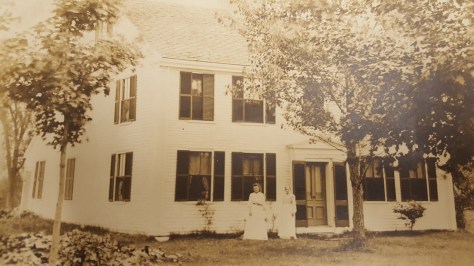
Martha Sprague Litchfield, left, and Sarah Trowbridge Litchfield. Circa 1890. Photo courtesy of the Hingham Historical Society.

Kenagy’s vivid descriptions of her family, the house, and Hingham make it feel like she is sitting down with us and flipping through pages of a photo album while sharing her family’s story. We see Colonel Charles Cushing building the house in 1785 after fighting in the Revolutionary War, and we watch subsequent generations move into and out of the family home. We learn of the successes and struggles of the family as they find ways to make a living in a changing world. As Kenagy shifts the narrative’s focus to each owner chapter after chapter, she recognizes the unique relationship each family member had with the house on School Street. She successfully sees the house through each of their eyes.

Although Kenagy admits there are gaps in her family’s story that research cannot fill, she does not let this obstacle frustrate her. Instead, Kenagy embraces what she does not know and proposes answers to the questions she cannot answer. By doing so, she becomes more attuned to the motivations, fears, and struggles of her ancestors. When Kenagy does know the answer to certain questions, she occasionally quotes letters and other sources to add another layer to her family’s story.

74 School Street 1889.jpeg

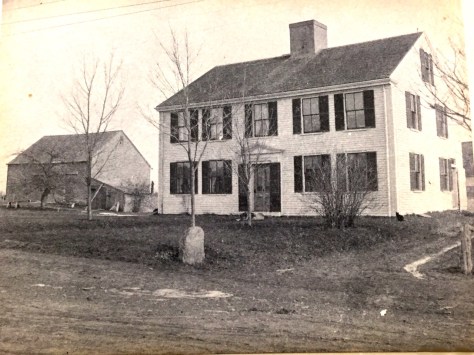
A large barn can be seen to the left of the house in this 1889 photo. A carriage house is to the right of the house. Photo courtesy of the Hingham Historical Society.

While this book presents the story about eight generations of a family, it also provides an overview of the history of Hingham. Through Kenagy’s detailed descriptions, we see Hingham’s transformation from a small village to a bustling wartime shipyard. Selected quotes from sources like the History of the Town of Hingham, Massachusetts and the Hingham Journal bring the town’s history to life. By acknowledging the history of the town, we can clearly recognize the family’s influence on Hingham’s community.

You can sense writing this book was a deeply personal experience for Kenagy. Not only does it document how she confirms family stories, but also how she uncovers family secrets. We are excited to learn more about Meg Kenagy’s experience writing this book and researching her family’s history when she comes to the Hingham Heritage Museum at Old Derby for a talk and book signing on Saturday, October 27, 2018 at 3:00pm. Please join us!

The “Precedent” and the Birth of Fire Fighting in Hingham

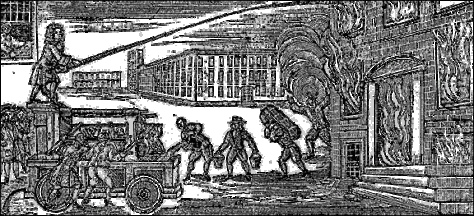
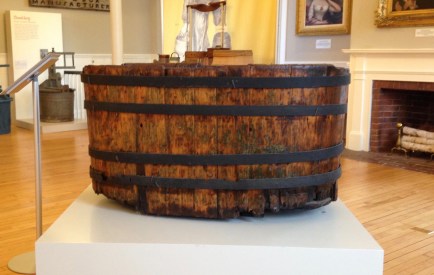
In 1802, the Town of Hingham authorized the construction of firehouses at Little Plain (Hingham Centre) and Broad Bridge (Hingham Square), although the responsibility to acquire the fire engines themselves rested with private citizens—the proprietors of Engine Companies No. 1 and 2.  The “hand tub” engines that they commissioned and paid for were large wooden tubs placed on carts for mobility and filled by hand from the nearest water source. Once the bucket was full, firemen pushed long wooden bars (“brakes”) up and down, setting in motion a piston in the tub that pumped the water out through a hose and nozzle.

hpwood

Francis H. Lincoln wrote in the 1893 History of the Town of Hingham:

If one were to imagine a fire in those days he would see a company of perhaps fifteen men at work upon the brakes and attending to the hose and pipe, while a line of men and women stretched away to the nearest water, which they passed from hand to hand in buckets, emptying it into the tub, passing the empty buckets back by another line to be filled again.

IMG_4495This wooden tub is from the Little Plain Engine, No. 1, nicknamed the “Precedent” because it was the first of what would ultimately be four such engines to be completed.  It was manufactured by local craftsmen: Peter Sprague made the tub from cedar furnished by Thomas Fearing. The ironwork was by the local firm of Stephenson and Thomas.
In 1830, the Town’s first suction apparatus, the “Hingham,” was acquired and “hand tubs” or “bucket tubs” such as the Precedent became obsolete.

The tub was reassembled and stabilized in recent years by Dick Kenney of the Bare Cove Fire Museum. It is currently on display at the Hingham Heritage Museum, on loan from the Bare Cove Fire Museum, 45 Bare Cove Park Drive, Hingham, MA 02043.


“The Old Tory”

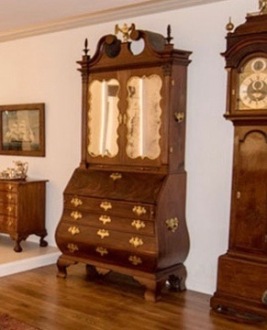
thumb.php (1).jpg            This beautiful drop-front desk and bookcase, newly installed in the Kelly Gallery at the Hingham Heritage Museum at Old Derby Academy, was built for Martin Gay (1726-1807) and Ruth Atkins Gay (1736-1810) upon their marriage in 1765 by cabinetmaker Gibbs Atkins of Boston, Ruth’s brother.
Called “the Old Tory” in acknowledgement of Martin Gay’s political leanings, the desk travelled to Nova Scotia with Martin upon the evacuation of Boston in 1776.  Many Loyalists were unable to bring larger pieces of furniture when fleeing, but Martin Gay owned a ship which made it possible for him to move the piece such a distance. Because Martin was a deacon of the West Church in Boston, he was charged with protecting the church’s valuables during the British occupation. Martin filled the drawers and shelves of his secretary desk with linen and silver communion service for safe keeping while exiled in Nova Scotia.

In 1788, Martin made a trip to England with hopes of procuring an indemnity for his losses as a Loyalist. Once again, “Old Tory” made the trip with Martin as he stayed in England for two years. Upon his return to Boston in 1792, Martin brought “Old Tory” back with him, filled with the linens and silver communion service to be returned to the West Church.

When Martin died in 1807, Ruth moved to the Gay family home on North Street in Hingham and lived there until her death in 1810. The desk descended in the Gay family until Ebenezer and Diana Gay donated it to a grateful Hingham Historical Society in 2014.

How Artist Joan Brancale Designed the Exhibit Mural for “Boxes, Buckets, and Toys: the Craftsmen of Hingham”

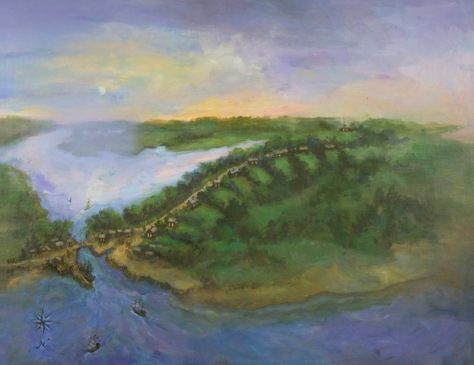
M1 Joan Brancale Hingham 1630 v2The birds’-eye view of Hingham Harbor, circa 1680, envisions Hingham as its earliest settlers found it, a heavily forested coastal village with a safe harbor and large tidal inlet called “Mill Pond.” The mural’s design concept, developed with Suzanne Buchanan, was to give context regarding the importance of the harbor for trade, the vast resource of timber that later helped drive the woodenware industry, and to depict how the early development of the village stemmed from the harbor front.

Working with exhibit designers Ed Malouf and Carol Lieb of Content Design Collaborative through a series of rough idea sketches, the following design evolved: M1 Joan Brancale Hingham 1630 NorthThe focus is on early North Street, later the route by which woodenware from village workshops of Hingham Centre and Hersey Street made their way down the harbor where ships awaited to carry them worldwide. The twilight setting was inspired by exhibit writer Carrie Brown’s description of candlelit homes in a world fueled and maintained by wood.

We see the village at twilight–simple homes, windows aglow—along “Town Road,” now North Street, where the first settlers were granted lots along an Indian path that followed Town Brook to what is now Beal Street. In the distance, I faintly M1 Joan Brancale Hingham 1630 Old Shipsuggested the steeple of Old Ship Church (not yet built) to help locate the site of an earlier meetinghouse on Main Street. At the harbor a single wharf, likely located at the mouth of Mill Pond, suggests the beginning of Hingham’s commercial harbor.  In later years, Hingham harbor’s many wharves were key to the success transporting goods produced by local tradesmen to Boston and beyond.

M1 Joan Brancale Hingham 1630 Mill PondThe viewer may be surprised at the prominence of Mill Pond—how it extends in the distance to what is now Home Meadows. This once broad expanse of water carried early settler Peter Hobart and company to their landing point at the foot of Ship Street at North Street. Mill Pond, flushed by tidal waters and fed by the Town Brook, is, alas, no longer.  In the late 1940s it was “paved over for a parking lot” along Station Street and the historic brook sent underground. The vestige of Mill Pond’s shoreline still remains, along the rear of old buildings lining the south side of North Street.

M1 Joan Brancale Hingham 1630 harbor detailResearch was important to surmise how Hingham Harbor may have first appeared to arriving settlers. I found no local 17th century drawings or paintings on which to base the design. Instead I used a variety of sources to help me understand what might be a plausible view. My research included:

  • Maps and harbor views of New Amsterdam and Boston and research done by the committee working on the development of Hingham Harbor’s Master Plan.
  • The 1893 History of Hingham, which provided information about the abundant hardwoods early settlers would have seen along the coast and drumlins of Hingham;
  • Not All is Changed, Russ and Lorena Hart’s aptly-titled history of Hingham, which includes early maps, including the first 12 lots granted along North Street, and vintage harborfront maps, which helped approximate the location of the first commercial wharf and buildings. These likely extended along Mill Pond near the grist mill, whose ancient foundation supports the old timbers of what is today called Liberty Grille.