One If By Land; Two If By Sea: the Hingham Connection

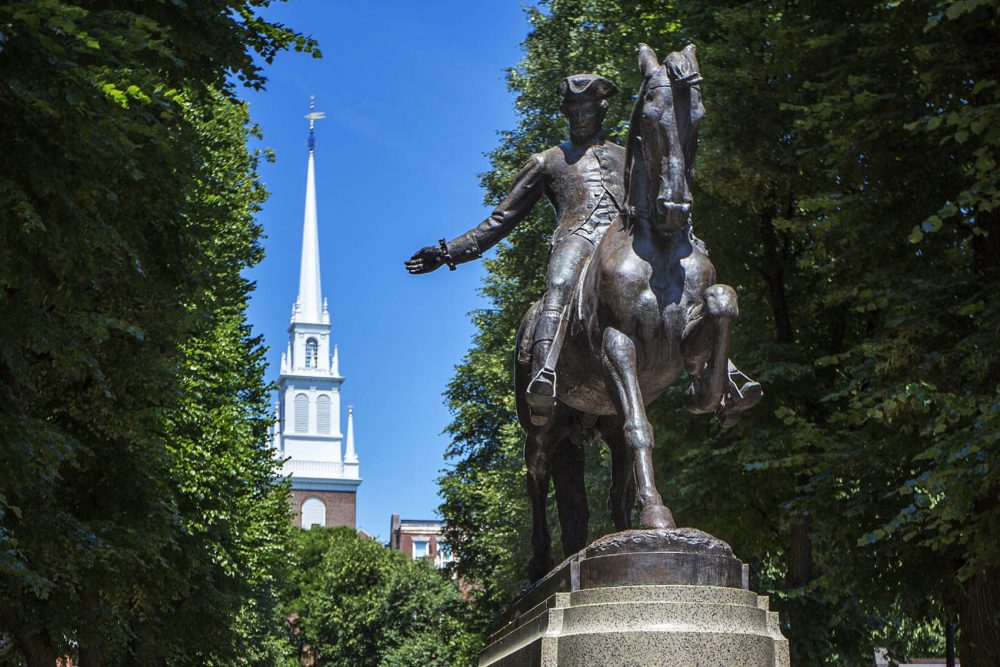
Most people are aware of Paul Revere’s midnight ride in April 1775 due to the poem by Henry Wadsworth Longfellow and the hanging of two lanterns in the Old North Church steeple preceding his journey.  We at the Hingham Historical Society were delighted to learn that this event has a Hingham connection.

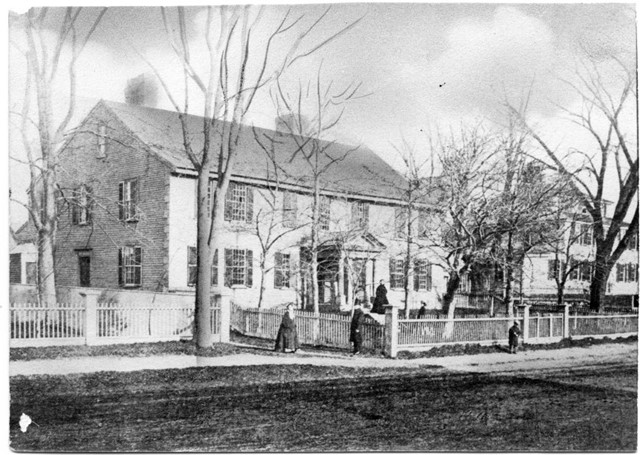
Thaxter Mansion, North Street, Hingham

One of the men responsible for hanging the two lanterns was John Pulling, Jr. a vestryman of Old North and a friend of Paul Revere. John was born in 1737 in Boston and was a trader by occupation. He married his first wife, Annis Lee, in Manchester in 1768. They had two children, a daughter and son both named for their parents.

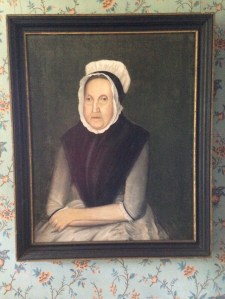
Abigail (Smith) Thaxter

John’s wife Annis died in 1771. This is where the Hingham connection comes in. John married his second wife, Sarah Thaxter McBean (17461843) in January 1773. She was the daughter of Major Samuel Thaxter (1723-1771) of Hingham, a trader and veteran of the French and Indian War, and Abigail Smith (1722-1807), daughter of Samuel and Bethia (Chipman) Smith of Sandwich. Sarah grew up in the Thaxter mansion on North Street, the site of today’s St. Paul’s Church. A portrait of Sarah’s mother, Abigail Smith hangs in our Old Ordinary museum.

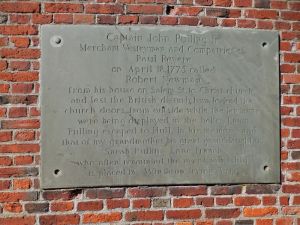
Pulling Tablet, Old North Church

This was Sarah’s second marriage as well. She was the widow of Duncan McBean, a West Indies planter from a family of Scottish traders. The McBeans had no surviving children. Records show that Sarah and John Pulling had three known children: Sarah (1773), Martha (ca 1780) and Richard (bef. 1782). During the Revolutionary War John served as a Captain and Commander of Ordinance Stores. On April 19 when he heard he was wanted by the British for questioning in his role aiding Revere, he, Sarah and their children fled Boston in a fishing boat, making their way to Hull. This event is memorialized on a tablet on the Old North Church. When they returned to the North End of Boston after the British evacuated in March 1776, they found their house ransacked and all their property gone. 

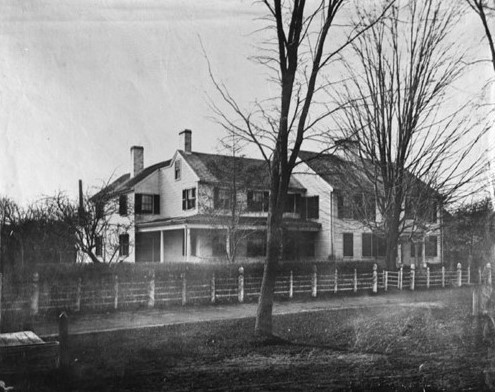
121-123 Main Street, Hingham

After John’s death in 1787 Sarah and her family (including the two children from John’s first marriage) returned to Hingham, where they lived until Sarah married for the third time to Thomas Reed of Abington in 1793. It is unknown where in Hingham Sarah and the children lived during that five-year period as Sarah’s childhood home, the Thaxter Mansion had been sold to Elisha Leavitt, Jr. in 1770. Perhaps Sarah and the children lived with

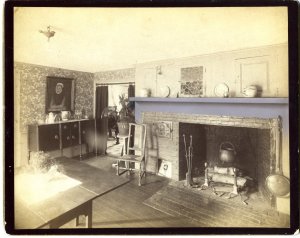
Parlor at 137 Main Street, Hingham

one of her younger brothers who remained in Hingham? Dr. Thomas Thaxter lived at 121 Main Street and Henry Thaxter lived at 137 Main Street. Both houses still stand today. After marrying Thomas Reed, Sarah resided in Abington until her death in 1843 at age 97.

Nature vs. Nurture: Consider the Spragues, Part 3

In this final part of my blog about the Sprague family, I’ll highlight descendants of Ralph Sprague, the oldest of the three brothers who came to the Massachusetts Bay Colony in 1628.

In the books written about Ralph Sprague and his family, Ralph is most highly regarded for his service to the Massachusetts Bay Colony.

In The Founding of Charlestown by the Spragues, A Glimpse of the Beginning of the Massachusetts Bay Settlement (1910), written by Henry H. Sprague, the author quotes the earlier historian Richard Frothingham, Jr., who wrote of Ralph Sprague in The History of Charlestown (1845):

He was a prominent and valuable citizen – active in promoting the colony.
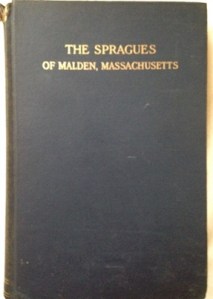
The Spragues of Malden, Massachusetts (Hingham Historical Society archives)

And in The Spragues of Malden, Massachusetts, by George Walter Chamberlain, this is written about Ralph’s contributions:

Ralph Sprague served as a Deputy to the General Court from Charlestown, then including Everett, Malden, Melrose, Stoneham and Somerville, etc., in at least sixteen sessions and served on important committees many times. The fact that Mr. Sprague served with the most distinguished men of the Massachusetts Bay Colony so long indicates that he was a man of sound judgment and remarkable ability. His influence in the Colony was great.

While Ralph first built a home for his family in Charlestown, he was later given more land:

In 1638 the Town of Charlestown made a record of twelve lots of land which were granted to him. Five of these lots were on Mystic Side, out of which the town of Malden was formed in 1649.

Within a decade, Ralph Sprague was helping to establish the Town of Malden.

On 1 Jan. 1648/9, Lt. Ralph Sprague and nine other freemen . . .  petitioned the General Court of Massachusetts Bay Colony, for a separation from Charlestown, and Misticke side became a distinct town of the name Maulden, 11 May 1649.

This post is intended to focus on historically prominent descendants of Ralph Sprague of Charlestown and Malden who were 19th and 20th century scientists, inventors, and industrialists. But permit me a diversion first to highlight some of Ralph’s descendants who made their mark during their time, though they are less remembered now:

Dr. John C. Sprague (1754-1803) of Malden, a descendant of Ralph’s son John Sprague, did military service as a surgeon, was twice captured by the British, and was imprisoned for a time in Ireland. After the War for Independence, he became a schoolteacher and also was involved in Malden Town government, serving on a wide range of Committees. At a special Town Meeting in 1797, Dr. Sprague was elected both to a committee on education and to a committee to raise money for the encouragement of singing. In noting this specific service, the author of The Spragues of Malden adds: “Thus was Dr. Sprague identified with the best things of his native town in the reconstructive period following the Revolutionary War.”
Phineas Sprague (1777-1869) of Malden—the 5th in a line of men named Phineas descended from Ralph’s son John, was a delegate to the Constitutional Convention of Massachusetts in 1820, at which he spoke on the Declaration of Rights, saying: “It is tyranny in the highest degree to compel a man to worship in a manner contrary to the dictates of his conscience. Religion is an affair between God and our own souls.”

Phineas’ liberal views regarding religion, like those we in Hingham associate with the minister at First Parish, Ebenezer Gay (1696-1787) in the early days of what was first known as the Arminian movement, eventually led Phineas to withdraw from First Parish of Malden. Phineas later would be involved in establishing a Universalist church in Malden.

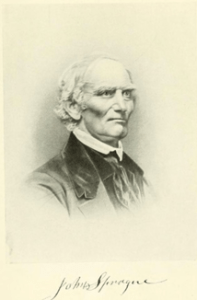
Dr. John’s son, John Sprague (1781-1852) of Malden, like his cousin Phineas, espoused liberal views of religion at a time when religious congregations in New England were dividing due to differing theological views during what would be known in Protestantism as the Great Awakening, and then due to differing political views: Federalism vs. States Rights. (In Hingham, these political divisions led to the founding of New North Church by a group of Federalist-leaning residents including Major General Benjamin Lincoln.)
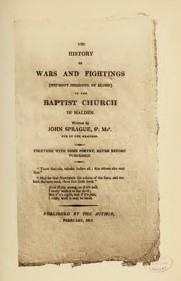
John was an original member of the First Baptist Church of Malden but later found himself unwelcome in the church due to his Arminian views vs. the Calvinist doctrines of the minister at the time. In 1812, John Sprague wrote and self-published a pamphlet that caused quite a stir: The History of Wars and Fightings (Without Shedding of Blood) in the Baptist Church in Malden. A subtitle reads “Together with Some Poetry, Never Before Published.”

On April 12, 1812, the members of the Baptist church based his exclusion from the congregation on the publication of this book. While John Sprague was a shoemaker by trade, he enjoyed writing poetry—and a few of his humorous poems are included in the The Spragues of Malden. 

John was selected by the town of Malden for many committees, among them: the Bunker Hill Monument Association formed to raise money for the monument’s construction, and the committee formed by the town in 1844 to choose the best path through Malden for what was then called the Maine Railroad.  I think many of those who serve on Town Committees in Hingham today would have enjoyed the company of shoemaker John Sprague of Malden.

Horatio Sprague Sr. (1784-1848), a descendant of Ralph’s son John, was born in Boston, but most associated with Gibraltar, where he permanently resided from 1815 until his death. Horatio was a merchant and ship owner in Gibraltar, a British territory on the tip of the Iberian Peninsula, when he was chosen to be U.S. Consul there in 1832.  His duties, largely tied to facilitating commerce, were not onerous, but his health declined.

His son, Horatio Jones Sprague Jr. (1823-1901), who was born in Gibraltar and spoke several languages, was appointed after his father’s death as U.S. Consul in Gibraltar and served in that post for 53 years. His consular workload was greater than his father’s due to the opening of the Suez Canal in 1870, and two wars that had an impact during his tenure: the Civil War in the U.S. (1861-65) and the Spanish-American War (1898.) Horatio Sprague Jr. also broadened the business portfolio he’d developed with his father when he became an importer of tobacco to Gibraltar. Horatio died in 1901, and would be succeeded as U.S. Consul by his son, Richard Sprague (1871-1934.) 

Details about this now-unusual Sprague diplomacy dynasty is on this website, serving fans of James Joyce. Why would such a James Joyce website include information about the Spragues of Gibraltar? I was surprised to learn that James Joyce’s famous work Ulysses (first serialized beginning in 1918, then published as a book in 1922) has a Horatio Sprague Jr. reference, as “old Sprague the consul”:

. . . when general Ulysses Grant whoever he was or did supposed to be some great fellow landed off the ship and old Sprague the consul that was there from before the flood dressed up poor man and he in mourning for the son.

While James Joyce’s Ulysses is a work of fiction, this reference to Ulysses Grant visiting Gibraltar is based on historic fact. The then former president, Ulysses Grant visited Gibraltar as part of a world tour in 1878, when the U.S. Consul there was Horatio Jones Sprague, Jr.

Now, on to those descendants of Ralph Sprague who made lasting contributions to science, innovation, and industry in the 19th and 20th centuries.

Charles H. Sprague (1827-1904) of Malden descended from Ralph’s son Phineas (1637-1690), who was among the Malden men who fought in King Philip’s War.
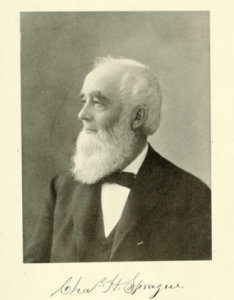
Charles served his local community as a member of the Malden City Council, following in the public service tradition of many Spragues over the centuries. And like other notable Spragues, Charles was a scientist as well as a prominent business leader.

In 1849, Charles Sprague was appointed by the United States Government to the editorial staff of the American Ephemeris and Nautical Almanac, where he reported on astronomical observations. He held this position for fifteen years. American Ephemeris and Nautical Almanac was published, under the authority of the Secretary of the Navy, from 1855 to 1980, containing information necessary for astronomers, surveyors, and navigators.  The Preface tothe 1855 edition reports “the preparation of this work was begun in the latter part of the year 1849, in accordance with an act of Congress, approved on the 3d of March of that year.” The publication continues now as The Nautical Almanac.

Charles went on, in 1870, to establish the Charles H. Sprague Company, a privately-held power company focused on the market for coal during the early part of the industrial age. During World War I, the company became the major supplier of coal to America’s European allies. To facilitate the shipment of coal across the Atlantic, he also founded the Sprague Steamship Company which operated a large fleet of vessels serving many company-owned terminals.
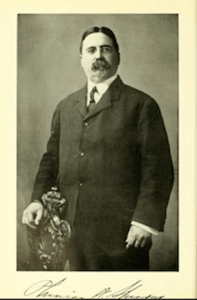
Charles’ son and Malden native Phineas Warren Sprague (1860-1943) had been a partner of what had become C.H. Sprague & Son, and after his father’s death he assumed full control of the business. The company would later expand into oil and be renamed Sprague Energy. In 1942, the U.S. Government selected Sprague Energy to manage its wartime coal shipment program.
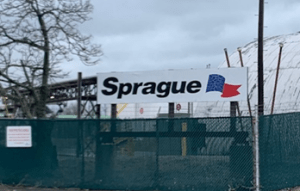
Sprague Energy, Quincy, Mass.

Charles’ grandson, Phineas Sprague Jr. (1901-1977) joined company management after World War II service in the Navy, from which he retired as a Lieutenant Commander. While the family sold its remaining interests in the company in 1970, the Sprague Energy brand is still in use, and has expanded into natural gas—including here on the South Shore, where the Sprague Energy brand is emblazoned at an oil terminal on Southern Artery along the Town River in Quincy, MA.

Frank Julian Sprague (1857-1934), another descendant from Ralph’s son John, was born in Milford, CT., was raised in North Adams, MA by an aunt and other relatives after his mother’s death when he was 9 years old. As a boy, Sprague became fascinated by the textile mills and related manufacturing operations in North Adams. He did quite well in school and went on to Annapolis where he studied electrical engineering. He worked briefly with Thomas Edison, but his major contributions came after he began working on his own inventions, for the electric motor, electric railways and electric elevators. His patented inventions made the electric streetcar a reliable means of transit for emerging “streetcar suburbs.” I enjoyed reading the biography: Frank Julian Sprague, by William D. Middleton, MD., published by Indiana University Press in 2009 (cover shown here), which chronicles his life as well as his many inventions.
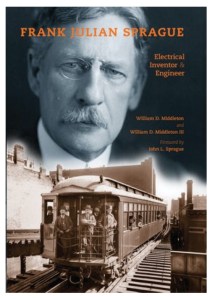
Frank lived with his family in New York City for much of his life. As a graduate of the Naval Academy and former Naval Officer, Frank was buried at Arlington National Cemetery.

Robert (1900-1991) and Julian (1903-1960) Sprague, sons of Frank Julian Sprague, became the co-founders, in 1926, of one of the largest electric components companies of its time. The Sprague Specialties Company, founded by the brothers in Quincy, MA, moved to North Adams, MA in 1930.  They chose North Adams due to their father’s fondness for his boyhood there. In 1942 the company changed its name to the Sprague Electric Company.

The company expanded in 1942—buying the factory buildings that previously housed the Arnold Print Works textile firm. The 16 acres of grounds on the Hoosic River in North Adams, Massachusetts, encompass a vast complex of 19th-century mill buildings and occupy nearly one-third of the city’s downtown business district. This was the home of Sprague Electric Company until 1985. At its peak, Sprague Electric was one of the largest electronic component manufacturers in the world.

John Louis Sprague, Sr. (1930-2021), Robert’s son, would be the last Sprague to head the Sprague Electric Company.  John Sprague was a chemist who joined the company soon after completing his PhD at Stanford in the late 1950s. He would spend 11 years as president of Sprague Electric. John’s son, John Sprague Jr., wrote a blog, available at www.spraguelegacy.com about his dad’s role with the company. The website also chronicles the history of the Sprague Electric Company.

The Sprague Electric Company was sold in 1976. John Sprague was still president (under the new ownership) in 1984 and 1985 when company owner Penn Central moved the company’s international headquarters from the Berkshires to Lexington and eliminated 700 Sprague jobs in North Adams.  That move, the Berkshire Eagle later reported, “left a legacy of bitterness in the city,” even though Sprague didn’t completely leave North Adams until the early 1990s.

Innovation and the Arts
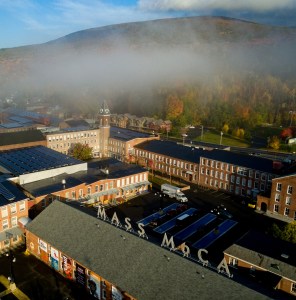
(Photo courtesy of MassMoCA.org)

Given the history of this family in both the arts and sciences, it seems so appropriate that what was the Sprague factory complex in North Adams has become Mass MOCA—an art museum, known for its embrace of innovation across the visual arts and, in more recent history, performing arts as well.

After years of planning, fund-raising and some additional construction on the former factory site, MASS MoCA celebrated its opening in 1999, as the center’s website says: “marking the site’s launch into its third century of production, and the continuation of a long history of innovation and experimentation.”

That “long history of innovation and experimentation” certainly applies to the contributions over generations of the creative Sprague family as well. Perhaps both nature and nurture played a role. An impressive legacy.

SOURCES not otherwise referenced:

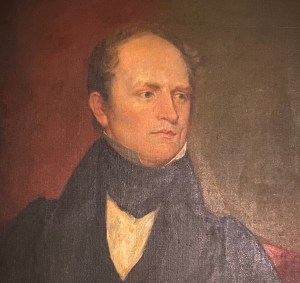
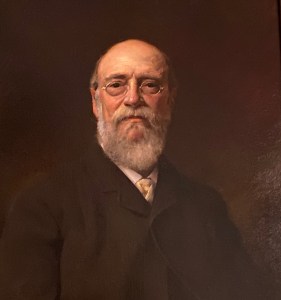
Portraits of John, Charles H., and Phineas W. Sprague from Historic Homes and Places and Genealogical and Personal Memoirs Relation to the Families of Middlesex County, Massachusetts, vol. III (Cutter, ed., 1908)

Obituaries of Charles H. Sprague published in the Boston Daily Globe, July 1, 1904; and the Springfield Republican (Massachusetts) June 30, 1904.

The History of Malden, Massachusetts 1633-1785

Malden Past and Present: 1649-1899, pub. May, 1899.

The website www.spragueenergy.com

Special thanks to my friend Paula Bagger who provided many of the images of items from the Hingham Historical Society archives–for part 2 of this blog in particular.

                                                                                                           ################
Nature vs. Nurture: Consider the Spragues, Part 2

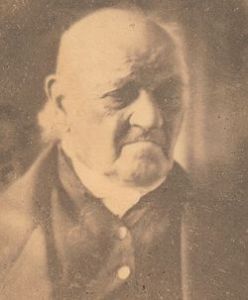
A rare photo of a Revolutionary War veteran [courtesy of findagrave.com]

William Sprague’s line of the family achieved prominence in the arts—from botanical illustration to poetry.

In this “Rev 250” period of commemoration of the War for Independence, I need to first mention that William’s great-great grandson, Samuel Sprague, born in Hingham in 1753, was a Revolutionary War Patriot who also participated in the Boston Tea Party, as discussed in a 2020 post on this blog.  Samuel’s pension states that he crossed the Delaware with George Washington!  (That tidbit is courtesy of the recently published book, Revolutionary War Patriots of Hingham, Ellen Stine Miller & Susan Garrett Wetzel, 2024, copies of which are available from the Hingham Historical Society.

Portrait of Charles Sprague, the “Banker Poet,” by Matthew Sprague (Hingham Historical Society)

Charles Sprague (1791-1875) —Samuel’s son, Charles, was born in Boston, where his father Samuel earlier had relocated as an apprentice mason.  Charles had success both in the banking business and as a poet and became well known as the “Banker Poet of Boston.” He is considered one of America’s earliest native-born poets. Some of his poems suggest an affinity for transcendentalism, a movement associated with Charles’ contemporaries Ralph Waldo Emerson, Henry David Thoreau, and Margaret Fuller, all of Massachusetts. One example of Charles’ poetry can be read here.

This portrait of Charles hangs in the hallway of the Hingham Historical Society’s General Benjamin Lincoln House (Charles’ granddaughter Helen Amelia Sprague married Lauriston Scaife, a Lincoln descendant).  A modern notation on the back of the canvas attributes the painting to “Matthew Sprague”–another talented Sprague?

Charles James Sprague (1823-1903), like his father, was a banker and a poet but he left his mark in the field of botany.  His portrait,  looking very much like a respectable banker, also hangs in the Benjamin Lincoln House.  It was painted by his nephew, Charles Sprague Pearce, a well-known painter of the 19th century.

Portrait of Charles James Sprague by Charles Sprague Pearce (Hingham Historical Society)

Charles James Sprague was known for his study and illustrations of lichens. More info about the Sprague Herbarium of Fungi can be found here.

Based on his scientific and literary contributions, Charles James Sprague was elected to the American Academy of Arts and Sciences in 1856.

Hosea Sprague (1779-1843) — A grandson of Isaac Sprague, Sr. (1709-1789) another Revolutionary War Patriot of Hingham, Hosea first trained as a printer in Boston. He then returned to Hingham where he worked as a bookseller and became known as a wood engraver.

A few of his engravings from the Hingham Historical Society archives are shown here.

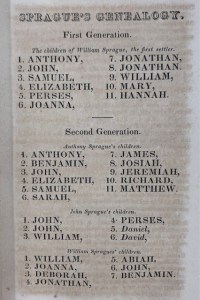
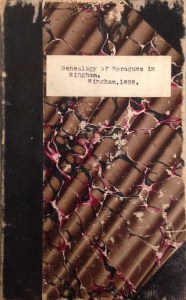
Hosea also was the compiler of The Genealogy of the Spragues in Hingham, published in 1828, an excerpt from which is show here.    The Hingham Library also has an original edition in its Sprague family archive. This genealogy is notable as it was published well-before the popularity of genealogies in the late 19th/early 20th century, following the 1876 U.S. centennial and the 1890 launch of the Daughters of the American Revolution, when charting colonial ancestry became quite popular.

In the 1840s, Hosea published several issues of a periodical of his observations about life, history, and weather: “Hosea Sprague’s Chronicle.” In an October 18, 1888, feature story, published in the Hingham Journal, Hingham’s Luther Stephenson (a Civil War general, who had both maternal and paternal Sprague grandmothers) wrote about his cousin Hosea:  “He had great respect for the first settlers of Hingham, and spent much time in deciphering and copying in his bold hand the early records of the town…”

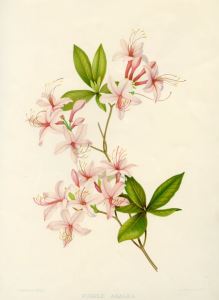
Isaac Sprague (1811-1895)—A great grandson of Isaac the Revolutionary War Patriot, Isaac was born in Hingham. He became an Artist Assistant to the well-known illustrator John James Audubon, joining Audubon’s expedition to Montana in 1843. Isaac then began his successful career in Cambridge as a botanical illustrator, working with influential botanist Asa Gray and others. In recognition of Isaac’s Hingham roots, the Hingham Heritage Museum treasures its collection of several of Isaac’s beautiful artworks and the Society sponsored an exhibit of his work in 2016.

Here are some of the prints in our collection:

Isaac’s work has been the subject of two posts on this blog, —in 2016 and 2017:

In addition to poets and artists, the William Sprague line includes skilled craftsmen known as coopers—artisans in woodenware-making including boxes, buckets, and wooden toys, during the long period when Hingham was known to many as “Bucket Town.” This history is documented and beautifully illustrated in the book Bucket Town, Woodenware and Wooden Toys of Hingham, Massachusetts, 1635-1945, written by Derin T. Bray and published by the town’s Hingham Historic Commission in 2014.

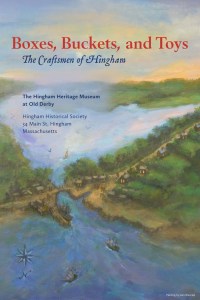
In 2014-15, Old Sturbridge Village featured an exhibit titled “Bucket Town: Four Centuries of Toy-Making and Coopering in Hingham.” The Hingham Heritage Museum’s inaugural exhibition in 2017 was Boxes, Buckets, and Toys: the Craftsmen of Hingham.”

Among the Hingham Sprague family members who were coopers/ woodenware makers are:

  • Isaac Sprague, Sr. (1709-1789), the Revolutionary War Patriot, by trade a set-work (or bucket/barrel making) cooper; his son Isaac (1743-1800) also a set-work cooper; and Isaac Sprague, Jr.’s sons Peter (1773-1859) and Isaac (1782-1826) both of whom were box coopers. Peter’s son, Peter (1801-1868) also worked as a box cooper.
  • Amos Sprague (1747-1838) a box cooper; and his son Amos (1774-1830) also a box cooper.
  • Blossom Sprague (1784-1860), a carriage painter who was also an award-winning maker of wooden toys.
  • Reuben Sprague (1785-1852), whose son Reuben O. Sprague (1811-1898) used his woodworking skills as a stair builder with a shop in Boston.
  • Adna Sprague (1790-1860) a box cooper who also served in town government as a Selectman.
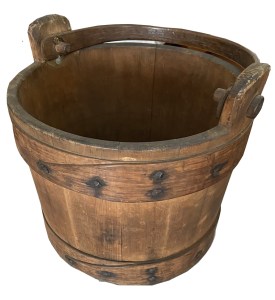
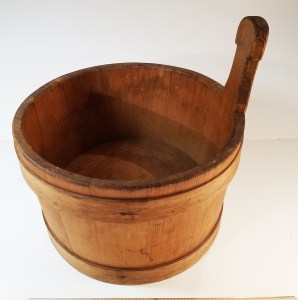
  • Bela Sprague (1804-1878), a brother of engraver Hosea, a “white cooper,” or maker of buckets, pails, and other household containers. Bela’s work is featured in the Bucket Town book. We have some examples of Bela’s work in our Hingham Historical Society collection, including this bail-handled pail and a small pail with a handle, known as a “piggin.”
  • Samuel Sprague (1809-1882), cooper, whose son Samuel (1833-1900) was a stair builder; and
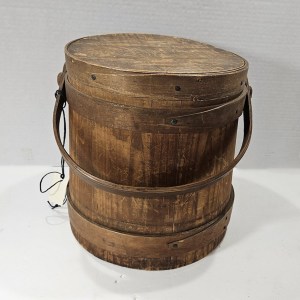
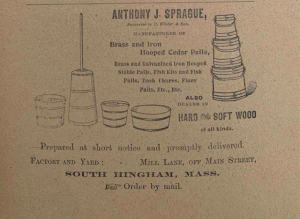
  • Anthony J. Sprague (1855-1921), who ran the ad shown here for his woodenware business in the 1894 Hingham-Hull Directory. One of Anthony J. Sprague’s buckets is this firkin from the Historical Society’s collection.

Women of the 18th-mid 20th century were generally less recognized for their contributions to the arts, but we are fortunate to have examples of the illustrations of Lydia Sprague (1832-1907), a cousin of Isaac, and a daughter of box cooper Adna Sprague. Several examples of Lydia’s artistry are included in Joan Brancale’s two-part post on our blog from 2014:

Also in our collection are some wonderful samplers by Sprague women – created when they were in school.

  • First, this sampler where nature and a structure (perhaps Derby Academy) are prominently featured, embroidered by Mary Sprague (1804-1871.) Mary was a daughter of Peter Sprague and Mary Whiton. She married Elijah Burr in 1828.
  • Next, a genealogical sampler, which tells us in embroidery that the creator is a then 8-year-old Jane Sprague, who stitched it on May 1, 1820. As spelled out in stitches, Jane is a daughter of David Sprague and Mary Leavitt Gardner. Jane (1811-1878) married Thomas Cushing in 1836.

Before concluding this short visit with members of the William Sprague family line, a note about descendants who are an important part of the history of Rhode Island. William’s son William, born in Hingham in 1650, moved to Rhode Island around 1710. His grandson William, born in Cranston in 1795, started
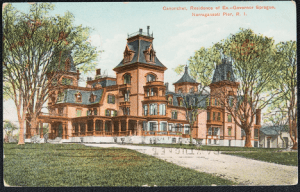
a grist and sawmill in Cranston along the Pocasset River. The next generation built on that foundation, and much wealth was created in the process due to the success of A & W Sprague, which grew to become, for a time, the largest cotton textile manufacturer in the country. Their business success made members of this line quite wealthy and propelled some of the family into politics: two became Governors of Rhode Island in the 19th century. One of these, another William, born in 1830, also became a US Senator, and built an enormous estate in Narragansett, RI in the 1860s, named Canonchet.

Part 3 of this blog will focus on the descendants of Raph Sprague, older brother of Charlestown and Hingham settler William, — and this line’s lasting contributions to science, technology and related businesses.

Nature vs. Nurture: Consider the Spragues

While doing research for the Hingham Historical Society’s 2023-24 lecture series, Suburbia: The American Dream, I learned of the important contribution of late 19th/early 20th century electrical engineer and inventor Frank Julian Sprague to the electric streetcar—an engine critical to early suburban development in the U.S.  The name Sprague caught my attention.

In his landmark book, Crabgrass Frontier: The Suburbanization of the United States, Kenneth Jackson pointed to the importance of the contributions of Franklin Julian Sprague:

By the turn of the century, half the streetcar systems in the United States were equipped by Sprague, and 90 percent were using his patents.

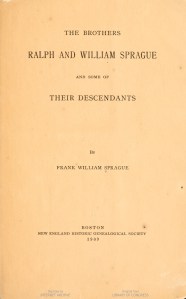
The Brothers Ralph and William Sprague (Hingham Historical Society archives)

Could this engineer and inventor, born in Connecticut and for most of his life a New Yorker, be part of the same family that produced the 19th century botanical illustrator Isaac Sprague and other notable Sprague family members here in Hingham? I needed to know more.

What my research revealed was a fascinating multi-generational story of an innovative, creative family. I was struck by the significant contributions made to both the arts and sciences by the descendants of the two-family lines–those of Ralph and William Sprague–that began with brothers who were among the original settlers of Charlestown in the Massachusetts Bay Colony. The impressive examples of creativity and innovation in these two Sprague lines got me thinking about the influences of both nature and nurture, as well as the close relationship between the creative arts and scientific inquiry and invention. Perhaps the story of this family will get you pondering too.

The Story Begins Along the Wey River in England

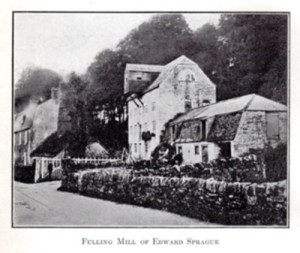
Brothers Ralph (1599-1650), Richard (1605-1668) and William Sprague (1609-1675), were sons of Edward Sprague (1576-1614), who operated a fulling mill on the river Wey, in Upwey, located between Dorchester and Weymouth, in the county of Dorset, England. (Edward’s mill, shown here, no longer exists.) After their father’s death, the three brothers joined a party of colonists emigrating for the Mass Bay Company to settle what became Charlestown, Massachusetts. It is unclear if religion was part of the Sprague brothers’ motivation to leave England. They arrived in Salem in 1628, then soon traveled on to Charlestown.
Fulling mills (“fulling” is part of the cleansing and thickening process when making cloth from sheep’s wool) were also common in the New England colonies, and there were three fulling mills in Hingham in 17th and 18th centuries: one on Crooked Meadow River in South Hingham, at what became known as Fulling Mill Pond; one off South Pleasant Street (near present-day Fulling Mill Road); and one at what was known as Beechwoods River or Mill River, flowing northeast from Accord Pond. As detailed in the 1893 History of the Town of Hingham, Massachusetts, these mills were operated by the Jacob and Cushing families, closely aligned through marriage.

Ralph Sprague emigrated, at 25, with his wife, Joanne Warren, and 4-year-old son John. He had trained as a fuller with his father in England, but apparently took up farming here. He also became a Selectman of Charlestown in 1637 and was elected Representative that same year, serving in both positions for several years. (Source: The History of Charlestown.) Just before Ralph died in 1650, he joined with others to petition successfully with for their own lands on the Mystic River side of Charlestown, later to  be known as Malden.  Ralph and his wife had several children. For generations, Ralph’s descendants lived in and around Charlestown and Malden.

The Spragues of Malden, Massachusetts (Hingham Historical Society archives)

In the early 20th century, two books, both focused on documenting the genealogy, were written about Ralph Sprague’s family line:

  • The Ralph Sprague Genealogy, written by descendant Edward George Sprague and published in 1913, covered 10 generations who had lived by that time.
  • The Spragues of Malden, written by the then-Secretary of the Malden Historical Society, George Walter Chamberlain, M.S., in 1928. A copy of this book, originally “printed for private circulation only” is in the collection of the Hingham Historical Society.

Richard Sprague, 23 at the time they left England, married in Charlestown in 1632. Richard became a merchant and owned a considerable amount of farmland and salt marsh and had shares in a couple of ships. He was a founding member of the church in Charlestown and a Selectman, Overseer of Highways, and Captain of the Military (local militia then.) Richard and his wife Mary Sharp had no children.

William Sprague, just 19 when he emigrated, married in 1635, while still in Charlestown, and moved to Hingham with his wife Millicent Eames 1636.  There they joined others from England who were just one year into founding a town here. William and Millicent would have 11 children, 8 of whom would survive into adulthood. Some descendants stayed in Hingham for generations.

Genealogy of the Spragues in Hingham (Hingham Historical Society archives)

The book Sprague Families in America, written by descendant Warren Vincent Sprague, M.D., and published in 1913, includes a section on the genealogy of William Sprague and his descendants up to that time. The author credits The Ralph Sprague Genealogy, published the same year, for providing valuable family data; he apparently had not seen the earlier Genealogy of Spragues in Hingham, published in 1828 by Hingham’s Hosea Sprague (1779-1843), about whom you’ll learn more in the next part of this blog.

The connection between colonists in Charlestown and the early settlers of Hingham was established at the time of the town’s founding. In the 1827 History of the Town of Hingham, Plymouth County, Massachusetts, author Solomon Lincoln, after listing inhabitants who started to arrive in Hingham as early as 1633, noted:

. . . The others settled at Charlestown, and in 1635 removed to this place. . . .  It was in June of that year that Rev. Peter Hobart arrived at Charlestown, and soon after settled in this place.

. . . In 1636, [there arrived] John Beal, senior, Anthony Eames, Thomas Hammond, Joseph Hull, Richard Jones, Nicholas Lobdin, Richard Langer, John Leavitt, Thomas Lincoln, Jr., miller, Thomas Lincoln, cooper, Adam Mott, Thomas Minard, John Parker, George Russell, William Sprague, George Strange, Thomas Underwood, Samuel Ward, Ralph Woodward, John Winchester, William Walker.

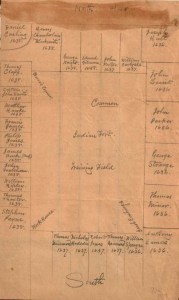
Division of Land Plots to Early Settlers (Hingham Public Library History Collection)

The Anthony Eames in this latter group was the father of William Sprague’s wife Millicent, and they would soon be granted adjacent parcels of land for their homes—as shown in the lower right corner of this 19th century plot chart created by local historian George Lincoln in his “Sketch of the Division of Land Plots to the Early Settlers of Hingham.”

From Ralph Sprague, of Charlestown and Malden, and William Sprague, of Charlestown and Hingham, descended a remarkably talented collection of 18th, 19th and 20th scientists/inventors/industrial innovators and artists/poets/craftsmen. The family lines have distinctions—with Ralph’s line most prominent as scientists and inventors while Wiliam’s descendants stand out as artists and poets and craftsmen.

Part 2 of this blog will focus on William’s line—and its noteworthy creators:  poets, a maker of woodcut engravings, a botanical illustrator, several woodenware craftsmen and more.  

Marion Teague, Hingham History Maker

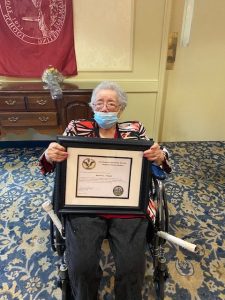
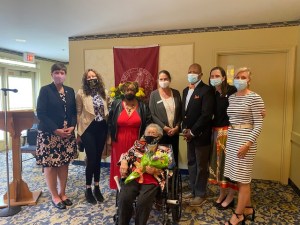
Hingham History Makers Awards Ceremony, May 14, 2021. Photo courtesy of Veronica Hodges

Marion L. Teague, Hingham History Maker

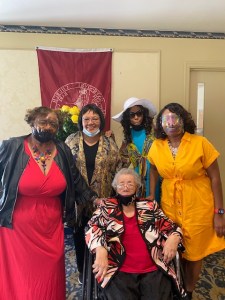
On Friday, May 14, 2021, the Hingham Historical Society awarded Marion Teague the designation “Hingham History Maker,” to honor her pioneering role in researching and preserving the history of Black and Indigenous people in Hingham.  At a necessarily small (owing to COVID restrictions) ceremony at Harbor House in Hingham, State Rep. Joan Meschino presented a citation from the Massachusetts House and Senate to 98-year old Marion and congratulated her on a “life well-lived” in the Town of Hingham.  Paula Bagger, President of the Society, spoke about Marion’s eventful life and work and presented a framed “History Maker” award.  Paula’s remarks may be read here.  Additional tributes to Marion were offered by Elizabeth Dings, on behalf of the Hingham Historical Commission; Joseph Collymore, of Harbor Media and also a longtime family friend; the Rev. Geoffrey Dana Hicks of Hingham’s First Baptist Church; and Marian’s daughter, Joyce Barber.  Katie Sutton attended as a representative of the Hingham Unity Council and Marian’s family and friends filled out the highly appreciative audience.

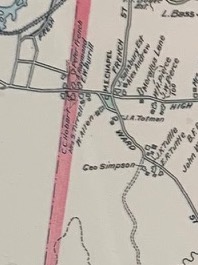
Tuttleville — detail from 19th c. Plymouth County Atlas

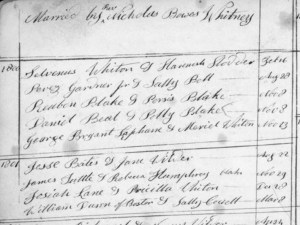
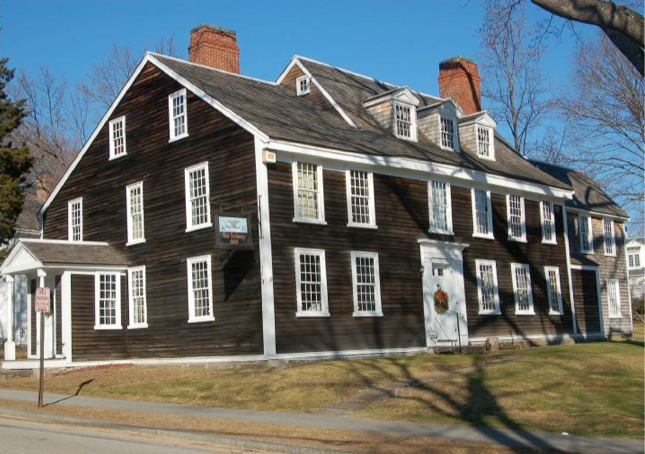
Marion is being celebrated for the pioneering role she has played in helping to preserve the history of Tuttleville, a two hundred year old Black neighborhood around Ward and High Streets in Hingham, and its families, some of whom have lived in Tuttleville throughout those two centuries. The eponymous James Tuttle (1780-1834), was the first Tuttle in Hingham, and he settled in the Ward Street/High Street area around the turn of the 19th century.  He was preceded as a landowner in the area, however, by members of a Black family named Humphrey; on November 29, 1801, James Tuttle and Rebecca Humphrey (1797-1843), a daughter of that family, were married by the Rev. Nicholas B. Whitney at Hingham’s Second Parish.

Marriage Record, James Tuttle and Rebecca Humphrey

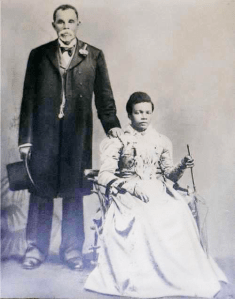
Believed to be John Tuttle and his half-sister Betsy. Photo in collection of Hingham Historical Society

James and Rebecca’s son, John Tuttle (1810-1886), described in the federal census as a farmer, was an important member of this growing Black community, as was his half-brother, James King Tuttle (1834-1906), whose mother was James Tuttle’s second wife, Margaret Quacum Leonard (1796-1806).  James King Tuttle was a shoemaker; many of the Tuttles worked in the shoe factories then operating in Weymouth.  John and James King Tuttle were instrumental in the founding of a village church, the Free Christian Mission, in 1876.

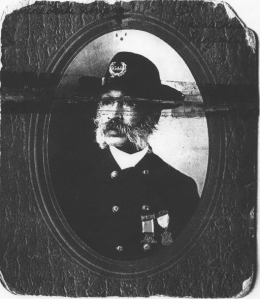
Lewis Legare Simpson as a member of the GAR

James King Tuttle married Henrietta Simpson (1840-1921) on November 13, 1856, thus joining the Tuttle family to the large (Henrietta had 15 siblings!) Simpson family, whose heritage was Black and Native American (the Chappaquiddick tribe). Henrietta’s brother, Lewis Legare Simpson (1843-1918), enlisted in the Massachusetts 54th volunteer infantry, the first Black fighting regiment in the Civil War.

Marion’s grandfather, Walter Thomas Tuttle (1859-1931), was a son of James King Tuttle and Henrietta Simpson.  Also employed in shoe manufacturing, he married Laura Vickers (1869-1931), from Worcester County.  Laura’s heritage was also Indigenous; she was a member of the Nipmuc nation.  Their daughter Mabel, who married Herbert Lindsay, was Marion’s mother.


So, once again, thank you, Marion Laura Lindsay Teague, and we look forward to continuing to discuss Hingham history with you for a long time!

Generations of Tuttle-Simpson women. Photo courtesy of Veronica Hodges

Searching Early Massachusetts Deeds from Home — For Free!

Deed Search Image 0 Old OrdinaryIf you are curious about property your Massachusetts ancestors or other persons of interest might have owned, there is a way to locate deeds online. All it takes is a free familysearch.org account and a little patience.
I have been researching The Old Ordinary, the Hingham Historical Society’s 1686 house museum at 21 Lincoln Street (aka “the road to Broad Cove”) in Hingham, and its former owners and have found on-line resources such as FamilySearch helpful.  I’ll use The Old Ordinary as my example for how to search early deeds on-line.

In order to set up an account, go to familysearch.org, where you will be asked to provide an email address, set up a password, and choose a userID.  (Make sure to write these down.) You will also be asked to provide some basic information to start “your” family tree but rest assured that information on any living persons remains private, and you don’t have to continue creating a family tree to do research on the site.

You will get a confirming email which you must respond to promptly, and you’re all set.

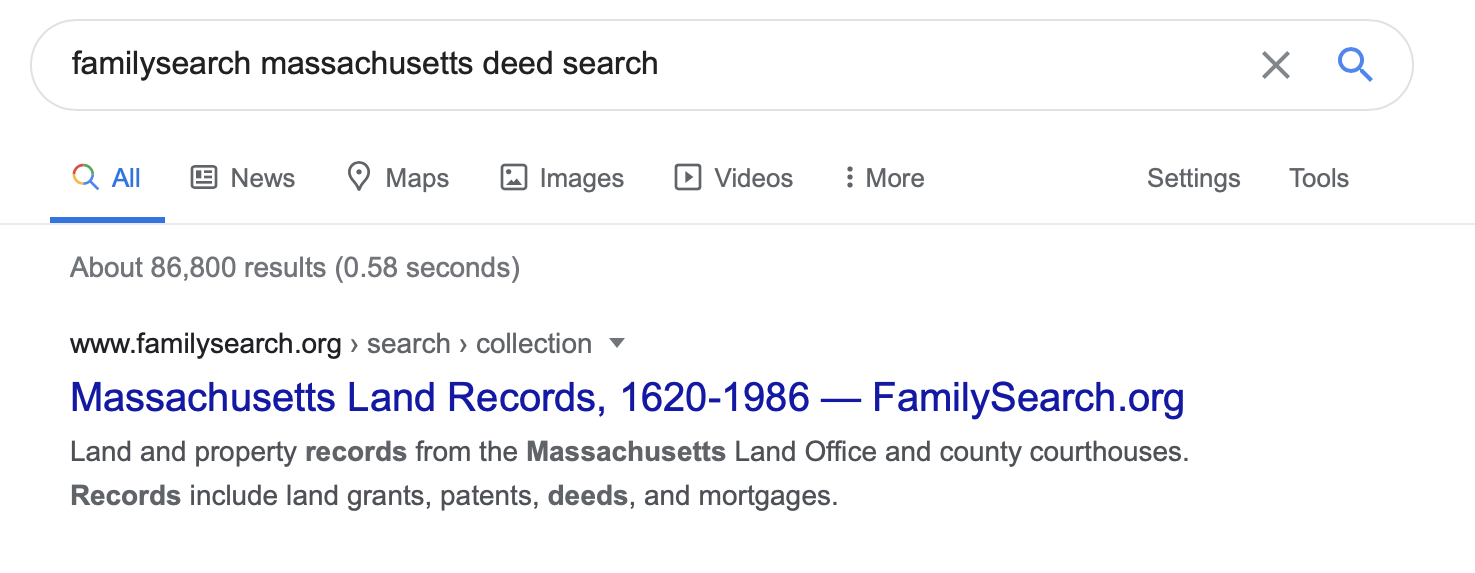
FamilySearch menus can be deeply nested. Rather than go through all of the menu items to find the deeds, just use your browser to search for: familysearch massachusetts deed search

Screen Shot 2020-04-21 at 9.19.09 AM

From the menu of results, choose: Massachusetts Land Records, 1620-1986 — FamilySearch.org

Click and on the next screen choose: Browse through 5,766,135 images.

Don’t be daunted!  On the next screen, you are presented with a list of the Commonwealth’s counties. When searching deeds, it’s important to know which county a town was in when it was registered.  For instance, Hingham was in Suffolk County from 1643 until 1803, at which point it became part of Plymouth County.   If I am researching the early years, I need to choose Suffolk County.

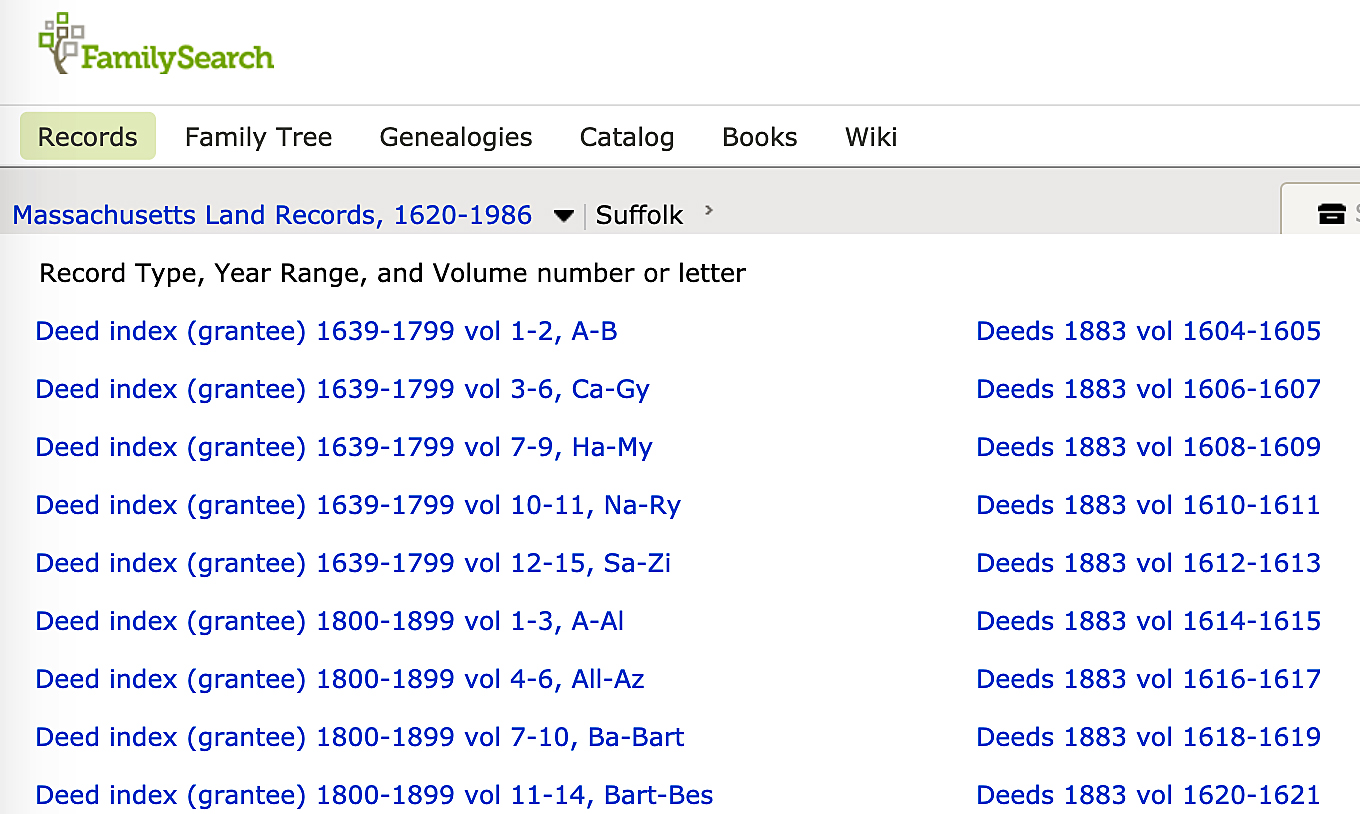
I am now presented with a long list of links arranged in two columns in the following order:

  • Deed indexes (grantee), grouped first by time period and then alphabetically by surname in successive volumes
  • Deed indexes (grantor), grouped first by time period and then alphabetically by surname, again in successive volumes
  • Deed books, containing the actual deeds, organized by years and volumes.

(A little terminology:  “grantors” are the sellers and “grantees” are the buyers.)

Deed Search Image 1The grantee and grantor index books help you locate a deed more quickly within a certain set of deed books.  As you will see below,  using them on-line is a little bit more cumbersome than using the physical index and deed books, but you do get to search from the comfort of your home and on your own schedule.

An advantage to researching older deeds is that the index books cover a huge span of years, so you don’t have to know exactly when a property changed hands.  For purposes of my example, I know that Francis Barker owned The Old Ordinary in the mid to late 1700s. He was both a grantee when he bought the property and a grantor when he sold.

To find the record of his purchase, I need the grantee index for the period 1639 to 1799 for grantees whose last names start with B

  • Deed index (grantee) 1639-1799 vol 1-2, A-B

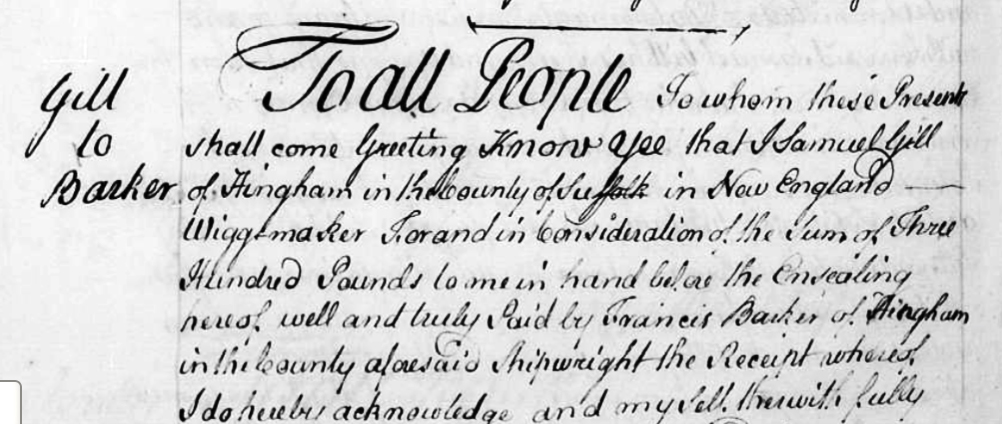
A click on the link brings up image 1 of the index book. Now it’s a matter of jumping around in the book until I find Francis Barker. Surnames are listed alphabetically at the top of the page, and given names are listed in the second column.  I like to jump about 50 images at a time until I get close.  I find that records for Francis Barker start at image 211 and end at image 215.  Happily, the one I am looking for is the first entry, which shows that on 5 Jan 1741 Francis Barker (grantee) purchased from Samuel Gill (grantor) a property in Hingham on the Highway to Broad Cove one acre in size. For the actual deed I am directed to consult Deed Book 62 page 171.

Deed Search Image 3I navigate back to the main page for Suffolk County by clicking at the top of the page and find myself at the long list of index books and deed books,  I look for Deed Book 62 and choose the link for
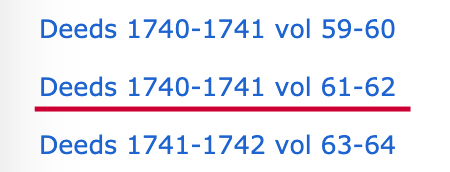
  • Deeds 1740-1741 vol 61-62

Deed Search Image 2This file of 619 images has two volumes, so Volume 62 probably starts halfway through about image 310.  Now, I need to find page 171.  A little browsing shows that each “page” is actually the front and back of a sheet.  Page 171 is, in fact, on images 495 and 496.  There, you can see “Gill to Barker” in the left margin of the left page of image 496. I can read the deed on my screen and/or download or print it.
Deed Search Image 4

[A bonus is that the document immediately prior to this is the deed by which Samuel Gill—Francis Barker’s grantor—himself acquired The Old Ordinary from Baruch Jordan!]

To find the deed for the sale of the property, I would go back and look at the grantor index books and repeat the process.

Not all deeds were registered in a timely fashion, and some land transfers were not registered at all. Some property passed through wills and other means. But most are listed, and you can often learn a lot about an ancestor by searching to see what land holdings he (or sometimes she) might have had.

Some of the terms in land records are archaic. For help understanding them, see: http://www.directlinesoftware.com/legal.htm

For help in understanding deeds and other property records in general, see: https://www.familysearch.org/wiki/en/U.S._Land_Records_Class_Handout

Happy hunting!

A Letter from Home: Easterly Winds and Death

Old letters open a window to the past. There isn’t a genealogist or historian who doesn’t yearn for them. And for good reason: letters carry the voices of our ancestors, they tell us a story. They illuminate our history.

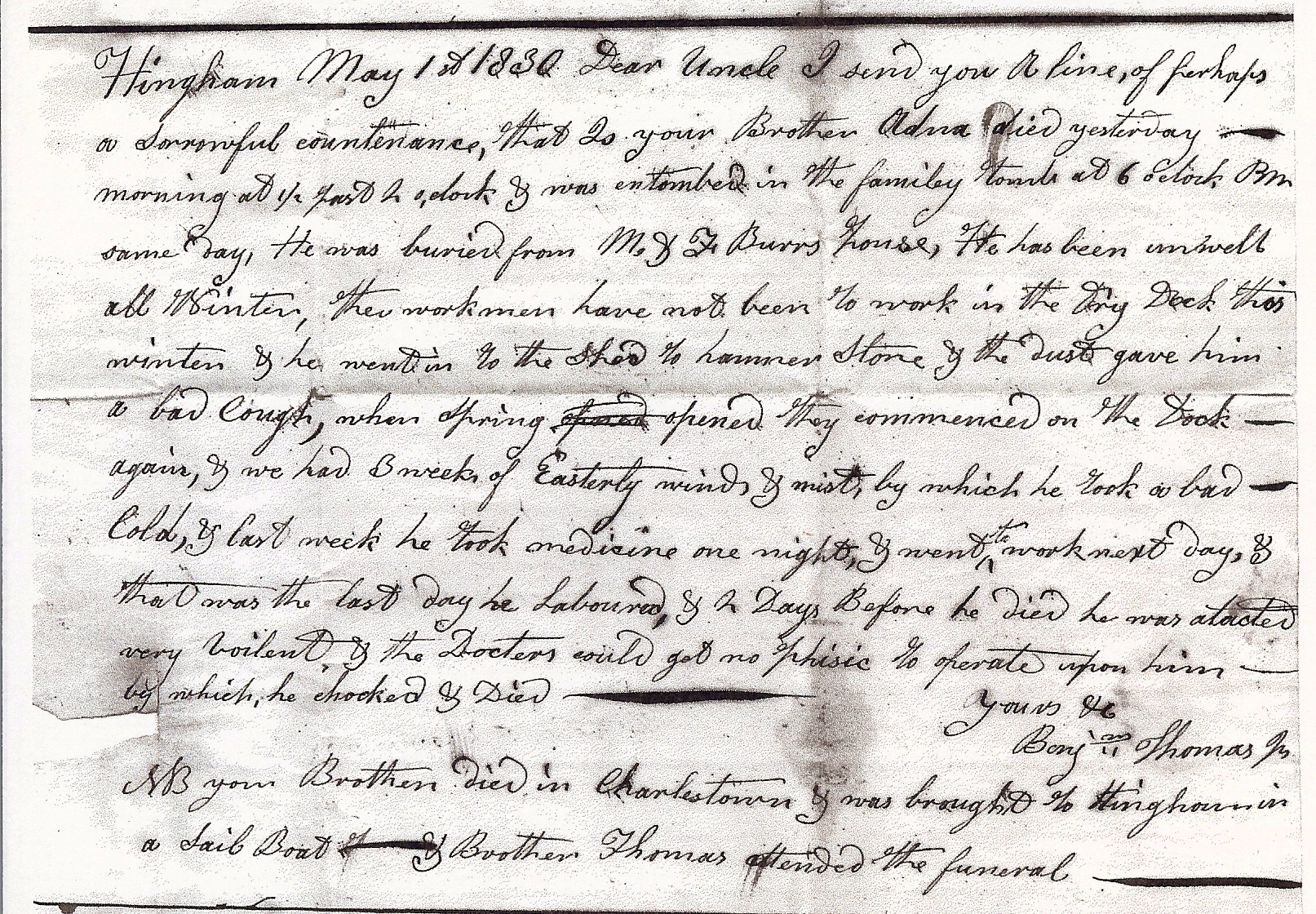
One such letter, written on May 1, 1830 by Hingham resident Benjamin Thomas, Jr., to his uncle Martin Cushing in Maine, contains “sorrowful” news. It relates the death of Martin’s older brother Adna, who died the day before. The story it tells is of working conditions, medical knowledge, and a community caring for its own.

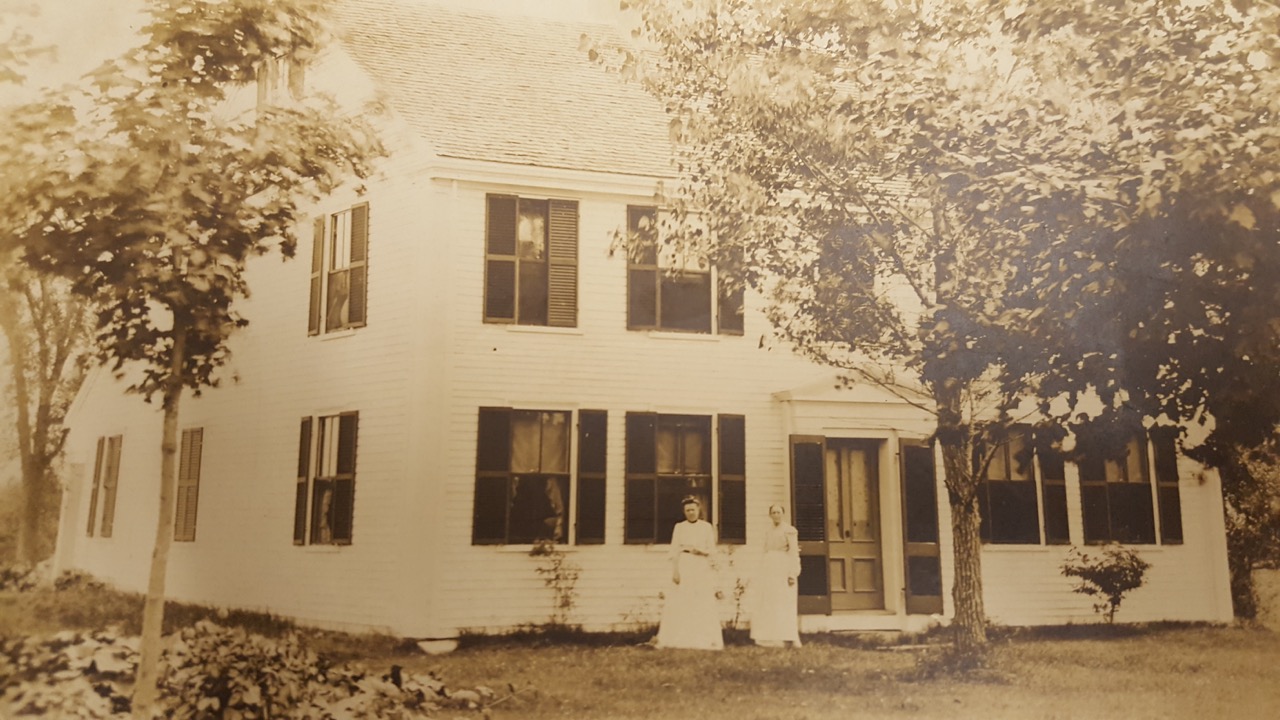
By way of background, Martin and Adna, sons of Isaac and Mary Cushing, were born in Hingham in 1788 and 1785, respectively. Descended from Matthew, the first Cushing to settle in town, they grew up in Hingham Centre, working on the family farm and in the sawmill. As adults, they entered the trades: Adna became a stonemason, Martin a bricklayer. In 1810, Adna married Sarah Leavitt and built a house at what is now 63 Pleasant Street; within a decade, he had moved his family to Leominster. Martin married Susan Thomas and moved to Maine.

In the letter, Benjamin recounts the facts of Adna’s death. He does not indulge in emotion or offer sympathy. From it, we learn that, in the winter of 1830, Adna worked indoors as a stone mason and that “the dust gave him a bad cough.” We learn that spring brought bad weather: there were “3 weeks of easterly winds and mist, by which [Adna] took a bad cold.” We learn that at the tail end of April, while working on a job in Charlestown, Adna fell violently ill and died. We learn he “labored” within days of his death.

When he died, his body “was brought to Hingham by a sail boat,” and “he was buried from M. & F. Burrs house” on the day of his death.

What the letter doesn’t tell us is that Adna was only 44 years old when he died. It doesn’t say how his wife and children learned of his death. Knowing he was buried the day he died, we understand that he was in the ground before most people knew he was dead. We see that immediately following his death a group of friends or co-workers carried his body from Charlestown to Hingham by sailboat. We know the news was rushed to Hingham Centre, and that the Fearing Burrs opened their home for an unexpected funeral. We realize that, in a matter of hours, a coffin was acquired, a gravedigger found, and a minister fetched. We are left to imagine the ripples of grief that spread across the villages and towns as friends and family heard the news.
Martin died seven years after his brother and is buried in Maine. How the letter survived is not clear as his widow is believed to have remarried and moved west, but it was handed down through the Cushing family. Thanks to the letter, we have a better idea of what it was like to live in Hingham in 1830.

Endnotes

Benjamin Thomas Jr. (1799-1854) was a nephew of Susan (Thomas) Cushing, Martin Cushing’s wife. He was the son of her brother, a gunsmith who lived in Hingham Centre. Lincoln, George et al., History of the Town of Hingham, Massachusetts, Vol. III (Genealogical), 1893. Pub. by the Town.

A copy of the letter from Benjamin Thomas Jr. to Martin Cushing was shared with me by researcher Margie von Marenholtz.

Adna Cushing (1785-1830) and Martin Cushing (1788-1837) were two of Deacon Isaac and Mary (Jones) Cushing’s seven children.

The Capt. Adna Cushing house at 63 Pleasant Street was built in 1811, according to the Hingham Historical Commission, Inventory of Historic, Architectural and Archaeological Assets. On Adna’s move to Leomister, see Cushing, James Stevenson. The genealogy of the Cushing family, an account of the ancestors and descendants of Matthew Cushing, who came to America in 1638.1905. Montreal, The Perrault Printing Co.

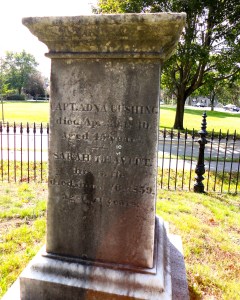
On M. & F. Burr’s house: Fearing Burr Sr. (1778-1866) had a store and home in Hingham Centre. Lincoln, George et al., History of the Town of Hingham, Massachusetts, Vol. III. Ibid. Adna is buried with his parents and his wife in Hingham Centre Cemetery. Note: His gravestone says he was 45 years old when he died; he was 44, in his 45th year.

Martin Cushing died 20 May 1837. “Maine Deaths and Burials, 1841-1910,” database, FamilySearch, Feb. 2018.

A Tale of One Family

A Review of Meg Ferris Kenagy’s Book The House on School Street: Eight Generations. Two Hundred and Four Years. One Family.

Not many people can say their family lived in the same house for eight generations, and even fewer strive to uncover the lives of these ancestors. Meg Ferris Kenagy is one of these rare individuals as she dives head first into this challenge and presents her discoveries in her book The House on School Street: Eight Fenerations. Two Hundred and Four years. One Family. Kenagy brings the history of her family’s house to life through numerous stories about her ancestors. We experience their lives and deaths, births and marriages, and the resulting joys and heartaches that accompany each event.

74 School (c) 1890
Martha Sprague Litchfield, left, and Sarah Trowbridge Litchfield. Circa 1890. Photo courtesy of the Hingham Historical Society.

Kenagy’s vivid descriptions of her family, the house, and Hingham make it feel like she is sitting down with us and flipping through pages of a photo album while sharing her family’s story. We see Colonel Charles Cushing building the house in 1785 after fighting in the Revolutionary War, and we watch subsequent generations move into and out of the family home. We learn of the successes and struggles of the family as they find ways to make a living in a changing world. As Kenagy shifts the narrative’s focus to each owner chapter after chapter, she recognizes the unique relationship each family member had with the house on School Street. She successfully sees the house through each of their eyes.

Although Kenagy admits there are gaps in her family’s story that research cannot fill, she does not let this obstacle frustrate her. Instead, Kenagy embraces what she does not know and proposes answers to the questions she cannot answer. By doing so, she becomes more attuned to the motivations, fears, and struggles of her ancestors. When Kenagy does know the answer to certain questions, she occasionally quotes letters and other sources to add another layer to her family’s story.

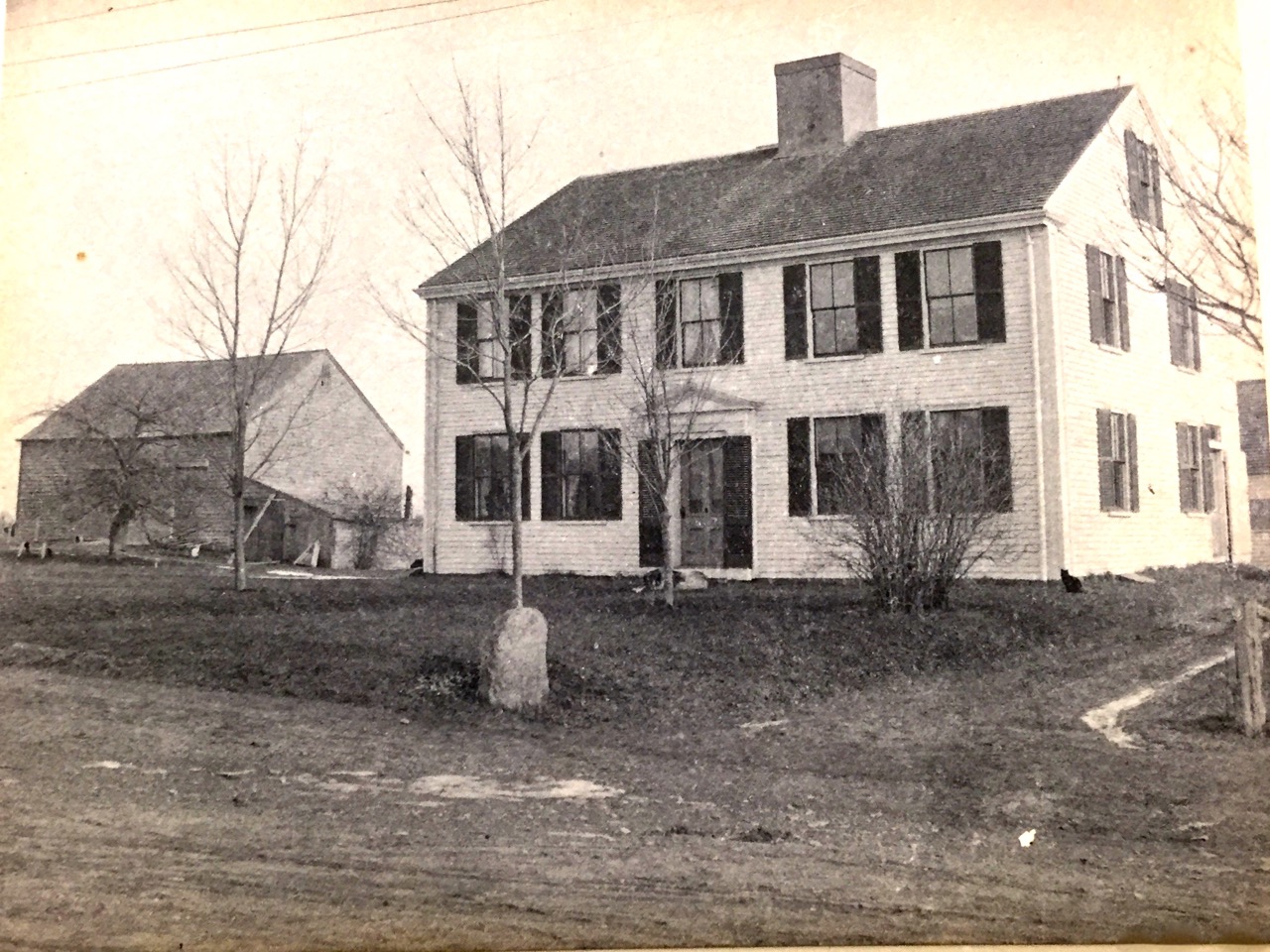
74 School Street 1889.jpeg

A large barn can be seen to the left of the house in this 1889 photo. A carriage house is to the right of the house. Photo courtesy of the Hingham Historical Society.

While this book presents the story about eight generations of a family, it also provides an overview of the history of Hingham. Through Kenagy’s detailed descriptions, we see Hingham’s transformation from a small village to a bustling wartime shipyard. Selected quotes from sources like the History of the Town of Hingham, Massachusetts and the Hingham Journal bring the town’s history to life. By acknowledging the history of the town, we can clearly recognize the family’s influence on Hingham’s community.

You can sense writing this book was a deeply personal experience for Kenagy. Not only does it document how she confirms family stories, but also how she uncovers family secrets. We are excited to learn more about Meg Kenagy’s experience writing this book and researching her family’s history when she comes to the Hingham Heritage Museum at Old Derby for a talk and book signing on Saturday, October 27, 2018 at 3:00pm. Please join us!

The Daly Family of Hingham

Historian John Richardson (1934-2011) was an avid collector of all things Hingham– its places, its buildings, its people. Among his collection in the Historical Society’s archives are 64 binders of material, gathered from families, purchased at estate sales, or sometimes rescued from homes or buildings facing demolition, that chronicle the lives of a disparate group of Hingham individuals and families.

Two binders are devoted to Daniel Daly (1825-1911), one of the town’s earliest Irish immigrants, and his descendants. They tell a story that takes the family from newcomers just prior to the Civil War to well respected members of the Hingham community by century’s end.

Portrait of John Daly, early 1900s(?), John P. Richardson Collection, Hingham Historical Commission / Hingham Historical Society

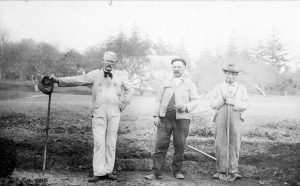
Daniel Daly was born in County Armagh, Ireland and arrived in Hingham in 1855, soon after marrying Nancy Crowe (1835-1905) from the County of Tipperary. Daniel began as a gardener, hiring himself out to local families. After serving in the Civil War he started working as a gardener and florist with prominent Hingham families, such as Charles B. Barnes.

Photo of Daniel Daly and 2 others on Estate of Charles B. Barnes, early 1900s, John P. Richardson Collection, Hingham Historical Commission / Hingham Historical Society

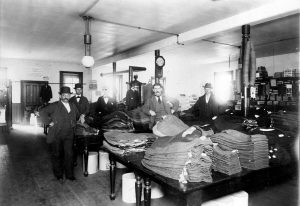
With the money he earned, he bought a house at 19 Green Street where he and Nancy raised their family. The Dalys had two children who survived to adulthood and who both attended Hingham schools: Daniel (1857-1900), who later moved to St. Louis and became a police officer, and Edmund (1866-1930), who started out working in retail stores in Boston and later became a businessman ins own right as a partner in the Hingham Bicycle Company and later as the sole owner of Edmund Daly & Co., Hatters and Furnishers, which had a store in West Hingham.

The interior of Edmund Daly and Co. store in West Hingham, 1910s(?), Edmund Daly (center), others unidentified. John P. Richardson Collection, Hingham Historical Commission / Hingham Historical Society

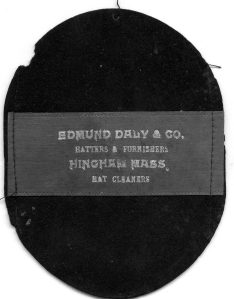
The Daly Family materials include this floor  sample from Daly & Co.:

Sample hat(?) floor sample from Edmund Daly & Co. c. 1910 from John P. Richardson Collection, Hingham Historical Commission / Hingham Historical Society

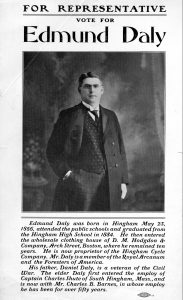
Because he was a well respected businessman, members of the local community urged him to run for public office, including for a seat in the state legislature in the early 1900s.

Political Poster supporting Edmund Daly for State Representative, Unknown, prior to 1910, John P. Richardson Collection, Hingham Historical Commission / Hingham Historical Society

Though he did not win this election for state office, Edmund served on many town boards, including the Playground Commission. Meanwhile, he inherited the family house on Green Street after his father’s death in 1911.

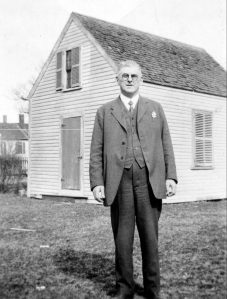
Edmund Daly standing in the backyard of his home at 19 Green Street, 1920s? John P. Richardson Collection, Hingham Historical Commission / Hingham Historical Society

His community standing and political connections allowed him to be appointed as Hingham Postmaster by President Wilson in 1917, a job he held until 1930 when he suffered a fatal heart attack walking to work from his home. The town was shocked and saddened in hearing the news.

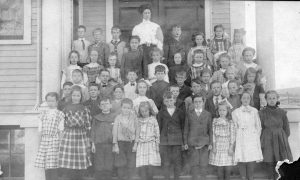
Edmund Daly married Margaret E. Daly (1864-1952). They had one daughter, Annabel Daly (1900-1993) who also attended the Hingham schools. The Richardson Daly binders even include one of her primary school class photos.

Class photo in front of Primary School Building in Hingham, unknown date (circa 1912), Annabel Daly second from left in first row. John Richardson Collection, Hingham Historical Society

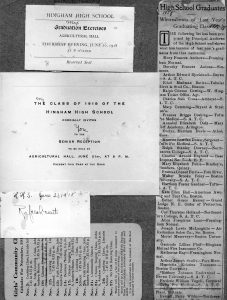
She then attended Hingham High School where she graduated in 1918. In her adult life, she kept a scrapbook of her early years and her father’s career, through which most of her family’s history was saved.

Page from Annabel Daly’s Scrapbook, June 1918. John P. Richardson Collection, Hingham Historical Commission / Hingham Historical Society

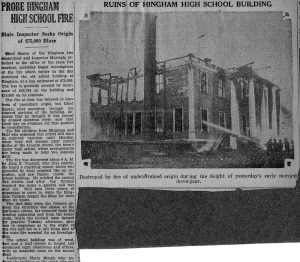
She not only kept items of a personal nature but chronicled important events in town as well. Among her materials is media coverage of the destruction of the original Hingham High School by fire in 1927.

Page from scrapbook of Annabel Daly, Oct. 1927. John P. Richardson Collection, Hingham Historical Commission / Hingham Historical Society

Annabelle Daly continued to live in the Green Street house until her death at age 92. She did not marry and had no children. She was buried in the family plot at the St. Paul’s Cemetery. Her collection was obtained by John Richardson, who organized the Daly family materials into binders. These Daly binders and other family materials collected by John Richardson will soon be greatly more accessible at the new Hingham Heritage Museum.