Nature vs. Nurture: Consider the Spragues, Part 3

In this final part of my blog about the Sprague family, I’ll highlight descendants of Ralph Sprague, the oldest of the three brothers who came to the Massachusetts Bay Colony in 1628.

In the books written about Ralph Sprague and his family, Ralph is most highly regarded for his service to the Massachusetts Bay Colony.

In The Founding of Charlestown by the Spragues, A Glimpse of the Beginning of the Massachusetts Bay Settlement (1910), written by Henry H. Sprague, the author quotes the earlier historian Richard Frothingham, Jr., who wrote of Ralph Sprague in The History of Charlestown (1845):

He was a prominent and valuable citizen – active in promoting the colony.

The Spragues of Malden, Massachusetts (Hingham Historical Society archives)

And in The Spragues of Malden, Massachusetts, by George Walter Chamberlain, this is written about Ralph’s contributions:

Ralph Sprague served as a Deputy to the General Court from Charlestown, then including Everett, Malden, Melrose, Stoneham and Somerville, etc., in at least sixteen sessions and served on important committees many times. The fact that Mr. Sprague served with the most distinguished men of the Massachusetts Bay Colony so long indicates that he was a man of sound judgment and remarkable ability. His influence in the Colony was great.

While Ralph first built a home for his family in Charlestown, he was later given more land:

In 1638 the Town of Charlestown made a record of twelve lots of land which were granted to him. Five of these lots were on Mystic Side, out of which the town of Malden was formed in 1649.

Within a decade, Ralph Sprague was helping to establish the Town of Malden.

On 1 Jan. 1648/9, Lt. Ralph Sprague and nine other freemen . . .  petitioned the General Court of Massachusetts Bay Colony, for a separation from Charlestown, and Misticke side became a distinct town of the name Maulden, 11 May 1649.

This post is intended to focus on historically prominent descendants of Ralph Sprague of Charlestown and Malden who were 19th and 20th century scientists, inventors, and industrialists. But permit me a diversion first to highlight some of Ralph’s descendants who made their mark during their time, though they are less remembered now:

Dr. John C. Sprague (1754-1803) of Malden, a descendant of Ralph’s son John Sprague, did military service as a surgeon, was twice captured by the British, and was imprisoned for a time in Ireland. After the War for Independence, he became a schoolteacher and also was involved in Malden Town government, serving on a wide range of Committees. At a special Town Meeting in 1797, Dr. Sprague was elected both to a committee on education and to a committee to raise money for the encouragement of singing. In noting this specific service, the author of The Spragues of Malden adds: “Thus was Dr. Sprague identified with the best things of his native town in the reconstructive period following the Revolutionary War.”
Phineas Sprague (1777-1869) of Malden—the 5th in a line of men named Phineas descended from Ralph’s son John, was a delegate to the Constitutional Convention of Massachusetts in 1820, at which he spoke on the Declaration of Rights, saying: “It is tyranny in the highest degree to compel a man to worship in a manner contrary to the dictates of his conscience. Religion is an affair between God and our own souls.”

Phineas’ liberal views regarding religion, like those we in Hingham associate with the minister at First Parish, Ebenezer Gay (1696-1787) in the early days of what was first known as the Arminian movement, eventually led Phineas to withdraw from First Parish of Malden. Phineas later would be involved in establishing a Universalist church in Malden.

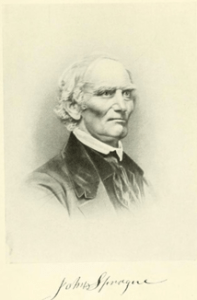
Dr. John’s son, John Sprague (1781-1852) of Malden, like his cousin Phineas, espoused liberal views of religion at a time when religious congregations in New England were dividing due to differing theological views during what would be known in Protestantism as the Great Awakening, and then due to differing political views: Federalism vs. States Rights. (In Hingham, these political divisions led to the founding of New North Church by a group of Federalist-leaning residents including Major General Benjamin Lincoln.)
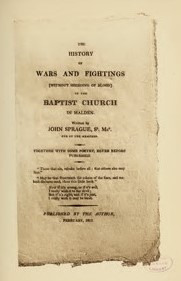
John was an original member of the First Baptist Church of Malden but later found himself unwelcome in the church due to his Arminian views vs. the Calvinist doctrines of the minister at the time. In 1812, John Sprague wrote and self-published a pamphlet that caused quite a stir: The History of Wars and Fightings (Without Shedding of Blood) in the Baptist Church in Malden. A subtitle reads “Together with Some Poetry, Never Before Published.”

On April 12, 1812, the members of the Baptist church based his exclusion from the congregation on the publication of this book. While John Sprague was a shoemaker by trade, he enjoyed writing poetry—and a few of his humorous poems are included in the The Spragues of Malden. 

John was selected by the town of Malden for many committees, among them: the Bunker Hill Monument Association formed to raise money for the monument’s construction, and the committee formed by the town in 1844 to choose the best path through Malden for what was then called the Maine Railroad.  I think many of those who serve on Town Committees in Hingham today would have enjoyed the company of shoemaker John Sprague of Malden.

Horatio Sprague Sr. (1784-1848), a descendant of Ralph’s son John, was born in Boston, but most associated with Gibraltar, where he permanently resided from 1815 until his death. Horatio was a merchant and ship owner in Gibraltar, a British territory on the tip of the Iberian Peninsula, when he was chosen to be U.S. Consul there in 1832.  His duties, largely tied to facilitating commerce, were not onerous, but his health declined.

His son, Horatio Jones Sprague Jr. (1823-1901), who was born in Gibraltar and spoke several languages, was appointed after his father’s death as U.S. Consul in Gibraltar and served in that post for 53 years. His consular workload was greater than his father’s due to the opening of the Suez Canal in 1870, and two wars that had an impact during his tenure: the Civil War in the U.S. (1861-65) and the Spanish-American War (1898.) Horatio Sprague Jr. also broadened the business portfolio he’d developed with his father when he became an importer of tobacco to Gibraltar. Horatio died in 1901, and would be succeeded as U.S. Consul by his son, Richard Sprague (1871-1934.) 

Details about this now-unusual Sprague diplomacy dynasty is on this website, serving fans of James Joyce. Why would such a James Joyce website include information about the Spragues of Gibraltar? I was surprised to learn that James Joyce’s famous work Ulysses (first serialized beginning in 1918, then published as a book in 1922) has a Horatio Sprague Jr. reference, as “old Sprague the consul”:

. . . when general Ulysses Grant whoever he was or did supposed to be some great fellow landed off the ship and old Sprague the consul that was there from before the flood dressed up poor man and he in mourning for the son.

While James Joyce’s Ulysses is a work of fiction, this reference to Ulysses Grant visiting Gibraltar is based on historic fact. The then former president, Ulysses Grant visited Gibraltar as part of a world tour in 1878, when the U.S. Consul there was Horatio Jones Sprague, Jr.

Now, on to those descendants of Ralph Sprague who made lasting contributions to science, innovation, and industry in the 19th and 20th centuries.

Charles H. Sprague (1827-1904) of Malden descended from Ralph’s son Phineas (1637-1690), who was among the Malden men who fought in King Philip’s War.
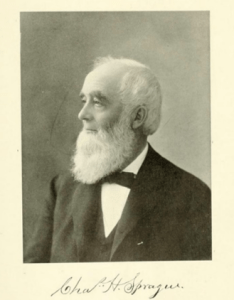
Charles served his local community as a member of the Malden City Council, following in the public service tradition of many Spragues over the centuries. And like other notable Spragues, Charles was a scientist as well as a prominent business leader.

In 1849, Charles Sprague was appointed by the United States Government to the editorial staff of the American Ephemeris and Nautical Almanac, where he reported on astronomical observations. He held this position for fifteen years. American Ephemeris and Nautical Almanac was published, under the authority of the Secretary of the Navy, from 1855 to 1980, containing information necessary for astronomers, surveyors, and navigators.  The Preface tothe 1855 edition reports “the preparation of this work was begun in the latter part of the year 1849, in accordance with an act of Congress, approved on the 3d of March of that year.” The publication continues now as The Nautical Almanac.

Charles went on, in 1870, to establish the Charles H. Sprague Company, a privately-held power company focused on the market for coal during the early part of the industrial age. During World War I, the company became the major supplier of coal to America’s European allies. To facilitate the shipment of coal across the Atlantic, he also founded the Sprague Steamship Company which operated a large fleet of vessels serving many company-owned terminals.
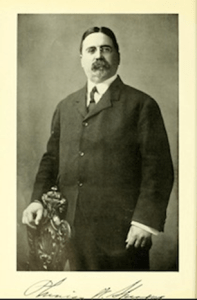
Charles’ son and Malden native Phineas Warren Sprague (1860-1943) had been a partner of what had become C.H. Sprague & Son, and after his father’s death he assumed full control of the business. The company would later expand into oil and be renamed Sprague Energy. In 1942, the U.S. Government selected Sprague Energy to manage its wartime coal shipment program.
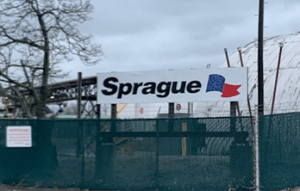
Sprague Energy, Quincy, Mass.

Charles’ grandson, Phineas Sprague Jr. (1901-1977) joined company management after World War II service in the Navy, from which he retired as a Lieutenant Commander. While the family sold its remaining interests in the company in 1970, the Sprague Energy brand is still in use, and has expanded into natural gas—including here on the South Shore, where the Sprague Energy brand is emblazoned at an oil terminal on Southern Artery along the Town River in Quincy, MA.

Frank Julian Sprague (1857-1934), another descendant from Ralph’s son John, was born in Milford, CT., was raised in North Adams, MA by an aunt and other relatives after his mother’s death when he was 9 years old. As a boy, Sprague became fascinated by the textile mills and related manufacturing operations in North Adams. He did quite well in school and went on to Annapolis where he studied electrical engineering. He worked briefly with Thomas Edison, but his major contributions came after he began working on his own inventions, for the electric motor, electric railways and electric elevators. His patented inventions made the electric streetcar a reliable means of transit for emerging “streetcar suburbs.” I enjoyed reading the biography: Frank Julian Sprague, by William D. Middleton, MD., published by Indiana University Press in 2009 (cover shown here), which chronicles his life as well as his many inventions.
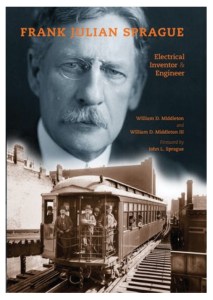
Frank lived with his family in New York City for much of his life. As a graduate of the Naval Academy and former Naval Officer, Frank was buried at Arlington National Cemetery.

Robert (1900-1991) and Julian (1903-1960) Sprague, sons of Frank Julian Sprague, became the co-founders, in 1926, of one of the largest electric components companies of its time. The Sprague Specialties Company, founded by the brothers in Quincy, MA, moved to North Adams, MA in 1930.  They chose North Adams due to their father’s fondness for his boyhood there. In 1942 the company changed its name to the Sprague Electric Company.

The company expanded in 1942—buying the factory buildings that previously housed the Arnold Print Works textile firm. The 16 acres of grounds on the Hoosic River in North Adams, Massachusetts, encompass a vast complex of 19th-century mill buildings and occupy nearly one-third of the city’s downtown business district. This was the home of Sprague Electric Company until 1985. At its peak, Sprague Electric was one of the largest electronic component manufacturers in the world.

John Louis Sprague, Sr. (1930-2021), Robert’s son, would be the last Sprague to head the Sprague Electric Company.  John Sprague was a chemist who joined the company soon after completing his PhD at Stanford in the late 1950s. He would spend 11 years as president of Sprague Electric. John’s son, John Sprague Jr., wrote a blog, available at www.spraguelegacy.com about his dad’s role with the company. The website also chronicles the history of the Sprague Electric Company.

The Sprague Electric Company was sold in 1976. John Sprague was still president (under the new ownership) in 1984 and 1985 when company owner Penn Central moved the company’s international headquarters from the Berkshires to Lexington and eliminated 700 Sprague jobs in North Adams.  That move, the Berkshire Eagle later reported, “left a legacy of bitterness in the city,” even though Sprague didn’t completely leave North Adams until the early 1990s.

Innovation and the Arts
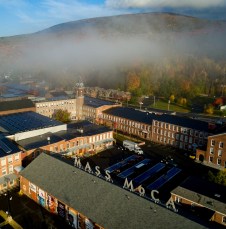
(Photo courtesy of MassMoCA.org)

Given the history of this family in both the arts and sciences, it seems so appropriate that what was the Sprague factory complex in North Adams has become Mass MOCA—an art museum, known for its embrace of innovation across the visual arts and, in more recent history, performing arts as well.

After years of planning, fund-raising and some additional construction on the former factory site, MASS MoCA celebrated its opening in 1999, as the center’s website says: “marking the site’s launch into its third century of production, and the continuation of a long history of innovation and experimentation.”

That “long history of innovation and experimentation” certainly applies to the contributions over generations of the creative Sprague family as well. Perhaps both nature and nurture played a role. An impressive legacy.

SOURCES not otherwise referenced:

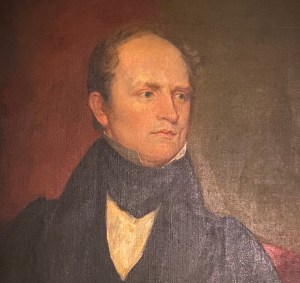
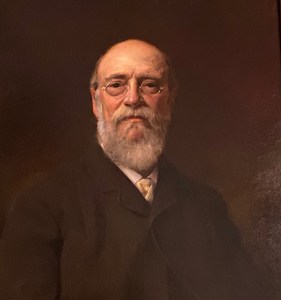
Portraits of John, Charles H., and Phineas W. Sprague from Historic Homes and Places and Genealogical and Personal Memoirs Relation to the Families of Middlesex County, Massachusetts, vol. III (Cutter, ed., 1908)

Obituaries of Charles H. Sprague published in the Boston Daily Globe, July 1, 1904; and the Springfield Republican (Massachusetts) June 30, 1904.

The History of Malden, Massachusetts 1633-1785

Malden Past and Present: 1649-1899, pub. May, 1899.

The website www.spragueenergy.com

Special thanks to my friend Paula Bagger who provided many of the images of items from the Hingham Historical Society archives–for part 2 of this blog in particular.

                                                                                                           ################
Nature vs. Nurture: Consider the Spragues, Part 2

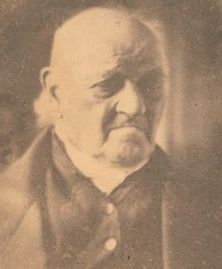
A rare photo of a Revolutionary War veteran [courtesy of findagrave.com]

William Sprague’s line of the family achieved prominence in the arts—from botanical illustration to poetry.

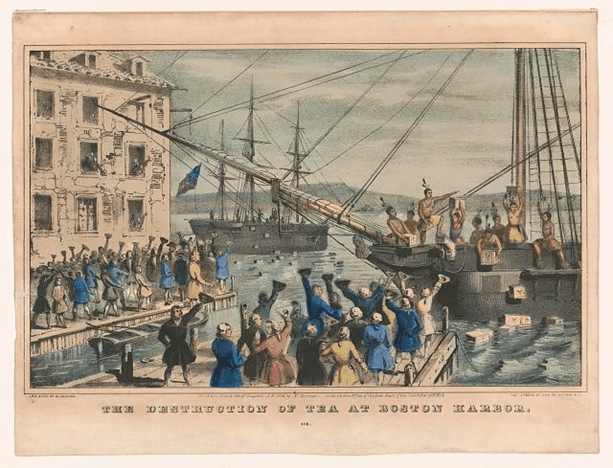
In this “Rev 250” period of commemoration of the War for Independence, I need to first mention that William’s great-great grandson, Samuel Sprague, born in Hingham in 1753, was a Revolutionary War Patriot who also participated in the Boston Tea Party, as discussed in a 2020 post on this blog.  Samuel’s pension states that he crossed the Delaware with George Washington!  (That tidbit is courtesy of the recently published book, Revolutionary War Patriots of Hingham, Ellen Stine Miller & Susan Garrett Wetzel, 2024, copies of which are available from the Hingham Historical Society.

Portrait of Charles Sprague, the “Banker Poet,” by Matthew Sprague (Hingham Historical Society)

Charles Sprague (1791-1875) —Samuel’s son, Charles, was born in Boston, where his father Samuel earlier had relocated as an apprentice mason.  Charles had success both in the banking business and as a poet and became well known as the “Banker Poet of Boston.” He is considered one of America’s earliest native-born poets. Some of his poems suggest an affinity for transcendentalism, a movement associated with Charles’ contemporaries Ralph Waldo Emerson, Henry David Thoreau, and Margaret Fuller, all of Massachusetts. One example of Charles’ poetry can be read here.

This portrait of Charles hangs in the hallway of the Hingham Historical Society’s General Benjamin Lincoln House (Charles’ granddaughter Helen Amelia Sprague married Lauriston Scaife, a Lincoln descendant).  A modern notation on the back of the canvas attributes the painting to “Matthew Sprague”–another talented Sprague?

Charles James Sprague (1823-1903), like his father, was a banker and a poet but he left his mark in the field of botany.  His portrait,  looking very much like a respectable banker, also hangs in the Benjamin Lincoln House.  It was painted by his nephew, Charles Sprague Pearce, a well-known painter of the 19th century.

Portrait of Charles James Sprague by Charles Sprague Pearce (Hingham Historical Society)

Charles James Sprague was known for his study and illustrations of lichens. More info about the Sprague Herbarium of Fungi can be found here.

Based on his scientific and literary contributions, Charles James Sprague was elected to the American Academy of Arts and Sciences in 1856.

Hosea Sprague (1779-1843) — A grandson of Isaac Sprague, Sr. (1709-1789) another Revolutionary War Patriot of Hingham, Hosea first trained as a printer in Boston. He then returned to Hingham where he worked as a bookseller and became known as a wood engraver.

A few of his engravings from the Hingham Historical Society archives are shown here.

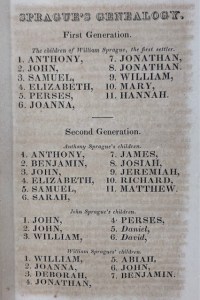
Hosea also was the compiler of The Genealogy of the Spragues in Hingham, published in 1828, an excerpt from which is show here.    The Hingham Library also has an original edition in its Sprague family archive. This genealogy is notable as it was published well-before the popularity of genealogies in the late 19th/early 20th century, following the 1876 U.S. centennial and the 1890 launch of the Daughters of the American Revolution, when charting colonial ancestry became quite popular.

In the 1840s, Hosea published several issues of a periodical of his observations about life, history, and weather: “Hosea Sprague’s Chronicle.” In an October 18, 1888, feature story, published in the Hingham Journal, Hingham’s Luther Stephenson (a Civil War general, who had both maternal and paternal Sprague grandmothers) wrote about his cousin Hosea:  “He had great respect for the first settlers of Hingham, and spent much time in deciphering and copying in his bold hand the early records of the town…”

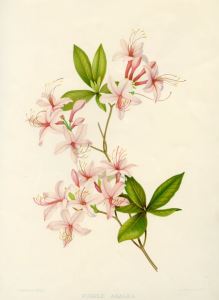
Isaac Sprague (1811-1895)—A great grandson of Isaac the Revolutionary War Patriot, Isaac was born in Hingham. He became an Artist Assistant to the well-known illustrator John James Audubon, joining Audubon’s expedition to Montana in 1843. Isaac then began his successful career in Cambridge as a botanical illustrator, working with influential botanist Asa Gray and others. In recognition of Isaac’s Hingham roots, the Hingham Heritage Museum treasures its collection of several of Isaac’s beautiful artworks and the Society sponsored an exhibit of his work in 2016.

Here are some of the prints in our collection:

Isaac’s work has been the subject of two posts on this blog, —in 2016 and 2017:

In addition to poets and artists, the William Sprague line includes skilled craftsmen known as coopers—artisans in woodenware-making including boxes, buckets, and wooden toys, during the long period when Hingham was known to many as “Bucket Town.” This history is documented and beautifully illustrated in the book Bucket Town, Woodenware and Wooden Toys of Hingham, Massachusetts, 1635-1945, written by Derin T. Bray and published by the town’s Hingham Historic Commission in 2014.

In 2014-15, Old Sturbridge Village featured an exhibit titled “Bucket Town: Four Centuries of Toy-Making and Coopering in Hingham.” The Hingham Heritage Museum’s inaugural exhibition in 2017 was Boxes, Buckets, and Toys: the Craftsmen of Hingham.”

Among the Hingham Sprague family members who were coopers/ woodenware makers are:

  • Isaac Sprague, Sr. (1709-1789), the Revolutionary War Patriot, by trade a set-work (or bucket/barrel making) cooper; his son Isaac (1743-1800) also a set-work cooper; and Isaac Sprague, Jr.’s sons Peter (1773-1859) and Isaac (1782-1826) both of whom were box coopers. Peter’s son, Peter (1801-1868) also worked as a box cooper.
  • Amos Sprague (1747-1838) a box cooper; and his son Amos (1774-1830) also a box cooper.
  • Blossom Sprague (1784-1860), a carriage painter who was also an award-winning maker of wooden toys.
  • Reuben Sprague (1785-1852), whose son Reuben O. Sprague (1811-1898) used his woodworking skills as a stair builder with a shop in Boston.
  • Adna Sprague (1790-1860) a box cooper who also served in town government as a Selectman.
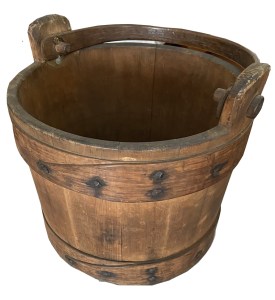
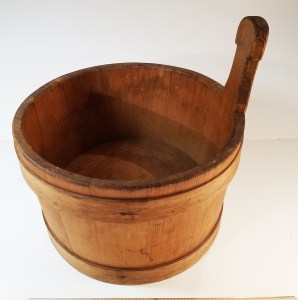
  • Bela Sprague (1804-1878), a brother of engraver Hosea, a “white cooper,” or maker of buckets, pails, and other household containers. Bela’s work is featured in the Bucket Town book. We have some examples of Bela’s work in our Hingham Historical Society collection, including this bail-handled pail and a small pail with a handle, known as a “piggin.”
  • Samuel Sprague (1809-1882), cooper, whose son Samuel (1833-1900) was a stair builder; and
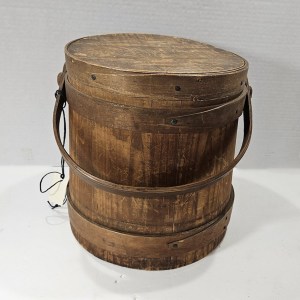
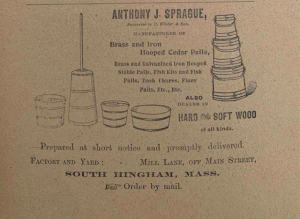
  • Anthony J. Sprague (1855-1921), who ran the ad shown here for his woodenware business in the 1894 Hingham-Hull Directory. One of Anthony J. Sprague’s buckets is this firkin from the Historical Society’s collection.

Women of the 18th-mid 20th century were generally less recognized for their contributions to the arts, but we are fortunate to have examples of the illustrations of Lydia Sprague (1832-1907), a cousin of Isaac, and a daughter of box cooper Adna Sprague. Several examples of Lydia’s artistry are included in Joan Brancale’s two-part post on our blog from 2014:

Also in our collection are some wonderful samplers by Sprague women – created when they were in school.

  • First, this sampler where nature and a structure (perhaps Derby Academy) are prominently featured, embroidered by Mary Sprague (1804-1871.) Mary was a daughter of Peter Sprague and Mary Whiton. She married Elijah Burr in 1828.
  • Next, a genealogical sampler, which tells us in embroidery that the creator is a then 8-year-old Jane Sprague, who stitched it on May 1, 1820. As spelled out in stitches, Jane is a daughter of David Sprague and Mary Leavitt Gardner. Jane (1811-1878) married Thomas Cushing in 1836.

Before concluding this short visit with members of the William Sprague family line, a note about descendants who are an important part of the history of Rhode Island. William’s son William, born in Hingham in 1650, moved to Rhode Island around 1710. His grandson William, born in Cranston in 1795, started
a grist and sawmill in Cranston along the Pocasset River. The next generation built on that foundation, and much wealth was created in the process due to the success of A & W Sprague, which grew to become, for a time, the largest cotton textile manufacturer in the country. Their business success made members of this line quite wealthy and propelled some of the family into politics: two became Governors of Rhode Island in the 19th century. One of these, another William, born in 1830, also became a US Senator, and built an enormous estate in Narragansett, RI in the 1860s, named Canonchet.

Part 3 of this blog will focus on the descendants of Raph Sprague, older brother of Charlestown and Hingham settler William, — and this line’s lasting contributions to science, technology and related businesses.

Nature vs. Nurture: Consider the Spragues

While doing research for the Hingham Historical Society’s 2023-24 lecture series, Suburbia: The American Dream, I learned of the important contribution of late 19th/early 20th century electrical engineer and inventor Frank Julian Sprague to the electric streetcar—an engine critical to early suburban development in the U.S.  The name Sprague caught my attention.

In his landmark book, Crabgrass Frontier: The Suburbanization of the United States, Kenneth Jackson pointed to the importance of the contributions of Franklin Julian Sprague:

By the turn of the century, half the streetcar systems in the United States were equipped by Sprague, and 90 percent were using his patents.

The Brothers Ralph and William Sprague (Hingham Historical Society archives)

Could this engineer and inventor, born in Connecticut and for most of his life a New Yorker, be part of the same family that produced the 19th century botanical illustrator Isaac Sprague and other notable Sprague family members here in Hingham? I needed to know more.

What my research revealed was a fascinating multi-generational story of an innovative, creative family. I was struck by the significant contributions made to both the arts and sciences by the descendants of the two-family lines–those of Ralph and William Sprague–that began with brothers who were among the original settlers of Charlestown in the Massachusetts Bay Colony. The impressive examples of creativity and innovation in these two Sprague lines got me thinking about the influences of both nature and nurture, as well as the close relationship between the creative arts and scientific inquiry and invention. Perhaps the story of this family will get you pondering too.

The Story Begins Along the Wey River in England

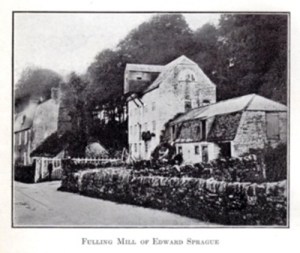
Brothers Ralph (1599-1650), Richard (1605-1668) and William Sprague (1609-1675), were sons of Edward Sprague (1576-1614), who operated a fulling mill on the river Wey, in Upwey, located between Dorchester and Weymouth, in the county of Dorset, England. (Edward’s mill, shown here, no longer exists.) After their father’s death, the three brothers joined a party of colonists emigrating for the Mass Bay Company to settle what became Charlestown, Massachusetts. It is unclear if religion was part of the Sprague brothers’ motivation to leave England. They arrived in Salem in 1628, then soon traveled on to Charlestown.
Fulling mills (“fulling” is part of the cleansing and thickening process when making cloth from sheep’s wool) were also common in the New England colonies, and there were three fulling mills in Hingham in 17th and 18th centuries: one on Crooked Meadow River in South Hingham, at what became known as Fulling Mill Pond; one off South Pleasant Street (near present-day Fulling Mill Road); and one at what was known as Beechwoods River or Mill River, flowing northeast from Accord Pond. As detailed in the 1893 History of the Town of Hingham, Massachusetts, these mills were operated by the Jacob and Cushing families, closely aligned through marriage.

Ralph Sprague emigrated, at 25, with his wife, Joanne Warren, and 4-year-old son John. He had trained as a fuller with his father in England, but apparently took up farming here. He also became a Selectman of Charlestown in 1637 and was elected Representative that same year, serving in both positions for several years. (Source: The History of Charlestown.) Just before Ralph died in 1650, he joined with others to petition successfully with for their own lands on the Mystic River side of Charlestown, later to  be known as Malden.  Ralph and his wife had several children. For generations, Ralph’s descendants lived in and around Charlestown and Malden.

The Spragues of Malden, Massachusetts (Hingham Historical Society archives)

In the early 20th century, two books, both focused on documenting the genealogy, were written about Ralph Sprague’s family line:

  • The Ralph Sprague Genealogy, written by descendant Edward George Sprague and published in 1913, covered 10 generations who had lived by that time.
  • The Spragues of Malden, written by the then-Secretary of the Malden Historical Society, George Walter Chamberlain, M.S., in 1928. A copy of this book, originally “printed for private circulation only” is in the collection of the Hingham Historical Society.

Richard Sprague, 23 at the time they left England, married in Charlestown in 1632. Richard became a merchant and owned a considerable amount of farmland and salt marsh and had shares in a couple of ships. He was a founding member of the church in Charlestown and a Selectman, Overseer of Highways, and Captain of the Military (local militia then.) Richard and his wife Mary Sharp had no children.

William Sprague, just 19 when he emigrated, married in 1635, while still in Charlestown, and moved to Hingham with his wife Millicent Eames 1636.  There they joined others from England who were just one year into founding a town here. William and Millicent would have 11 children, 8 of whom would survive into adulthood. Some descendants stayed in Hingham for generations.

Genealogy of the Spragues in Hingham (Hingham Historical Society archives)

The book Sprague Families in America, written by descendant Warren Vincent Sprague, M.D., and published in 1913, includes a section on the genealogy of William Sprague and his descendants up to that time. The author credits The Ralph Sprague Genealogy, published the same year, for providing valuable family data; he apparently had not seen the earlier Genealogy of Spragues in Hingham, published in 1828 by Hingham’s Hosea Sprague (1779-1843), about whom you’ll learn more in the next part of this blog.

The connection between colonists in Charlestown and the early settlers of Hingham was established at the time of the town’s founding. In the 1827 History of the Town of Hingham, Plymouth County, Massachusetts, author Solomon Lincoln, after listing inhabitants who started to arrive in Hingham as early as 1633, noted:

. . . The others settled at Charlestown, and in 1635 removed to this place. . . .  It was in June of that year that Rev. Peter Hobart arrived at Charlestown, and soon after settled in this place.

. . . In 1636, [there arrived] John Beal, senior, Anthony Eames, Thomas Hammond, Joseph Hull, Richard Jones, Nicholas Lobdin, Richard Langer, John Leavitt, Thomas Lincoln, Jr., miller, Thomas Lincoln, cooper, Adam Mott, Thomas Minard, John Parker, George Russell, William Sprague, George Strange, Thomas Underwood, Samuel Ward, Ralph Woodward, John Winchester, William Walker.

Division of Land Plots to Early Settlers (Hingham Public Library History Collection)

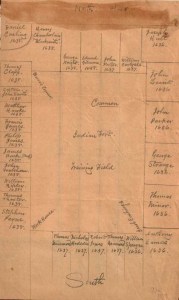
The Anthony Eames in this latter group was the father of William Sprague’s wife Millicent, and they would soon be granted adjacent parcels of land for their homes—as shown in the lower right corner of this 19th century plot chart created by local historian George Lincoln in his “Sketch of the Division of Land Plots to the Early Settlers of Hingham.”

From Ralph Sprague, of Charlestown and Malden, and William Sprague, of Charlestown and Hingham, descended a remarkably talented collection of 18th, 19th and 20th scientists/inventors/industrial innovators and artists/poets/craftsmen. The family lines have distinctions—with Ralph’s line most prominent as scientists and inventors while Wiliam’s descendants stand out as artists and poets and craftsmen.

Part 2 of this blog will focus on William’s line—and its noteworthy creators:  poets, a maker of woodcut engravings, a botanical illustrator, several woodenware craftsmen and more.  

Six Sons of Hingham and the Boston Tea Party – PART TWO

In PART ONE of this blog, you learned about three men who were part of the Boston Tea Party event on December 16, 1773: Jared Joy, James Stoddard II, and Abraham Tower.

In addition to the three participants whom both Hingham and Cohasset can claim as their own, there were three other sons of Hingham involved in the Boston Tea Party:  Adam Beal, Jr., Amos Lincoln, and Samuel Sprague, each of whom relocated from Hingham as young men.

ADAM BEAL, Jr.: Age 19 on the day of the Boston Tea Party. Adam was born in Hingham on November 3, 1754. His parents, both born in Hingham, were Adam Beal (1725-1796) and Jael Worrick (also 1725-1806). When Adam Beal Jr. was born, his family lived on Hull Street in the Second Precinct of Hingham.

The Beal family in Hingham began with John Beal, “Shoemaker,” who emigrated from Hingham, England in 1638, traveling with his wife, five sons, three daughters, and two (presumably indentured) servants. John received a land grant of six acres on what is now South Street near the corner of Hersey Street. In 1659 John was chosen to represent the town at the General Court of the colony.

Adam Beal, Jr. left Hingham soon after marrying Lydia Beal, a cousin who was the daughter of Lazarus Beal, a teacher for several years in Hingham, and his wife Lydia Wheat, originally of Newton, MA. Adam and Lydia relocated to St. Albans, Franklin County, Vermont, where Adam worked as a cabinet maker. (The young couple may have briefly lived in Goshen, Hampshire County, MA, where Adam’s parents had moved, as the second of Adam, Jr. and Lydia’s sons was born in Goshen.)

In addition to his participation in the Boston Tea Party event, Adam, Jr. served multiple enlistments during the Revolutionary War, between 1776 and 1778. Adam died on July 21, 1834. He and his wife Lydia are both buried in St. Albans, Vermont.

AMOS LINCOLN: Age 20 on the day of the Boston Tea Party. Amos was born in Hingham on March 18, 1753. His parents were life-long Hingham residents Enoch Lincoln (1721-1802) and Rachel Fearing Lincoln (1721-1782), who are both buried at Hingham Cemetery. The family (Amos was one of nine children) lived on Lincoln Street in Hingham. One of Amos Lincoln’s brothers, Levi, who later would serve as Thomas Jefferson’s first attorney general, was part of the convention that drafted the Massachusetts Constitution in 1779 and supported Quock Walker of Worcester County as he successfully sued to win his freedom from slavery citing language in that constitution.

Amos was a descendant of Samuel Lincoln, “Weaver,” who was born in Hingham England and settled in Hingham Massachusetts in 1637.  The future town leader and historian Solomon Lincoln of Hingham, as well as President Abraham Lincoln of Kentucky, would therefore have been distant cousins of this participant in the Boston Tea Party.

Amos left Hingham to be a carpenter’s apprentice to Thomas Crafts, Sr. in Boston.  Amos is known for marrying two of Paul Revere’s daughters: he married Deborah Revere, they had 9 children, and after her death, her sister Elizabeth Revere, with whom he had 5 children, and later Martha Howard Robb, with whom he had 3 more children. He most likely met the Revere sisters when serving in their father’s regiment during the Revolutionary War. J.L. Bell, author of the “Boston 1775” blog, wrote: “We know from Massachusetts records that Amos Lincoln served mostly close to home. He joined the state artillery regiment commanded by his master’s son, Thomas Crafts, Jr. On 10 May 1776, Col. Crafts submitted a list of officers to the state government, and Amos Lincoln was made a captain-lieutenant. He was promoted to captain in January 1778 and remained at that rank as command of the regiment passed to Lt. Col. Paul Revere in 1779.” Captain Lincoln died on the 14th or 15th of January of 1829 in Quincy, Massachusetts but is buried in Boston, at Copps Hill Burial Ground.

SAMUEL SPRAGUE: Age 20 on the day of the Boston Tea Party. Samuel was born in Hingham on December 22, 1753. His parents were Jeremiah Sprague, “Weaver,” (born in Hingham in 1714, died “before 1778”) and Elizabeth Whiton (born in Hingham in 1718/1719, died in Hingham in 1800). Samuel’s father Jeremiah served as constable in Hingham in 1755 and 1756.

Samuel was a direct descendant of William Sprague, born in 1609 in Dorset, Upway, England, who came to the American colonies in 1629 with his older brothers, who are credited with being founders of Charlestown. William Sprague married Millicent Eames in Charlestown. After settling in Hingham in 1636 (“land was granted to him that year on ‘the Playne’”) they lived on Union Street “over the river.” This would be the paternal homestead for generations to come. William served Hingham as a Selectman and as a town constable.

Samuel Sprague served in the Revolutionary War in the artillery company of Maj Thomas Pierce. Samuel was a mason by trade and it likely was work that first brought him to Boston from Hingham. He married Joanna Thayer, of Boston, a daughter of Obediah Thayer, born in 1756 in Braintree. The Spragues became most well-known for their fourth son, Charles Sprague, who was a famous poet in the nineteenth century, at times referred to as the “The Banker Poet of Boston.” They lived in a house on Orange (now Washington) Street.

In his book “Tea Leaves,” which provides considerable detail about the Boston Tea Party, Francis S. Drake (1828-1885) includes an account that Samuel Sprague reportedly shared with his son regarding the tea dumping event of December 1773:

“That evening…I met some lads hurrying along towards Griffin’s wharf…I joined them, and on reaching the wharf found the “Indians” busy with the tea chests…I obtained a quantity of soot, with which I blackened my face. Joining the party, I recognized among them Mr. Etheredge, my master. We worked together, but neither of us ever afterwards alluded to each other’s share in the Proceedings.”

Samuel Sprague died June 20, 1844.

He is buried in the Central Burying Ground, on Boston Common off Boylston Street (as is his son the poet) in the Sprague family tomb, Number 5—gravesite shown here. His wife Joanna died a few years later—in 1848.

I came across a fun Hingham history-related story about Samuel and Joanna’s son Charles, the poet. There is a collection of Sprague family papers in the Hingham Public Library archives, collected and donated by John Richardson.  Among the items archived in the collection is a letter from poet Charles Sprague written in 1835, to Jairus Lincoln, stating that he will be unable to write an ode for Hingham’s Bicentennial Celebration, as had been requested of him. 

Were there any consequences for those who participated in the Boston Tea Party?

One important aspect about Hingham at the time of the Boston Tea Party, and throughout the Revolutionary War, is that there were residents who were Loyalists, faithful to the King of England, living alongside the Patriots fighting for independence. Jotham Gay, whose letter I referenced earlier, was not alone in expressing disapproval of the “destruction…of private consignments” of tea. Reportedly, George Washington thought the protestors, whose concerns about taxation he agreed with, had gone too far in dumping the tea, and that they should compensate the East India Company for the damages. But at the time, many of those involved fled from Boston, and their identities were kept secret.

Others of our founding fathers disagreed. John Adams wrote in his diary, “This destruction of the tea is so bold, so daring, so firm, so intrepid and inflexible, and it must have so important consequences, and so lasting, that I cannot but consider it as an epoch in history. The question is whether the destruction of the tea was necessary? I apprehend it was absolutely and indispensably so…. To let it be landed would be giving up the principle of taxation by Parliamentary authority, against which the continent has struggled for ten years…. But it will be said, it might have been left in the care of a committee of the town, or in Castle William. To this many objections may be urged.” 

Benjamin Franklin wrote the following, from London, to the Honorable Thomas Cushing on March 22, 1774 concerning potential legal consequences for those involved in the dumping of tea at Boston:

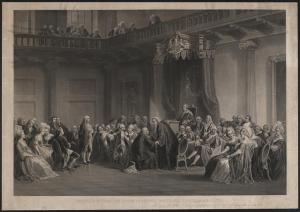
Franklin before the lord’s council, Whitehall Chapel, 1774; painted by C. Schuessele, engraved by Whitechurch. Digital file from Library of Congress.

A footnote to this letter on Founders Online adds that when witnesses from Boston were interrogated—presumably, the “enquiries” to which Benjamin Franklin refers—the law officers decided that such testimony did not provide sufficient evidence for a charge of high treason.  “Only one member of the Sons of Liberty, Francis Akeley, was caught and imprisoned for his participation.”  A partial listing, of 58 of those involved in the Boston Tea Party, was published decades later, in 1835–after many of the protestors had died.

And here we are, in 2020, a year of many challenges, when protest and activism by citizens of all ages has been a constant throughout our nation.

I will end this blog by noting that December 16, 2023 will be the 250th anniversary of the Boston Tea Party. But I am not waiting to celebrate these young activists of their day. When this year’s 247th anniversary arrives, I plan to brew a pot of tea and have a high tea salute to our six Hingham Sons of Liberty!

______________________________________________________________________________

REFERENCES for this blog post (parts one and two) include:

PATRIOT LEDGER, November 4, 2019, article by Sue Scheible; The 1893 History of Hingham, published by the Town of Hingham; the 1827 History of Hingham by Solomon Lincoln; article on the Boston Tea Party by MABEL PRATT Registrar, Col Thomas Lothrop, DAR, AMERICAN MONTHLY MAGAZINE March 1901; http://www.Founders.archives.gov (Founders Online repository); the Boston Tea Party Museum website, the Library of Congress online archives; Tea Leaves, Being a collection of letters and documents relating to the shipment of tea to the American colonies in the year 1773, by the East India Company, by Francis S. Drake, 1884; Out of the Archives, the Hingham Historical Society’s blog; the Gay family papers at the Hingham Historical Society; the work of J. L. Bell on Boston 1775, on-line articles provided by the History Channel; various family histories available on Ancestry, the Plymouth Colony Pages, and other genealogy websites. I also benefitted from the insights, suggestions, and access to items in the Hingham Historical Society collection provided by Ellen Miller (who, in addition to her work for the Old Ordinary House Museum, is involved, with Susan Wetzel, in a collaborative Hingham Historical Society/DAR project to identify Hingham men connected with the Revolutionary War) and by Hingham Historical Society Collections Manager and Registrar, Michael Achille.

Isaac Sprague and American Botany

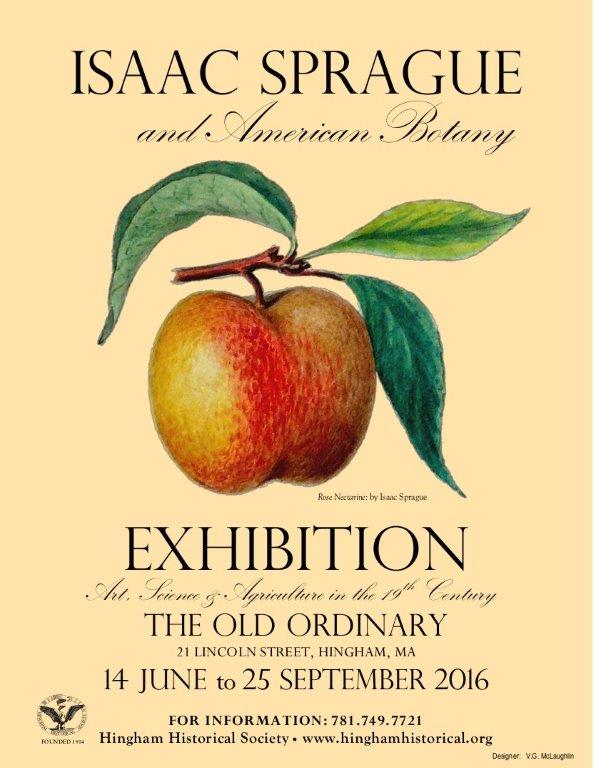
isaac sprague poster '16-100dpiA new exhibit opened today at our 1688 Old Ordinary house museum, 21 Lincoln Street, Hingham. Isaac Sprague and American Botany: Art, Science, and Agriculture in the 19th Century examines the life and work of America’s best-known botanical illustrator–and son of Hingham–and places his art in the context of several currents of 19th century social history.  Plus, we have mounted some absolutely lovely botanical prints and and a series of beautifully detailed pencil drawings of the many types of orchard fruits that were once grown in this area. The exhibit can be seen Tuesdays through Saturdays, between 1 pm and 5 pm, for the rest of the summer.  We hope you come and take a look and learn a little more about this Hingham artist.
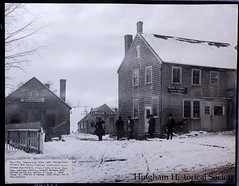
Main Street, Top of Pear Tree HillIsaac Sprague was born in Hingham in 1811. His family lived in Hingham Centre, in a house that still stands today. The Spragues of Hingham were primarily coopers, part of the woodenware industry that gave early Hingham the nickname “Bucket Town.”  Sprague was mostly self-taught as an artist, recalling that he “always had a fondness for making pictures” as a child. He was “constantly discouraged from doing so by [his] father, who said artists were invariably poor,” but his family did have some creative roots–his Uncle Hosea was a printer and engraver, and another uncle, Blossom, ran a carriage-painting business (visible in the center of this early photo of Hingham Centre) where Sprague was apprenticed as a young man.

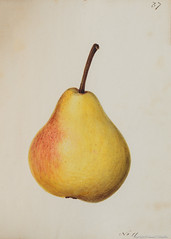
No. 11Sprague developed an early love of nature and much of his juvenile work is drawn from the woods and fields around Hingham.  In particular, young Isaac drew and painted numerous pictures of birds.  When Sprague was about thirty, he met the wildlife artist J. J. Audubon, who examined a number of Sprague’s bird drawings and, impressed with his talent, hired him as an assistant. In this capacity, Sprague accompanied Audubon out west to the Missouri Territory and Fort Union on a trip to produce sketches for Audubon’s Quadrupeds of North America. This connection with Audubon launched Sprague’s career as a botanical artist.

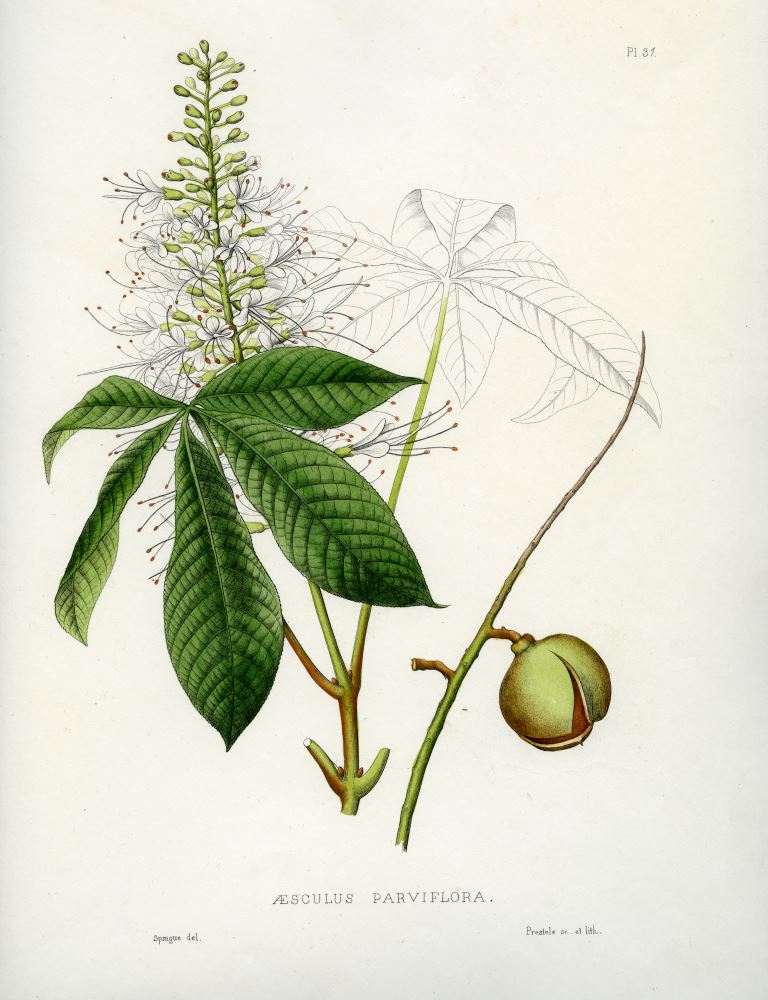
2011.0.271After his trip west Sprague returned briefly to the South Shore, working as a clerk in a Nantasket Beach hotel until, the following year, he started to work as an illustrator for prominent American botanist Asa Gray, first producing illustrations for his 1845 Lowell lectures at Harvard.  Before long he moved to Cambridge, continuing to work for Gray and other Harvard professors, illustrating several comprehensive botanical volumes in the 1840s and 1850s.  (The illustration to the left, of Aesculus Parviflora, is from an 1848 work, Trees and Shrubs of New England.)
Lydia Sprague: Young Artist and Scholar (Part 1)

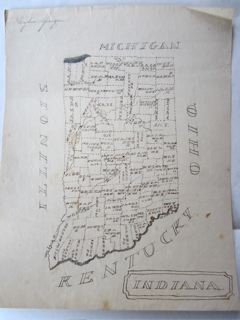
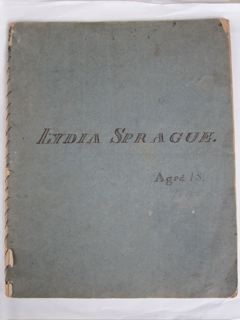
IMG_3205Our archives contain a partial school record of an artistic young Hingham scholar.  Her name was Lydia Sprague, and she attended Derby Academy from 1844, when she was 12, through 1846. Her sketchbook, hand-drawn maps, copybook, and other school work provide a glimpse into schoolwork at Derby Academy in the mid-19th century and reveal a schoolgirl’s love of drawing and a desire to excel by attention to detail.

Lydia’s small sketches of possibly local scenes, landscapes, and figures engaged in play and daily life suggest a family talent shared with the more famous Hingham artist Isaac Sprague. Isaac Sprague, an older second cousin, was born in 1811. Like Lydia, he was the son of a box-cooper and grew up in Hingham Center. It is likely that Lydia knew and looked up to her cousin Isaac.

Isaac Sprague was a self-taught artist and naturalist who met early success when he accompanied John Jay Audubon on the 1843 expedition up the Missouri River that led to Audobon’s famous portfolio, “Quadrupeds of North America.” An obituary of Isaac Sprague quoted him as saying, on the subject of his training, “I always had a fondness of making pictures and made small drawings at school.”

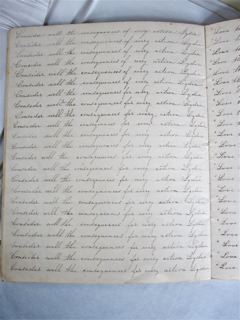
IMG_3216Young Lydia Sprague also made “small drawings at school,” and we have in our collection three of her pencil sketchbooks, highly detailed maps of American states and territories, and a copy book of exquisite penmanship. This fascinating legacy conveys her individual achievement as a diligent student and young artist.

The repetitive penmanship exercises of moral phrases and the exhaustive information included on her maps provide a glimpse of Derby Academy’s high expectations both of virtuous behavior and proficiency in these areas of study.

IMG_3196IMG_3194

Before the advent of universal public primary and secondary education, most children who received a good education had affluent parents who could pay for it. Lydia was the daughter of a box-cooper and born in 1832, when most Hingham girls of her class were taught only enough reading, writing, and arithmetic and needlework to prepare them for their lives as the wives or tradesmen, mariners, and artisans. IMG_3198She had the good fortune to have been raised by parents who valued education and who enrolled her for a few years at Derby Academy. This progressive school, the first in New England to offer a rigorous education to girls, was founded shortly after the Revolution and perhaps reflected a new republication concern that women be prepared to raise knowledgeable and patriotic citizens.

–To be continued