Dr. Robert Thaxter–Dedicated Physician and Champion of the Poor

Dr. Robert Thaxter was born in Hingham on October 21, 1776, only months after the 13 American colonies declared their independence from Great Britain. This was of course a year symbolic of strength, resilience and change, and the same can be said of Dr. Thaxter, who possessed this type of fortitude and a commitment to helping others that one day would claim his life.
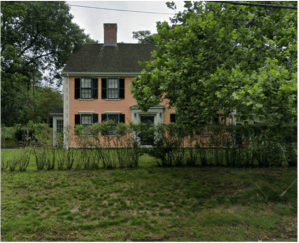
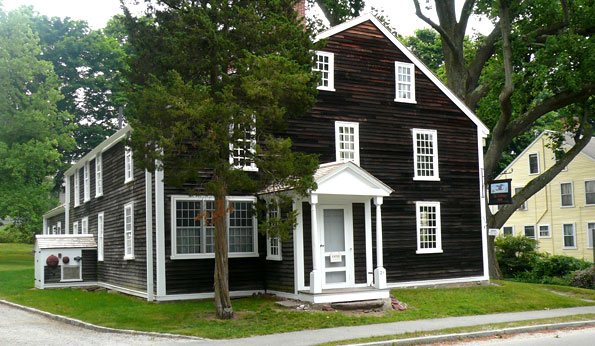
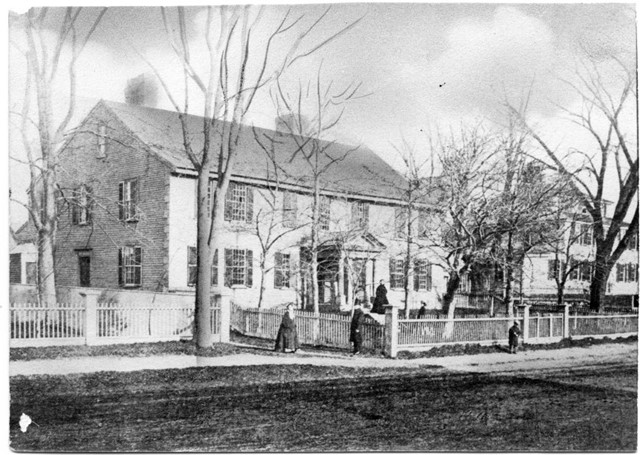
Tranquility Lodge, 137 Main Street, Hingham

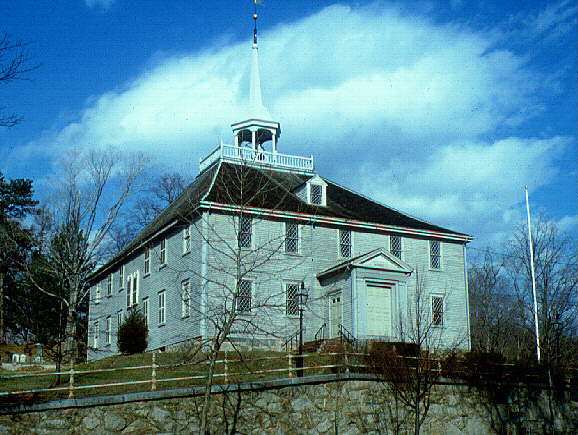
Likely born in his grandparents’ house at 21 Lincoln Street (now known as the Hingham Historical Society’s Old Ordinary), Robert Thaxter grew up at 137 Main Street in Hingham, a lovely home once called “Tranquility Lodge,” sitting just down aways on Main Street from Hingham’s 1681 Old Ship Church Meeting House.  

He graduated from Harvard College in 1798 and attended the highly selective private cadaver lectures in Anatomy and Surgery offered by the famous surgeon Dr. John Warren (1753-1815), who would go on to be a founder of Harvard Medical School. Dr. Robert Thaxter’s original admission ticket to Dr. Warren’s class is seen below.  Robert soon joined the Massachusetts Medical Society and in 1824 delivered that body’s annual oration, titled A Dissertation on the Excessive Use of Ardent Spirits.
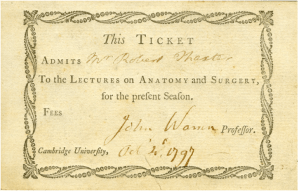
Robert continued a family tradition as a highly respected medical doctor. He was mentored by and practiced with his father, Dr. Thomas Thaxter, in the study of medicine and surgery in Hingham. Dr. Thomas Thaxter was of deep Hingham roots, as “the family of Thaxters were among the early settlers of that town.” (The Boston Medical and Surgical Journal, Vol, XLVI., Wednesday, May 19, 1852. No.16 pg. 309)

Dr. Robert Thaxter kept detailed records of his patients. His medical diary is a treasure that the Hingham Historical Society holds in its archives. He had a unique writing style and in one journal entry describes the travels of a critically ill man who journeyed from northern Maine for medical care.
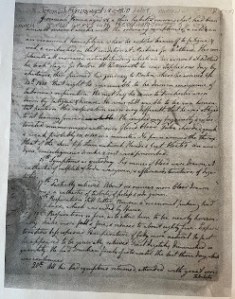
This was a demanding trip in the 19th century even for a healthy person let alone one with a critical illness. But Dr. Thaxter was a physician of both the rich and the poor and a healer with an extensive reputation as a doctor both near and far. The doctor’s notes reflect his high level of compassion for this distressed patient. His concise description of the patient’s clinical findings also shows a modernist sensibility in terms of his ability to describe clinical findings with a degree of precision. At that time, treating patients was limited by the lack of today’s medicines such as antibiotics which may have cured this patient. Dr. Thaxter did a remarkable job taking care of patients with the limited pharmacopoeia available at that time. Dr. Thaxter’s 1810 entry regarding his examination of this sick patient is as follows.

Jeremiah Ferino: Jeremiah, 28, a thin habit, (and) narrow chest, had been unwell several weeks with the ordinary symptoms of a cold an occasional haemophysis, when he exhaled himself to fatigue (and) … (and) embarked in that condition at Machias for Portland.

His complaints all increased notwithstanding which on his arrival at Portland he took stage for Boston. At Portsmouth he was stopped one day by epistaxis then … his journey to Boston, where he arrived April 14th, 1810.

That night he was unable to lie down in consequence of laborious respiration. The next day he came to Dorchester worn down by fatigue (and) disease. He was still unable to lie in a horizontal position. His respiration was so very difficult that he was obliged to sit leaning forward. He coughed very frequently (and) expectorated mucous mixed with very (fluid) blood.

To have medicines on hand as a doctor, his father, Dr. Thomas Thaxter was also proprietor of a pharmacy in Hingham, which Robert’s maiden aunt, Abigail Thaxter, ran.  (History of the Town of Hingham, 1893; Vol II, page 323; “Native and Resident Physicians” by George Lincoln.)  The Thaxter pharmacy would have had a wealth of compounds, elixirs, herbs, and other medicinal items that the young Robert Thaxter could access to treat and cure ailments of that time. Dr. Robert Thaxter’s beautiful wooden medicine chest is also in the collection of the Hingham Historical Society. His medicine chest contains thirteen mold blown glass bottles, many of them with original paper labels. The bottles are labeled with interesting ingredients such as maraschino, strawberry syrup, ginger, parfait amour, rose water, spirit of camphor, orange, oil of cinnamon, oil of cloves, and aromatic elixir. Today, most of these items would be found in our kitchen spice rack rather than our medicine cabinet.

Once trained, Robert Thaxter stayed in Hingham side by side with his father and continued the medical practice. They were both driven and ambitious men but by 1809, Dr. Robert Thaxter needed his independence. He moved his medical practice to Dorchester. Not surprisingly, he was “immediately received into popular confidence which he retained until his death.” (The Boston Medical and Surgical Journal, Vol, XLVI., Wednesday, May 19, 1852. No.16 pg.309). Dr. Thaxter was married to his love of medicine and never took a wife. Once settled in Dorchester, he posted the following advertisement in the July 22, 1809 Columbian Centinel Newspaper:

NOTICE: Doctor Robert Thaxter informs the Inhabitants of Dorchester that he has taken lodgings at the residence of Mr. William Richards, where he will be ready at all times to attend to his profession. He will inoculate with kine Pox, free of expense, all persons who feel themselves unable to pay.

(History of the Town of Hingham, 1893; Vol II, page 324. “Native and Resident Physicians” by George Lincoln.)

At that time, Boston was a homogeneous and in many ways provincial society, with a deeply rooted regard for its protestant English past.  Irish immigrants now flooded into Boston hoping for a second chance in life. These Catholic newcomers, though, were seen as a threat to the norms of Boston society. Dr. Thaxter’s decision to relocate his practice to Dorchester was a bold move. He might have damaged his reputation as a doctor by leaving, but he didn’t and still returned to the area to perform surgeries (The Boston Medical and Surgical Journal, Vol, XLVI., Wednesday, May 19, 1852. No.16 pg.309).

Once settled in Dorchester his reputation took off. Dr. Thaxter’s diligence, careful medical observation, and never-ending dedication to the sick expanded his medical practice to neighboring areas. As time went on, he also was drawn to the Irish poor now arriving in Dorchester. “The Irish population gathered more thickly about him . . . .  By night and by day, he was at their beck,” (The Boston Medical and Surgical Journal, Vol, XLVI., Wednesday, May 19, 1852. No.16 pg.312)

Dr. Thaxter’s commitment as a doctor to serving the needy, poor, and especially, those from Ireland fleeing the potato famine is commendable—then and now. Those emigrating by what were later called “coffin ships” from Ireland carried poor passengers in steerage where there was a lack of food, plenty of filth and diseases running rampant such as typhus. (As described in a Hingham Historical Society lecture, “The Irish Riviera and Hingham’s Irish 1850-1950,” available for viewing here, typhus and other infectious diseases were killers without our present-day antibiotics.

Dr. Thaxter met his end doing what he believed in. “He fell a martyr to the ship fever (typhus fever), caught in attending an Irish family, just from on board ship.” (Obituary, Boston Daily Evening Transcript 11 Feb 1852).  It was said that “Dr. Thaxter never stopped helping the Irish.” (Ibid.) He had a charitably rich and spiritual life to the end. Dr. Thaxter died February 9th, 1852. He was 75 years old. (History of the Town of Hingham, 1893; Vol II, page 324; “Native and Resident Physicians” by George Lincoln.)

To learn more about the Thaxter family and its place in local and American history, please see our post One if By Land, Two If By Sea on this blog.  You might also look at the recent publication, Revolutionary War Patriots of Hingham, by Ellen Miller and Susan Wetzel, Dec 26, 2023, which details the town’s Patriots, including quite a few from the Thaxter family who left their mark in history.
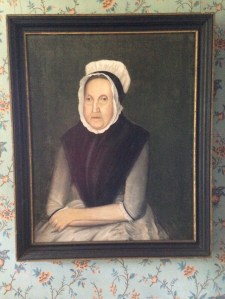
Abigail (Smith) Thaxter

If you are in Hingham, you also may want to visit Dr. Thaxter’s likely birthplace, the Old Ordinary. There you can see a portrait of Dr. Robert Thaxter’s grandmother, Abigail Smith Thaxter, hanging in the parlor.

Dr. Robert Thaxter’s spirit carries on today in public service and health. This tradition of outreach and assistance to those most disadvantaged continues in the Boston area such as the work of the late Dr. Paul Farmer and the continuing work of Partners in Health, and Dr. Jim O’Connell and Boston Health Care for the Homeless, as well as numerous others dedicating their lives to helping those in need.
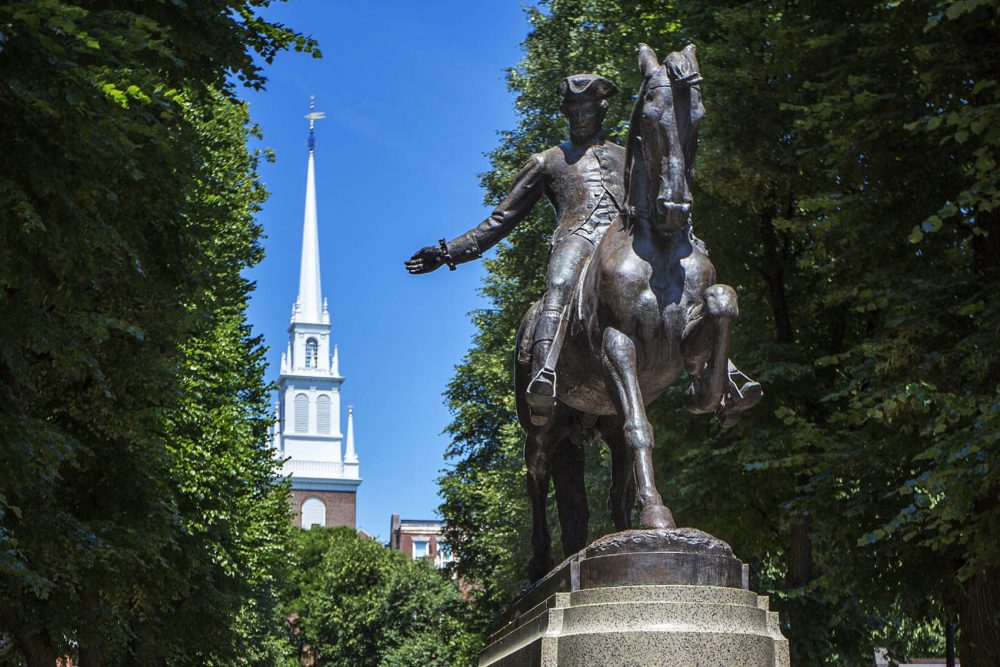
One If By Land; Two If By Sea: the Hingham Connection

Most people are aware of Paul Revere’s midnight ride in April 1775 due to the poem by Henry Wadsworth Longfellow and the hanging of two lanterns in the Old North Church steeple preceding his journey.  We at the Hingham Historical Society were delighted to learn that this event has a Hingham connection.

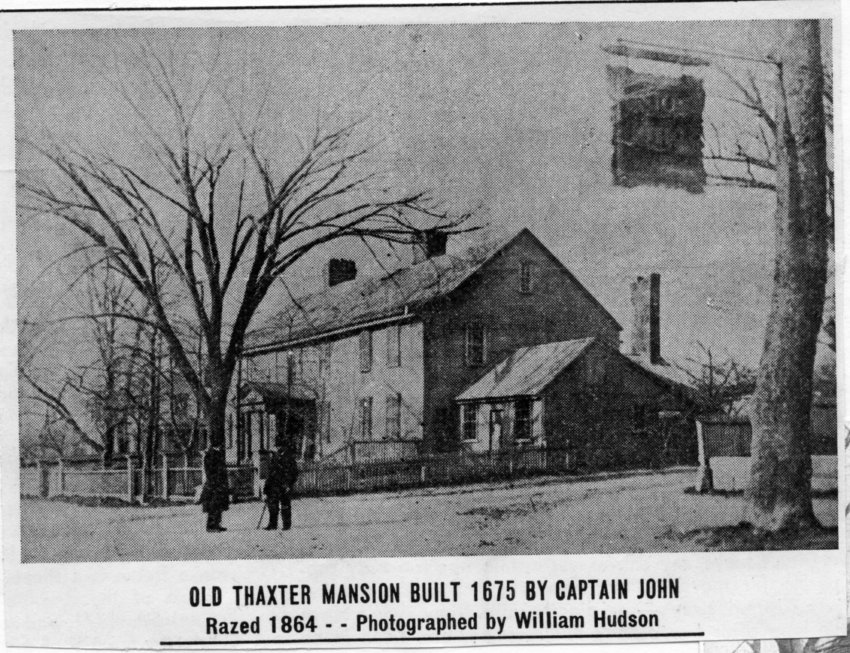
Thaxter Mansion, North Street, Hingham

One of the men responsible for hanging the two lanterns was John Pulling, Jr. a vestryman of Old North and a friend of Paul Revere. John was born in 1737 in Boston and was a trader by occupation. He married his first wife, Annis Lee, in Manchester in 1768. They had two children, a daughter and son both named for their parents.

Abigail (Smith) Thaxter

John’s wife Annis died in 1771. This is where the Hingham connection comes in. John married his second wife, Sarah Thaxter McBean (17461843) in January 1773. She was the daughter of Major Samuel Thaxter (1723-1771) of Hingham, a trader and veteran of the French and Indian War, and Abigail Smith (1722-1807), daughter of Samuel and Bethia (Chipman) Smith of Sandwich. Sarah grew up in the Thaxter mansion on North Street, the site of today’s St. Paul’s Church. A portrait of Sarah’s mother, Abigail Smith hangs in our Old Ordinary museum.

Pulling Tablet, Old North Church

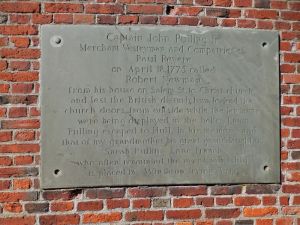
This was Sarah’s second marriage as well. She was the widow of Duncan McBean, a West Indies planter from a family of Scottish traders. The McBeans had no surviving children. Records show that Sarah and John Pulling had three known children: Sarah (1773), Martha (ca 1780) and Richard (bef. 1782). During the Revolutionary War John served as a Captain and Commander of Ordinance Stores. On April 19 when he heard he was wanted by the British for questioning in his role aiding Revere, he, Sarah and their children fled Boston in a fishing boat, making their way to Hull. This event is memorialized on a tablet on the Old North Church. When they returned to the North End of Boston after the British evacuated in March 1776, they found their house ransacked and all their property gone. 

121-123 Main Street, Hingham

After John’s death in 1787 Sarah and her family (including the two children from John’s first marriage) returned to Hingham, where they lived until Sarah married for the third time to Thomas Reed of Abington in 1793. It is unknown where in Hingham Sarah and the children lived during that five-year period as Sarah’s childhood home, the Thaxter Mansion had been sold to Elisha Leavitt, Jr. in 1770. Perhaps Sarah and the children lived with

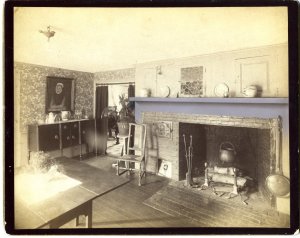
Parlor at 137 Main Street, Hingham

one of her younger brothers who remained in Hingham? Dr. Thomas Thaxter lived at 121 Main Street and Henry Thaxter lived at 137 Main Street. Both houses still stand today. After marrying Thomas Reed, Sarah resided in Abington until her death in 1843 at age 97.

The Portico Finds Its Home

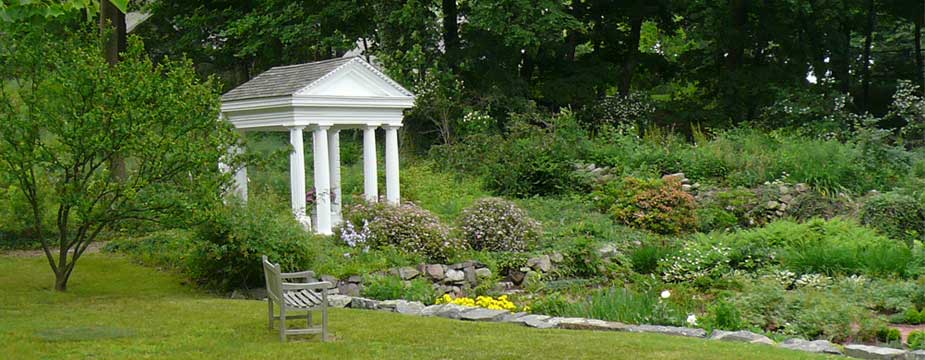
Those who have been to our Old Ordinary House Museum—or who have been to the home page of our Society website—have seen the gazebo or summer house in the shape of a small Grecian temple which sits at the top of the Old Ordinary garden.

slide_01

As well as being a charming backdrop for garden parties and the occasional wedding, this structure is a genuine piece of Hingham history. Its travels around town over the last two hundred years are documented by correspondence, photographs, and the written reminiscences of the Rev. John Gallop, one of its former custodians–all in our archives.

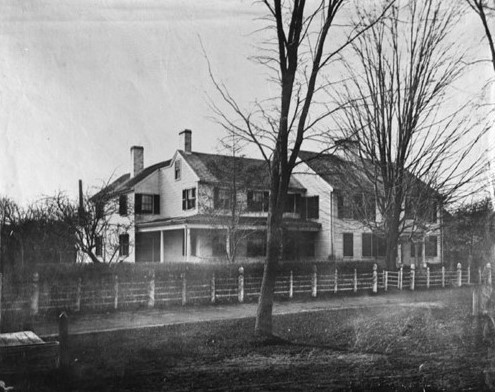
In the late 17th century, the Thaxter family built a house in Hingham Square, on the present day site of St. Paul’s Church. As added to and improved over the years, the “Thaxter mansion” grew into a large, attractive home, furnished with tapestries, tiled fireplaces, and painted doors—some of which were donated to our Society by Thaxter descendants.

ph2358

At some point, prior to the first photographs of the house but almost certainly in the first half of the 19th century, a classically-influenced portico, with a pediment and columns, was added at the house’s front door.

Greek revival architecture was the fashion during the first half of the 19th century, and it sometimes took a more modest form than the Monticello or “Tara” models. Greek-influenced porticos were added to many older New England buildings. In addition to the Thaxter mansion, porticos with columns and a pediment were added to the Old Ordinary itself and (in an architectural mash-up) the English Gothic Old Ship Church.

oldordinary2

hingham
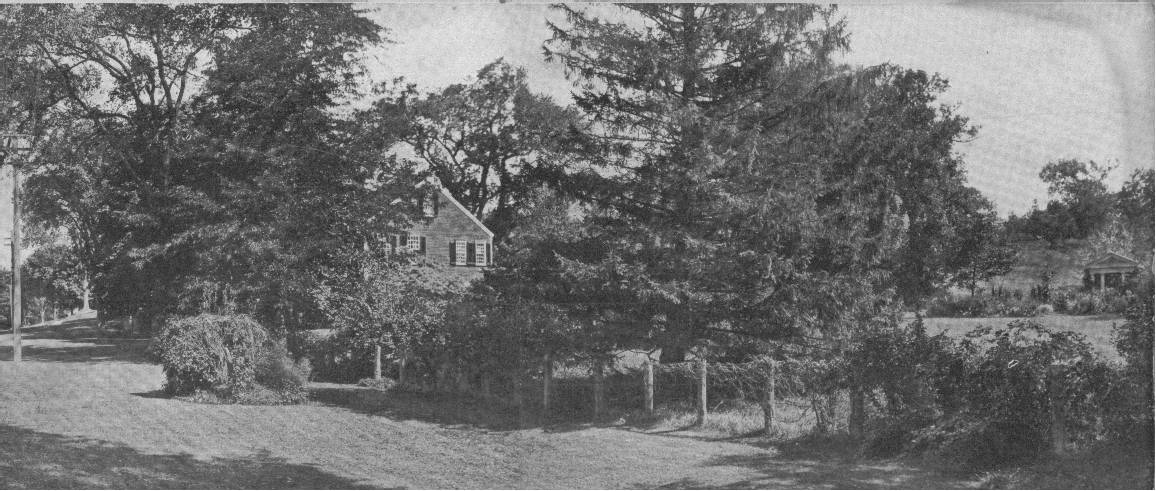
The Thaxter mansion was torn down in 1866 to make way for St. Paul’s Church, but the portico was saved. The story is that it was taken away by Hingham artist W. Allan Gay, but in any event, it was installed in the side yard of the Martin Gay house at 262 South Street, where it began its second life as a summer house or gazebo.

The Martin Gay house and its side yard.  (See the portico at the far right of the photograph.)

The Martin Gay house and its side yard. (See the portico at the far right of the photograph.)

Almost 100 years later, during an expansion of the South Shore Country Club, the garden area the Gay property was sold. The portico, which had fallen into disrepair, was threatened with demolition. The Rev. John M. Gallop, rector of the Parish of St. John the Evangelist, saved the portico from demolition. He sought and received permission to remove it. He installed it in the side yard of St. John’s Rectory, on Main Street next door to the church.

Upon his retirement from St. John’s, Gallop donated the portico to the Hingham Historical Society. The decision was reached to add it to the formal gardens on the grounds of the Old Ordinary. (These gardens have a rich history of their own which would take another post to cover.) Still more preservation work was needed, but thanks to Gallop and many dedicated volunteers at the Society, the portico found a permanent home in 1979, not much further than a football field’s length away from where it was originally built.

Installing the portico in the Old Ordinary's garden (1979)

Installing the portico in the Old Ordinary’s garden (1979)

From Witch Trials to Praying Indians to Old Ship Church

“To All Christian People to whome this present instrument shall come Greeting,” this deed in our archives opens magisterially.  The date at the bottom is equally impressive:   July 4, 1690, “Anno Regni & Regina Guilielmi & Maria Secundi” (in the second year of the reign of King William and Queen Mary).  The deed is executed by William Stoughton, “of Dorchester in the Colony of the Massachusetts Bay in New England,” and conveys several parcels of land in the vicinity of Broad Cove to Thomas Thaxter “of Hingham in the Colony aforesaid, yeoman.”  Stoughton is acting on behalf of “the Governor and Company established & residing in the Kingdome of England for the propagation of the Gospel to the Indians in New England &c.”

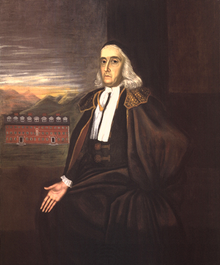
William Stoughton

William Stoughton

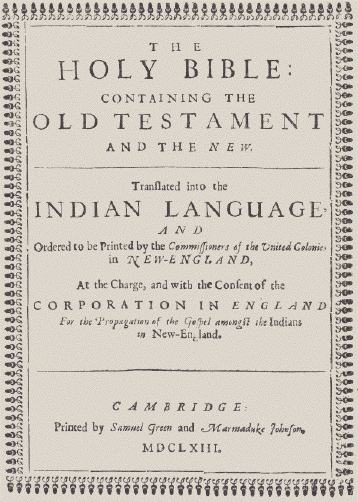
In addition to his service as a judge during the Salem witch trials (see our prior post about this document, “William Stoughton’s Seal”), and later service as first Chief Justice of Massachusetts’ Supreme Judicial Court, Stoughton was Lieutenant Governor of the Colony in the 1680’s and early 1690’s.  Among his many other public positions was Commissioner, and later Treasurer to the Commissioners, of the Company for the Propagation of the Gospel to the Indians in New England and the Parts Adjacent in America, a company chartered by Parliament in 1649 to support the conversion of New England’s native people.  The Company originally made investments in England and sent the income to the colonies, to be used to support conversion efforts, including John Eliot’s 1663 translation of the Old Testament into the Massachusett language, the creation of settlements for the so-called “Praying Indians” (including present-day Stoughton, Mass.), and other missionary activities such as the creation of a short-lived “Indian College” at Harvard College.  (These efforts may be familiar to readers of the recent historical novel Caleb’s Crossing, by Geraldine Brooks.)

Eliot_BiblePoor returns on investments in England (including losses owing to the Great Fire in London) led the New England Company to start to send capital for investment in the colonies.  The task of finding suitable investments fell to Stoughton.  Two such investments, made in 1683, were loans of £50 each to Simon and Joshua Hobart of Hingham, sons of Captain Joshua Hobart, nephews of the Rev. Peter Hobart, and both identified as “mariners.”  The loans were secured by real estate in Hingham and, according to the legal structure of the day, evidenced by deeds conveying the parcels to Stoughton, upon the condition that if the greater sum of £66 was repaid four years hence, in 1687, the sale would be null and void.

It is not clear what happened to the younger Joshua Hobart’s land but, on July 4, 1690, Stoughton sold the land he had “purchased” from Simon Hobart to Thomas Thaxter, for the inappropriately small sum of £4.  In all likelihood, this sale to Thaxter was part of some larger transaction, of which we know nothing.

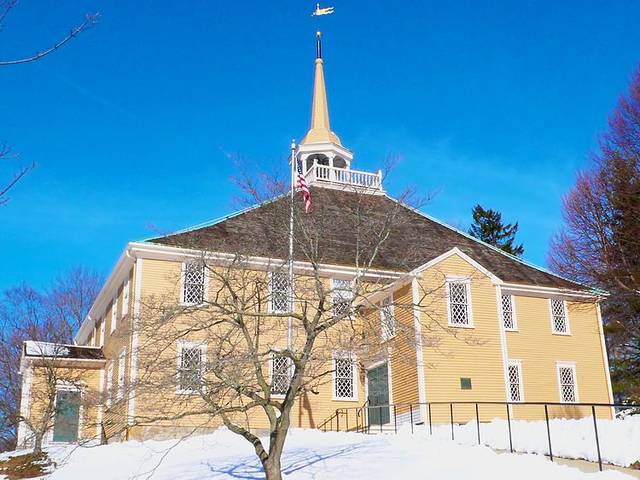
N__367777355How did Stoughton come to loan the New England Company’s funds to the Hobart brothers?  Stoughton had reason to be familiar with Hingham real estate in the early 1680’s.  In 1681, Hingham needed a new church, but a dispute arose about where to locate it.  The decision where to build what would become Old Ship Church was elevated to the General Court, which appointed an oversight committee, on which Stoughton served.  The Committee determined that the Church would be located on property purchased from Captain Joshua Hobart, adjacent to the parcels involved in the New England Company financing two years later.

From the Salem witch trials to the Praying Indians and back to Old Ship Church, this one old deed shows just what a small world 17th century Massachusetts Bay was.

Widow Sarah Humphrey’s Discharge

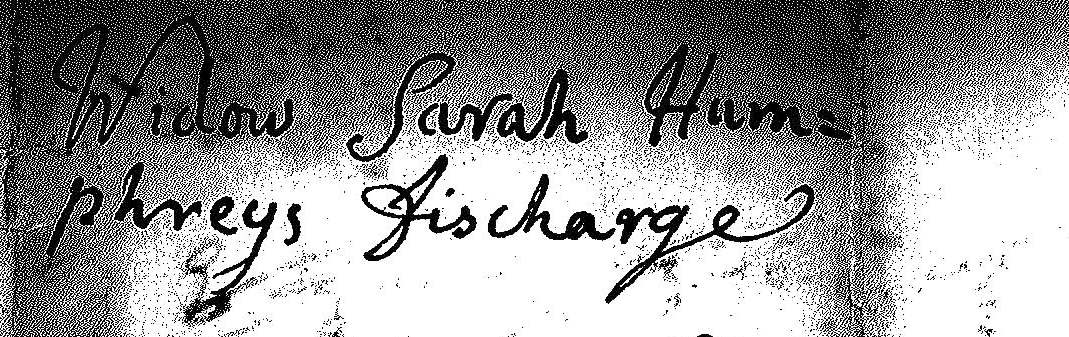
A sad, tattered scrap of paper in our archives lets us see the effect on families of the colonial era’s high mortality rate–here the untimely passing first of a father and then of a child.

Title Widow Sarah Humphrey's DischargeSarah Humphrey was 32 years old and the mother of six living children (aged 11, 10, 8, 5, 2, and 4 months) when her husband Ebenezer died in 1745 at age 41.  Ebenezer Humphrey had been a weaver and a descendent of Hingham’s first settlers.  The family lived on High Street and appears to have been fairly well off (the inventory of his estate listed real and personal property worth £494).

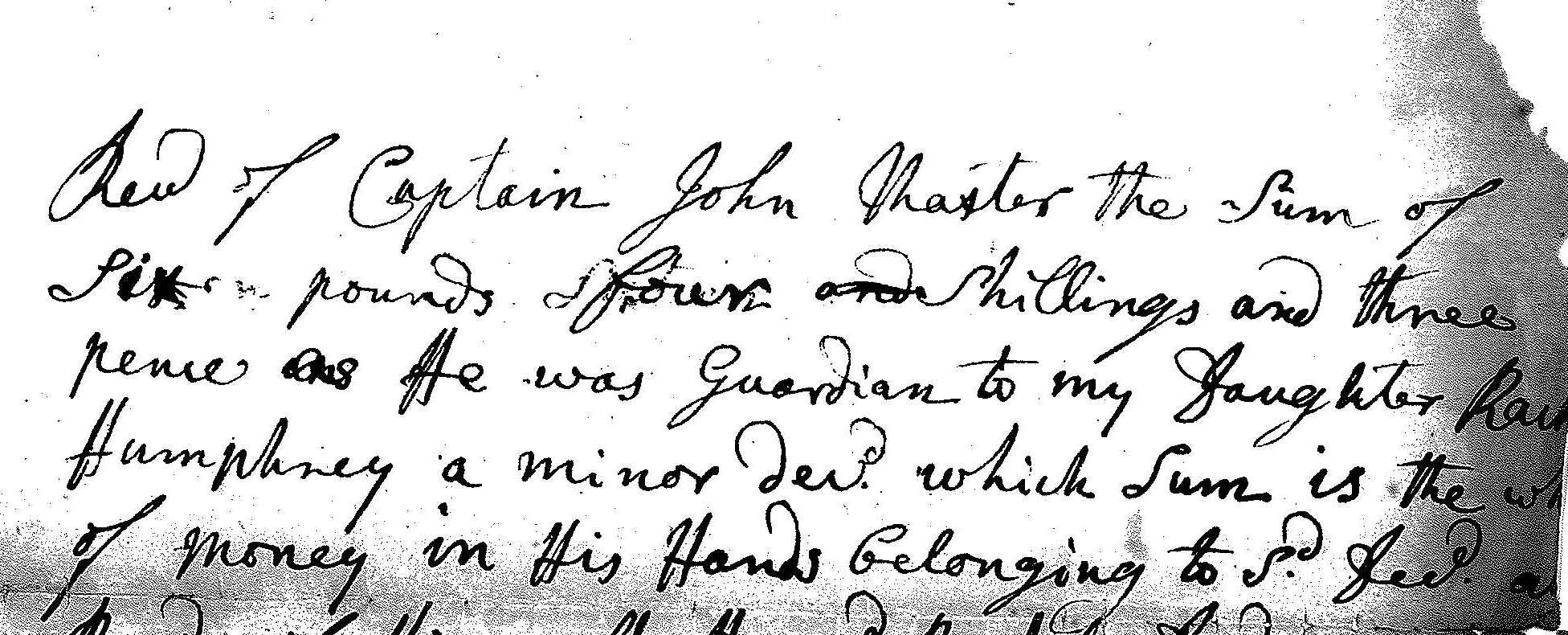
Cropped top of Discharge The document is Sarah’s sworn statement discharging John Thaxter from any further obligations as the court-appointed guardian of her daughter Rachel.  Rachel had died at the age of 17 and John Thaxter had returned to Sarah the property which he had held on Rachel’s behalf.  Sarah provided Thaxter a receipt acknowledging his full performance of his obligations:

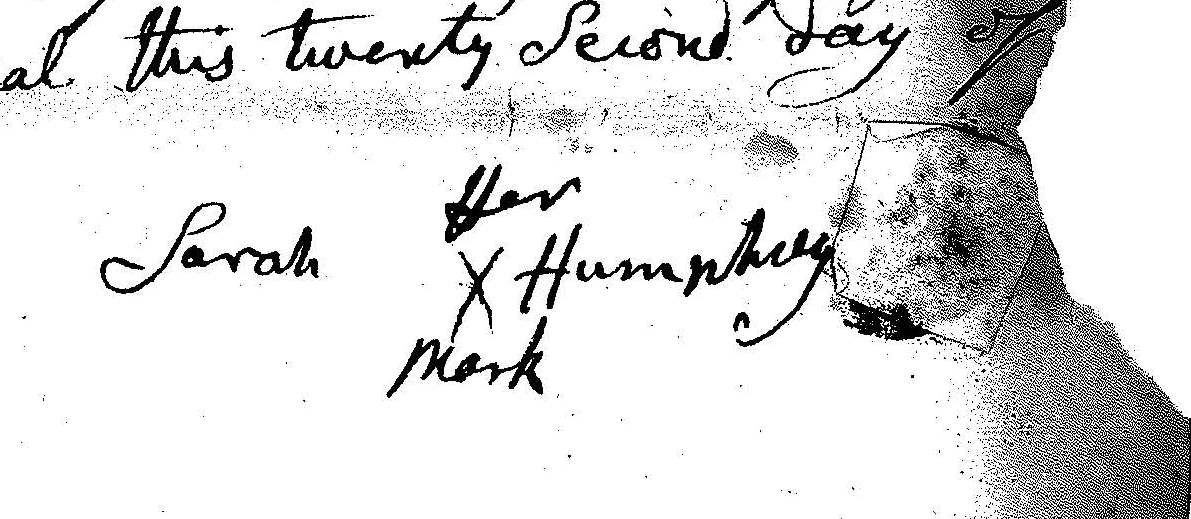
 Rec’d of Captain John Thaxter the sum of six pounds four shillings and three pence.  He was guardian to my daughter Rachel Humphrey a minor dec’d which sum is the whole of the money in His Hands belonging to s’d dec’d minor.  Rec’d of him all s’d Rachel dec’d wearing appearell and what of Household Stuff or Goods that were in his possession and I do hereby for my self my Heirs acquit and discharge Him the s’d John his Heirs from s’d dec’d Estate having rec’d the whole of s’d dec’d Estate that was committed to his trust & care.  In testimony whereof I have sett my Hand & Seal this twenty second day of June A.D. 1758.

£6:4:3.                         Sarah Humphrey  (Her Mark)

Signed sealed in presence of

/s/ Welcome Lincoln

/s/ Hannah Barker

Sarah Humphrey Her MarkWhy was Thaxter named Rachel’s guardian (and the guardian of her younger siblings Mary and Ebenezer)?  The answer lies in colonial laws of property and inheritance that are very different than those with which we are familiar today.  Although Ebenezer Humphrey’s estate was relatively large, he did not leave a will.  Under Massachusetts law at that time, Ebenezer’s six children—not his wife—were his heirs.  Sarah was afforded a “dower share,” that is, the right to the use of one-third of her husband’s estate during her widowhood, but she did not own any of it.  It was very common, then, to appoint a guardian to take charge of the childrens’ inheritance during the years of their minority.

As administratrix of Ebenezer’s estate, Sarah accounted to the Probate Court in 1746 for amounts she had paid out of the estate, including the payment of Ebenezer’s debts, the “many implements of household allowed the widow,” and the expense of “maintaining and cloathing of three children . . . one of them 5 years, one 2 years, and one 4 months” for a year after her husband’s death.  Why just the younger three?  Perhaps her older children had been “put out” to work or learn a trade.  Perhaps they lived with relatives.  Probate records confirm that John Thaxter was appointed guardian of the three younger children in 1757, 12 years after Ebenezer’s death, for the express purpose of safeguarding what each of them had inherited from their father.  Why such a delay?  Had money started to run short?  The eldest child, Benjamin, had turned 21 the year before and Rachel’s big sisters, Hannah and Susanna, had just married.  Perhaps Benjamin, who was entitled to his share of the estate upon his majority, or Hannah’s or Susanna’s new husbands had raised questions about Sarah’s stewardship of her childrens’ inheritance.

We do not have any written discharge of John Thaxter as guardian of Rachel’s younger siblings, but his role as guardian was almost complete.  Ebenezer died in 1762 and Mary married in 1764.  Sarah Humphrey never remarried.  Having survived three of her seven children, she died, aged 70, in 1784.

A Resolution Reached At Town Meeting

ayrshireThe great thing about poking around in an archive as rich as ours at the Hingham Historical Society is that connections are there to be made.  Half the story might be in one document—and then the other half pops up.  A prior post on this blog (“An Appeal to Town Meeting”) was about the address of an unnamed 18th century farmer to Hingham’s Town Meeting.  The farmer had complained that he was unable to drive his livestock to pasture at the Great Lots, or bring off any produce, because  another Hingham farmer, Thomas Hersey, had built a stone wall across a public way.  The farmer had came to Town Meeting armed with evidence that, he claimed, proved that one hundred years previously the Town had authorized the laying out of a road to ensure the access to the very same Great Lots now blocked by Mr. Hersey.  And there the story ended.  The documents we were looking at were from the Hersey Family papers, and they left the identity of the petitioner and the outcome of the dispute unknown.

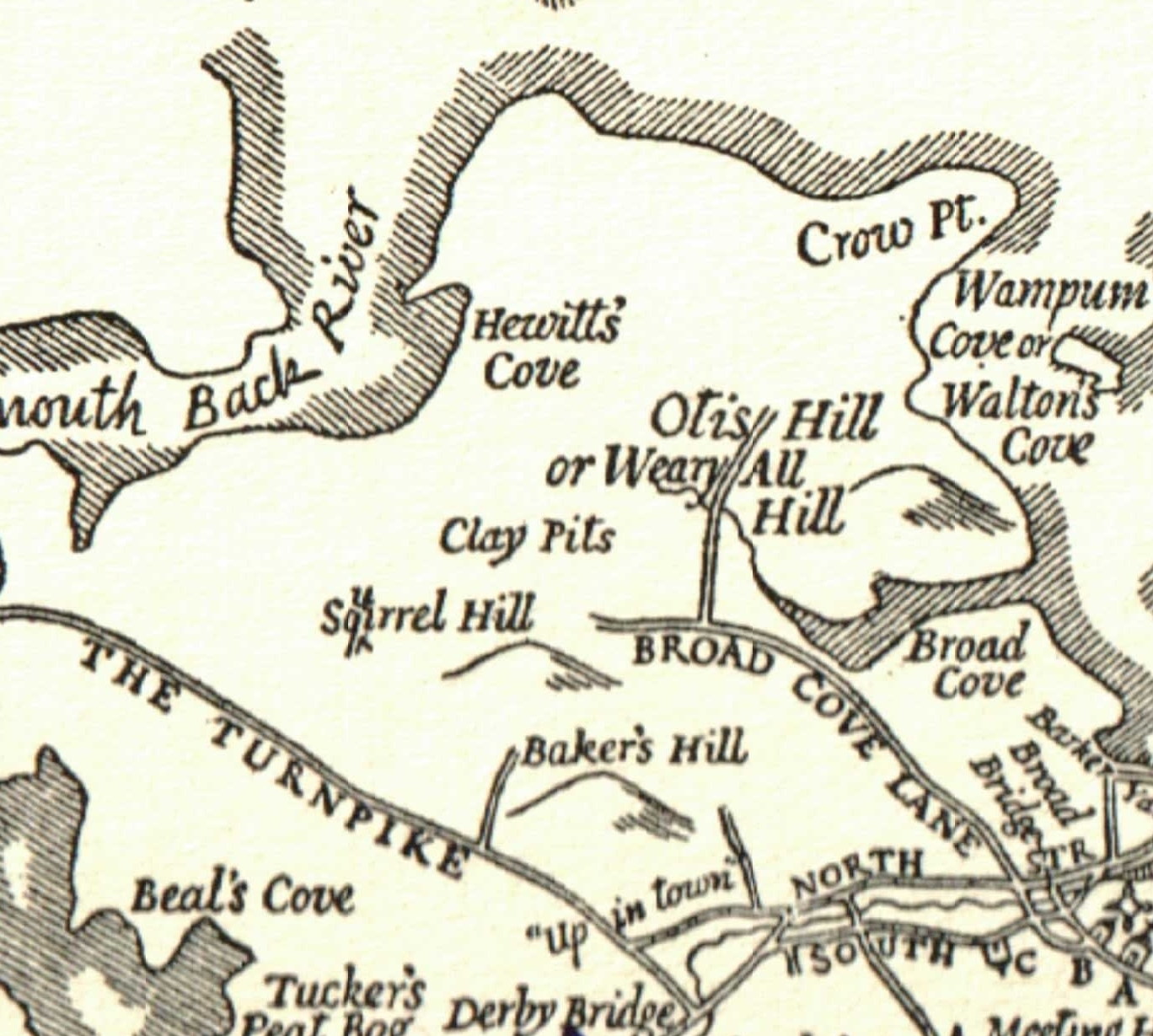
Detail from D.A. Dwiggins' map of Hingham, "The Old Place Names," 1935

Detail from “Historic Map of Hingham, Mass.,” Hingham Public Library Local History & Special Collections

But it turned out that the rest of the story was nearby, in our Thaxter Family papers, because the unhappy petitioner was John Thaxter, Sr., who left a memorandum describing the resolution reached at Town Meeting, together with the “true copy” of the 17th century Town Meeting vote upon which he relied.  John Thaxter presented the dispute to Town Meeting on December 17, 1794.  He presented evidence that in June 1694, almost exactly 100 years previously, Josiah Loring had complained to the Town Meeting that he could not access his own pasture at the Great Lots.  The solution he had proposed, which was accepted by the Town, was the laying out of a public way between Broad Cove Lane and Goles Lane (the “Turnpike”) adjacent to the Great Lots and the Squirrel Hill Lots.  According to Thaxter’s memorandum, written the next day, here is what happened:

At a Legal town meeting in Hingham June ye 19th 1794.  The within votes of the Town [i.e., the 1694 record] were presented to the Town by John Thaxter as a memorial that the high way from Goles Lane to Broad Cove Street which has been passed & repassed on time immemorial is now stopped up by Thomas Hearsy erecting a stone wall across the same whereby said Thaxter is deprived from going to his pasture at great Lotts in a great measure.  As the meeting was thin the town thought there was a probability of said Thaxter & Hearsy settling the difficulty subsisting between them and they labored for an accommodation.  Said Thaxter then made said Hearsy a proposal.  As both of them had said they would not remove the wall, that if said Hearsy would send a hand he would another to remove the wall, which said Hearsy agreed to.  Then said Thaxter withdrew the memorial and nothing further was acted by the Town.  The wall was removed the next day.

So, with some encouragement (or pressure) from their neighbors, John Thaxter and Thomas Hersey settled their dispute, agreeing to share the job of removing the stone wall which Thaxter had proved was an obstruction on a public way.

Thaxter and Hersey were contemporaries, born two years apart in the early 1730s.  Hersey lived on Lincoln Street, Thaxter on South Street; both spent their entire lives in Hingham, except for military service and Thaxter’s years at Harvard College.  They must have known each other very well.  We don’t know what their personal relationship was or how this incident fit into it.  They have, however, provided us a glimpse into how local land use disputes were handled in a long-ago era.