Individually we are ineffective, united we achieve results.
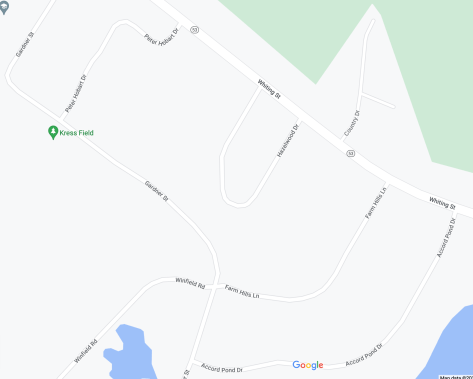
While researching my neighborhood around Peter Hobart Drive, I noticed that information about its history was limited in comparison to other parts of town. The road connects to upper Gardner Street, an area whose history extends to the early days of Hingham’s establishment. Various smaller streets branch off and create an entanglement of roads that forms our neighborhood community. My street was named after the Reverend Peter Hobart, one of the original settlers of Hingham and a pastor of the Town’s first church. However, the life of this neighborhood only stretches back to the early twentieth century, far later than the time period when Hobart lived.
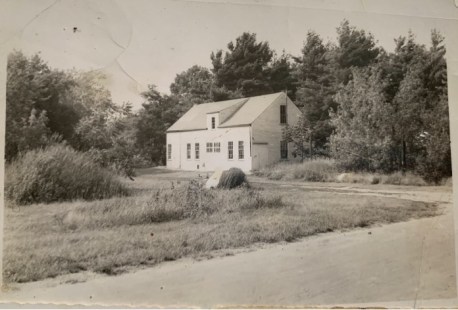
The chicken barn that started the neighborhood c. 1963
Development began in 1938 with a chicken barn hiding behind an old bucket factory, and the rest of the houses were constructed throughout the fifties and sixties. To my dismay, much of Hingham’s historical research does not extend beyond World War II but rather focuses on the original era of English settlement. Although newly developed areas of town were not involved in Hingham’s establishment, they illustrate the pathway of change taken throughout Hingham’s existence.
The neighborhoods of upper Gardner Street have contributed greatly to the town’s politics and communal activities for the past few decades. The concern that initially brought the Farm Hills Civic Society together involved a proposal to extend Route 3 into the upper Gardner area. Residents worried that adding a busy highway in the middle of the neighborhood would negatively affect the area’s character and interfere with the neighborhood’s tranquil and hospitable personality. In collective agreement that this proposal would create a great disturbance, residents collaborated to prevent the extension from being constructed.
Writing articles and calling meetings to present their views to others, the group achieved success in preventing the extension. This communal organization endures, still presenting their collective ideas for improvements to the neighborhood while fighting against town proposals that would threaten the area’s character.
Throughout the organization’s life, it has accomplished a variety of goals, both small and large. Creating a sense of community has been a principal goal of the Farm Hills Civic Society since it first began. One manner of accomplishing this has been hosting social events, such as annual Easter egg hunts and block parties. Involving neighbors in enjoyable communal activities enhanced the feeling of togetherness necessary for the FHCS to continue working for the benefit of the community as a whole. These events often catered to child residents, indicating the group’s desire to create a positive environment for families to raise their children.

A 1969 newspaper article by Debra K. Piot in which the Thomas’s explain that they bought their home “looking for family roots in Hingham”
Just a few years after the FHCS was first incorporated, it faced a significant concern presented by the town government. The town provided the Selectman with permission to determine the relocation process of Route 228 with state officials. The six-lane highway would have cut through the Gardner Street neighborhoods, polluting the water supply with oil and salts while removing up to eighty-five homes around Farms Hills. To avoid the devastation this relocation would have caused, the FHCS united to defeat the proposal, which had been presented two separate times.
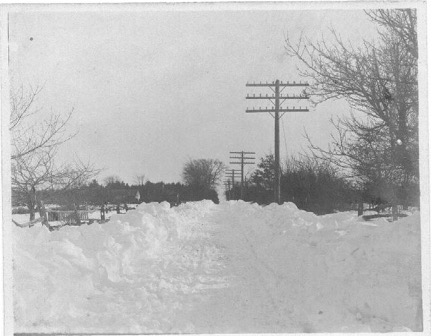
Gardner Street in a snow storm c. 1898
One of the Farm Hills Civic Society’s most notable accomplishments occurred between the years 1999 and 2000. A real estate company known as Mills Corporation of VA proposed a plan to construct a mega-mall where the South Weymouth Naval Air Station was once located. The development would have needed a connector road to be structured through the neighborhood, causing endless traffic on the surrounding streets. When the residents of the Farm Hills Area learned of this proposal, local town and state officials were already finalizing negotiations, explaining to the FHCS that the project was a “done deal.” However, neighbors rallied together, publishing newspaper articles to educate fellow townspeople about the issues this connector road would cause. With the tide turning in their favor, the FHCS called a town meeting, demonstrating the community support that their efforts had garnered and disrupting the supposedly “already decided” project.
The FHCS has seen incredibly dedicated presidents and members over the years. Notably, Stephen Kelsch served as president during the eighties, and members of his community remember and admire his efforts. He focused much of his attention on the effects of development in the South Hingham area, and current residents appreciate the enduring accomplishments he allowed the FHCS to achieve. Kelsch, sadly, passed in 2013, but his impact on the town’s politics remains apparent. Alongside the FHCS, he involved himself in multiple town committees and historical associations, including the Hingham Historical Society.
Current resident of Farm Hills Lane, Judy Kelley, has been an active member of the FHCS for many years. Her efforts in vocalizing the ideas and opinions of the FHCS have tremendously aided the accomplishment of many of the neighborhood’s goals. One significant issue that she helped the neighborhood overcome was the impending development of a substantial apartment complex near the upper Gardner area. Between the years 2011 and 2013, a development company known as AvalonBay planned to replace 18.5 acres of wooded area on Recreation Park Drive with an apartment complex comprised of sixteen buildings and one hundred seventy-seven individual apartments. This location was chosen to avoid specific town zoning regulations that inhibit crowded population densities. The construction of these apartments would have also required an access road leading into the neighborhood from Deerfield Road. This development would have resulted in multiple four-story housing complexes squeezing uncomfortably into the small streets of upper Gardner, inevitably increasing congestion on nearby roads and highways. Judy Kelley explained in an interview with Jeff Keating from WGBH News that the development would not have been accepted if the size of the land and the community were taken into greater consideration. Ultimately, with the help of the FHCS, the town selectmen passed a proposal to utilize the land for further development of the South Shore Industrial Park.
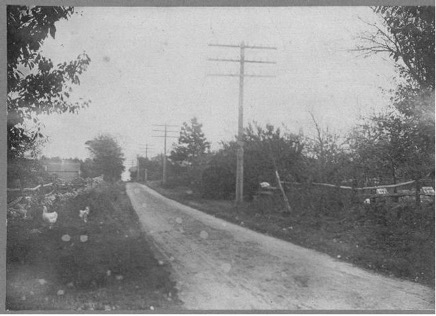
Gardner Street (with stone walls and chickens), c. 1900
Documents describing the accomplishments of the FHCS express: “Individually we are ineffective, united we achieve results.” This statement perfectly depicts the organization’s dedication to creating a supportive community and advocating for the best interests of the entire neighborhood. The community still remains politically active, with residents involved in various aspects of the town’s government, and the Farm Hills Civic Society continues to advocate for the good of the neighborhood under the current president, Ted Healy, who has served since 2014. Former residents believe that the group is more dynamic now than ever before due to dedicated leadership over the years.
The author, Ella Kennedy, is a member of the Hingham High School Class of 2022. She participate in the Hingham Historical Society’s high school intern program during the fall term 2021.
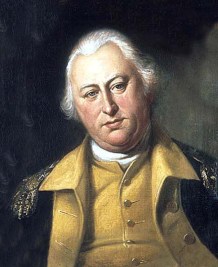 After recuperating from a wound suffered during the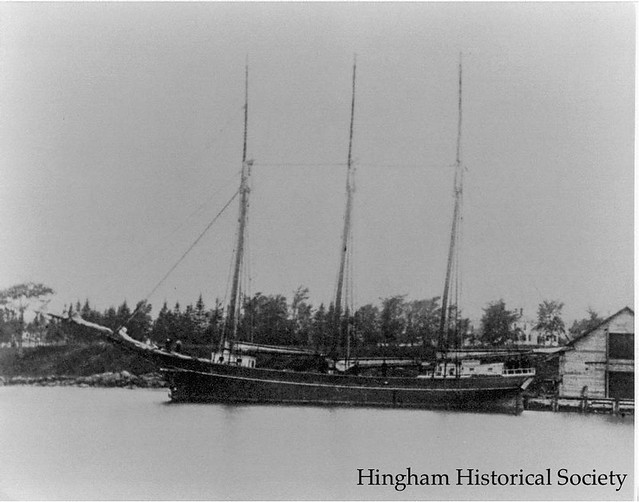


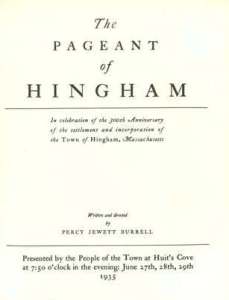 Hingham pulled out all the stops in preparation for its 300th anniversary celebration. Twelve hundred of the Town’s residents participated in a three-plus hour historical pageant, which was performed before 2,000 attendees on the evenings of June 27, 28, and 29, 1935. In the midst of the Great Depression, the Town appropriated an astonishing $14,000 for its tercentenary observance, which was written and directed by
 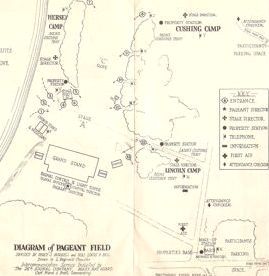 “The Pageant of Hingham” was performed on a sprawling outdoor set at what was then called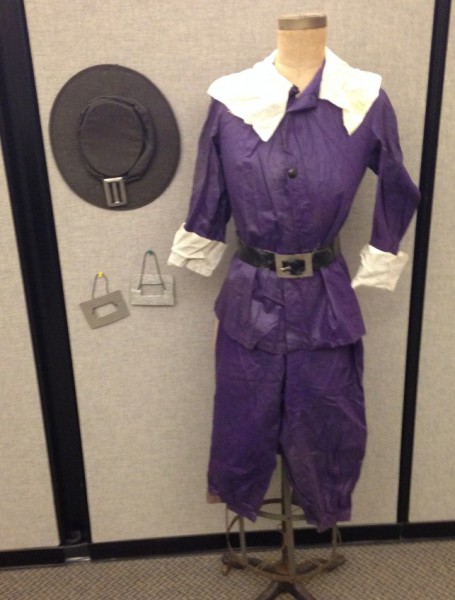
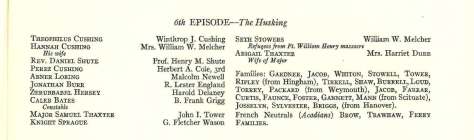 Young Newell and Herbert Cole, another Hingham boy also cast as an 18th century Hingham boy (Perez Cushing, 1746-1794), called out the names of the guests arriving at the Cushing farm. An example of their lines, taken from the Pageant Program: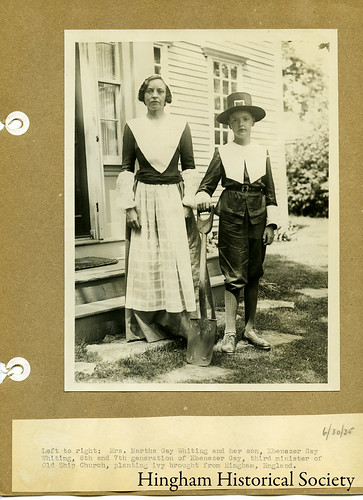
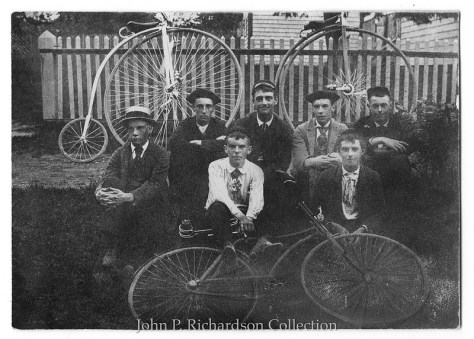 These seven Hingham boys posed with three bicycles are witnessing the birth of modern cycling. Behind them are two older bicycles—so-called “high wheelers” or “penny farthings” (the latter nickname descriptive of the relative sizes of the two wheels). High-wheelers originated in England and became popular in the United States in the early 1880s. As this photo lets us see clearly, these early bicycles had a “direct drive” mechanism, that is, the pedals attach directly to the wheel, so that the cyclist’s motion turns the wheel directly. Enlarging the front wheel, therefore, was the only way to make the bicycles go faster–and this is what happened. Front wheels often five feet in diameter, with the cyclist perched directly over the wheel, meant an increased risk of the cyclist pitching headfirst from the front of his bike. Cycling in the era of the high wheelers was a sport for athletic young men.








 Out of the Archives