From Witch Trials to Praying Indians to Old Ship Church

“To All Christian People to whome this present instrument shall come Greeting,” this deed in our archives opens magisterially.  The date at the bottom is equally impressive:   July 4, 1690, “Anno Regni & Regina Guilielmi & Maria Secundi” (in the second year of the reign of King William and Queen Mary).  The deed is executed by William Stoughton, “of Dorchester in the Colony of the Massachusetts Bay in New England,” and conveys several parcels of land in the vicinity of Broad Cove to Thomas Thaxter “of Hingham in the Colony aforesaid, yeoman.”  Stoughton is acting on behalf of “the Governor and Company established & residing in the Kingdome of England for the propagation of the Gospel to the Indians in New England &c.”
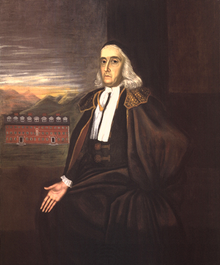
William Stoughton

William Stoughton

In addition to his service as a judge during the Salem witch trials (see our prior post about this document, “William Stoughton’s Seal”), and later service as first Chief Justice of Massachusetts’ Supreme Judicial Court, Stoughton was Lieutenant Governor of the Colony in the 1680’s and early 1690’s.  Among his many other public positions was Commissioner, and later Treasurer to the Commissioners, of the Company for the Propagation of the Gospel to the Indians in New England and the Parts Adjacent in America, a company chartered by Parliament in 1649 to support the conversion of New England’s native people.  The Company originally made investments in England and sent the income to the colonies, to be used to support conversion efforts, including John Eliot’s 1663 translation of the Old Testament into the Massachusett language, the creation of settlements for the so-called “Praying Indians” (including present-day Stoughton, Mass.), and other missionary activities such as the creation of a short-lived “Indian College” at Harvard College.  (These efforts may be familiar to readers of the recent historical novel Caleb’s Crossing, by Geraldine Brooks.)
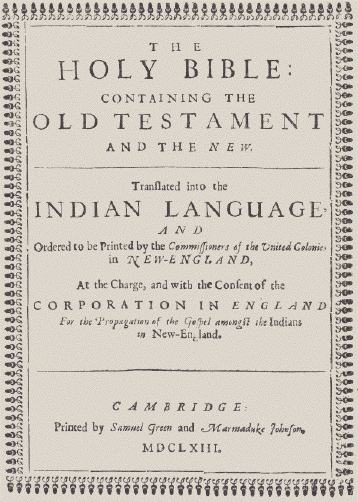
Eliot_BiblePoor returns on investments in England (including losses owing to the Great Fire in London) led the New England Company to start to send capital for investment in the colonies.  The task of finding suitable investments fell to Stoughton.  Two such investments, made in 1683, were loans of £50 each to Simon and Joshua Hobart of Hingham, sons of Captain Joshua Hobart, nephews of the Rev. Peter Hobart, and both identified as “mariners.”  The loans were secured by real estate in Hingham and, according to the legal structure of the day, evidenced by deeds conveying the parcels to Stoughton, upon the condition that if the greater sum of £66 was repaid four years hence, in 1687, the sale would be null and void.

It is not clear what happened to the younger Joshua Hobart’s land but, on July 4, 1690, Stoughton sold the land he had “purchased” from Simon Hobart to Thomas Thaxter, for the inappropriately small sum of £4.  In all likelihood, this sale to Thaxter was part of some larger transaction, of which we know nothing.
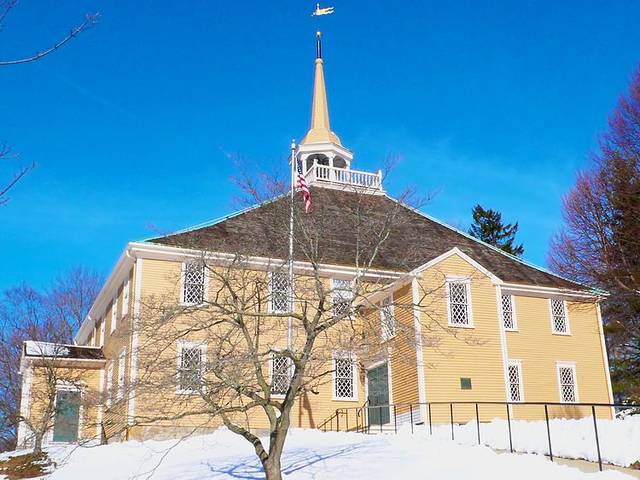
N__367777355How did Stoughton come to loan the New England Company’s funds to the Hobart brothers?  Stoughton had reason to be familiar with Hingham real estate in the early 1680’s.  In 1681, Hingham needed a new church, but a dispute arose about where to locate it.  The decision where to build what would become Old Ship Church was elevated to the General Court, which appointed an oversight committee, on which Stoughton served.  The Committee determined that the Church would be located on property purchased from Captain Joshua Hobart, adjacent to the parcels involved in the New England Company financing two years later.

From the Salem witch trials to the Praying Indians and back to Old Ship Church, this one old deed shows just what a small world 17th century Massachusetts Bay was.
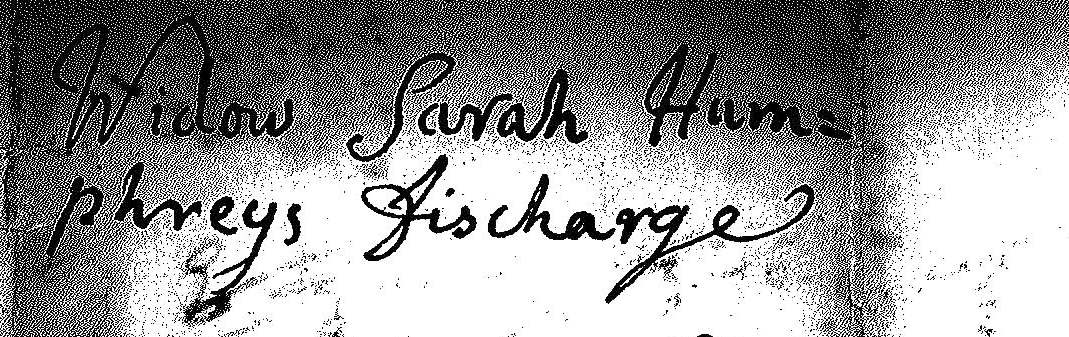
Widow Sarah Humphrey’s Discharge

A sad, tattered scrap of paper in our archives lets us see the effect on families of the colonial era’s high mortality rate–here the untimely passing first of a father and then of a child.

Title Widow Sarah Humphrey's DischargeSarah Humphrey was 32 years old and the mother of six living children (aged 11, 10, 8, 5, 2, and 4 months) when her husband Ebenezer died in 1745 at age 41.  Ebenezer Humphrey had been a weaver and a descendent of Hingham’s first settlers.  The family lived on High Street and appears to have been fairly well off (the inventory of his estate listed real and personal property worth £494).

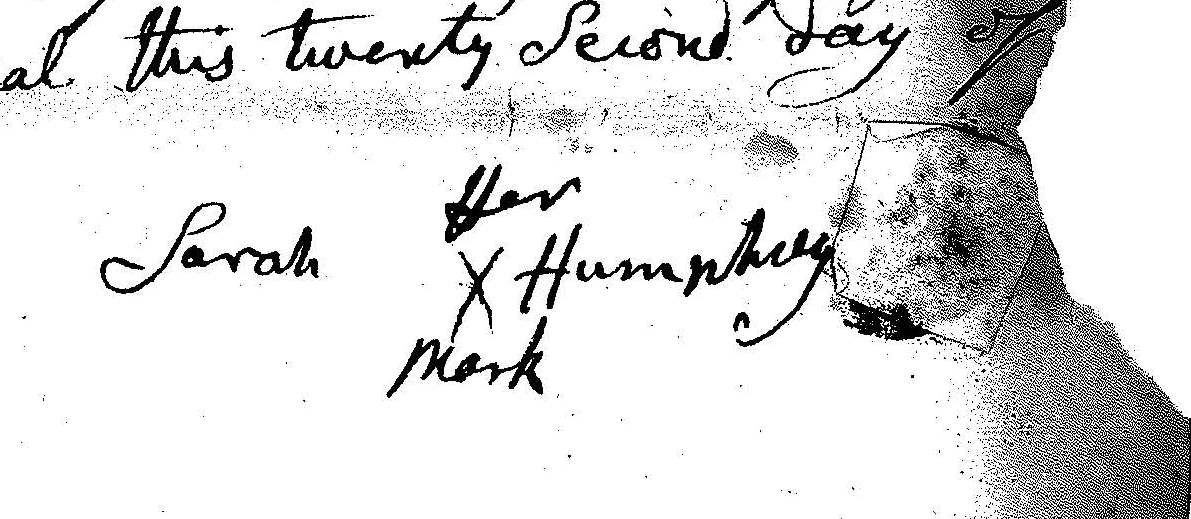
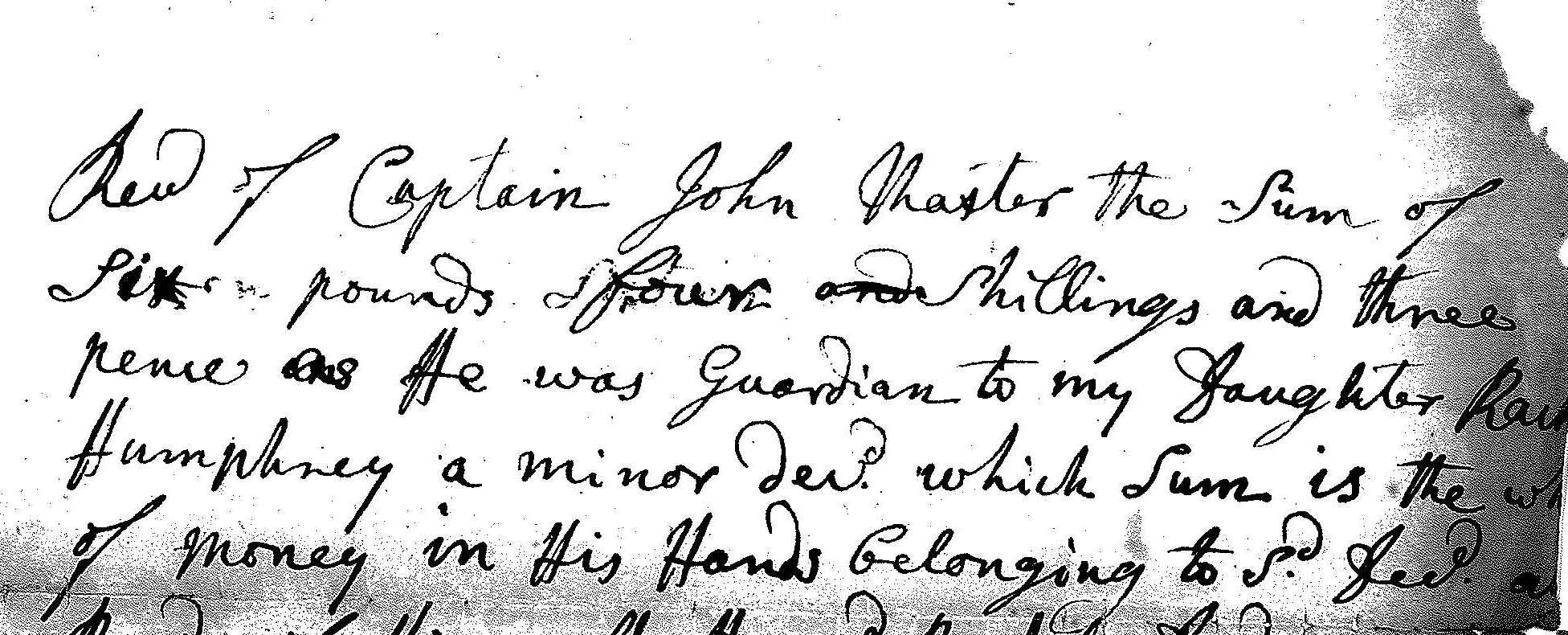
Cropped top of Discharge The document is Sarah’s sworn statement discharging John Thaxter from any further obligations as the court-appointed guardian of her daughter Rachel.  Rachel had died at the age of 17 and John Thaxter had returned to Sarah the property which he had held on Rachel’s behalf.  Sarah provided Thaxter a receipt acknowledging his full performance of his obligations:

 Rec’d of Captain John Thaxter the sum of six pounds four shillings and three pence.  He was guardian to my daughter Rachel Humphrey a minor dec’d which sum is the whole of the money in His Hands belonging to s’d dec’d minor.  Rec’d of him all s’d Rachel dec’d wearing appearell and what of Household Stuff or Goods that were in his possession and I do hereby for my self my Heirs acquit and discharge Him the s’d John his Heirs from s’d dec’d Estate having rec’d the whole of s’d dec’d Estate that was committed to his trust & care.  In testimony whereof I have sett my Hand & Seal this twenty second day of June A.D. 1758.

£6:4:3.                         Sarah Humphrey  (Her Mark)

Signed sealed in presence of

/s/ Welcome Lincoln

/s/ Hannah Barker

Sarah Humphrey Her MarkWhy was Thaxter named Rachel’s guardian (and the guardian of her younger siblings Mary and Ebenezer)?  The answer lies in colonial laws of property and inheritance that are very different than those with which we are familiar today.  Although Ebenezer Humphrey’s estate was relatively large, he did not leave a will.  Under Massachusetts law at that time, Ebenezer’s six children—not his wife—were his heirs.  Sarah was afforded a “dower share,” that is, the right to the use of one-third of her husband’s estate during her widowhood, but she did not own any of it.  It was very common, then, to appoint a guardian to take charge of the childrens’ inheritance during the years of their minority.

As administratrix of Ebenezer’s estate, Sarah accounted to the Probate Court in 1746 for amounts she had paid out of the estate, including the payment of Ebenezer’s debts, the “many implements of household allowed the widow,” and the expense of “maintaining and cloathing of three children . . . one of them 5 years, one 2 years, and one 4 months” for a year after her husband’s death.  Why just the younger three?  Perhaps her older children had been “put out” to work or learn a trade.  Perhaps they lived with relatives.  Probate records confirm that John Thaxter was appointed guardian of the three younger children in 1757, 12 years after Ebenezer’s death, for the express purpose of safeguarding what each of them had inherited from their father.  Why such a delay?  Had money started to run short?  The eldest child, Benjamin, had turned 21 the year before and Rachel’s big sisters, Hannah and Susanna, had just married.  Perhaps Benjamin, who was entitled to his share of the estate upon his majority, or Hannah’s or Susanna’s new husbands had raised questions about Sarah’s stewardship of her childrens’ inheritance.

We do not have any written discharge of John Thaxter as guardian of Rachel’s younger siblings, but his role as guardian was almost complete.  Ebenezer died in 1762 and Mary married in 1764.  Sarah Humphrey never remarried.  Having survived three of her seven children, she died, aged 70, in 1784.

The Old Salt Works

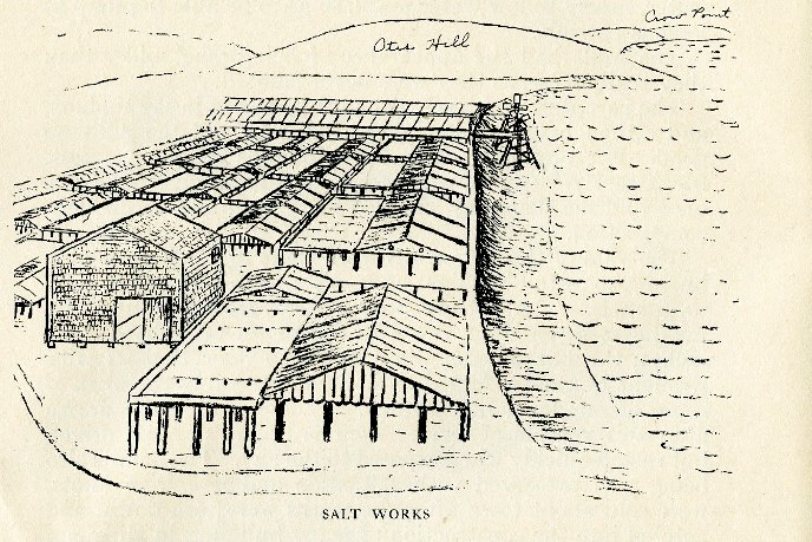
Illustration from "The Old Salt Works," Hingham Historical Society Publication No. 1 (1916)

Illustration from “The Old Salt Works,” Hingham Historical Society Publication No. 1 (1916)

The manufacture of salt in Hingham commenced at Broad Cove around 1812.  Buoyed by the rapid growth of Hingham’s fishing industry in the early years of the 19th century, several salt works were built, both at the easterly end of the harbor, near the steamboat landing, and on the salt meadows at Broad Cove.  Salt manufacture, “one of the old industries of Hingham,” was the subject of a paper presented to the Hingham Historical Society at its January 24, 1916 meeting, by Orin Brewster Sears, “a son of the proprietor of the [salt] works.”   The salt works owned and operated by Orin Brewster Sears’ father, also named Orin Sears, were built in the salt meadow along Otis Street, accessed by Fearing Road.  They were the last salt works to operate in Hingham.

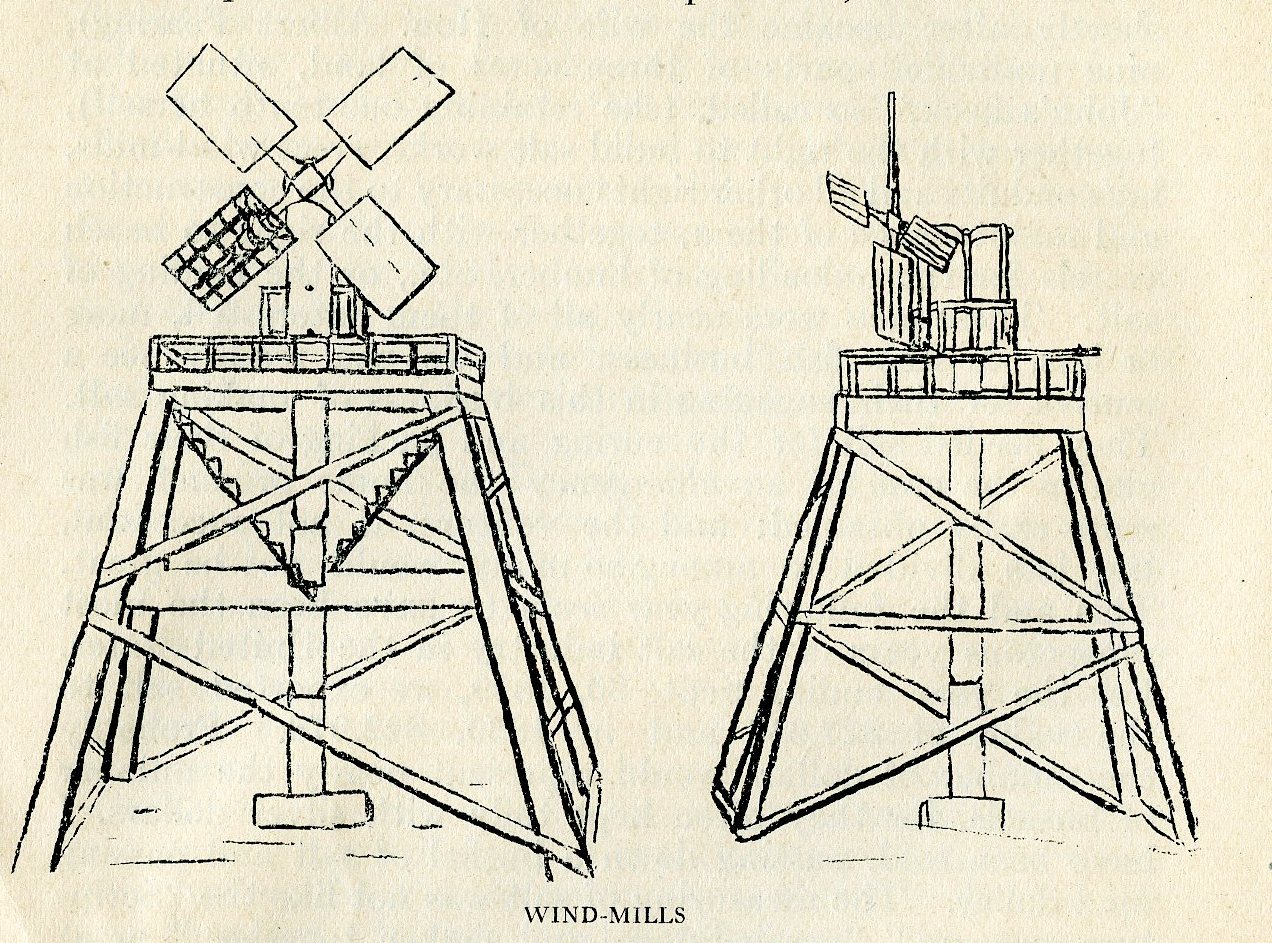
In his paper, “The Old Salt Works,” published in 1916 as “Hingham Historical Society Publication No. 1,” Sears described the method of extracting sea salt by solar evaporation.  Salt water was pumped from the harbor into two long rows of vats around 200 feet long, called the “water rooms,” which ran up from the harbor at the westerly end of the salt meadow.  The pumps used to fill the water rooms were powered by a pair of windmills.  The water sat in the vats, evaporating, until it began to deposit lime, at which point it was drawn, through a system of hollow logs, to the “pickle rooms.”  There, as evaporation continued, lime and other unwanted constituents of sea brine were separated from the salt and water and salt crystals began to form.  The liquid would then be drawn, again through hollow logs, to another set of vats in the “salt rooms.”   Here, as the salt crystals increased in size, they dropped to the bottom of the vats and were raked together, drained, and carried to the “salt house” to dry.  The entire process took around three weeks.

Illustration from "The Old Salt Works," Hingham Historical Society Publication No. 1

Illustration from “The Old Salt Works,” Hingham Historical Society Publication No. 1

The Sears family was instrumental in the development of New England’s salt industry.  Pre-revolutionary colonists imported salt from England.  The war-time embargo created a crisis on Cape Cod, where salted fish was a staple food and primary export.  Captain John Sears of Dennis is credited with having invented the method of sea salt extraction by solar extraction described above.  Well suited to New England’s climate, it was adopted across the Cape as our domestic salt industry grew, aided by tariffs imposed by the young United States government.  It was also the system used in Hingham.  Orin Sears moved to Hingham from Dennis in 1846, motivated by “the desire to keep his boys from going to sea,” then “the only lucrative business on the Cape.”  He purchased the salt works described in the Historical Society paper, although the heyday of the local salt industry had already passed.  Between the mid-1830s and the mid-1850s, as the result of the decline of its fisheries and the development of alternate domestic sources of salt, Hingham’s salt production declined from over 20,000 bushels a year to fewer than 2,000.

The Historical Society’s early interest in Hingham’s “old industries” went hand in hand with the early 20th century belief in progress.  Sears waxed philosophical in his talk about the disappearance of the old ways:

It may seem strange to some of us in this day of development, with mines of rock salt, salt lakes, and salt springs almost everywhere, that our fathers should have been obliged to procure their supply from the ocean; no less so that with our country filled to overflowing with petroleum, they should have been obliged to brave the dangers of the whale fishery, for oil for illuminating purposes.  Those of us who have lived to watch the transition from tallow candle to the electric light, from the lumbering stage coach over rough roads to the automobile on the modern oiled stone boulevards or swifter steam express trains, from the messenger to the wireless telegraph, have reason to thank God that we live in the twentieth century.

A Resolution Reached At Town Meeting

ayrshireThe great thing about poking around in an archive as rich as ours at the Hingham Historical Society is that connections are there to be made.  Half the story might be in one document—and then the other half pops up.  A prior post on this blog (“An Appeal to Town Meeting”) was about the address of an unnamed 18th century farmer to Hingham’s Town Meeting.  The farmer had complained that he was unable to drive his livestock to pasture at the Great Lots, or bring off any produce, because  another Hingham farmer, Thomas Hersey, had built a stone wall across a public way.  The farmer had came to Town Meeting armed with evidence that, he claimed, proved that one hundred years previously the Town had authorized the laying out of a road to ensure the access to the very same Great Lots now blocked by Mr. Hersey.  And there the story ended.  The documents we were looking at were from the Hersey Family papers, and they left the identity of the petitioner and the outcome of the dispute unknown.

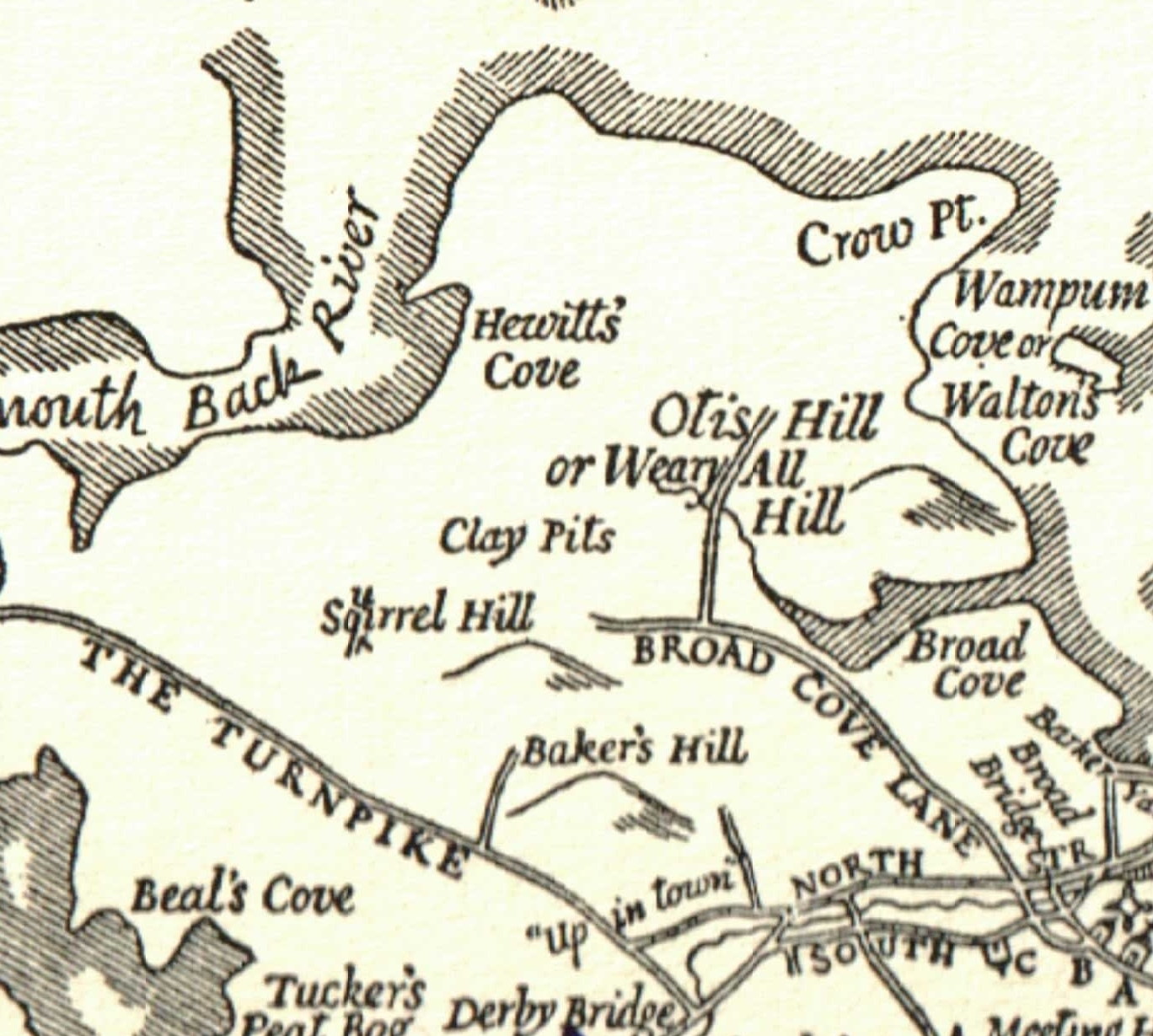
Detail from D.A. Dwiggins' map of Hingham, "The Old Place Names," 1935

Detail from “Historic Map of Hingham, Mass.,” Hingham Public Library Local History & Special Collections

But it turned out that the rest of the story was nearby, in our Thaxter Family papers, because the unhappy petitioner was John Thaxter, Sr., who left a memorandum describing the resolution reached at Town Meeting, together with the “true copy” of the 17th century Town Meeting vote upon which he relied.  John Thaxter presented the dispute to Town Meeting on December 17, 1794.  He presented evidence that in June 1694, almost exactly 100 years previously, Josiah Loring had complained to the Town Meeting that he could not access his own pasture at the Great Lots.  The solution he had proposed, which was accepted by the Town, was the laying out of a public way between Broad Cove Lane and Goles Lane (the “Turnpike”) adjacent to the Great Lots and the Squirrel Hill Lots.  According to Thaxter’s memorandum, written the next day, here is what happened:

At a Legal town meeting in Hingham June ye 19th 1794.  The within votes of the Town [i.e., the 1694 record] were presented to the Town by John Thaxter as a memorial that the high way from Goles Lane to Broad Cove Street which has been passed & repassed on time immemorial is now stopped up by Thomas Hearsy erecting a stone wall across the same whereby said Thaxter is deprived from going to his pasture at great Lotts in a great measure.  As the meeting was thin the town thought there was a probability of said Thaxter & Hearsy settling the difficulty subsisting between them and they labored for an accommodation.  Said Thaxter then made said Hearsy a proposal.  As both of them had said they would not remove the wall, that if said Hearsy would send a hand he would another to remove the wall, which said Hearsy agreed to.  Then said Thaxter withdrew the memorial and nothing further was acted by the Town.  The wall was removed the next day.

So, with some encouragement (or pressure) from their neighbors, John Thaxter and Thomas Hersey settled their dispute, agreeing to share the job of removing the stone wall which Thaxter had proved was an obstruction on a public way.

Thaxter and Hersey were contemporaries, born two years apart in the early 1730s.  Hersey lived on Lincoln Street, Thaxter on South Street; both spent their entire lives in Hingham, except for military service and Thaxter’s years at Harvard College.  They must have known each other very well.  We don’t know what their personal relationship was or how this incident fit into it.  They have, however, provided us a glimpse into how local land use disputes were handled in a long-ago era.

Lincoln on Lincoln (and the start of the Civil War)

When John Barker, subject of two prior posts on this blog (“A Soldier Writes Home” and “John Barker at Gaines Mill”), went off to war in 1861, 15-year old Francis H. Lincoln of Hingham was a student at Derby Academy.  In two bound volumes, preserved in our archives, he minutely described his primary and secondary education.  The Academy’s rules (memorialized in these books) provided that “the writing of compositions be required of the scholars as often as once a fortnight during each term.”  Lincoln recorded each of his efforts in these volumes.

Two of Lincoln’s compositions written during his last year at Derby took current events as their subject–South Carolina’s secession from the Union, the election of a distant relation as President, and the coming of war.  In February 1861, two months after South Carolina seceded, he penned “A Fable on the Times”:

“Once upon a time” when the people of the United States elected their President, the South or Southern States, the inhabitants of which were mostly Democrats, generally outvoted the Republicans and other parties of the North; but in 1860 at the Democratic conventions, for nominating candidates for the Presidency they were unable to agree, and Republicans outvoted the other parties, and selected Abraham Lincoln of Illinois, President.

Mr. Lincoln being a man opposed to slavery, South Carolina, a miserable little State, tried to rebel against the Union, by seceding and making war, endeavoring to get some other small states to join her, and form what they intended to call the “Southern Confederacy.”

How this will turn out, nobody knows, but probably the Republicans will be masters of the Union.

“Haec fabula docet” that persons must not think that they can be masters of everything, that they must be sometimes willing to give way to others; and it is best to begin these habits in early life, for the child that is permitted to have its own way will grow up like South Carolina creating hatred, and perhaps war. Therefore, O parents, “lead up children in the way they should go;” therefore, O Republicans, do your best; correct South Carolina in her mad course, and “lead it up in the way it should go.”

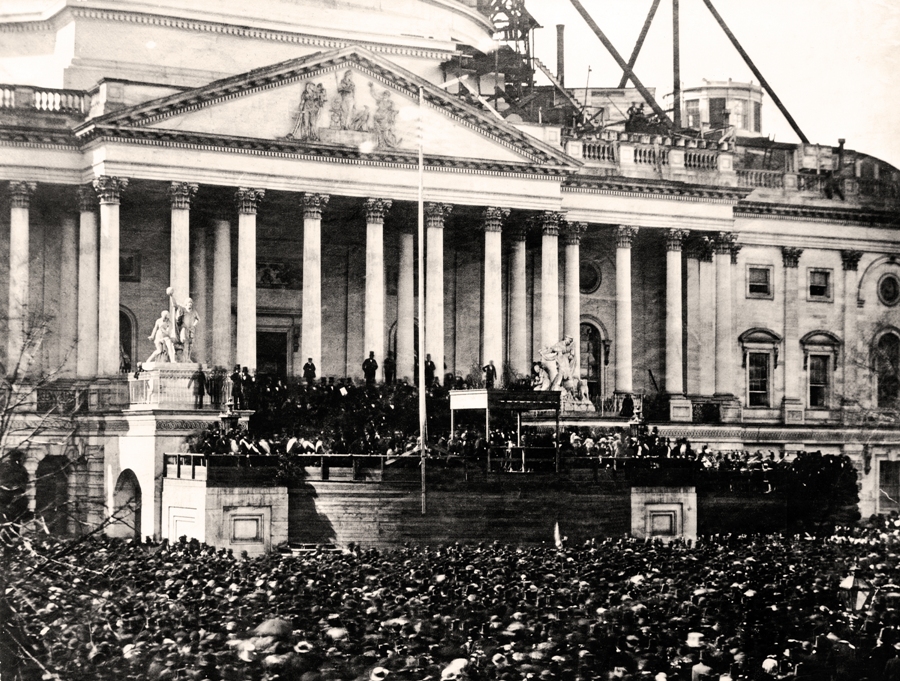
Inauguration of Abraham Lincoln, March 5, 1861. Photo from Lincoln Collection, Library of Congress

The next months were eventful.  Lincoln’s June 1861 composition was titled, “Fort Sumter”:

 This fort, which is situated upon an island in the harbor of Charleston, South Carolina; was taken by Secessionists in the spring of 1861, shortly after the inauguration of Abraham Lincoln as President of the United States.

Although much might be said about Fort Sumter, I shall not confine myself to that in particular, but shall write concerning the present rebellion in general.

The Southern or slave-holding states, especially South Carolina, have probably desired to be separated from the Northern for more than twenty years; and until now have not had what they thought could be called a reasonable excuse. Once, I believe, during the administration of Andrew Jackson, they made an attempt at secession, but failed, as they must now.

They have now made the excuse, that Lincoln will interfere with their institutions, and do all in his power, to free their slaves; but this is nonsense; for Lincoln said in a speech before he was elected, “I shall not meddle with their institutions or slaves, but I shall certainly not permit them to extend slavery any farther than it has now gone.”

Persons who had sworn allegiance to the Government and Laws of the United States, have proved traitors, and have done all in their power to destroy the Union; and have done, also, to accomplish this object, the worst thing they could have done for themselves, that is, opened war upon us; and when Major Anderson (who was in command at Fort Sumter) and his handful of men, were nearly starved, opened fire upon him, and shame upon him, a Massachusetts man was the first to fire upon him.

The North should and will have revenge. “The Union must and shall be preserved.”  There are still at the South, many who would give all their property to preserve the Union, and such men should be delivered from the hands of those mean and cowardly scamps who are compelling them hither to die or fight for them.

But they will be freed, and their persecutors punished, and if the leaders, viz. Jefferson Davis & Gen. Beauregard and a few others escape with their lives they may congratulate themselves.

Enjoying the “Cool Sea Breezes” at Hingham’s Old Colony House

The advent of mass transportation in the mid-19th century helped create the summer tourism industry that has been so important to our regional economy.  When New England and the Sea, an historical survey of our maritime heritage, addresses the rise of seaside resorts, it tips its hat to Hingham:  “. . . one had to have a summer house at the shore, or go to the White Mountains, or stay at one of the fashionable hotels—say, the Old Colony House at the head of the harbor in Hingham . . . .”

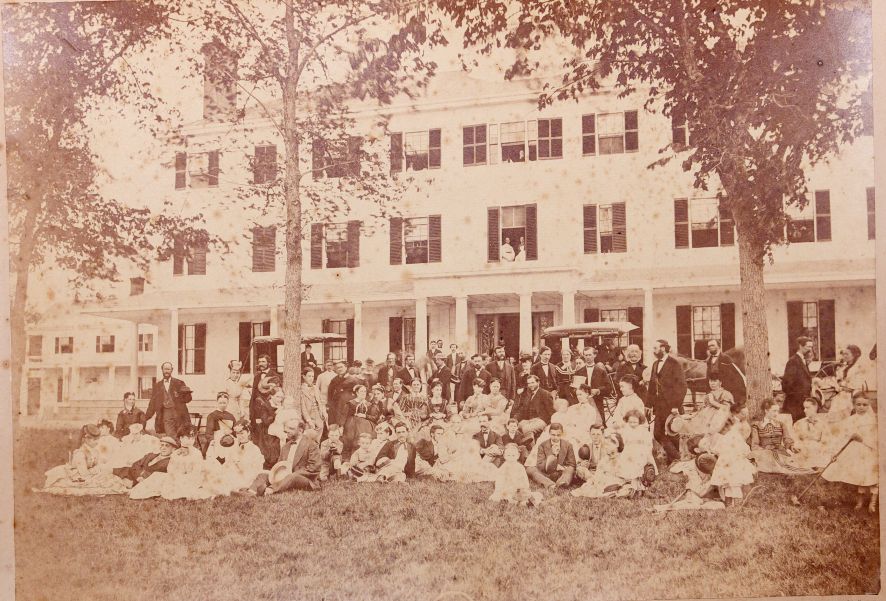
A gathering in front of the Old Colony House. Photograph from the archives at the Hingham Historical Society.

Built in 1832 by the Boston & Hingham Steamship Company, the Old Colony House was an early example of the symbiotic relationship between the infant transportation and recreation industries.  The steamboat General Lincoln made the trip from Boston to Hingham swift (around 75 minutes) and pleasant, while the Old Colony House, erected on Summer Street near Martin’s Lane, created a destination, increasing passenger traffic on the vessel.  The railroad came through Hingham in 1849, and one of the stops on the new South Shore Railroad, called “Old Colony House,” was close by the hotel, providing easy access from Boston—and soon thereafter, the opportunity to change trains for Nantasket.  (The station’s descendent is today’s Nantasket Junction stop on the MBTA Greenbush Line.)  After the Civil War, the great Nantasket hotels drew business away from the Old Colony House, which was in decline when it burned in 1872.

The Historical Society’s archives include a collection of the business papers of Alfred C. Hersey.  Among Hersey’s many business interests (largely in the shipping and transportation industries) was the Old Colony House, which the steamship company sold in the late 1830’s.  Hersey’s 21-page handwritten inventory of the hotel’s furnishings, made in May 1860, provides important detail about what a New England resort hotel of the 1860’s was really like.

The inventory faithfully describes the furnishings of each room of the hotel, including dining room, parlors, billiard room, bowling alley, and office, specifying quantities, materials, and state of repair.  In the “East Parlor,” for instance, guests could sit on their choice of 6 damask covered sofas (4 “slightly stained”), 1 stuffed arm chair, 13 black walnut stuff bottom chairs, a stuffed rocking chair, and 10 black arm chairs (which had among them, however, only 8 cushions).

A typical guest room was furnished with a bedstead, mattresses, bolster and pillow, bureau, washstand, looking glass, mosquito netting, chamber pot and cover, soap cup, mug, and curtains.  A servant’s room in the attic, by contrast, had a bedstead, mattress, bolster and pillow (“stained”), wooden chair, toilet table (“defaced”), “small” looking glass, basin and ewer, and soap cup.  (Servants’ rooms in the scullery appear to have had significantly fewer furnishings.)

The inventories of the kitchen and laundry provide detailed lists of equipment.  To launder the hotel linens and guests’ clothes required water casks, grease casks, basins, wash boards, starch pans, a mangle, clothes horses, brushes, 11 flat irons, iron racks, and an iron heater.

The contents of the kitchen and “pastry room” tell us about the hotel’s fare.  There were large and small frying pans, copper and iron sauce pans, a meat saw, large and small steamers, tin and copper baking and cake pans, iron cake molds, tin jelly molds, a gridiron, waffle irons, coffee pots, a tea chest, ice cream freezers, an ice cream chest, and an ice cream scoop.  The “pastry room” was furnished with a bed—the pastry cook must have needed to rise early.

In a series of travel letters published as A Trip to Boston in 1838, Enoch Cobb Wines wrote warmly of the

splendid and well-kept Old Colony Hotel, the refined social pleasures it affords, the noble view enjoyed from the observatory on its roof, and the cool sea breezes that almost enable you to put summer at defiance. . . . [It]t presented a gay and happy appearance.  The broad piazza which surrounds three sides of the house was thronged with smiling groups, in which a due intermixture of the gentler sex was not wanting . . . .

. . . There was an excellent band from Boston there, and we had the poetry of music, the poetry of motion, and the poetry of social happiness, all in high perfection; and afterwards the poetry of sound sleep in the cool air, for which the proprietor of the Old Colony seems to have made a perpetual contract.

Christmas in Hingham, 1857

Christmas 1857.  Francis Henry Lincoln of Hingham was an 11-year old student at Derby Academy.  When school resumed in January, he wrote a composition, entitled “Christmas,” which is preserved in our archives.  Lincoln recounts how he and his older brothers Solomon and Arthur spent their “very merry Christmas.”

Christmas is the day on which the birth of Christ is celebrated.  It is a holiday.  In many parts of the world, the week in which the anniversary occurs, is devoted to amusements.  I had a very pleasant Christmas this year.  I will give you some account of it.  In the morning I awoke as usual and found in my stocking a very handsome present.  In the forenoon I went to Loring Hall to see the committee of arrangements prepare the tables for the party in the evening.  The First Parish usually have a special social gathering on that evening.  At noon I witnessed the firing at a target by two gentlemen in our neighborhood.

After enjoying a Christmas dinner Solomon Arthur & I went into the field in the rear of our house and fired at a target with Solomon’s gun.  I then read a while at home. In the evening I attended the Parish party at Loring Hall. There was dancing until eight o’clock, when there was an intermission; during that time the scholars connected with the Sunday School were collected in the saloon and marched into the Hall. Arthur acted as Marshall.

I had been appointed to present to my cousin Henry E. Hersey, the superintendent of the school, a writing desk in behalf of the scholars.  Mr. Hersey, being introduced, I made a short speech and presented the desk to him.  He made a short speech in reply, expressing his warm thanks to the scholars.  Dancing was then resumed.  Afterwards by an invitation of my Sunday School teacher, I went to his house and received from him a present of a very interesting book.  I then returned to the Hall and spent the remainder of the evening in dancing.  We had refreshments and excellent music.  I went home between twelve and one o’clock having spent a very merry Christmas.

The Royal Navy’s “Eyes on the Prize”

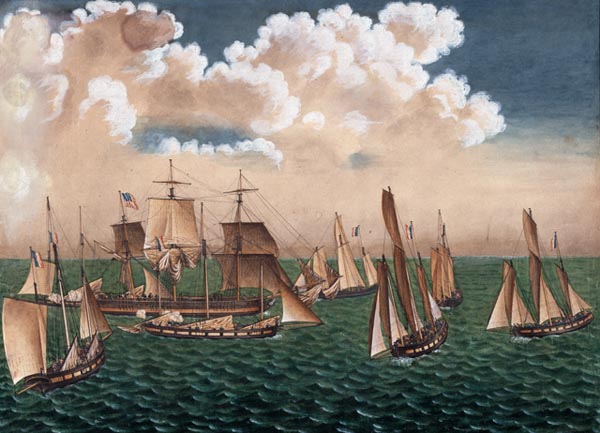
The Betsey, surrounded by seven French corsairs.  Anonymous, 1797.  Courtesy of The Mariners' Museum, Newport News, VA.

The Betsey, surrounded by seven French corsairs. Anonymous, 1797. Courtesy of The Mariners’ Museum, Newport News, VA.

The European powers were at war in the 1790’s and first years of the 19th century, and their war at sea posed obstacles to the United States’ young merchant fleet.   British seizure of American merchant ships and their cargoes and impressment of U.S. sailors into naval service was famously one cause of the War of 1812.

The law of the United States, France, and other European powers distinguished between a neutral vessel and one sailing under the flag of an enemy state, but 18th century British law—as applied by the Royal Navy and privateers—allowed “enemy goods” or “contraband” on a neutral vessel to be seized as a “prize.”

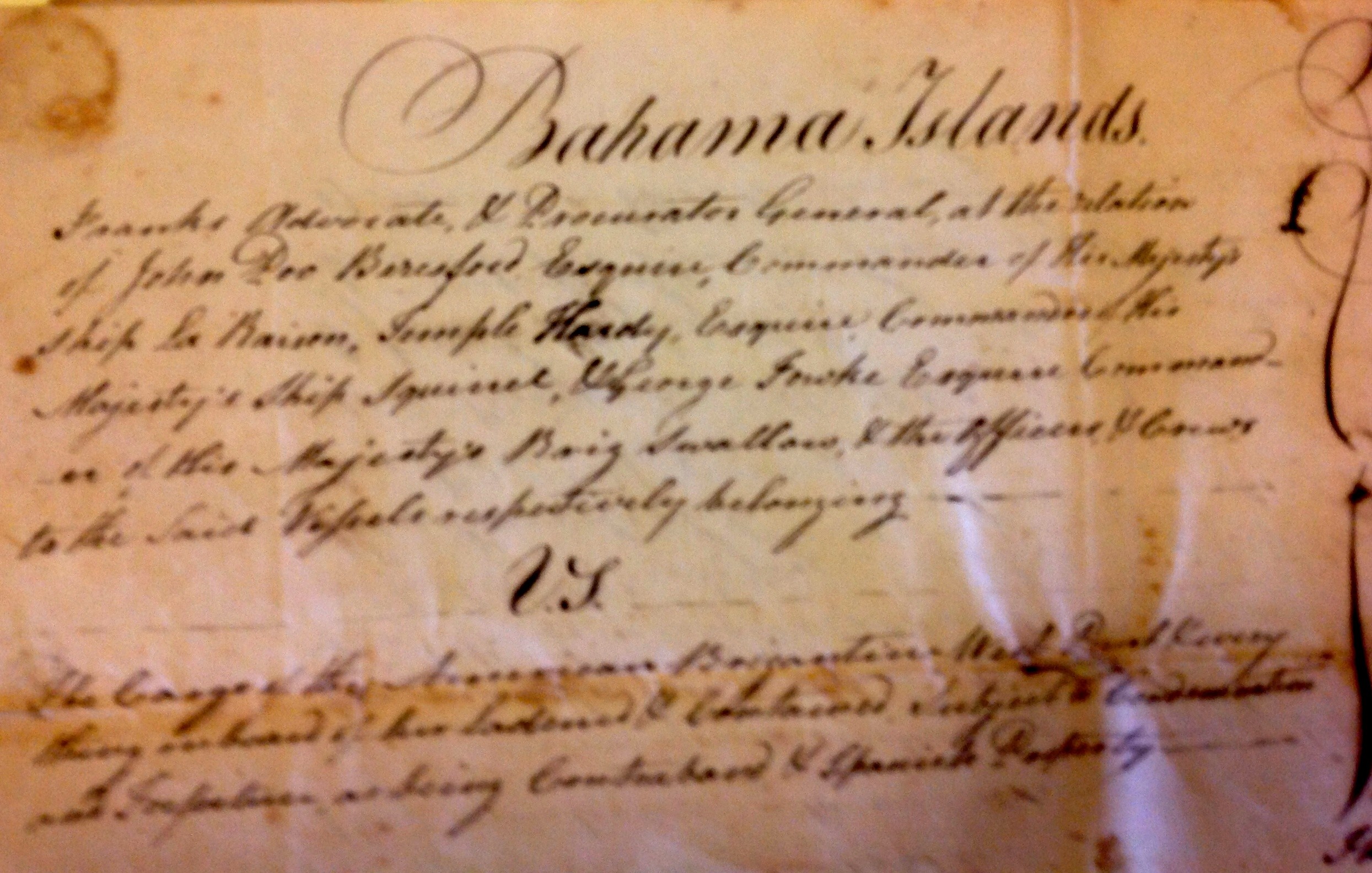
In 1797, Britain was at war with revolutionary France and its ally Spain.  In April of that year, the American merchant ship West Point was en route from Charleston to Havana when it was seized by three British Navy vessels, HMS Squirrel, HMS La Raison, and H.M. Brig Swallow.  They escorted the West Point to port at Nassau, “in order that the cargo might be adjudged and condemned as lawful prize to the captors.”  A libel in admiralty was filed on behalf of the commanders, officers, and crew of the three  vessels, who would participate directly in any recovery.  The commanders claimed “[t]he Cargo of the American Brigantine West Point and every thing on board of her ladened and contained subject to condemnation and inspection as being contraband” or property which “at the time of capture belonged to the king of Spain or his vassals or subjects or some person or persons inhabiting within the territory of Spain.”

The Admiralty Court examined evidence including markings on the goods, invoices, bills of lading, and statements from the crew and, on May 3, 1797, issued its decision, preserved in our archives.  Some but not all of the cargo was awarded to the British officers as their “prize.”  The Court held the libel supported (i.e., it decided that the Americans had not been able to prove that the seizure was unlawful) as to three categories of property.

First, the British were awarded a portion of the ship’s cargo, including 110 pieces of “osnaburg,” a coarse linen cloth manufactured in Britain; 45 iron pots, a barrel of earthenware, and a crate of cheese.  These goods had no customs mark and the ship’s captain could not produce any invoices or bills of lading for them.  Second, they were awarded a “large trunk of sundry articles” belonging to the unfortunate but otherwise unidentified “Francisco Selgado,” as well as other items owned by West Point crew members who presumably were Spanish subjects.  Third, and probably most valuable, they were awarded 19 coils of rigging cordage, 153 barrels of tar, 17 barrels of pitch, 1 bundle of steel, and 9 casks of lead which, the Court found, were being shipped by the American crew “contrary to their neutrality as subjects of the United States.”  These items presumably fell into the category of “contraband,” or items of material assistance to Spain’s war efforts.

From the naval officers who populate Jane Austen’s novels to Horatio Hornblower to Master and Commander, the figure of the ambitious young man joining the Royal Navy to make his fortune is a familiar one.  The “prize” system helped those men accomplish that end.  The officers of the Swallow, Squirrel, and La Raison did gain from the seizure of the West Point, although none of them made a fortune that day.

John Barker at Gaines Mill

To follow up on our post about the stationery, envelopes, and postage on John Barker’s Civil War letters home, we’ll allow Barker to speak for himself, through a letter to his sister, preserved in our archives.  He describes his first serious battle, at Gaines Mill, a Union defeat during General George McClennan’s 1862 Peninsula Campaign:

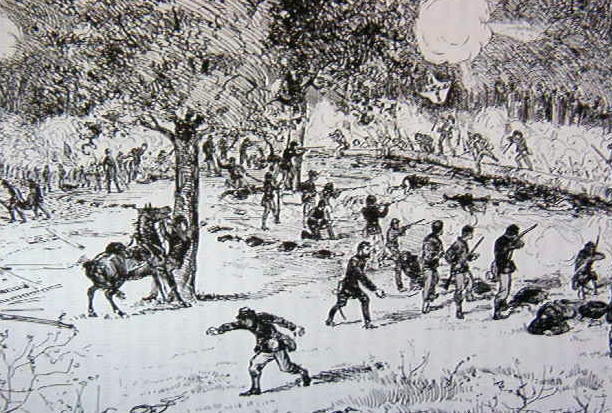
. . . At about noon the skirmishers began to fire & kept it up till about 3 in the afternoon, when the fight commenced in earnest.  Our Reg’t was not engaged until 5 o’clock when the line in front were driven back.  They went to our rear & then came the tug of war for us & it came in earnest too.  Such roars of musketry I never heard although I thought I had heard it before when it sounded musical to some extent & the artillery above all this.

The Massachusetts 22nd, John Barker's regiment, at Gaines Mills.  (Source:  Parker, Henry Wilson's Regiment:  History of the 22nd Massachusetts Infantry)

The Massachusetts 22nd, John Barker’s regiment, at Gaines Mill. (Source: Parker, Henry Wilson’s Regiment: History of the 22nd Massachusetts Infantry)

On they came and we were forced to retreat.  Just as the retreat commenced I stopped & layed down.  I had a hole through my right breast.  The ball entered my breast & passed through my lung came out just below my shoulder blade.  I bled dreadfully.  The blood completely soaked my clothes & I also bled inside a good deal but as narrow as my escape was I have lived through it.  The Reg’t was on the retreat when I was wounded, & in two minutes the Rebels were about me & as they advanced our artillery from the hills opened on them with grape and canister, which was scattered all around where I lay covered me with dirt & mowing the foe down in great numbers & killing some of our wounded left in the field.  The fight lasted till night then stopped when two of the Rebels came to me & helped me back to the woods close by where I was left till the next day afternoon.  I was in great pain all night.  It was with difficulty I could breath at all & did not know I should live to see morning again & at time was in so much distress I almost wished I were dead, but got through the night & the next day did not feel quite so bad.

In the afternoon I was taken & carried to a house close by where were 275 of our wounded men & I asked our Dr. who was taken also what he thought of my wound & his reply was that I might possibly get over it. But he could do nothing for it.  He told me to keep it wet with water & I tore one of pockets out of my pants & cut it in two, & put one piece on my breast & one on my back.  I kept it wet all the time. . . .

The first week at the house I layed out on the ground, after that got into an old hovel and stayed there.  For the first week they buried from 8 to 15 each day, after that not so many.  Our living was very poor but we made out to live some of us at least.

. . . [O]ne morning there came 30 or 40 baggage wagons & they piled us in & drove off.   Such groaning as that I should not hear again.  They drove us in wagons with no springs for 5 miles over a corduroy road of the roughest kind, then we were loaded off into the cars, what of us were not put on top.  Just as we got ready to start it began to rain & blow, which it did for the next hours in earnest & wet me nicely I being outside.

At night we arrived at the city of Richmond.  That night & till noon the next day stayed in the depot, then were taken to an old tobacco factory in which we stayed a week peeking through the grates in the windows & lying on the nasty floor.  There were 800 sick & wounded prisoners in that building & we had to live on rather short allowance I tell you. . . .

Barker was lucky that his stay at the notorious Libby Prison (the “old tobacco factory”) was short.  He was part of one of the first prisoner exchanges of the war and returned North after only one week.  He closed his letter to his sister, written from a Pennsylvania military hospital, with the report that “[t]he Dr. examined me this morning & says he thinks my lung will soon be nearly as good as ever.”  The doctor was right:  John Barker was back with his regiment for the Battle of Gettysburg, was injured again, and returned to Hanson.  He married and became a shoemaker, dying in 1903.  His name appears on Hanson’s Civil War monument.

A Soldier Writes Home

Unlike 20th century soldiers, whose mail home traveled for free—or 21st century soldiers, with access to email—Civil War soldiers typically had to purchase their own stationery, envelopes, and stamps in order to write to their loved ones at home.  Our collection of letters which John Barker of Hanson sent home between December 1861 and January 1863—and their envelopes—help tell that story.  Writing materials and stamps were not always easy to come by.  In an 1862 letter home from East Point, VA, Barker wrote:

I suppose that the girls have begun their school.  I would wright them but I have only one stamp and the letters will not go without them now.   I should like to have you send me some if you have them for they cannot be got hear for love nor monney.

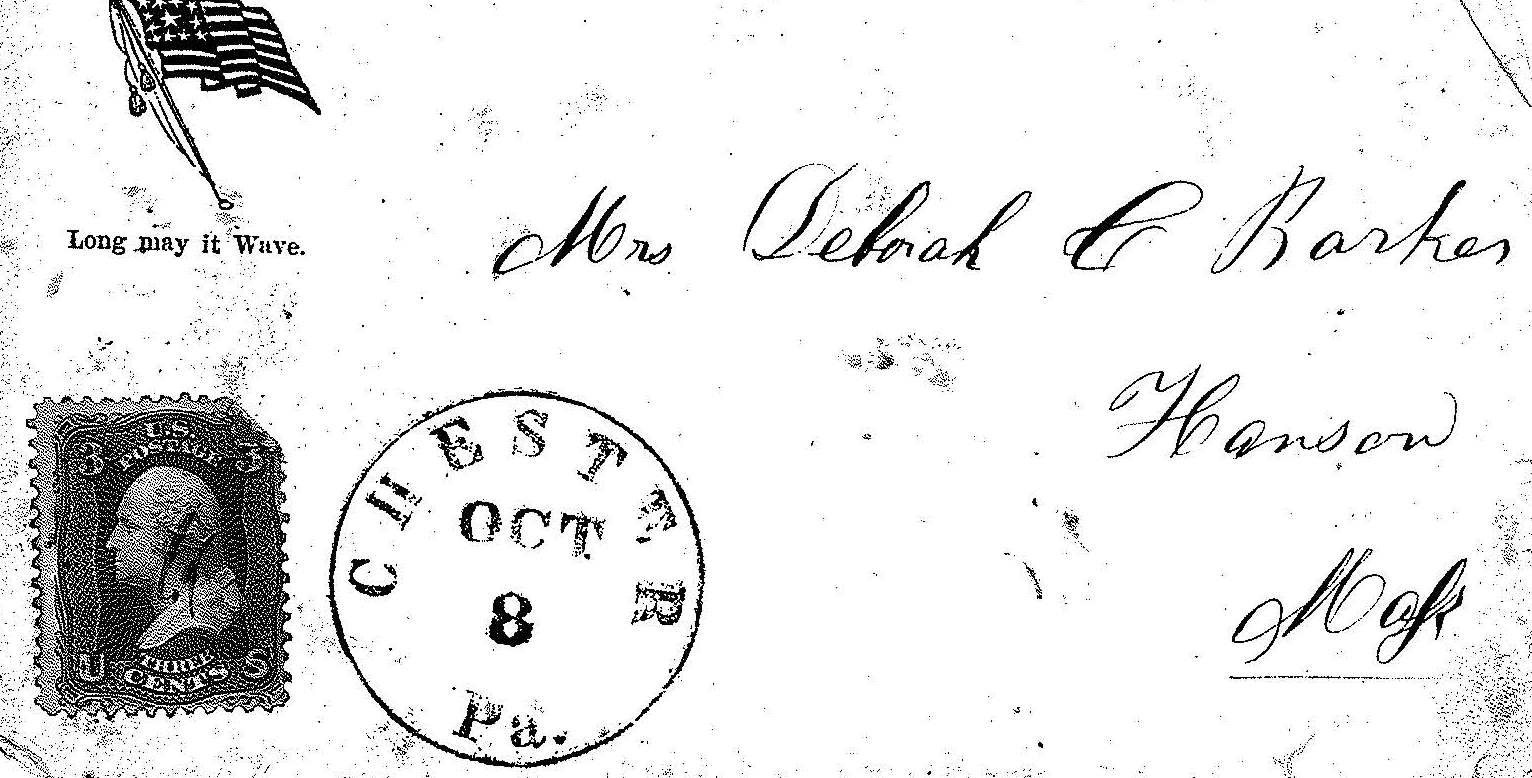
StampedBarker apologized for his poor writing materials when writing from camp (“Do not know as you can read this for it is poorly written and my pencil is short”) while in a later letter from a military hospital in Pennsylvania, he remarked upon the quality of his stationery (“I must stop now for I have filled this great white sheet of paper”).  A first-class stamp for a letter sent east of the Mississippi cost three cents.  The 3¢ stamp with Washington’s profile used on Barker’s envelopes was issued after Fort Sumter and used throughout the war.

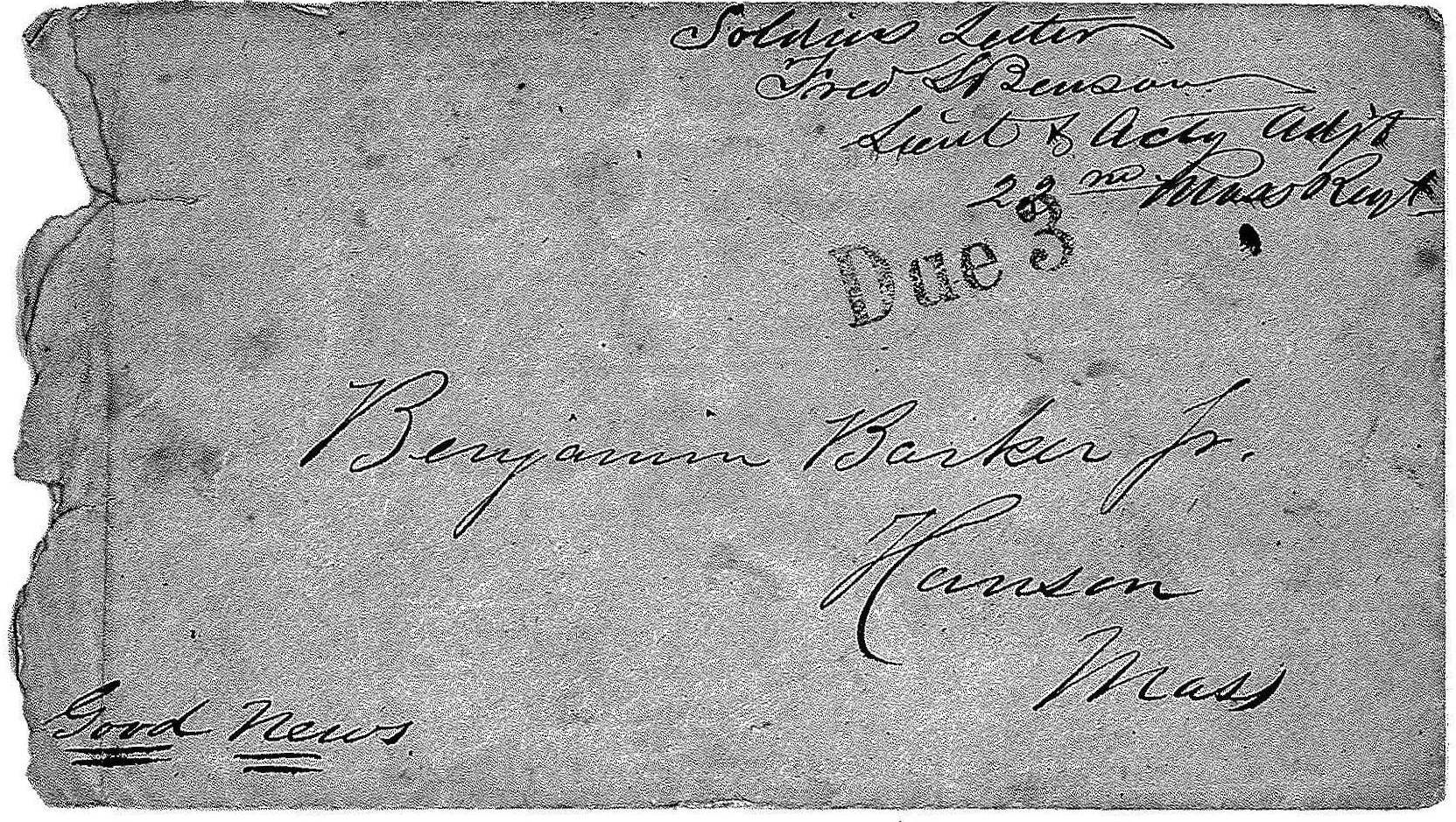
Mixter EnvelopeStamps were not always available, as Barker notes.  Letters would be delivered if labeled “Soldier’s Letter” and accompanied by a soldier’s name and regimental information.  The postage due was stamped on the outside of the envelope, to be paid by the recipient.  Barker was taken prisoner in the summer of 1862 and after his commanding officer learned that he was well and would be sent North in a prisoner exchange, he wrote the family a letter.  Marked “Soldier’s letter” and inscribed with an officer’s name, it was stamped “Due 3” and delivered to the Barkers.  (Note the handwritten note, “Good news,” in the lower left hand corner of the envelope, a reminder of what a terrifying prospect a letter from a soldier’s commanding officer would have been in the circumstances.)

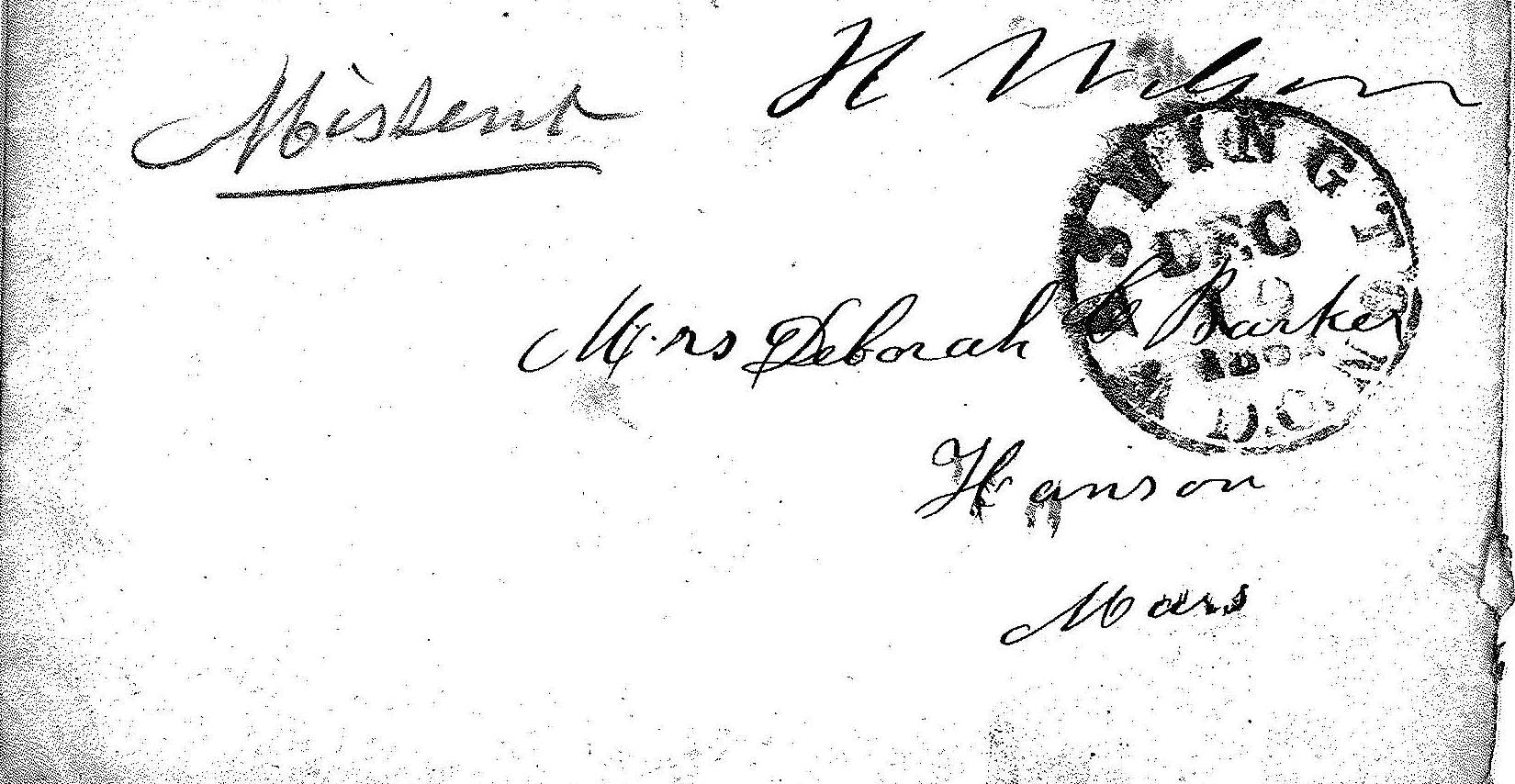
FrankedInterestingly, Barker did for a period of time have the opportunity of sending letters without buying stamps.  He served in the Massachusetts 22nd Regiment, which was organized by Henry Wilson, then a sitting United States Senator from Massachusetts (and later Vice President under President Ulysses S. Grant).  Barker’s first letter home, from training camp at Hall’s Hill, Virginia, has no stamp.  Instead it was “franked,” i.e., Henry Wilson’s signature appears in the upper right hand corner in place of a stamp.  Union military officers did not ordinarily enjoy franking privileges; presumably, Barker was able to send some early letters without postage because his commanding officer was a sitting member of Congress.

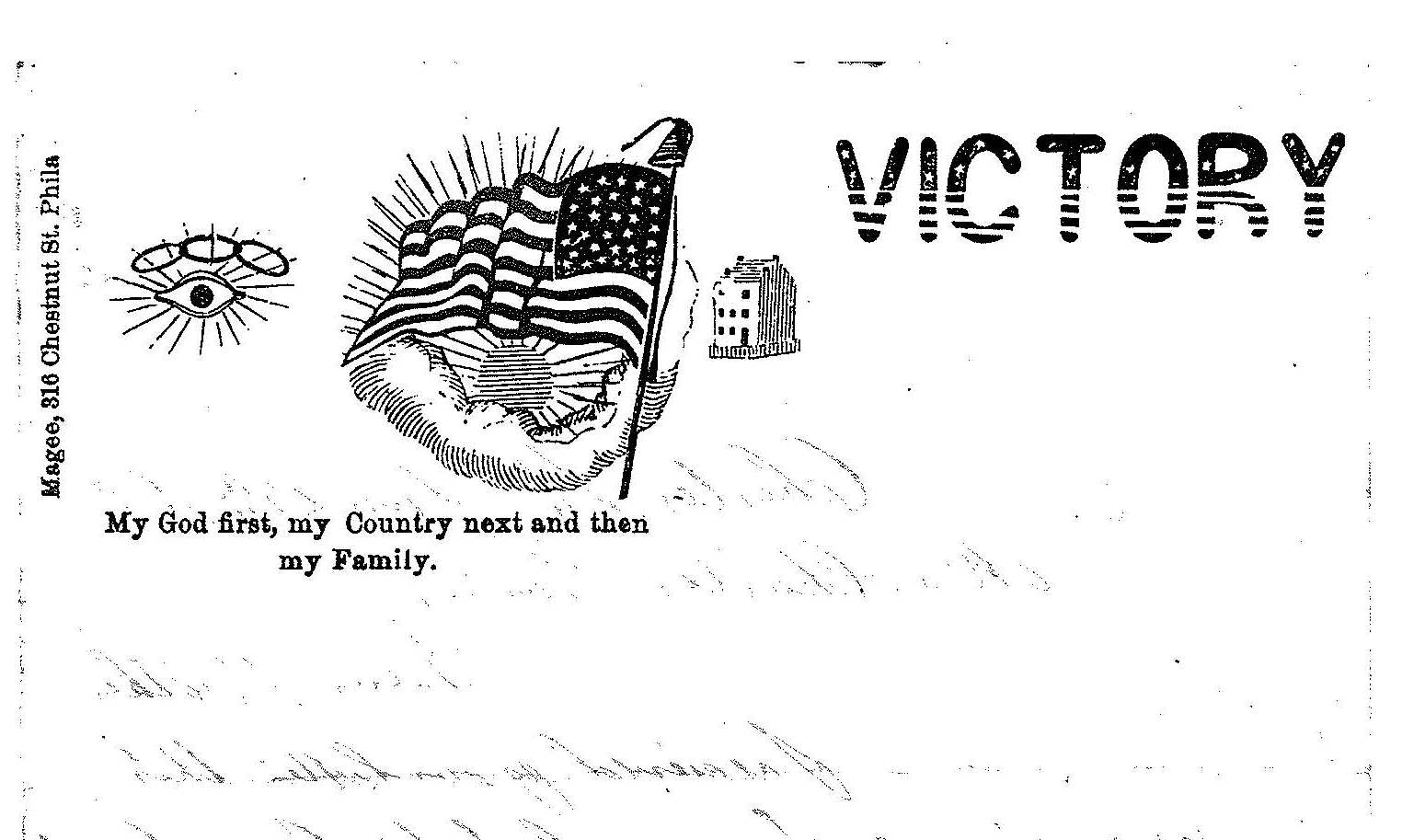
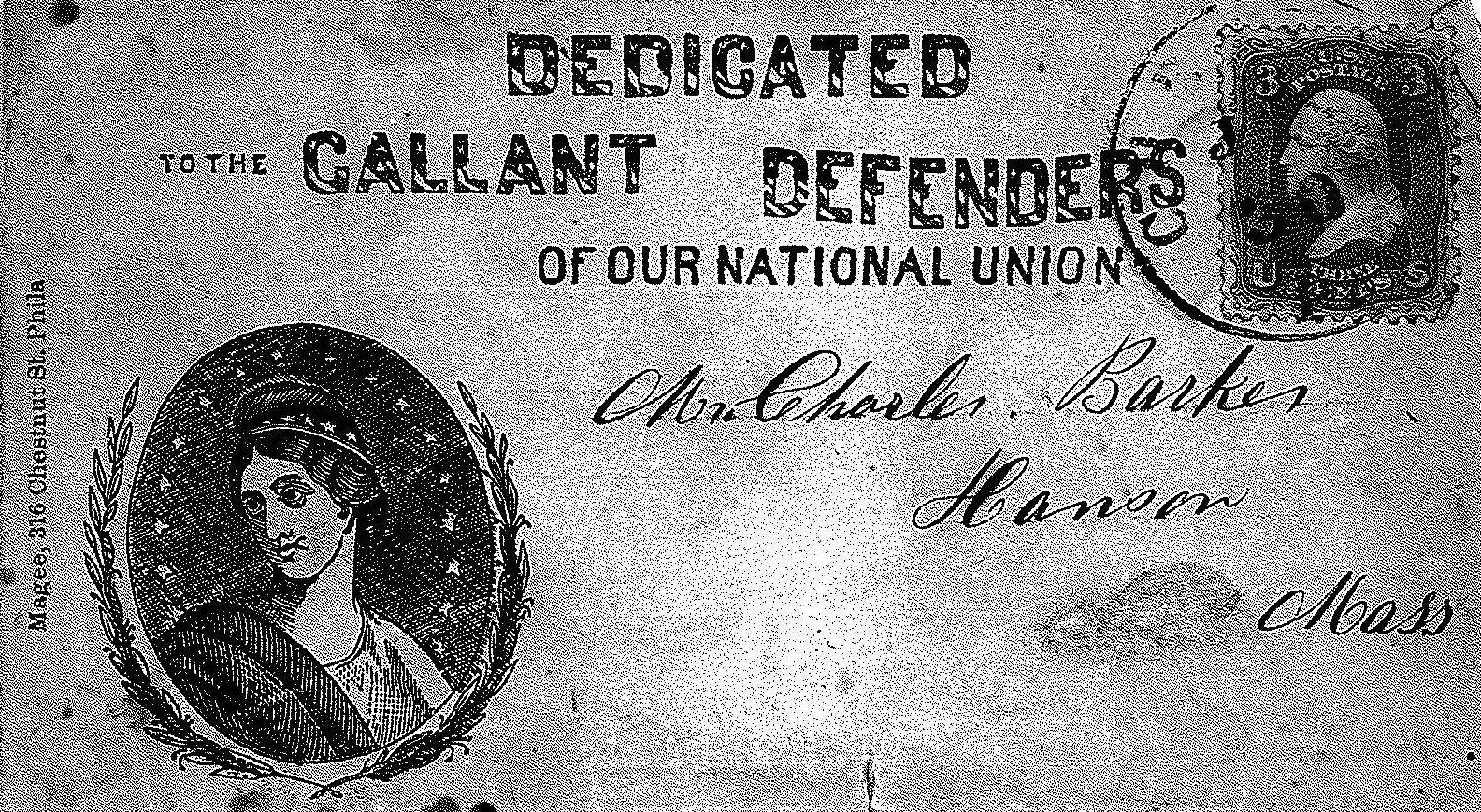
SlogansStationery companies met the demand for stationery and envelopes by manufacturing numerous designs and styles for the soldiers’ use.  Elaborate patriotic pictures and slogans were common.  John Barker wrote home on stationery and envelopes featuring portraits of General Burnside and Columbia; drawings of  flags, eagles, and the Masonic “all-seeing eye;” and slogans such as “One Flag, One Government,” “My God first, my Country next and then my Family,” “Victory,” and “Dedicated to the Gallant Defenders of our National Union.”Columbia