Prince Demah, Portrait Painter

Prince Demah, Portrait of Christian Barnes. Hingham Historical Society. Photo (c) James Vradelis

One of our Society’s co-founders, Susan Barker Willard, bequeathed a treasure trove of art, furniture, and documents which she had inherited from her Barker, Thaxter, and Willard family ancestors. Much of it has furnished our 1688 Old Ordinary house museum since the early part of the last century. Two paintings in particular have always been favorites, especially on the fifth grade school tours that are a rite of passage in the Hingham Public Schools.  They are a pair of 18th century oil portraits of Henry and Christian Barnes of Marlborough, Massachusetts.

Henry Barnes had no family connection to our town of Hingham, but Christian had friends and relatives here.  Her mother’s family were Barkers from the South Shore. Henry was a distiller, manufacturer of pearl ash (an early chemical leavener), and trader in British manufactured goods. They were Loyalists and forced to flee Marlborough for England in late 1775 after some violent incidents (including, it has been reported, the tarring and feathering of Henry’s horse). The Barnes portraits are each damaged in the chest area, and the lore is that the portraits—left at their estate—were the victims of Marlborough patriots.
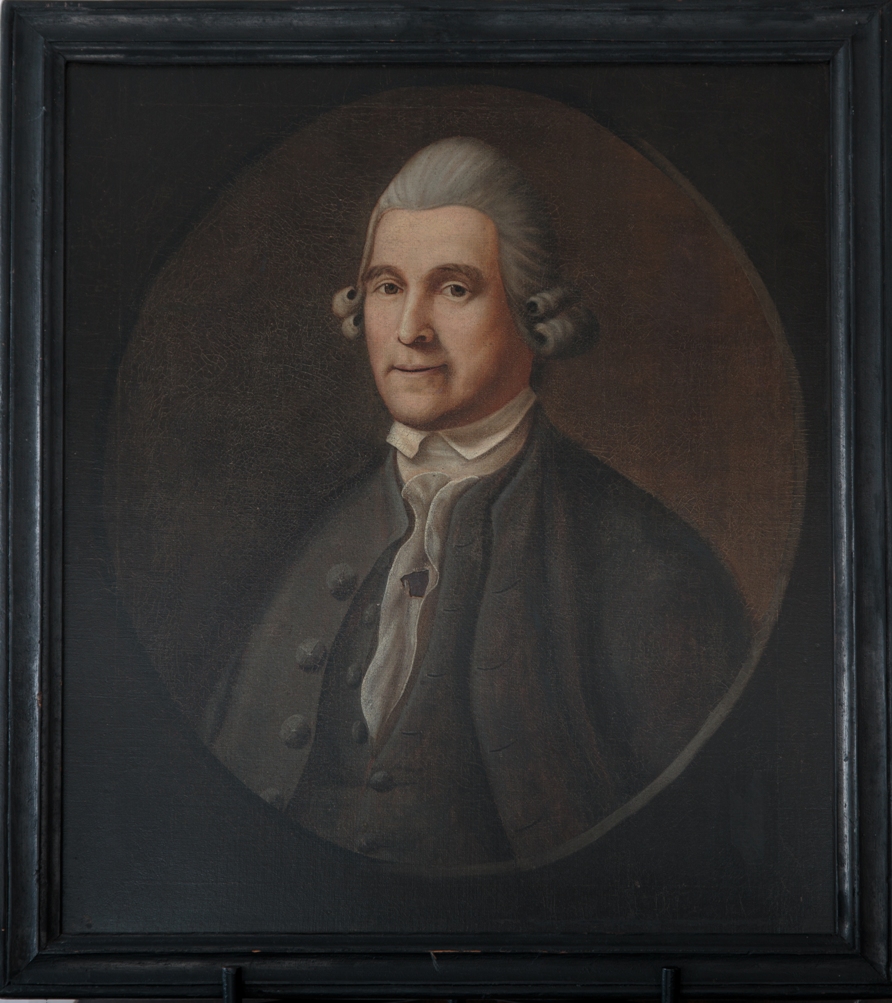
Portrait of Henry Barnes by Prince Demah.  Hingham Historical Society Photo (c) James T. Vradelis

Prince Demah, Portrait of Henry Barnes. HIngham Historical Society. Photo (c) James Vradelis

Members of Marlborough’s financial elite, the Barneses owned three slaves in the early 1770s. Thanks to Christian’s prolific correspondence, we have known for some time that Prince, the son of their slave Daphney, was a talented artist. (Prince’s mother, Daphney, features in a set of letters in our archives. She was the subject of an earlier post in this blog, “A Letter from Daphney.”) In the first letter that mentions Prince, Christian writes, that “Prince is here and I am sitting to him for my picture.”  A month later, in November 1769, she reports that Henry has purchased Prince, with a view towards “improving his genius in painting.”  From there, Christian’s appreciation for Prince’s talent grows.  In an early 1770 letter, she reports that he is

a most surprising instance of the force of natural Genius for without the least instruction or improvement he has taken several faces which are thought to be very well done. He has taken a copy of my picture which I think has more of my resemblance than Copling’s [sic].

(She is referring to John Singleton Copley, a colonial American painter famous for his portraits of 18th century Bostonians.)

The original manuscripts of Christian’s letters are at the Library of Congress, but we are lucky to have, in our Old Derby Academy archives, a set of typescripts made in the early 20th century—also the gift of Susan Barker Willard.  In her letters, among her friends, and even in a set of newspaper advertisements, Christian passed the word about Prince:

As soon as the roads are tolerable I propose going to Boston in order to recommend our Limner to the Publick. I should be glad to have your judgment as to his performance and likewise your advice how I shall proceed with him. He has taken five pictures from the life since his return. Three of them as good likenesses as ever Mr. Copling took. I am in no doubt but he could coppy a picture as well as anybody in the Country.

Christian’s enthusiasm made it impossible for us to stop thinking about Prince the painter—particularly since our two Barnes portraits were painted in the 1770s and were unattributed.  We continued to learn more about Prince and his remarkable life but were unable to connect the dots between Prince and the Barnes portraits. (The paintings are unsigned and when they were restored in the 1930s a heavy layer of masonite was placed over the back of the canvas, obliterating any obvious clues.
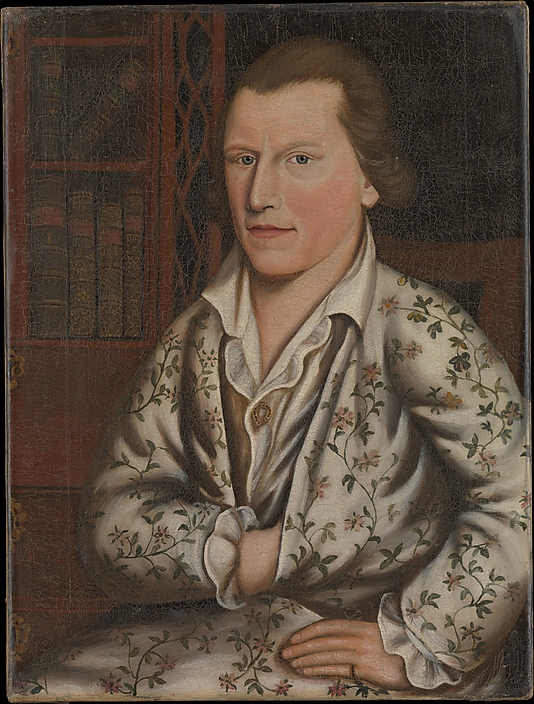
Portrait of William Duguid by Prince Demah.  Metropolitan Museum of Art

Prince Demah, Portrait of William Duguid.  Metropolitan Museum of Art

In late 2013, the Metropolitan Museum of Art in New York opened an exhibit called “Interwoven Globe,” on the 18th century international trade in textiles. The exhibition included a modest portrait of a Scottish textile merchant, painted in 1773 and signed, on a stretcher on the back of the canvas, “Prince Demah Barnes.”

We got in touch with the Metropolitan and were able to share what we had learned about Prince. The Metropolitan invited us to bring our two portraits to its Paintings Conservation Department, where they were examined using x-radiographs and infrared reflectography. The Metropolitan concluded that its signed painting by Prince and our two Barnes portraits were all by the same artist.  We have co-authored an article about the three paintings which appears in this month’s issue of Antiques magazine.

Prince enjoyed a short professional painting career before the Revolution changed the lives of Christian, Henry, and Prince.  Christian and Henry fled and Prince enlisted in the Massachusetts militia as a free man–Prince Demah (no more “Barnes”)–and served as a matross. He died, likely of smallpox or other disease, in March 1778. As “Prince Demah, limner,” he wrote his will, leaving all he had to Daphney.
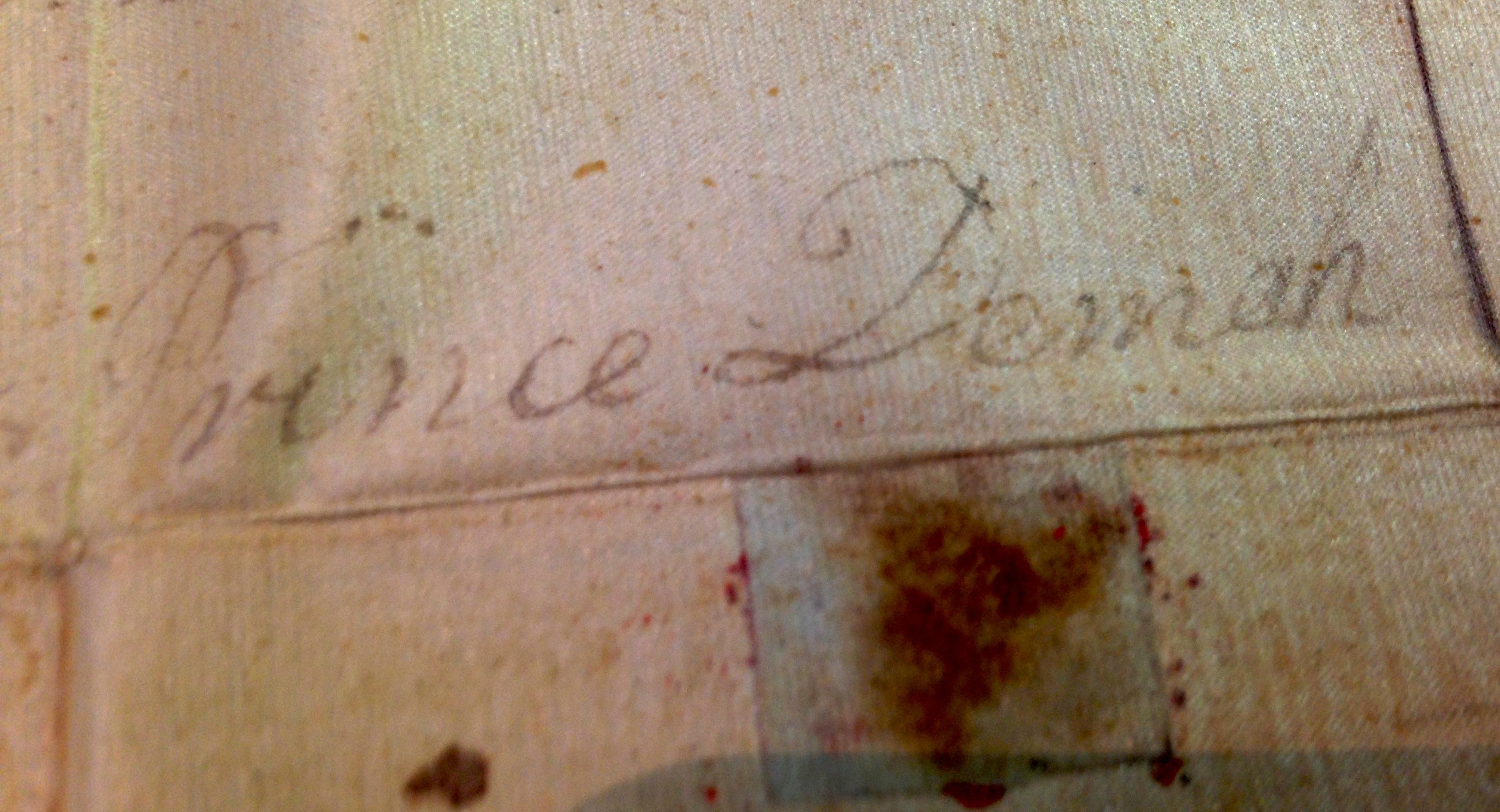
Prince Demah’s will.  Massachusetts State Archives

These three portraits by Prince Demah are the earliest known paintings by an African-American to be located and identified. It appears that Prince was only allowed to focus on his art for around ten years, but we know that he made other portraits as well—in oils and with “crayons,” or what we call pastels today. The next step: seeing if we can identify any more of his paintings.  As we at the Hingham Historical Society now know, one (or two) of them could be  found just about any place.
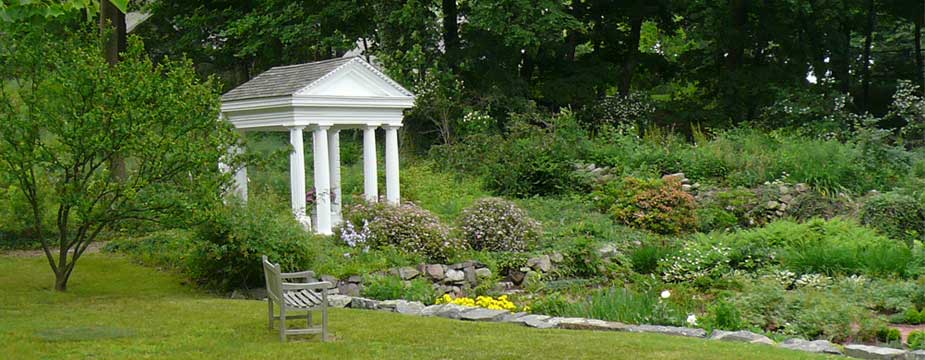
The Portico Finds Its Home

Those who have been to our Old Ordinary House Museum—or who have been to the home page of our Society website—have seen the gazebo or summer house in the shape of a small Grecian temple which sits at the top of the Old Ordinary garden.

slide_01

As well as being a charming backdrop for garden parties and the occasional wedding, this structure is a genuine piece of Hingham history. Its travels around town over the last two hundred years are documented by correspondence, photographs, and the written reminiscences of the Rev. John Gallop, one of its former custodians–all in our archives.

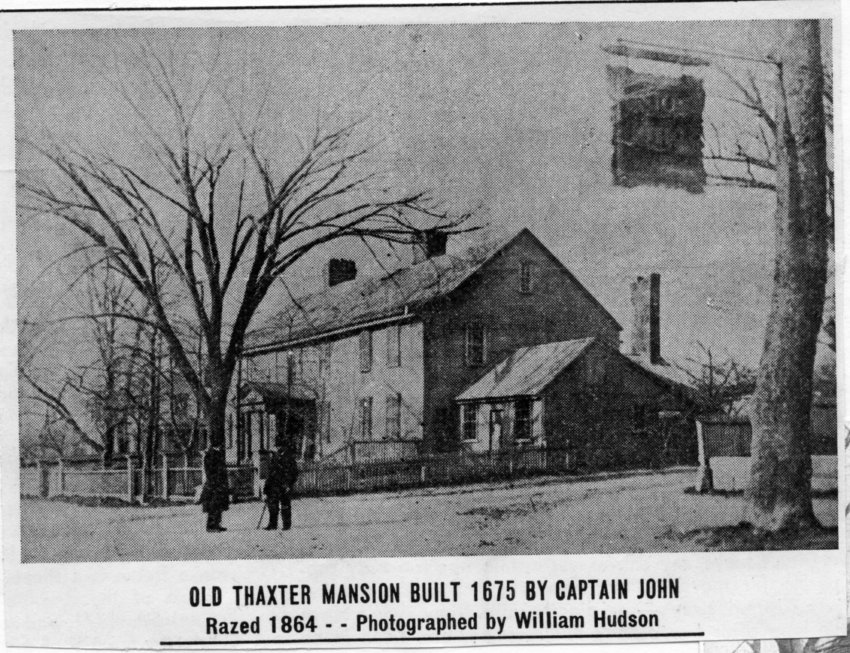
In the late 17th century, the Thaxter family built a house in Hingham Square, on the present day site of St. Paul’s Church. As added to and improved over the years, the “Thaxter mansion” grew into a large, attractive home, furnished with tapestries, tiled fireplaces, and painted doors—some of which were donated to our Society by Thaxter descendants.

ph2358

At some point, prior to the first photographs of the house but almost certainly in the first half of the 19th century, a classically-influenced portico, with a pediment and columns, was added at the house’s front door.

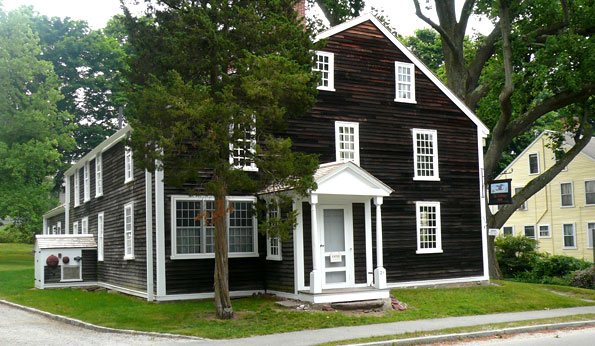
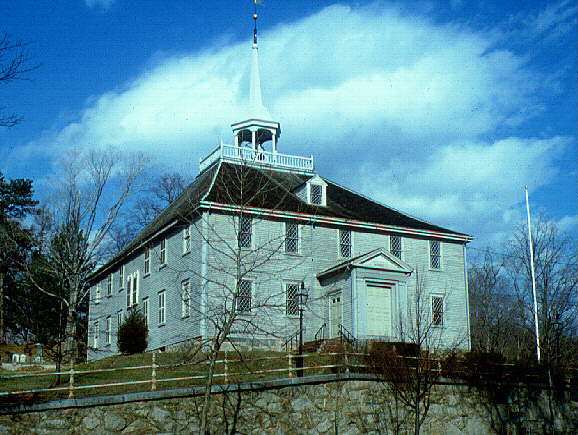
Greek revival architecture was the fashion during the first half of the 19th century, and it sometimes took a more modest form than the Monticello or “Tara” models. Greek-influenced porticos were added to many older New England buildings. In addition to the Thaxter mansion, porticos with columns and a pediment were added to the Old Ordinary itself and (in an architectural mash-up) the English Gothic Old Ship Church.

oldordinary2

hingham
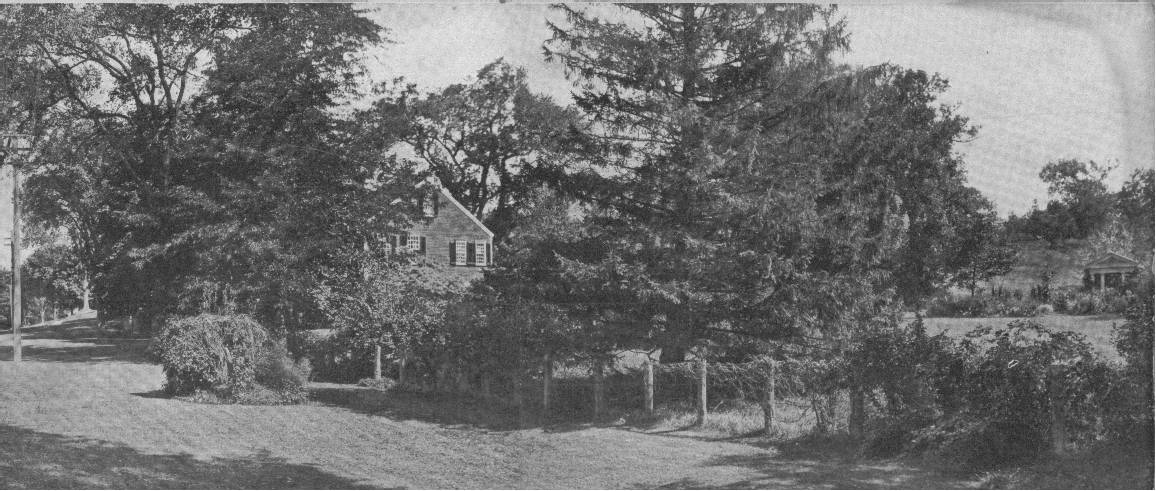
The Thaxter mansion was torn down in 1866 to make way for St. Paul’s Church, but the portico was saved. The story is that it was taken away by Hingham artist W. Allan Gay, but in any event, it was installed in the side yard of the Martin Gay house at 262 South Street, where it began its second life as a summer house or gazebo.

The Martin Gay house and its side yard.  (See the portico at the far right of the photograph.)

The Martin Gay house and its side yard. (See the portico at the far right of the photograph.)

Almost 100 years later, during an expansion of the South Shore Country Club, the garden area the Gay property was sold. The portico, which had fallen into disrepair, was threatened with demolition. The Rev. John M. Gallop, rector of the Parish of St. John the Evangelist, saved the portico from demolition. He sought and received permission to remove it. He installed it in the side yard of St. John’s Rectory, on Main Street next door to the church.

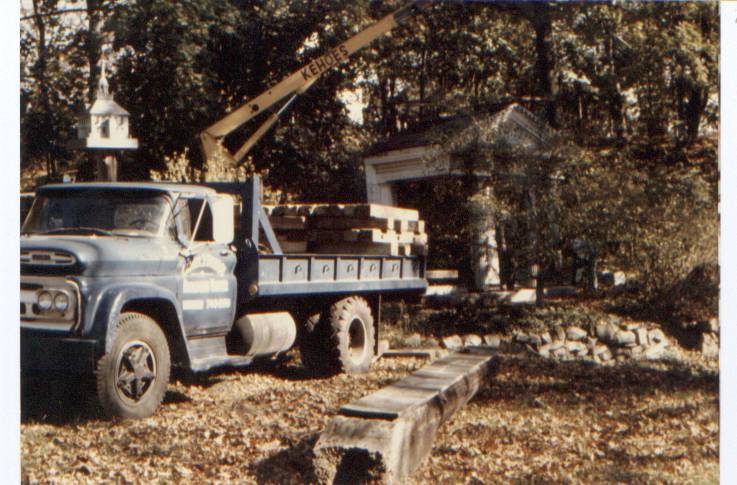
Upon his retirement from St. John’s, Gallop donated the portico to the Hingham Historical Society. The decision was reached to add it to the formal gardens on the grounds of the Old Ordinary. (These gardens have a rich history of their own which would take another post to cover.) Still more preservation work was needed, but thanks to Gallop and many dedicated volunteers at the Society, the portico found a permanent home in 1979, not much further than a football field’s length away from where it was originally built.

Installing the portico in the Old Ordinary's garden (1979)

Installing the portico in the Old Ordinary’s garden (1979)

Lydia Sprague: Young Artist and Scholar (Part 2)

[Second part of a post about young Lydia Sprague, an artistic girl in 1840s Hingham]

Lydia attended school in the large upstairs room at Old Derby that we know today as the “ballroom.” The room was divided in two, with girls in the southeast half and boys in the northwest half. Up to 30 North Parish girls, age 9 or over, could attend the Academy. As a Hingham resident, Lydia’s minimal tuition included supplying her share of firewood during winter for the one stove in the room.

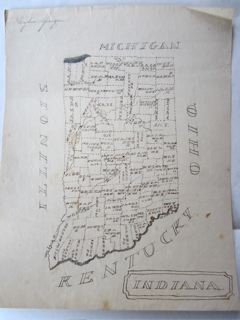
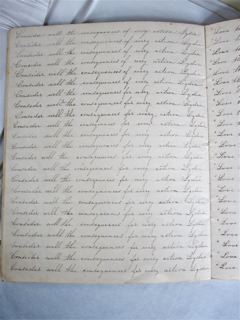
Girls were taught writing, English, French, arithmetic, geography, and needlework, a traditional skill for schoolgirls who demonstrated their proficiency by embroidering samplers.  Our prior post featured examples of Lydia’s penmanship exercises and maps; if any of her needlework survives, it did not come to us.

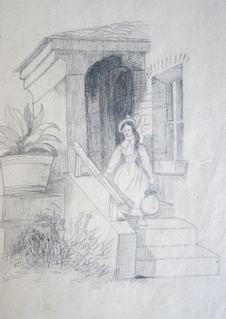
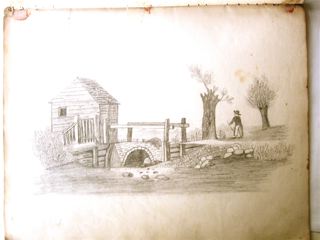
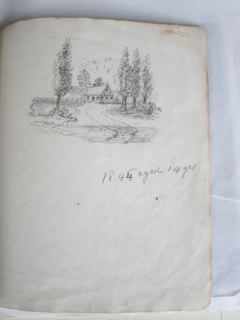
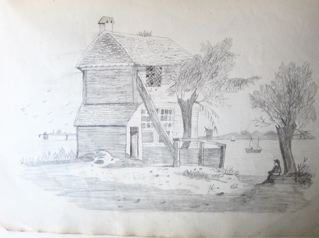
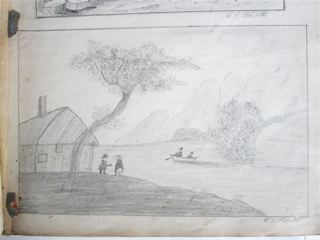
Drawing was also a desirable skill for young ladies and one at which Lydia Sprague clearly excelled. Her sketchbooks date from 1844 through 1846, beginning when she was 12 years old. They contain numerous landscape vignettes with figures and cottages, charming and detailed and derivative of engraved illustrations she may have seen in local gazettes, copies of European paintings or popular Currier and Ives prints. Copying such images was a common way for a motivated student to develop drawing skills.

IMG_3212

IMG_3217

IMG_3203

Some sketches in her books appear to be imaginary scenes–

IMG_3214 –but others appear to have been influenced by direct observation. Many landscapes include a bay-shaped expanse of water that suggests Hingham Harbor.

IMG_3219
IMG_3218

IMG_3206
Other than her school work and drawings, we know little about Lydia Sprague’s life. She grew up in Hingham Center, married young, and had no children. In all likelihood, she set aside her artistic ambitions when the demands of married life shifted her priorities. Similarly, the story of her sketchbooks before they came into the Society’s collection is also a mystery. Lydia’s survive today in very good condition, perhaps treasured and protected for decades by a doting niece or nephew before finding their way into our collection.
IMG_3222

Lydia Sprague: Young Artist and Scholar (Part 1)

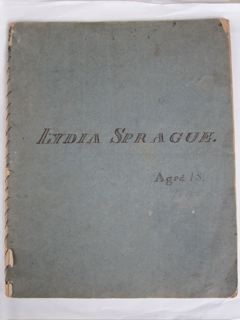
IMG_3205Our archives contain a partial school record of an artistic young Hingham scholar.  Her name was Lydia Sprague, and she attended Derby Academy from 1844, when she was 12, through 1846. Her sketchbook, hand-drawn maps, copybook, and other school work provide a glimpse into schoolwork at Derby Academy in the mid-19th century and reveal a schoolgirl’s love of drawing and a desire to excel by attention to detail.

Lydia’s small sketches of possibly local scenes, landscapes, and figures engaged in play and daily life suggest a family talent shared with the more famous Hingham artist Isaac Sprague. Isaac Sprague, an older second cousin, was born in 1811. Like Lydia, he was the son of a box-cooper and grew up in Hingham Center. It is likely that Lydia knew and looked up to her cousin Isaac.

Isaac Sprague was a self-taught artist and naturalist who met early success when he accompanied John Jay Audubon on the 1843 expedition up the Missouri River that led to Audobon’s famous portfolio, “Quadrupeds of North America.” An obituary of Isaac Sprague quoted him as saying, on the subject of his training, “I always had a fondness of making pictures and made small drawings at school.”

IMG_3216Young Lydia Sprague also made “small drawings at school,” and we have in our collection three of her pencil sketchbooks, highly detailed maps of American states and territories, and a copy book of exquisite penmanship. This fascinating legacy conveys her individual achievement as a diligent student and young artist.

The repetitive penmanship exercises of moral phrases and the exhaustive information included on her maps provide a glimpse of Derby Academy’s high expectations both of virtuous behavior and proficiency in these areas of study.

IMG_3196IMG_3194

Before the advent of universal public primary and secondary education, most children who received a good education had affluent parents who could pay for it. Lydia was the daughter of a box-cooper and born in 1832, when most Hingham girls of her class were taught only enough reading, writing, and arithmetic and needlework to prepare them for their lives as the wives or tradesmen, mariners, and artisans. IMG_3198She had the good fortune to have been raised by parents who valued education and who enrolled her for a few years at Derby Academy. This progressive school, the first in New England to offer a rigorous education to girls, was founded shortly after the Revolution and perhaps reflected a new republication concern that women be prepared to raise knowledgeable and patriotic citizens.

–To be continued

A 19th Century Thanksgiving

In 1857, eleven year-old Francis Lincoln of Hingham described his family’s Thanksgiving in a school essay.  As we would today, he writes of roast turkey, a multi-generational family gathering, and giving thanks to God:

Thanksgiving was the day set apart from work by our forefathers to worship God, after they had gathered in their harvest, and it has been celebrated ever since their time. It is the occasion when Grandmothers, Grandfathers, Uncles, Aunts, Cousins, Brothers and Sisters gather together and have a good dinner of Roast Turkey and Plum-Pudding. I have generally dined at my Grandfather’s, but since he has been unwell and rather old, I have remained at home. I will give you an account of my last Thanksgiving Day. In the morning, I attended church and heard the Rev. Calvin Lincoln preach an excellent sermon. In the afternoon my Father, two brothers and I started on a walk to World’s End, which is more than two miles from our house, but we went to the point which made the walk about one half a mile longer. Solomon then loaded his gun and fired at a target, he also let Arthur fire at an old stump. We got home at about five and a half o’clock having been gone three hours. I therefore spent a very pleasant Thanksgiving.

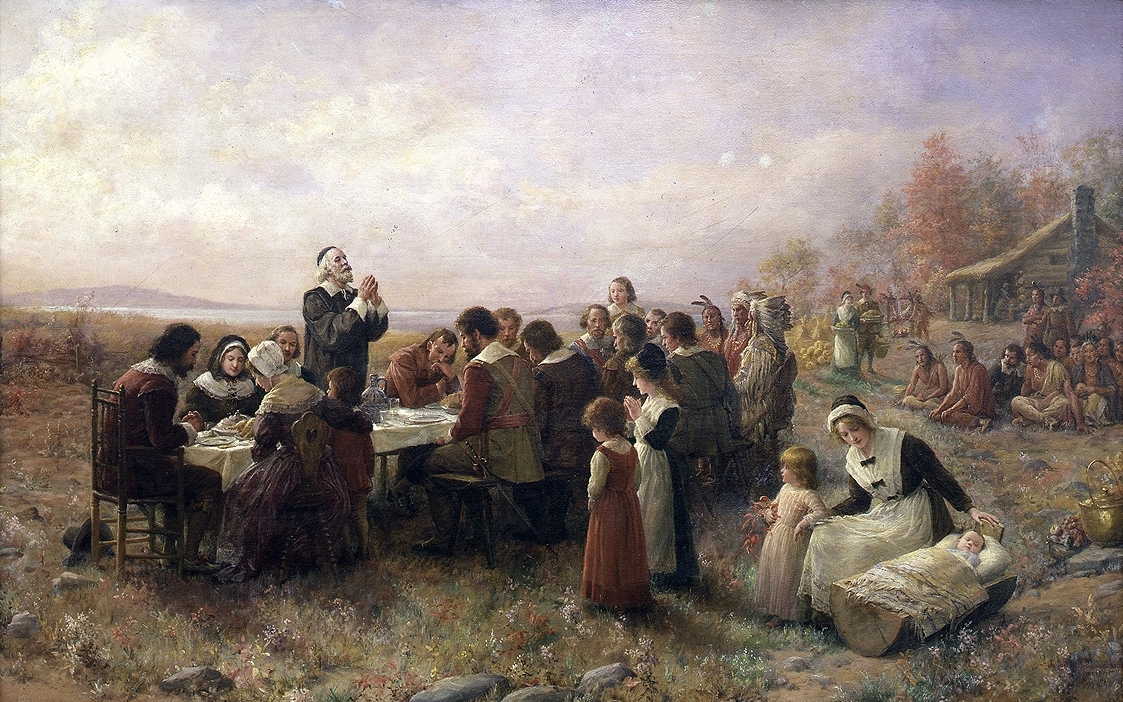
Yet, from our 21st century perspective, two things are missing from Lincoln’s essay: football, of course, which did not yet exist in its modern form, and any mention of the Pilgrims –because the now-universal association of Plymouth, the Pilgrims, and Thanksgiving Day is a relatively recent phenomenon. 

"The First Thanksgiving at Plymouth" (1914) By Jennie A. Brownscombe

“The First Thanksgiving at Plymouth” (1914) By Jennie A. Brownscombe

The Puritan settlers of New England had a tradition of “providential” holidays: days of fasting during difficult times for the community and days of thanksgiving to celebrate times of plenty or deliverance from strife. In the years following the American Revolution, our federal government adopted this practice and held periodic thanksgiving holidays, including one declared by newly-elected President Washington in 1789. The practice gradually became institutionalized, and in 1816 Massachusetts and New Hampshire became the first two states to establish late fall state holidays of Thanksgiving.  During the depths of the Civil War, in a bid to foster unity, Abraham Lincoln declared a national Thanksgiving holiday.  All were framed in religious terms not unlike the early settlers’ days of thanksgiving.

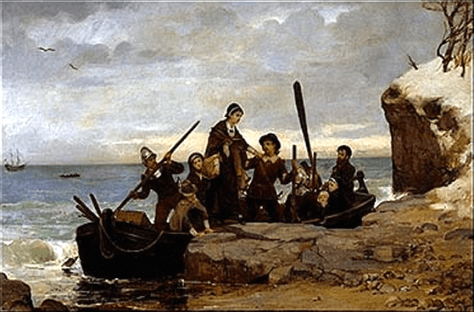
The Pilgrims were not ignored in 18th and 19th century New England; we just did not always think of them and turkey dinners at the same time.  Rather, in Plymouth, Boston, and other Massachusetts towns, dinners, speeches, parades, and other celebrations were held on December 22, the anniversary of the date in 1620 when the Pilgrims landed at Plymouth (having already spent several months on Cape Cod).  Speeches and sermons were given, on what came to be called Forefathers’ Day, by South Shore ministers and politicians, as well as the occasional national luminary, such as John Quincy Adams (1802), Daniel Webster (1820), Edward Everett (1824), and Lyman Beecher (1827).  The focus, however, was on the Pilgrims’ landing at Plymouth Rock and their role as our nation’s “founding fathers.”  

 So, what led to the rise of the popular story of the “first Thanksgiving?”  To a great extent, it was the product of social and political currents in post-Civil War America.  Interest in the Pilgrims and our “founding fathers” grew with white Protestant America’s increased anxiety over immigration and the influx of newcomers with diverse backgrounds. A myth of non-violent colonialism was a balm to the conscience of a nation that had achieved its “manifest destiny” of expansion across the continent. 

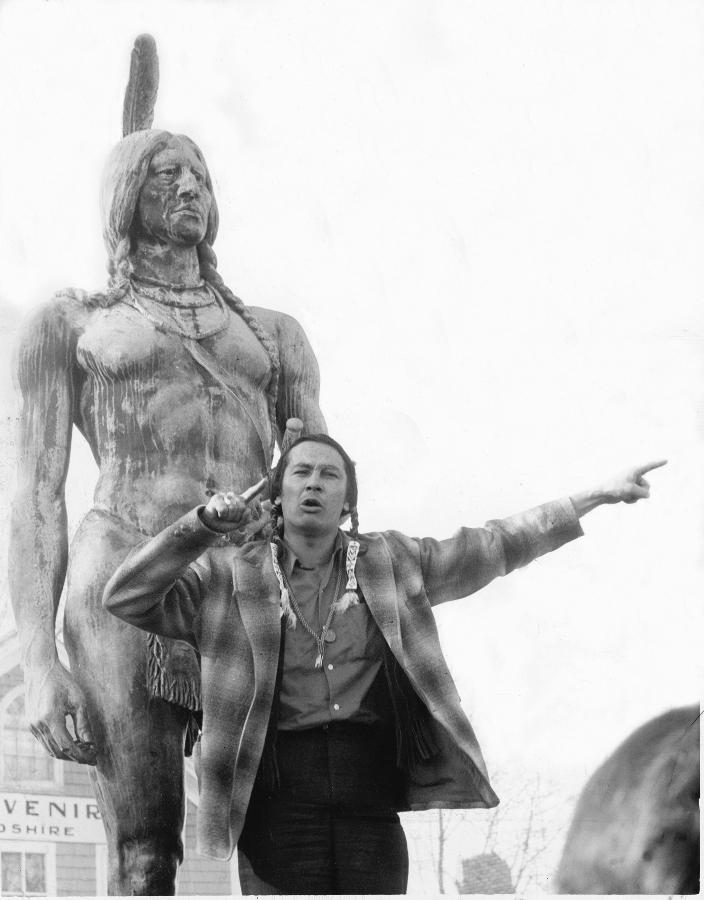
First National Day of Mourning, Plymouth, Mass., 1970

In 1970, 350 years after the Pilgrims’ landing at Plymouth, representatives of the Wampanoag declared a National Day of Mourning on the fourth Thursday in November, to honor their ancestors and educate those celebrating a “traditional” (though no more than 100 year-old) Thanksgiving about white America’s treatment of their people. This “counter-commemoration” has its own 50th anniversary as Plymouth observes its 400th this year. Growing recognition of the checkered history that lies behind the “First Thanksgiving” is the result of the attention that has been paid to Native American history in New England and a more critical examination of the late 19th and early 20th century version of that story.  This itself is resulting in a further evolution of the holiday’s meaning, including a greater emphasis on celebrating our families and fellowship in the present day.

[First posted in Nov. 2014; edited in Nov. 2020]

Powerful Words in the Name of Freedom

Every day Hingham residents drive or walk past the entrance to a small park lying between Central and Hersey Streets. Now known as Burns Memorial Park, it was once home to Tranquility Grove, an outdoor space used for meeting and rallies—including in particular abolitionist rallies.

Hingham was home to an active group of abolitionists. Led in large part by local women who were considered extremists by many, Hingham’s abolitionists worked for freedom through petitions, speeches, meetings, and protests. High-profile abolitionists visited Hingham regularly during this period, including Frederick Douglass (who came more than once), William Lloyd Garrison, an aging John Quincy Adams, and the Grimke sisters.

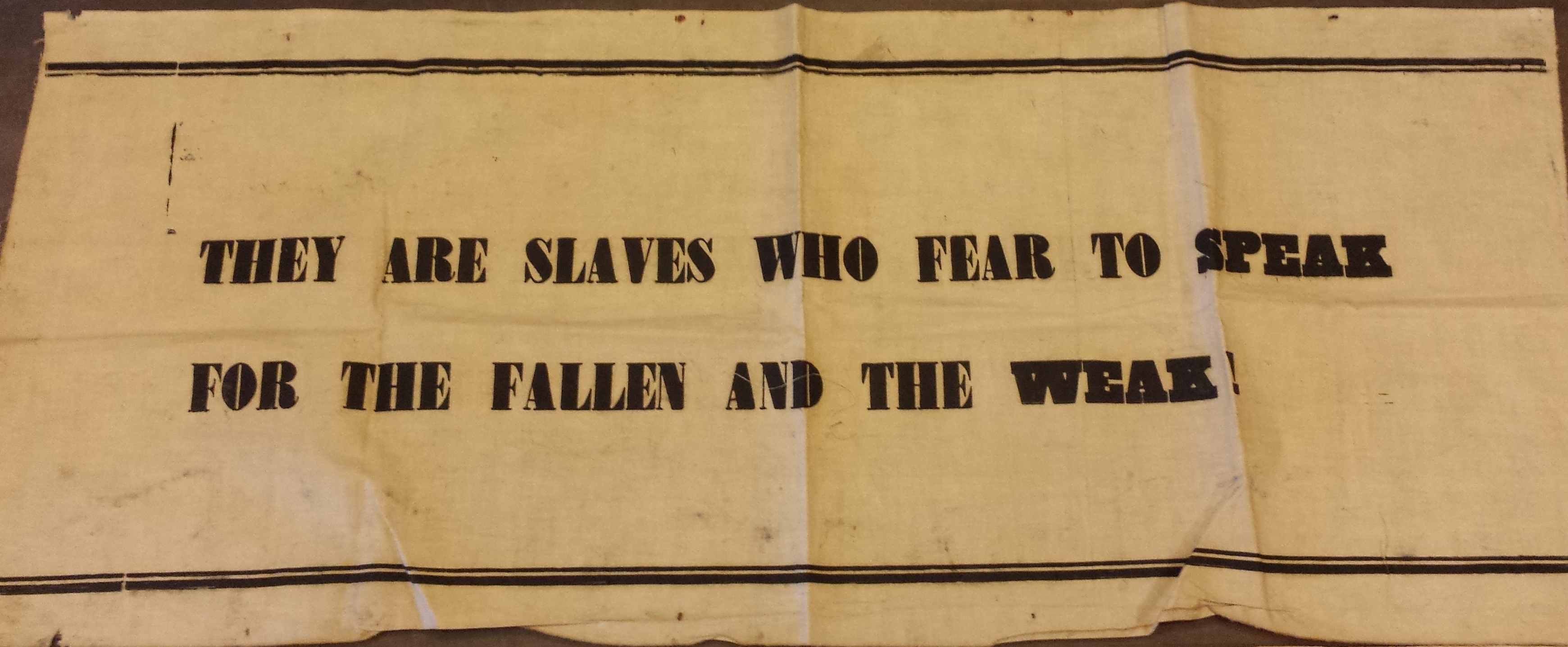
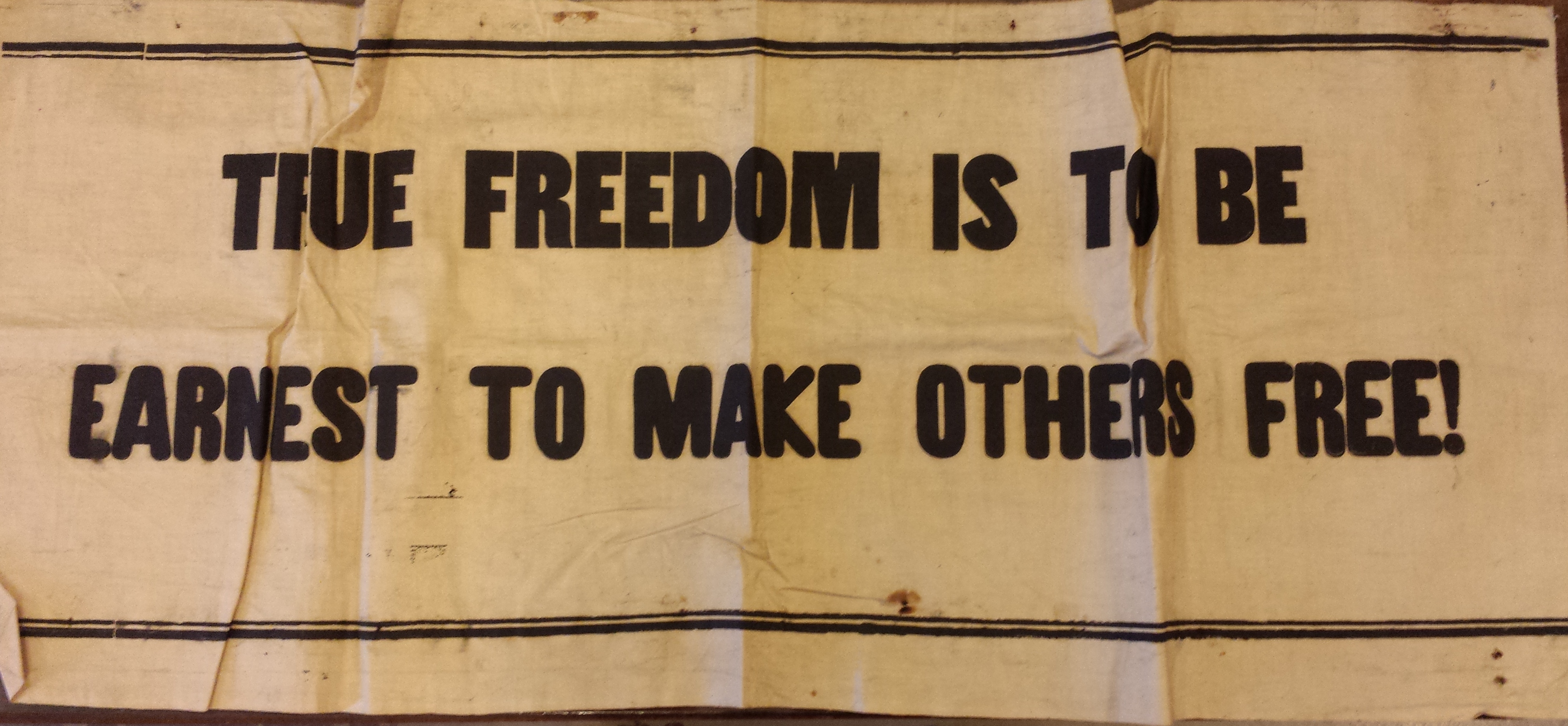
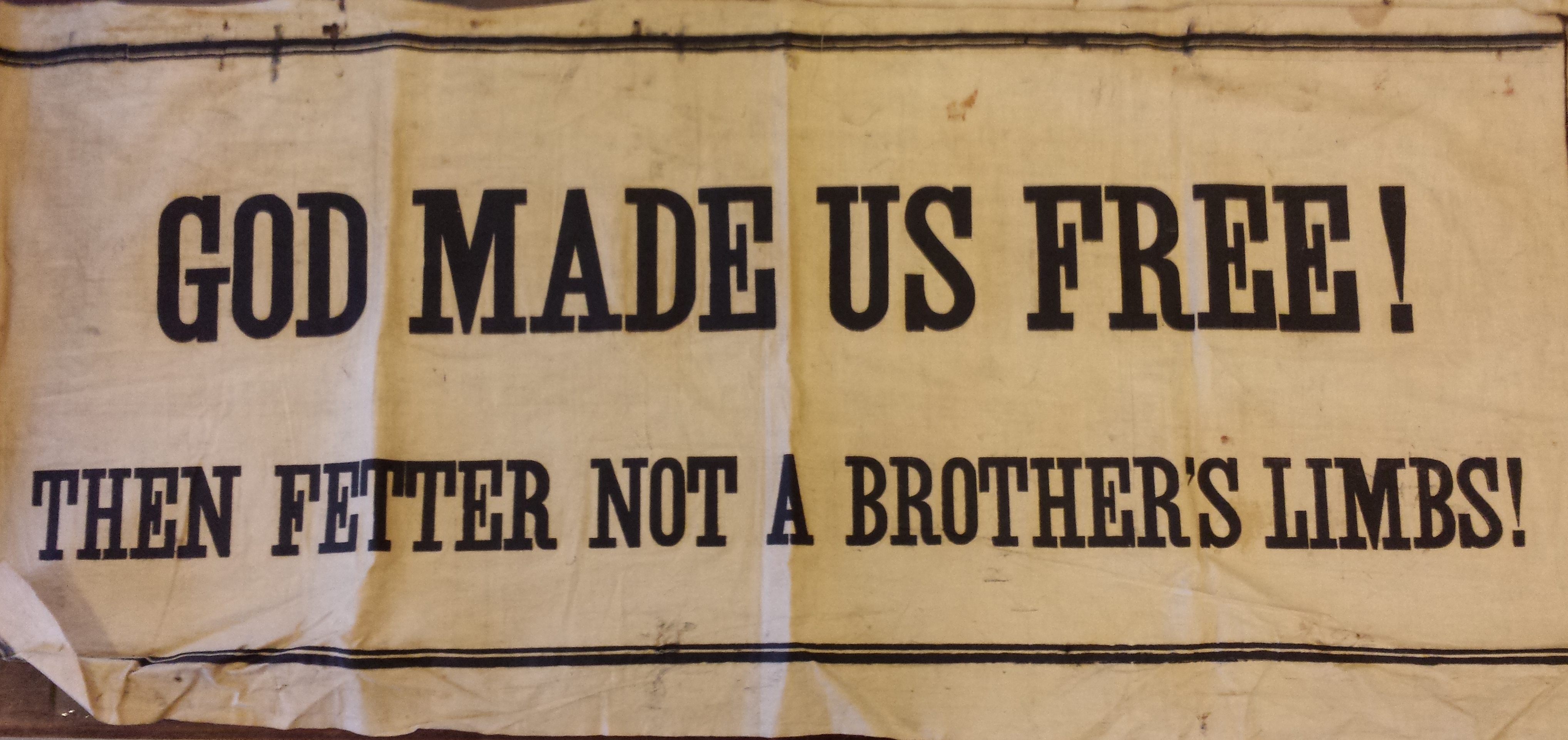
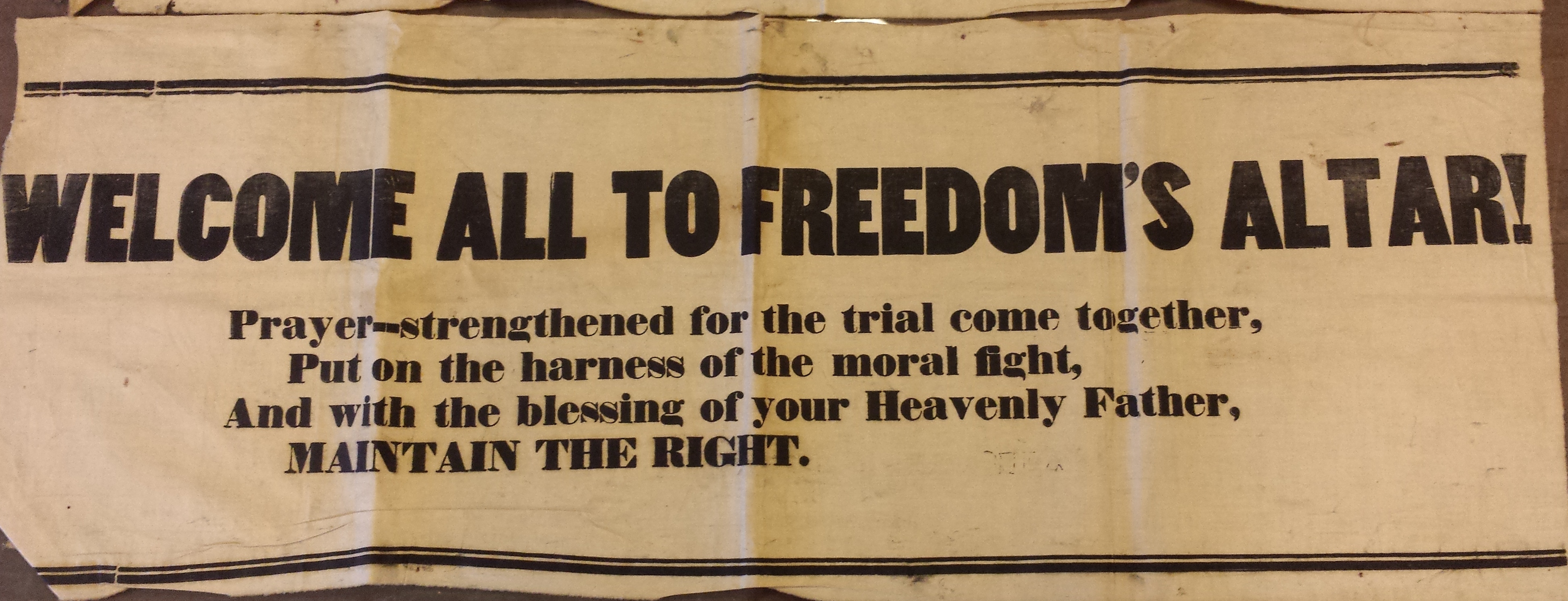
On August 1, 1844, the Hingham Anti-Slavery Society hosted a large regional rally to mark the tenth anniversary of the abolition of slavery in the British West Indies. The rally featured a speech by Frederick Douglass at the First Baptist Church and a procession down Hingham’s Elm Street to Tranquility Grove. As the abolitionists entered the Grove, they were greeted by large white banners hung from the surrounding fir trees. In bold black letters, the banners spelled out anti-slavery slogans:

20141011_110642They are slaves that fail to speak/ for the fallen and the weak

20141011_110456True freedom is to be earnest to make OTHERS free

20141011_110507God made us free! Then fetter not a brother’s limbs!

20141011_110636Welcome All to Freedom’s Altar!

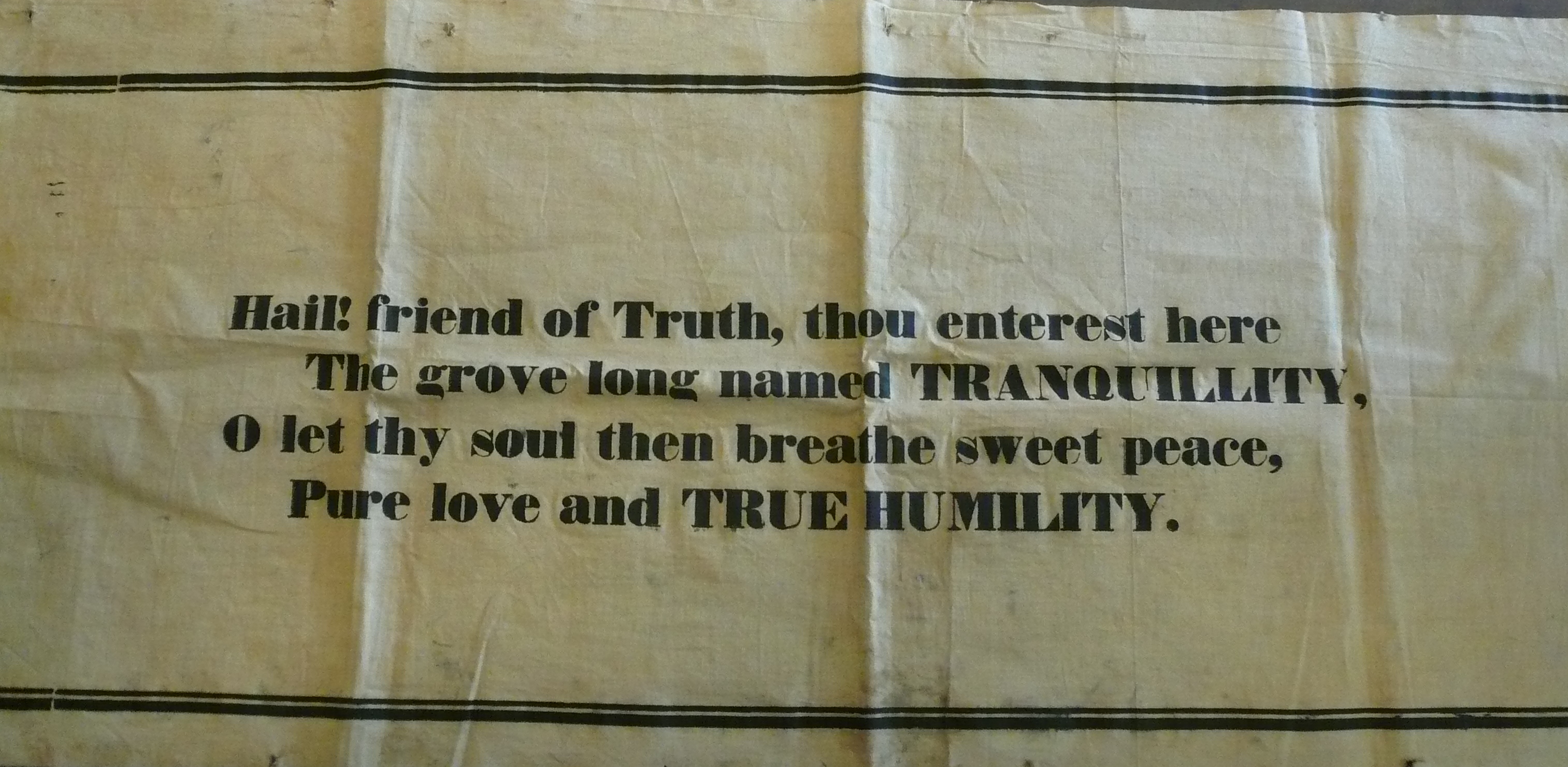
Fragile and creased with age, the banners from the 1844 Tranquility Grove meeting are preserved in our archives. One of them makes direct reference to Tranquility Grove, greeting supporters entering the rally with a verse:

Hail! Friend of Truth, thou enterest here
The grove long named TRANQUILITY.
O let thy soul then breathe sweet peace,
Pure love and TRUE HUMILITY.

P1060107The efforts of the Hingham abolitionists contributed to the larger national abolition movement which would continue to gain traction across the country until the Emancipation Proclamation brought their hard work to fruition. The banners remain an evocative reminder of Hingham’s participation in that important work, and their powerful statements still right true to this day.

Clubs and Societies in 19th c. Hingham

“It would be impossible,” Francis H. Lincoln remarked in the 1893 History of Hingham, Massachusetts, “to give a complete list of all the social organizations which have existed in Hingham.”

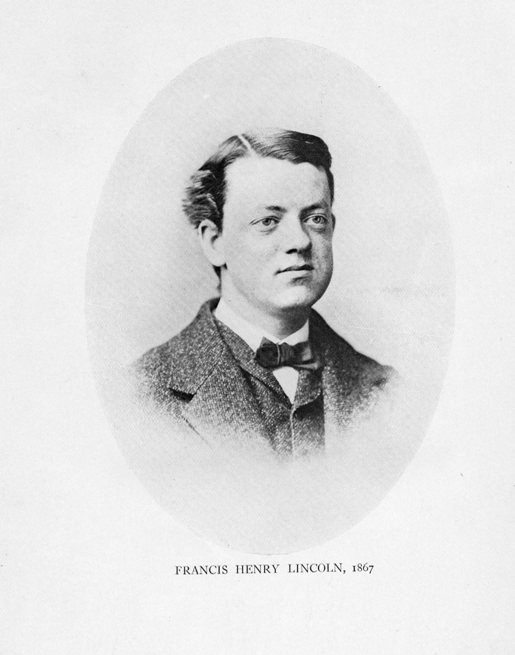
Francis H. Lincoln (

Francis H. Lincoln

Lincoln knew whereof he spoke: he was known for his active engagement in his community’s civic, religious, and charitable organizations. Three of the nine paragraphs in his eulogy were devoted exclusively to his membership in various societies and organizations, of which 21 are expressly named. This does not include his service on Hingham’s School Committee for nine years starting in 1879 and as treasurer of the American Unitarian Association.

Although certainly more engaged than most, Francis Lincoln was not the only one in town to show such a diversity of involvement. Each of the two 19th-century histories of Hingham devotes an entire chapter to the discussion of Hingham’s various “Lodges and Societies,” patriotic and political associations, charitable organizations, and recreational clubs. At one point, just in the arena of music, Hingham boasted both a brass and a cornet band, two choral societies (in addition to the church choirs), and a Philharmonic (formerly the more humbly named Amateur) Orchestra. Two social libraries were formed early on, in 1771 and 1773, and lasted until Hingham’s public library was founded close to a hundred years later. Early in the 20th century, the Hingham Historical Society was formed by townspeople interested in Hingham’s venerable history.

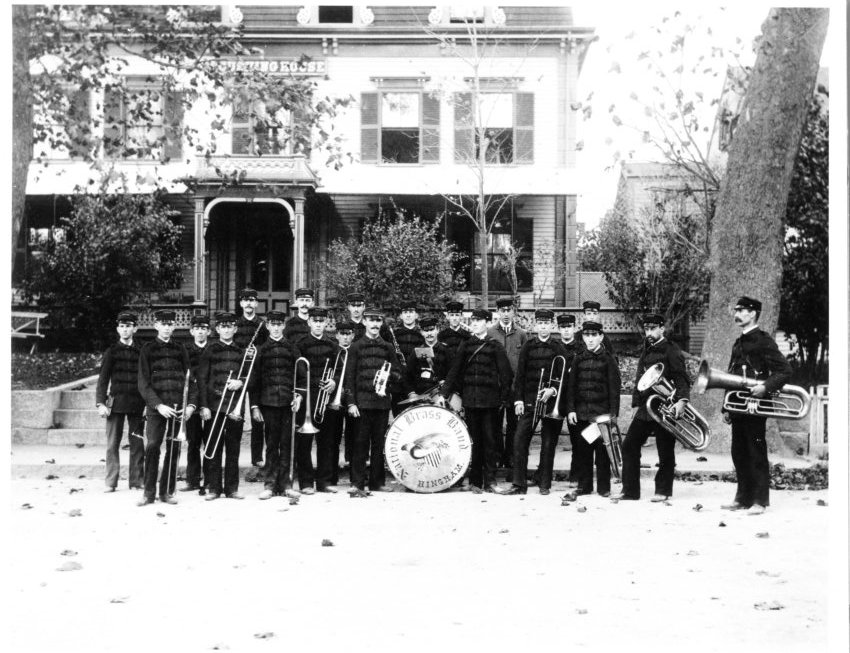
The Hingham National Brass Band

The Hingham National Brass Band

Each generation reorganized the societies to its liking: the Jefferson Debating Society of the early 19th century gave way in the 1840’s to the competition-based Hingham Debating Society, which in turn morphed thirty years later into the Monday Night Club, a more informal discussion group. (Despite this “informality,” when it was Francis Lincoln’s turn to address the club on the topic of “The Systems of Taxation In Massachusetts” in April 1878, he went armed with 26 pages of notes—preserved in our archives.) One organization, founded midcentury as the “G. I. A. of Scribes and Pharisees,” hosted socials, parades, fancy-dress balls and other diversions for decades, but changed its name and officers so often that it reportedly became known as the “Phoenix Club” for its constant re-emergences.

Political societies became popular with several abolition societies in the mid-19th century. After the Civil War, they switched their focus to temperance (with differing approaches, from religious to scientific) and then women’s rights. The Hingham Women’s Alliance boasted men as well as women amongst its members, and the local branch of the Massachusetts Women’s Suffrage Association met at Loring Hall, receiving support from Hingham resident and then-governor of Massachusetts John Davis Long.

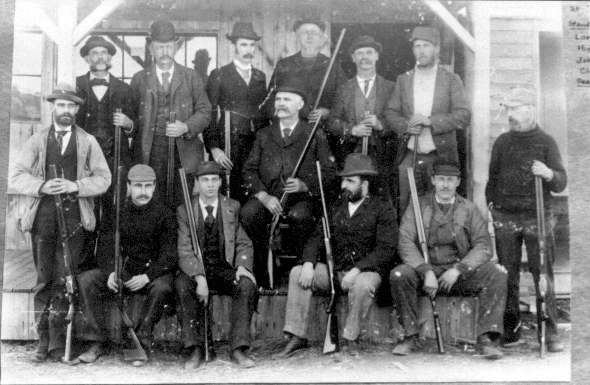
The Hingham Gun Club

The Hingham Gun Club

The community sustaining these myriad organizations was thus also sustained by them. In the early 1800s, facing a growth in population density that made both fire and thieves more common, townspeople founded the Society of Mutual Aid for Detecting Thieves and the Hingham Mutual Fire Society, both of which lasted through the century, promising to lend a hand when their neighbors’ belongings went missing or their buildings burst into flame.

The Hingham Croquet Club

The Hingham Croquet Club

The social engagement and civic responsibility displayed in the Town’s profusion of associations and causes runs through its history, but the 19th century surely marked a high point in the number and strength of Hingham’s social organizations. Hingham was nothing less than a working example of what Alexis de Tocqueville saw as an explanation for the success of American democracy: our social engagement and investment in community created the interdependence that allowed our political processes (the process of voting and representation and compromise) to work. Or, as Francis Lincoln, club member extraordinaire, remarked in an essay written as a 15-year old student: “all the institutions of the land . . . are nurseries of learning, truth, and freedom.”

The Lane Family Seen Through 19th Century Deeds

Sometimes, even the most mundane documents give us deeper insight into the lives and relationships of Hingham’s oldest families. Such is the case with a collection of deeds and wills recently donated to the Historical Society by Philip S. Allen. The focus of the collection is the Lane family, one of Hingham’s oldest and most prominent, particularly well-known for Jared Lane, one of the town’s many talented coopers. The deeds and wills, however, cast light on Hannah Lane, the widow of Rufus Lane, Jared Lane’s brother and a painter who resided on South Street where the Hingham Water Company once stood.

After Rufus’ death in 1801, Hannah did not remarry. She enjoyed the use of her husband’s considerable personal and real estate, which she conveyed to her sons, Charles and Rufus, over the course of her 37 years as a widow. (When Rufus died, Charles and young Rufus had not inherited directly, having been only 11 and 13 at the time.)

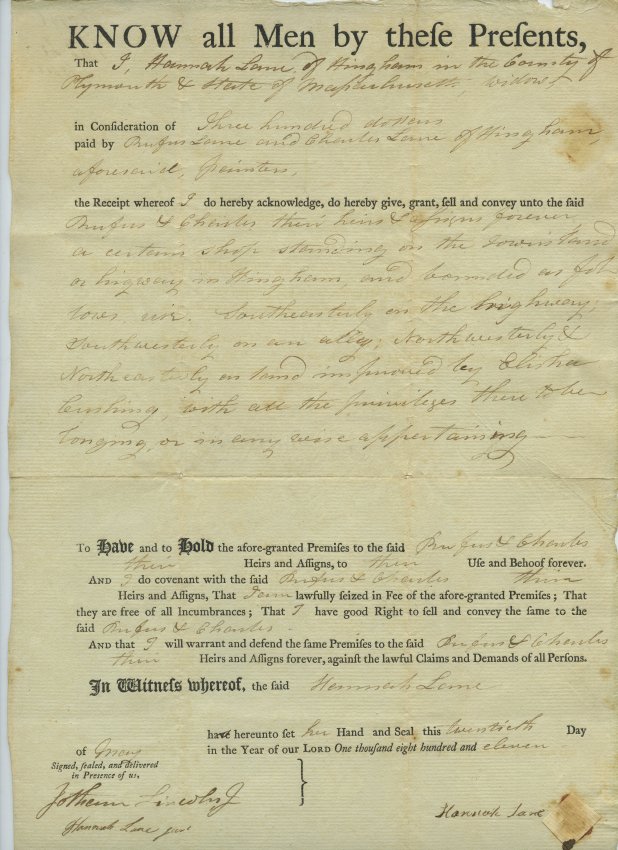
The first deed from Hannah is dated 1811, ten years after Rufus’ death, and conveys to Charles and Rufus a small shop and its contents located on Town land near Elisha Cushing’s estate (now, 692 Main Street). Like later conveyances to Charles and Rufus, the shop was conveyed to them jointly. Charles and Rufus are described as “painters,” like their late father, and paid their mother $300 for this property.

Lane Deed (1811)

Hannah Lane’s 1811 Deed to sons Charles and Rufus Lane

Hannah later conveyed other real estate, with a house upon it, to Charles and Rufus jointly. In April 1824, they divided this property between them, by means of a Land Division Agreement, also in our collection. It is easy to tell the two are brothers just by the language used in the agreement. Like two young boys dividing a candy bar, they drew a very specific line down the center of the property—and through the house—with each brother getting half. The Agreement addresses the specific aspects of the house and property to which each is entitled—including entire rooms which are divided and split down the middle.

The brothers acquired other land over the years, and not always from their mother. Another deed in our collection, from January 1824, evidences their purchase of nearly three acres of woodland in the area of Hingham known as the “Third Division” (the area of Levitt Street, merging into present-day Wompatuck State Park) from the previously mentioned cooper Jared Lane and his wife Sarah for $133.33.

The brothers jointly owned the firm of R & C Lane, which was engaged in mackerel fishing and dealt in fishermen’s supplies, and they frequently sold property back and forth between them. One deed in the collection has Rufus buying land and “all the buildings upon it” on North Street from his brother Charles for the considerable sum—in 1833—of $2,700. As the years went by, their property holdings began to reflect their unique personal interests, but that didn’t stop their mother from continuing to sell to the two of them together. The final deed in this collection, dated March 1835, is from Hannah to her two sons—again jointly—conveying a shop and land at the junction of North and South Streets in Hingham Square, for $717.87.

The collection includes Hannah’s Last Will and Testament, written in 1835. Upon her death, in 1838, she bequeathed all of her remaining real estate not just to Charles and Rufus but also to her one surviving daughter, Sally, who had married Benjamin Parker of Boston in October 1814. (This was the sole mention of Sally in these Lane family documents.) She left her personal property to her eight grandchildren. The will of one of these grandchildren, Abigail, is the final record in this collection. Abigail’s will, made only three days after her grandmother died, leavers all of her personal and real estate to her cousins, Charles Lane, Jr. and Rufus Lane, Jr.

A Schoolboy Fan of the “Boston Game”


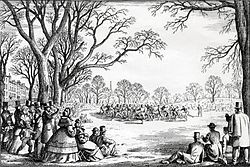
Artist's rendering of the Oneida Football Club in match play on Boston Common

Artist’s rendering of the Oneida Football Club in match play on Boston Common

Those interested in the history of American football know that the Oneida Football Club of Boston is often given significant credit for the development of the modern game. That team was formed by Gerrit S. Miller, one of a number of Boston schoolboys who played what was sometimes called the “Boston game” on Boston Common during the early 1860s. The game involved both running and kicking plays and developed a more consistent set of rules than prior versions of American football.

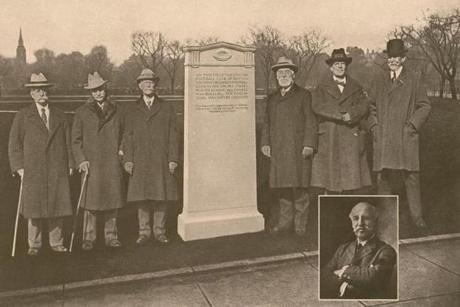
In 1925, a marker was erected on Boston Common to commemorate the Oneida Football Club.  It reads, “On this field the Oneida Football Club of Boston, the first organized football club in the United States, played against all comers from 1862 to 1865. The Oneida goal was never crossed.”

Oneida Football Club members at the dedication of the monument on Boston Common.  Lincoln's classmate, Gerrit S. Miller is immediately to the right of the monument.

Oneida Football Club members at the dedication of the monument on Boston Common. Lincoln’s classmate, Gerrit S. Miller, stands  immediately to the right of the monument. (Photo from W. Scudder, An Historical Sketch of the Oneida Football Club of Boston: 1862-1865)

Miller and other early players attended Epes Sargent Dixwell’s Latin School, a Boston preparatory school.  Francis Lincoln of Hingham was a classmate of theirs at Mr. Dixwell’s School and, if not a football player, certainly a fan. His high school diary, which is preserved in our archives, reports on football at Mr. Dixwell’s School. Here, on October 18, 1862, he reports on some intramural play:

The first class were challenged by the second for a match game of football. The first class were assisted by Thies and the second by G. S. Miller.
Two games out of three.
The second class beat. The first game was very hard and long—1 h. 6 m. with considerable lurking by Frank Peabody.

Louis Thies, like Gerritt Miller, was a member of the Oneida Football Club.   Both student coaches’ names appear on the Boston Common marker. (“Lurking,” of which Frank Peabody was guilty, was an early word for “offsides.”)

Lincoln also reports on a June 1862 football match between Mr. Dixwell’s School and the Boston Latin School. This was clearly considered an important event by more than young Lincoln, who pasted into his diary the results reported in four different newspapers:

The Boston Evening Traveller, June 6th:

MATCH GAME OF FOOTBALL.—A match game of football came off yesterday afternoon, on the Common, between the Latin and Mr. Dixwell’s school. The Latin school boys won three games in five, and were the challenged party. The best feeling prevailed on both sides. Each game was a specimen of splendid playing, and the last was prolonged to the unusual time of forty-two minutes—resulting in the victory of the Latin school.

The Boston Herald, June 6th:

FOOTBALL MATCH. A football match between seventeen boys of the Public Latin School and the same number from Mr. Dixwell’s school took place yesterday afternoon on the parade ground. The Latin school boys won three games in five and were therefore victorious.

The Boston Daily Advertiser, June 7th:

FOOTBALL MATCH.–A football match between seventeen boys of the Public Latin School and the same number from Mr. Dixwell’s school took place on Thursday afternoon on the parade ground. The Latin school boys won three games in five and were therefore victorious.

The Boston Journal, June 6th:

MATCH GAME OF FOOTBALL.–Seventeen boys of the Public Latin school, and a like number from Mr. Dixwell’s school, played on the parade ground on Thursday afternoon a match game of football, which resulted in the Latin school boys winning three games in five. Each game was a specimen of splendid playing, and the last was prolonged to the unusual time of forty-two minutes—resulting in the victory of the Latin school.

Francis Lincoln also gave an eyewitness report of this match in his diary. He can be forgiven if he has a slightly different take than the Boston newspapers on the disappointing result for his classmates in his entry for Thursday, June 5, 1862:

Seventeen fellows from our School challenged the same number of the Latin School to kick a match game of football. Our fellows beat the first game; Latin school, second; Our fellows, third; Latin School, fourth & fifth.
Some foul play on side of Latin School.

Our Religious Pamphlets Collection

Up in the archives, we have been busy indexing a collection of over 300 different religious pamphlets from the 18th and 19th centuries.  Most of these soft-cover, professionally printed booklets contain a single sermon given in a Hingham or South Shore church, although there are also religious tracts, catechisms, devotional literature, and Sunday School texts.  There is even a pamphlet of marital advice to husbands and wives.

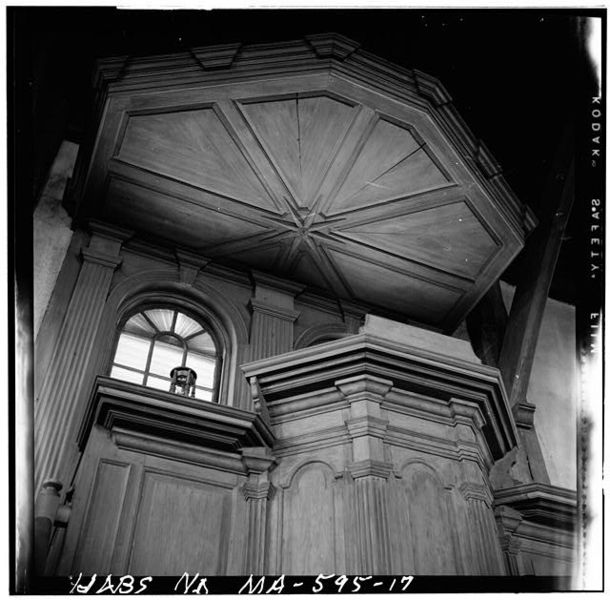
Pulpit in Old Ship Church (1941 photograph from Branzetti, Historic American Buildings Survey)

Pulpit in Old Ship Church (1941 photograph from Branzetti, Historic American Buildings Survey)

Our religious pamphlet collection provides a useful complement to the Hingham church records preserved both in our archives and at other institutions.  They tell an important story of the development of Protestant Christianity in this small corner of the country from the Great Awakening to the rise of liberal Christianity and Unitarianism to the evangelical reaction of the Second Great Awakening.  As the 19th century progressed, social issues such as abolition, temperance, and social inequality increasingly became the subject of sermons in Hingham and South Shore pulpits.

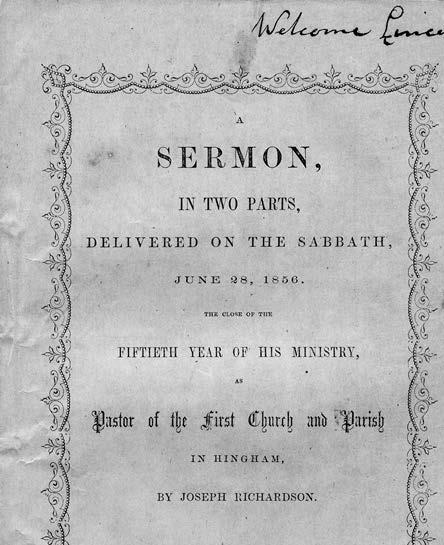
Joseph Richardson's "A Sermon in Two Parts," delivered Sunday, June 28, 1856

Joseph Richardson’s “A Sermon in Two Parts,” delivered Sunday, June 28, 1856

Preaching—whether written or delivered from the pulpit—was popular in 19th century Hingham, as the many multiple copies in our collection of certain “favorites” by local preachers Joseph Richardson (Pastor of First Parish or “Old Ship” Church from 1805to 1868) and Oliver Stearns (Pastor of Third Parish or “New North” Church from 1839 to 1856) attest.  Many of our copies of the sermons of Ebenezer Gay (Pastor of First Parish from 1718 to 1787) are reprints, demonstrating that he retained an audience for his sermons 50 years after his death.

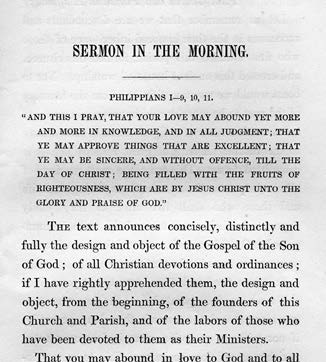
Even in the mid-19th century, attending Sunday church services in Hingham was an all-day affair, and preaching was a central part of the services in our Protestant churches.  (The pulpit of Old Ship Church in the photo at the top of this post attests to this.) These sermons are long by contemporary standards, most of them 25-30 pages long.  A number of the sermons are in two parts:  one for the morning service and one for the afternoon. They are dense and closely-argued, raising the unhappy suspicion that our ancestors’ attention spans, or at least their listening skills, were better developed than our own.

Aldrich035

Sunday, June 28, 1858. The morning’s sermon . . .

Aldrich036

. . . and the afternoon’s sermon