Signs of “nature’s god” at the Ebenezer Gay house

When a local developer purchased the Rev. Ebenezer Gay (1696-1787) house at 89 North Street, local historian John P. Richardson participated in some pre-construction historical investigations.  These painted panels from the Gay house, later installed in the 1690 Old Fort House which Mr. Richardson owned and occupied, are now part of the John P. Richardson Collection at the Hingham Historical Society.
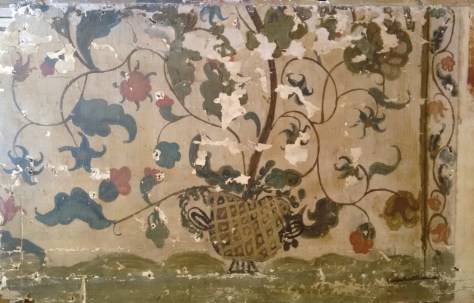
2012302001

Wall Fragment from the Ebenezer Gay House.   John P. Richardson Collection, Hingham Historical Society.

The first wall fragment is made of a plaster and lath surface attached to heavy vertical boards, which are in turn attached to two more modern boards horizontally laid.  The decorative side is painted a dirty off-white base with a meandering vine ad flower motif that originates out of a basket or planter decorated in a cross hatch pattern with dots in each diamond of the crosshatch.  The basket rests on a hilly green stylized landscape. The vine bears large, stylized acanthus-type leaves and flowers of varying shapes in red and blue. Five hand-cut nails protrude from the wall—two at the far left, one at the top center, one at the upper right, one at mid-right.
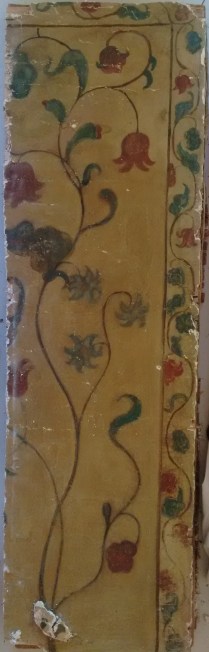
2012302000

Wall Fragment from the Ebenezer Gay House. John P. Richardson Collection, Hingham Historical Society.

The second decoratively painted wall fragment consists of two layers of plaster and lath encasing two heavy vertical boards. The plaster side is painted with at least 2 layers of paint, the topmost having been added by a 20th century Gay family member seeking to restore the design.  The original background was green, while the background of the current surface layer is a dirty tan color.

A meandering vine motif climbs the panel, with the vine bearing red tulip-shaped blue lily-shaped flowers.  At right is a narrow border set off by a dark brown line.  Within the border the flower and vine motif repeats in a narrower scale. To the right of the border is an unfinished area of white plaster with two maroon colored squares of paint laid out in a windowpane pattern.

In his book, The Benevolent Deity: Ebenezer Gay and the Rise of Rational Religion in New England, author Robert J. Wilson III described the Gay house at it looked during the years that Ebenezer lived there with his wife, Jerusha (Bradford) Gay and their ten children:

The house was a 2-1/2 story, rectangular, pitched-roof affair, somewhat large for the period, but not ostentatiously so.  Though it was painted a rather austere blue-gray on the outside, the interior was lively and colorful.  Someone (Jerusha?) adorned the cream colored walls of the family sitting room with a free hand vine design, very like eighteenth-century crewelwork.  The woodwork, fireplace wall, and the wainscott (added later) were all painted a light green.  The whole effect suggested that nature’s god in all his vibrancy was very much alive in the Gay house.
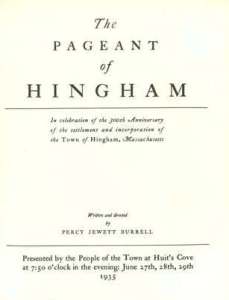
 

Hingham’s Tercentenary Pageant


Pageant Title PageHingham pulled out all the stops in preparation for its 300th anniversary celebration. Twelve hundred of the Town’s residents participated in a three-plus hour historical pageant, which was performed before 2,000 attendees on the evenings of June 27, 28, and 29, 1935.  In the midst of the Great Depression, the Town appropriated an astonishing $14,000 for its tercentenary observance, which was written and directed by Percy Jewett Burrell, a well-known producer of such extravangas. Reunions of Hingham’s oldest families were held, the Boy Scouts gave tours of Town buildings, and the Hingham Historical Society put on a special Historic House Tour to mark the occasion.
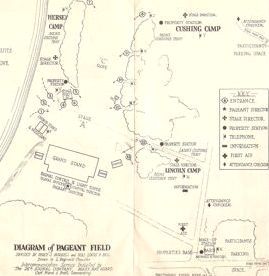
Pageant Site“The Pageant of Hingham” was performed on a sprawling outdoor set at what was then called Huit’s Cove (current site of the Shipyard development) and comprised ten “episodes,” interspersed with music and dance.  The episodes portrayed key moments in Hingham’s history, including the “landing” at Bare Cove, the Rev. Peter Hobart’s dispute with Gov. John Winthrop, an early Town Meeting, receipt of the Town Deed from the Wampanoag, the erection of Old Ship Church, a Colonial “husking” bee, the Battle of Grape Island, Madam Derby’s bequest to found Derby Academy, the ordination of the Rev. Henry Ware, and the Civil War.
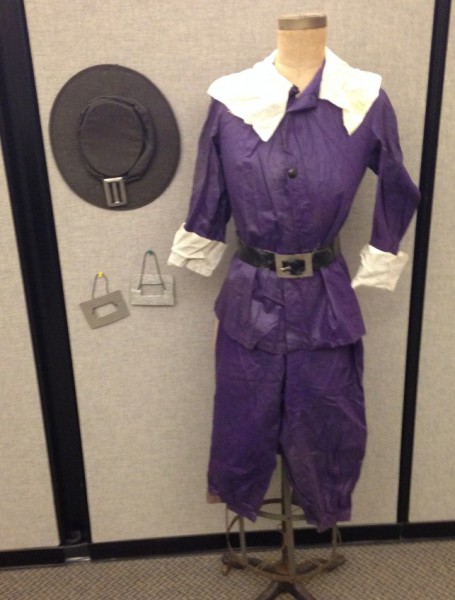
We were recently fortunate enough to receive the donation of a costume that a 12-year old Hingham boy wore as a pageant participant: breeches, jacket, hat, and shoe buckles.  Who would have imagined that the costumes were this brightly colored?  Certainly the black and white photographs of the Pageant that we have posted elsewhere provide no hint.

Pageant Costume

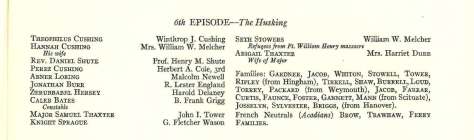
The boy who wore this costume, Malcolm Newell, scored a speaking role in the “husking” scene—that of Abner Loring (1742-1789), a 13-year old Hingham boy. According to the Pageant Program, this scene was set on Theophilus Cushing’s farm in South Hingham, “midsummer 1757,” and celebrated peace and prosperity in mid-18th century Hingham:

Here, there is peace, as onward Hingham moves. What was in early days a wilderness is now a fruitful place. The hills, the plains, the streams, and vales lie quiet . . . .  It is a mid-century year—an August month, and beautiful is the harvest . . . .

Husking CroppedYoung Newell and Herbert Cole, another Hingham boy also cast as an 18th century Hingham boy (Perez Cushing, 1746-1794), called out the names of the guests arriving at the Cushing farm.  An example of their lines, taken from the Pageant Program:
Perez Cushing (shouting): “Here they come from Scituate! The Jacobs, Farrars, Curtises, and Faunces!

Abner Loring (shouting): “And the Gannets, Fosters, and Manns.  And see! Hanover’s a-comin’, too!”

It must have been a memorable several evenings for a school-age boy to have performed in this Pageant before the Town and many visitors.  The addition of this purple Pageant costume to our collection makes it all seem a little more real to us today.

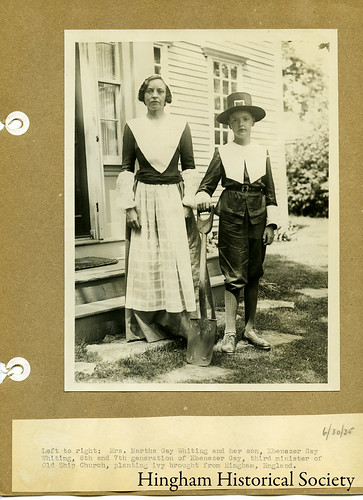
Hingham Tercentenary Pageant Scrapbook

Ebenezer Gay, another young Hingham participant, with his mother, in costume for the Tercentenary Pageant.


High-Wheelers in Hingham

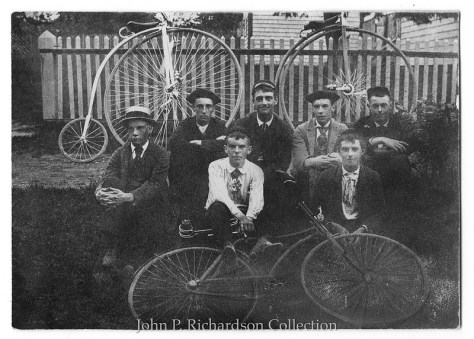
These seven Hingham boys posed with three bicycles are witnessing the birth of modern cycling. Behind them are two older bicycles—so-called “high wheelers” or “penny farthings” (the latter nickname descriptive of the relative sizes of the two wheels). High-wheelers originated in England and became popular in the United States in the early 1880s. As this photo lets us see clearly, these early bicycles had a “direct drive” mechanism, that is, the pedals attach directly to the wheel, so that the cyclist’s motion turns the wheel directly. Enlarging the front wheel, therefore, was the only way to make the bicycles go faster–and this is what happened. Front wheels often five feet in diameter, with the cyclist perched directly over the wheel, meant an increased risk of the cyclist pitching headfirst from the front of his bike. Cycling in the era of the high wheelers was a sport for athletic young men.
By the early 1890s, however, “safety bicycles”—like the one lying on the ground in front of the boys—had been introduced and quickly grown in popularity. With two wheels of equal size and pedals connected to a chain that propelled the rear wheel, this direct ancestor of our modern bicycles had a lower center of gravity and was easier to ride. With these technological advances—and the pneumatic tires which smoothed out the ride, bicycling became a very popular past time, with men, women, and children all participating.

Hingham R.F.D.

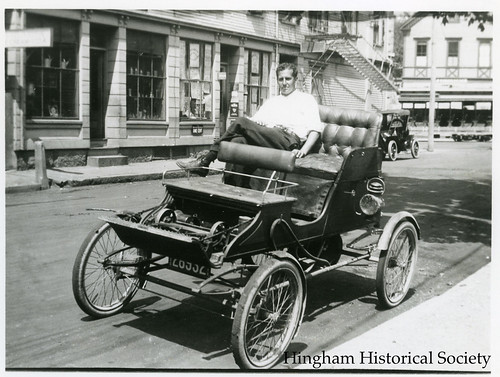
Ervin Horton in his Stanley Steamer (1911)
This 1911 shot from our photo archives depicts Ervin Horton (1876-1959), at the time a Hingham mail carrier, in his Stanley Steamer automobile. When we reproduced the photo in Michael Shilhan’s 1976 local history, When I Think of Hingham, the caption read, “Ervin S. Horton and his red Stanley Steamer on South Street in front of the Post Office, July 31, 1911.”

Ervin’s son, Howard Leavitt Horton (1904-1983), memorialized the Hingham of his youth in letters, stories, water color paintings, and sound recordings, many of which are in our archives. Here, in a 1975 letter written to Historical Society President James W. Wheaton, an elderly Howard Horton remembers his father, the delivery route, and the car:

I remember driving around the Hingham R.F.D. mail route with my father in that old Stanley Steamer . . . . We started up Fearing Road and turned right past the old Cadet Field (now Derby) and then left at the foot of the hill by the harbor and over Otis Street then turned right on Downer Avenue passing the Crow Point Inn and to the Steamboat Landing. Then we took a very sharp left turn and up a very steep hill, Steamboat Lane. This was before 1915 and there were few automobiles in Hingham then and I doubt if any of them except my father’s Stanley Steamer could go up that hill after a sharp turn. The old Stanley Steamer just went up that hill puffing steam with no trouble at all. The Crow Point Golf Club was at the top of the hill and then we turned right and there was a beautiful view of Boston Harbour. . . .

In those days there was an old blacksmith shop as we turned right leaving Downer Avenue on Lincoln Street . . . Mr. Wing’s blacksmith shop and then Jerry Breen’s farm house and barn with a windmill which pumped water from a well for use on his truck garden. There were several of these farms in Hingham and they all drove over Lincoln Street early in the dawn to get to the market district on Hanover and Blackstone streets at Boston by daylight, these huge wagons requiring two horses and sometimes four. . . .

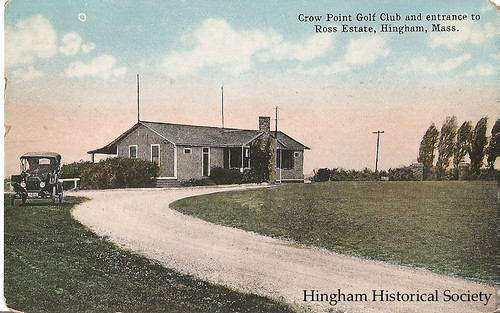
Crow Point Golf Club
This postcard dates from 1915, around the time young Howard Horton accompanied his father on summertime mail delivery trips up the hill to the Crow Point Golf Club, a 9-hole golf course located at the top of Paige Hill, off Howe Street.
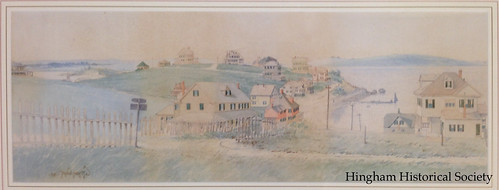
Steamboat Hill

Steamboat Hill ran up from the former steamboat landing–where the Hingham  Yacht Club now has its pier:  the sharp left up the hill remains in place today.  The painting above, showing Steamboat Hill from the far side, was made somewhat earlier, in 1895–the year before Melville Garden was closed and development of Crow Point accelerated.

LST-1077

In December 1941, the Bethlehem Shipbuilding Company started to build a shipyard on 150 acres of land at Hewitts Cove in Hingham. By June 1942, the first ship, a destroyer escort, was completed and launched from the Bethlehem-Hingham Shipyard. The Shipyard built 132 destroyer escorts before turning to the construction of tank landing ships in 1944.

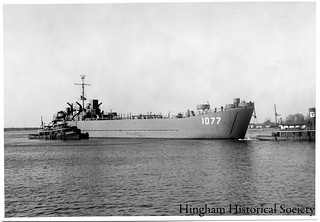
Tugboat “Venus” Escorting Tank Landing Ship LST-1077

This photo shows LST-1077, one of the last of the 165 tank landing ships launched from Hingham in 1944 and 1945. It is making its way out to sea–perhaps near Hull Gut–guided by the tug “Venus,” on April 19, 1945.

LST-1077 only arrived in time for the tail end of World War II, entering Pearl Harbor on July 19, 1945 and remaining there until August 29, 1945, when she ferried U.S. troops to Japan for the post-war occupation. In the Korean War, she served the Pacific Fleet from 1950 through 1955. In that year, she was finally given a name—the U.S.S. Park County.

After a substantial refit in 1965, the U.S.S. Park County supported the United States forces in Vietnam from 1966-1971. The Navy sold her to the Mexican government in 1978. Rechristened the A.R.M. Rio Panuco, she served the Mexican Navy as a landing ship.

At the end of her useful days, the Mexican Navy used LST-1077 as a target ship during military exercises. Her final service, then, is as an artificial reef off Mexico, where she provides a habitat for marine life.

Quite a journey, which all started at the Hingham Shipyard.

Holy Ghosts

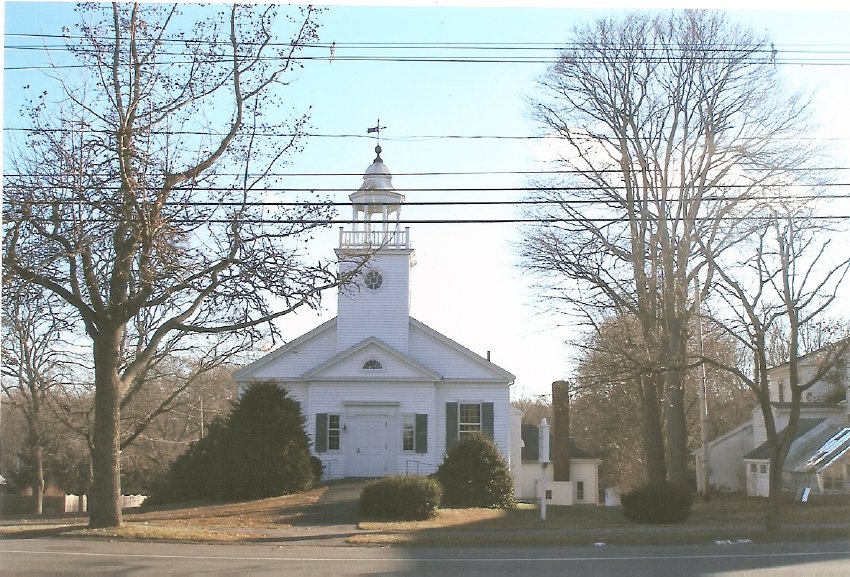
Former First Church of Christ Scientist, Hingham.  From the collection of the Hingham Historical Society

First Church of Christ Scientist, Hingham. Collection of the Hingham Historical Society

The recent sale of the First Church of Christ, Scientist building on Main Street and its conversion to a secular use is nothing Hingham hasn’t seen before.  Other former Hingham houses of worship remain in our midst, repurposed as private homes and office buildings. The First Universalist Church and Society, the Free Christian Mission, and the United Social Society of South Hingham have all, over the years, slipped from our consciousness, but their architectural ghosts remain on North Street, High Street, and Gardner Street.

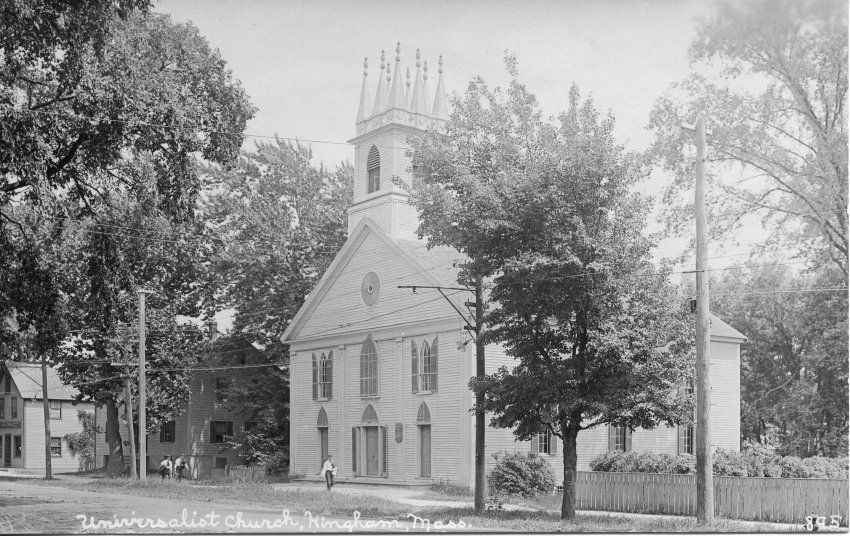
First Universalist Church and Society.  From the collection of the Hingham Historical Society

First Universalist Church and Society in Hingham.  Collection of the Hingham Historical Society

In 1829, the First Universalist Church and Society of Hingham erected a meetinghouse on North Street. Universalists were liberal Protestants whose name reflected a central tenet of their faith:  unlike their Puritan forefathers, they believed that God granted salvation to all human beings.  (In 1961, the Universalist Church of America merged with the American Unitarian Association, forming the Unitarian Universalist (“UU”) Assocation, to which Hingham’s Old Ship Church belongs.)

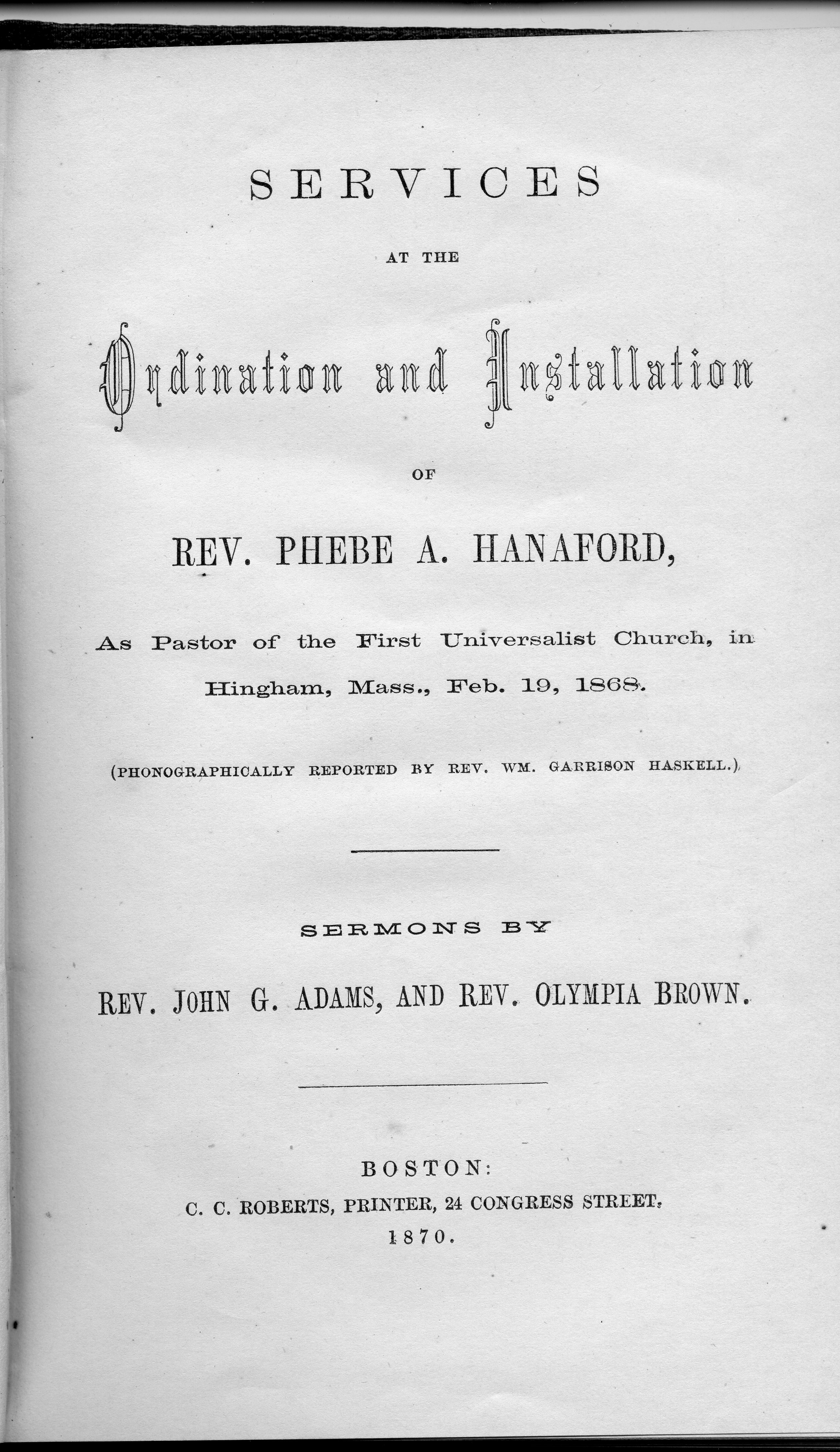
The history of Hingham’s Universalist Church and Society is linked with the 19th century women’s movement. In 1868, Phebe A. Hanaford, its pastor, became the third woman to be ordained to the ministry in the United States—in the Universalist church on North Street. The ordination was performed by the Rev. Olympia Brown, the first woman in the United States to be ordained to the ministry and the pastor of the First Universalist Society of Weymouth.

Ordination of the Rev. Phebe A. Hanaford.  Collection of the Hingham Historical Society.

Ordination of the Rev. Phebe A. Hanaford. Collection of the Hingham Historical Society.

When Hanaford left the Hingham church to accept the Universalist pulpit in New Haven (and increase her abolitionist and suffragist activity), she was succeeded by the Rev. Daniel Livermore.  Livermore’s wife was the prominent abolitionist, suffragist, and reformer Mary Ashton Livermore.  Although the couple resided in Melrose, Mary Livermore, a sought-after speaker once dubbed “The Queen of the American Platform,” spoke from the Universalists’ North Street pulpit and elsewhere in Hingham in support of women’s rights and temperance.

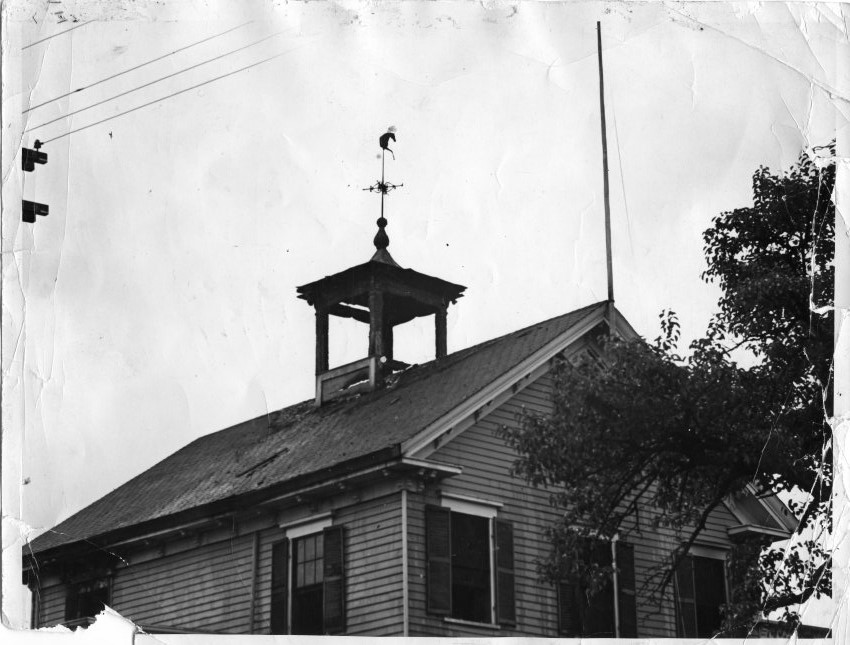
Hingham’s Universalist Church disbanded in 1929.  After several commercial uses in the early and mid-20th century, the building still stands as a private residence.

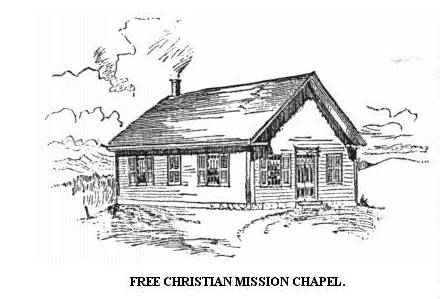
Illustration from Bouve, et al., History of the Town of Hingham (1893)

Illustration from Bouve, et al., History of the Town of Hingham (1893)

In 1872, the Town of Hingham voted to allow the Free Christian Mission to build a chapel at the corner of High Street and Ward Street. The Free Christian Mission was a religious society formed by families of color who lived in and near what was often referred to as the village of “Tuttleville.”  After meeting in private homes  for a year, John Tuttle and others petitioned the Town of Hingham to allow them to build a chapel on vacant, town-owned land on the corner of High Street and Ward Street.  In 1872, a special Town Committee recommended that the Town allow the petition, in words with a ring of paternalism:

The advantages which follow an attendance upon public worship are apparent to nearly every candid and thinking person. A community is not only improved in intelligence, virtue, and happiness thereby, but with those characteristics come a more earnest recognition and maintenance of law and order, as well as an increased interest in the prosperity and general welfare of society. . . .

At the present time a number of our fellow citizens desire to establish another church. With their associates they number about one hundred persons, the majority of whom reside on Ward and High Streets, or in the vicinity. They have held meetings during the past year at their residences, and these meetings have been very well-attended . . ..

Photograph of the Free Christian Mission.  From the collection of the Hingham Historical Society

Undated photograph of the Free Christian Mission. From the collection of the Hingham Historical Society

The Free Christian Mission, at some points also called Mt. Zion Chapel, embraced the covenant of the “Second Advent” or imminent second coming of Christ. Adventism, an evangelical branch of Protestantism, grew in popularity after the Second Great Awakening of the early 1800s.

The Free Christian Mission disbanded in the early 20th century.  As with the Universalist Church, the building was put to  a succession of secular uses.  It was for some time an antiques store and is currently a dentist’s office.

While “Liberty Plain” and the South Hingham neighborhoods along Gardner, Whiting, and Derby Streets were formally part of Hingham’s Second Parish, it was a long trip up Main Street for services.  In 1891, two sisters, Sara Chubbuck and Anna Belcher, were instrumental in the formation of the United Social Society of South Hingham, which ran a Sunday School and offered worship services to families in this southernmost part of Hingham.  After the Society spent a year in an unheated woodenware factory on Gardner Street, it erected a chapel at the corner of Gardner and Derby Streets for Sunday School and worship services.  This building, too, survived its congregation; it is now a private residence on lower Gardner Street near Farm Hill Lane, not far from its original location.

End of an Era, Easter Day 1902

Much recent attention has been paid to Hingham’s 19th century industrial period, when our town dominated the national woodenware industry, and boxes, buckets, and wooden toys churned out of workshops and factories in South Hingham. Hingham’s former nickname “Bucket Town” is the title both of a recent book and a recent exhibition at Old Sturbridge Village.

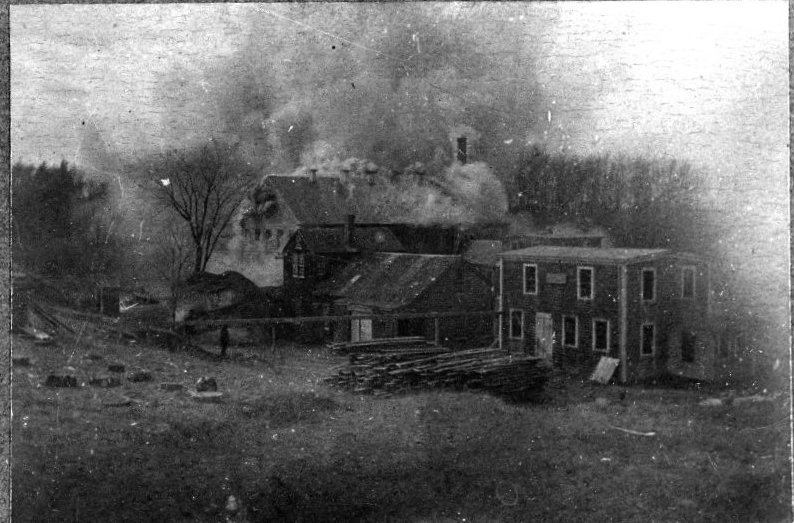
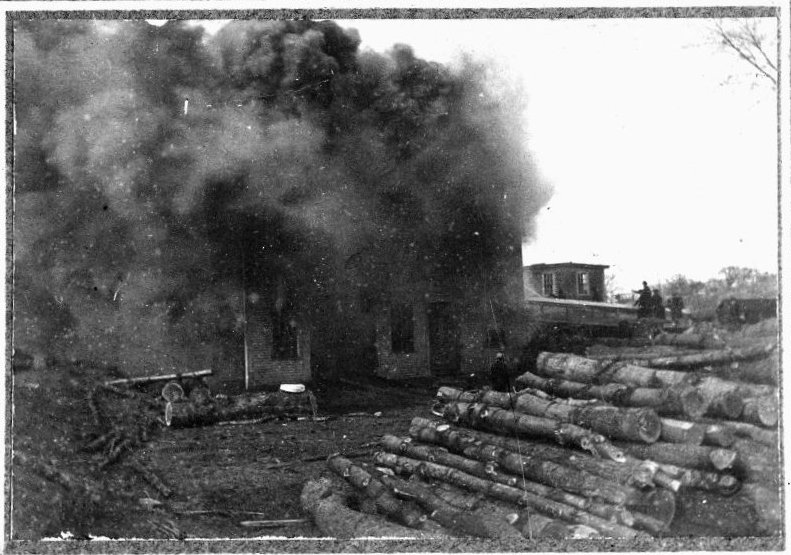
This predominance waned in the later 1800s for a variety of reasons, but the steam-powered bucket factory that the Wilders had built on Cushing Pond in the 1840s came to a spectacular end when it burned down on Easter Day, 1902.

Fire at the Wilder Bucket Factory, Easter 1902. (Photo: Hingham Historical Society)

Fire at the Wilder Bucket Factory, Easter 1902. (Photo: Hingham Historical Society)

Fire at the Wilder Bucket Factory, Easter 1902 (Photo: Hingham Historical Society)

Fire at the Wilder Bucket Factory, Easter 1902 (Photo: Hingham Historical Society)

Our Autograph Albums

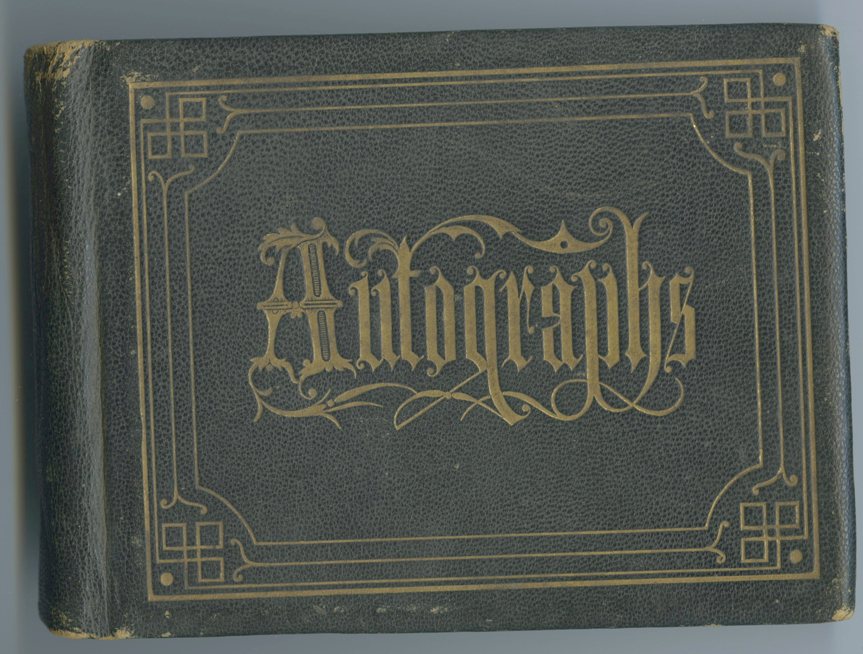
Autograph albums were all the rage in mid-19th century America—and Hingham was no exception.  We have a collection of the small books in which Hingham boys and girls exchanged signatures, messages, and verse during the 1860s and 1870s.  The albums themselves came in all shapes and sizes–the boys’ albums more conservative  and the girls’ more elaborate, with illustrations, decorations, and fanciful covers.  Willie Leavitt’s album was compact and business-like,

Willie Leavitt's Autograph Album

Willie Leavitt’s Autograph Album

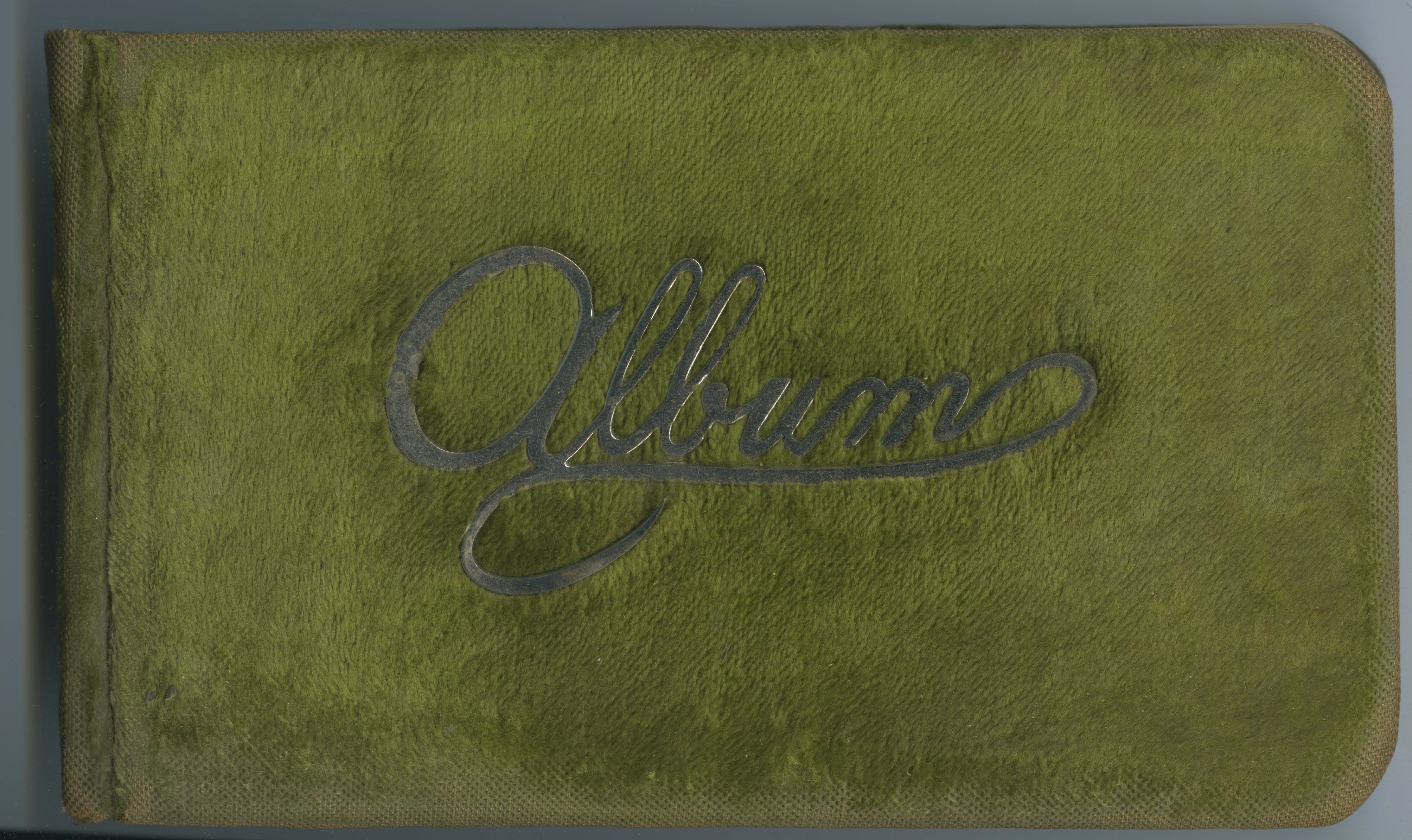
but the photograph below does not do justice to Minnie F. Burr’s autograph album, which was covered with deep-pile, chartreuse green velvet with the word “Album” inlaid in shiny celluloid letters.

Minnie F. Burr’s Autograph Album

Some boys and girls (mostly boys) simply signed their names in their friends’ albums but many penned a few lines of poetry or prose.  As would later be the case with high school yearbook inscriptions, there must have been some pressure to write memorably, and to meet this need, collections of autograph album inscriptions were published.  The Album Writer’s Friend, a copy of which is in our archives, helpfully asked,

Who among the readers of this preface has not been invited to write a few words of sentiment in the Albums of a friend? As an aid to the many thousands who have received this invitation and have not known what to write, we offer this collection of choice verse and prose . . . embracing sentiment, affection, humor, and miscellany . . . .

Its offerings ranged from the florid–

Our lives are albums, written through
With good or ill—with false or true—
And, as the blessed angels turn The pages of our years,
God grant they read the good with smiles
And blot the bad with tears

to the light-hearted–

In the storms of life
When you need an umbrella
May you have to uphold it
A handsome young fellow

The young people of Hingham did not appear to have needed much help, and the entries they made in their friends’ albums sound original and genuine, whether penned in verse (like Maud Cushing’s entry in Lizzie Hersey’s album, April 8, 1876),

AR120_074

Lizzie Hersey’s Autograph Album

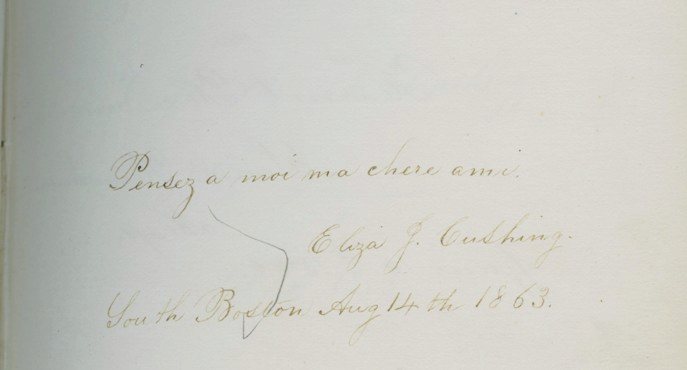
or with a touch of sophistication (like Eliza Cushing’s perfect French in Hattie Cushing’s album, August 14, 1863).

"Pensez a moi, ma chere amie"

“Pensez a moi, ma chere amie” — Hattie Cushing’s Autograph Album

Otis Remington’s humor, penned in Minnie Burr’s album on April 23, 1879, is corny but funnier than The Album Writer’s “humorous” suggestions:

AR120_073

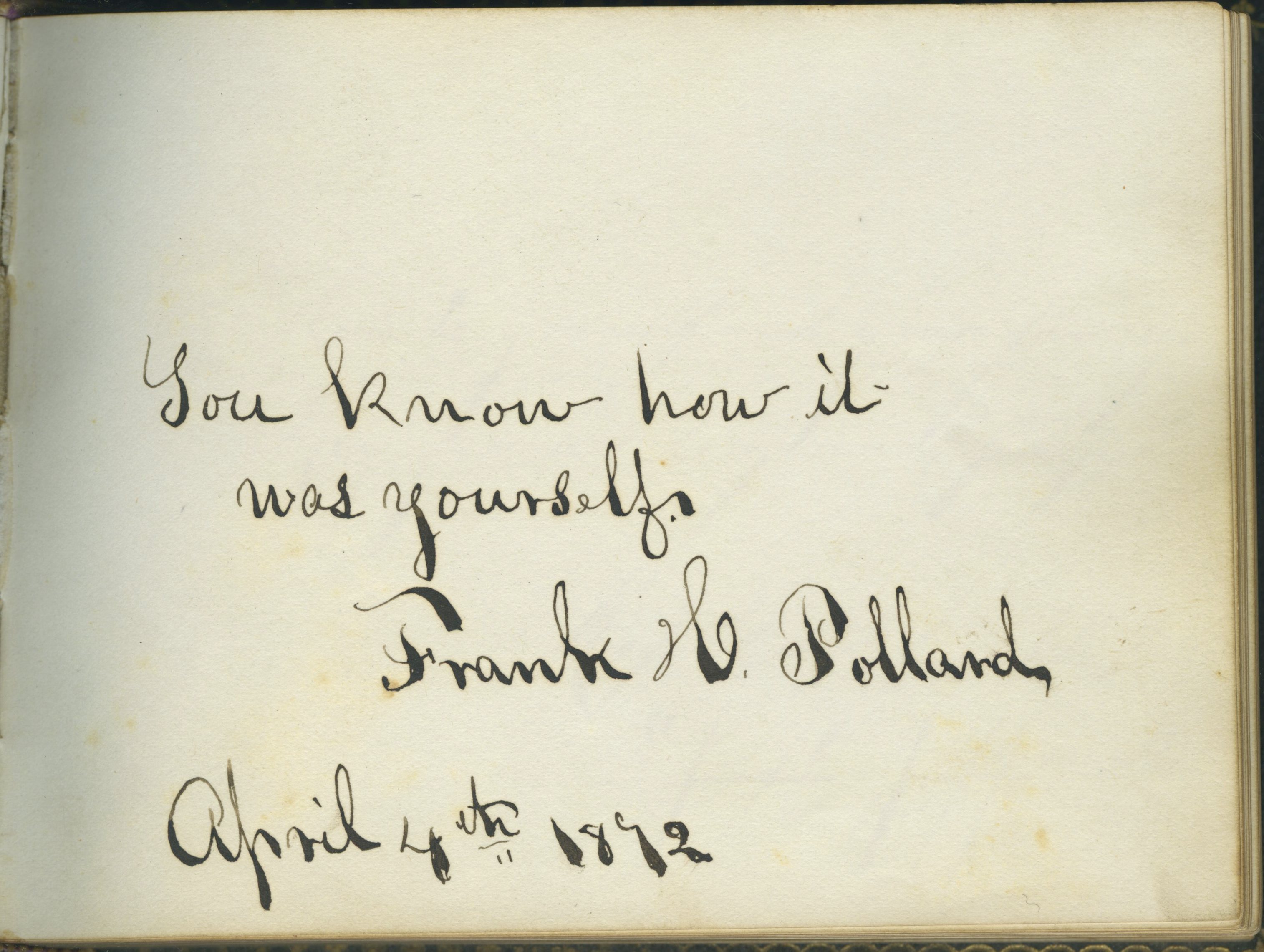
And inside jokes must have been as prevalent then as they are now:  who knows what Frank Pollard meant by this vaguely ominous note made on April 4, 1872 in Willie Leavitt’s album?

AR120_071
These Hingham young people left often-endearing reminders of their daily life and friendships in their autograph albums.  They never imagined that their schoolroom would become an historical society’s archives or that these notes exchanged among themselves would survive as “artifacts.”

Prince Demah, Portrait Painter

Prince Demah, Portrait of Christian Barnes. Hingham Historical Society. Photo (c) James Vradelis

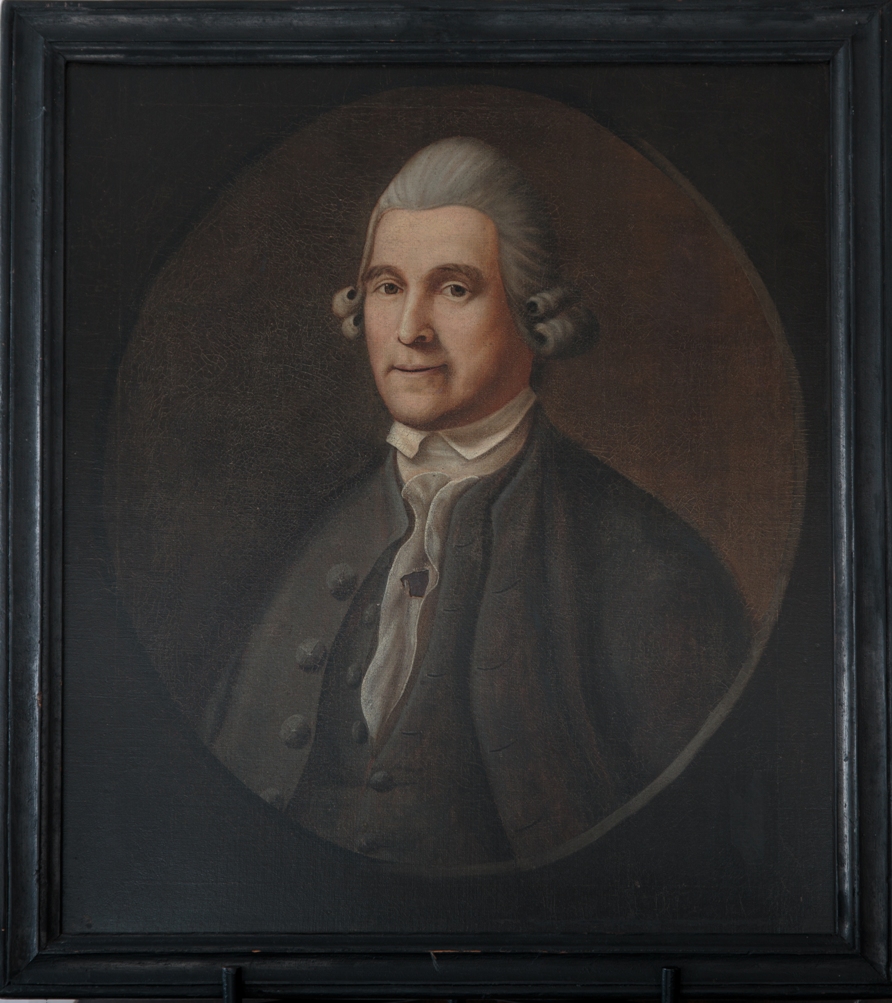
One of our Society’s co-founders, Susan Barker Willard, bequeathed a treasure trove of art, furniture, and documents which she had inherited from her Barker, Thaxter, and Willard family ancestors. Much of it has furnished our 1688 Old Ordinary house museum since the early part of the last century. Two paintings in particular have always been favorites, especially on the fifth grade school tours that are a rite of passage in the Hingham Public Schools.  They are a pair of 18th century oil portraits of Henry and Christian Barnes of Marlborough, Massachusetts.

Henry Barnes had no family connection to our town of Hingham, but Christian had friends and relatives here.  Her mother’s family were Barkers from the South Shore. Henry was a distiller, manufacturer of pearl ash (an early chemical leavener), and trader in British manufactured goods. They were Loyalists and forced to flee Marlborough for England in late 1775 after some violent incidents (including, it has been reported, the tarring and feathering of Henry’s horse). The Barnes portraits are each damaged in the chest area, and the lore is that the portraits—left at their estate—were the victims of Marlborough patriots.

Portrait of Henry Barnes by Prince Demah.  Hingham Historical Society Photo (c) James T. Vradelis

Prince Demah, Portrait of Henry Barnes. HIngham Historical Society. Photo (c) James Vradelis

Members of Marlborough’s financial elite, the Barneses owned three slaves in the early 1770s. Thanks to Christian’s prolific correspondence, we have known for some time that Prince, the son of their slave Daphney, was a talented artist. (Prince’s mother, Daphney, features in a set of letters in our archives. She was the subject of an earlier post in this blog, “A Letter from Daphney.”) In the first letter that mentions Prince, Christian writes, that “Prince is here and I am sitting to him for my picture.”  A month later, in November 1769, she reports that Henry has purchased Prince, with a view towards “improving his genius in painting.”  From there, Christian’s appreciation for Prince’s talent grows.  In an early 1770 letter, she reports that he is

a most surprising instance of the force of natural Genius for without the least instruction or improvement he has taken several faces which are thought to be very well done. He has taken a copy of my picture which I think has more of my resemblance than Copling’s [sic].

(She is referring to John Singleton Copley, a colonial American painter famous for his portraits of 18th century Bostonians.)

The original manuscripts of Christian’s letters are at the Library of Congress, but we are lucky to have, in our Old Derby Academy archives, a set of typescripts made in the early 20th century—also the gift of Susan Barker Willard.  In her letters, among her friends, and even in a set of newspaper advertisements, Christian passed the word about Prince:

As soon as the roads are tolerable I propose going to Boston in order to recommend our Limner to the Publick. I should be glad to have your judgment as to his performance and likewise your advice how I shall proceed with him. He has taken five pictures from the life since his return. Three of them as good likenesses as ever Mr. Copling took. I am in no doubt but he could coppy a picture as well as anybody in the Country.

Christian’s enthusiasm made it impossible for us to stop thinking about Prince the painter—particularly since our two Barnes portraits were painted in the 1770s and were unattributed.  We continued to learn more about Prince and his remarkable life but were unable to connect the dots between Prince and the Barnes portraits. (The paintings are unsigned and when they were restored in the 1930s a heavy layer of masonite was placed over the back of the canvas, obliterating any obvious clues.

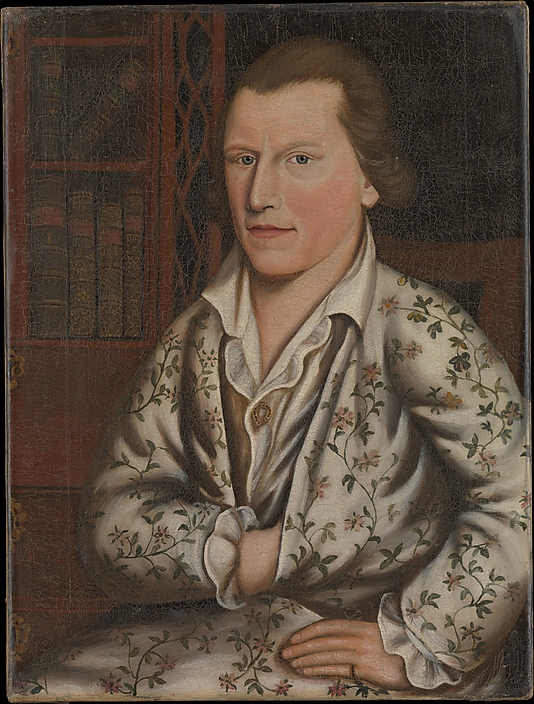
Portrait of William Duguid by Prince Demah.  Metropolitan Museum of Art

Prince Demah, Portrait of William Duguid.  Metropolitan Museum of Art

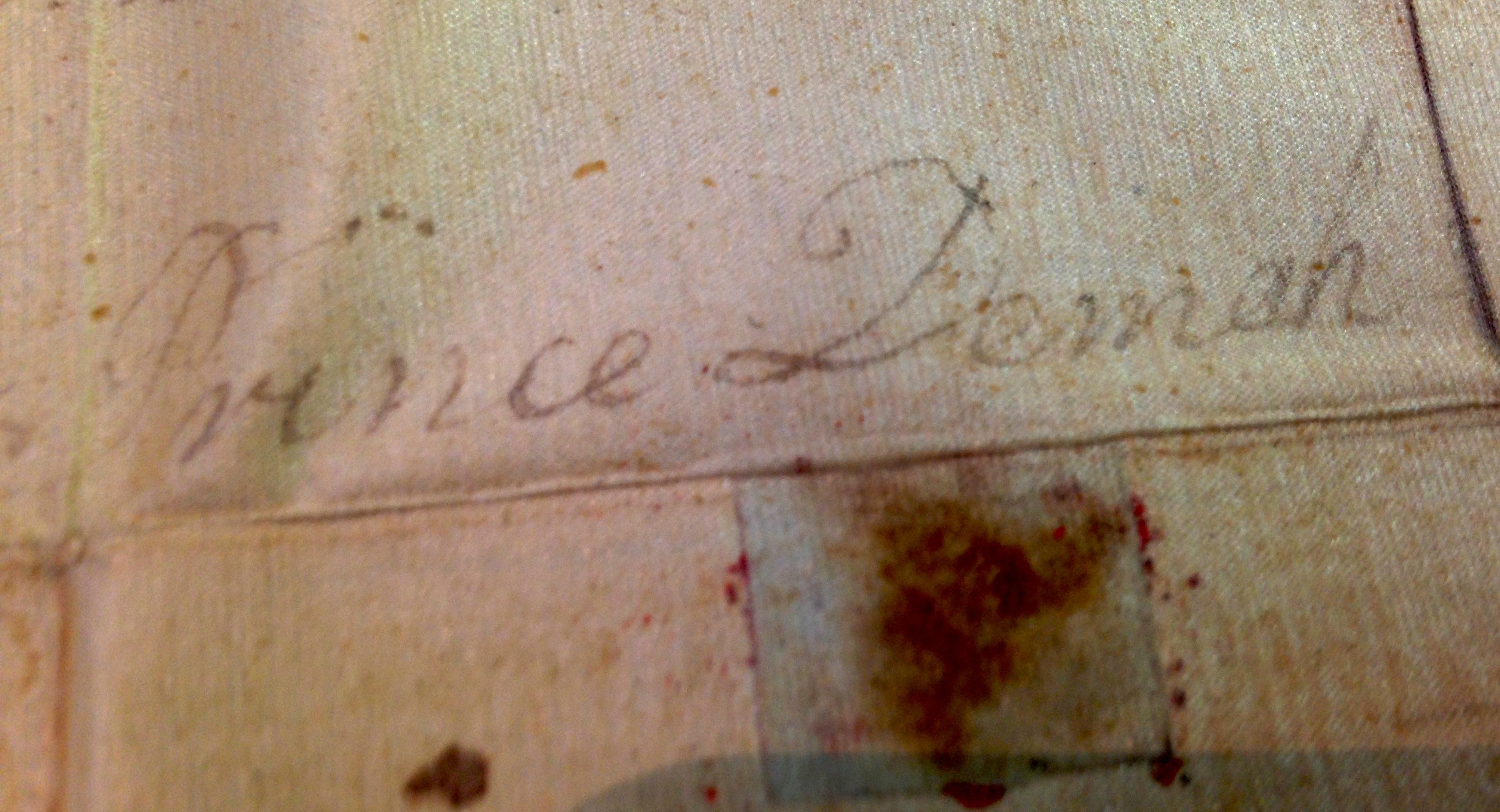
In late 2013, the Metropolitan Museum of Art in New York opened an exhibit called “Interwoven Globe,” on the 18th century international trade in textiles. The exhibition included a modest portrait of a Scottish textile merchant, painted in 1773 and signed, on a stretcher on the back of the canvas, “Prince Demah Barnes.”

We got in touch with the Metropolitan and were able to share what we had learned about Prince. The Metropolitan invited us to bring our two portraits to its Paintings Conservation Department, where they were examined using x-radiographs and infrared reflectography. The Metropolitan concluded that its signed painting by Prince and our two Barnes portraits were all by the same artist.  We have co-authored an article about the three paintings which appears in this month’s issue of Antiques magazine.

Prince enjoyed a short professional painting career before the Revolution changed the lives of Christian, Henry, and Prince.  Christian and Henry fled and Prince enlisted in the Massachusetts militia as a free man–Prince Demah (no more “Barnes”)–and served as a matross. He died, likely of smallpox or other disease, in March 1778. As “Prince Demah, limner,” he wrote his will, leaving all he had to Daphney.

Prince Demah’s will.  Massachusetts State Archives

These three portraits by Prince Demah are the earliest known paintings by an African-American to be located and identified. It appears that Prince was only allowed to focus on his art for around ten years, but we know that he made other portraits as well—in oils and with “crayons,” or what we call pastels today. The next step: seeing if we can identify any more of his paintings.  As we at the Hingham Historical Society now know, one (or two) of them could be  found just about any place.

The Portico Finds Its Home

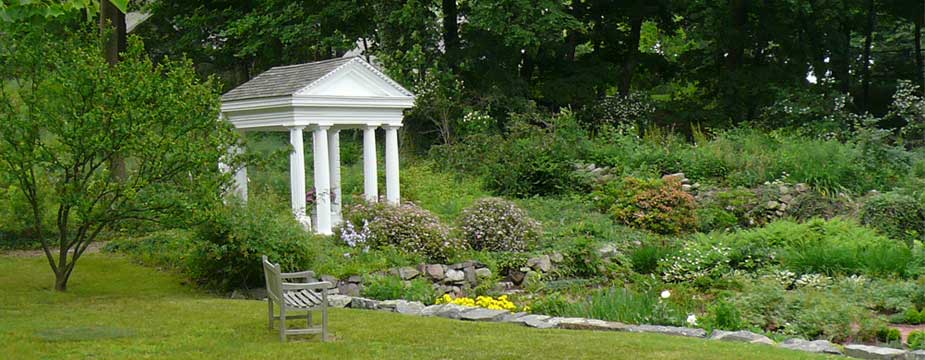
Those who have been to our Old Ordinary House Museum—or who have been to the home page of our Society website—have seen the gazebo or summer house in the shape of a small Grecian temple which sits at the top of the Old Ordinary garden.

slide_01

As well as being a charming backdrop for garden parties and the occasional wedding, this structure is a genuine piece of Hingham history. Its travels around town over the last two hundred years are documented by correspondence, photographs, and the written reminiscences of the Rev. John Gallop, one of its former custodians–all in our archives.

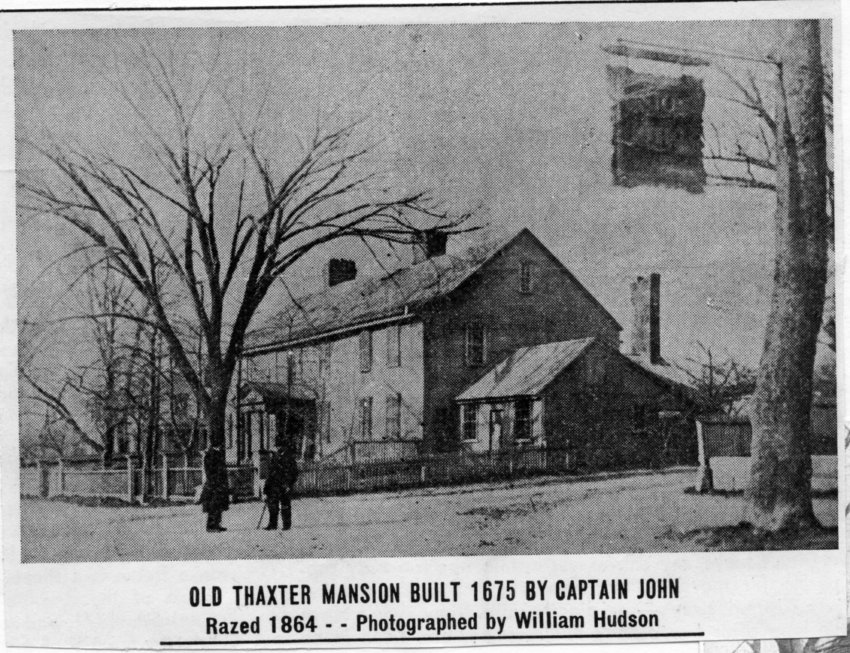
In the late 17th century, the Thaxter family built a house in Hingham Square, on the present day site of St. Paul’s Church. As added to and improved over the years, the “Thaxter mansion” grew into a large, attractive home, furnished with tapestries, tiled fireplaces, and painted doors—some of which were donated to our Society by Thaxter descendants.

ph2358

At some point, prior to the first photographs of the house but almost certainly in the first half of the 19th century, a classically-influenced portico, with a pediment and columns, was added at the house’s front door.

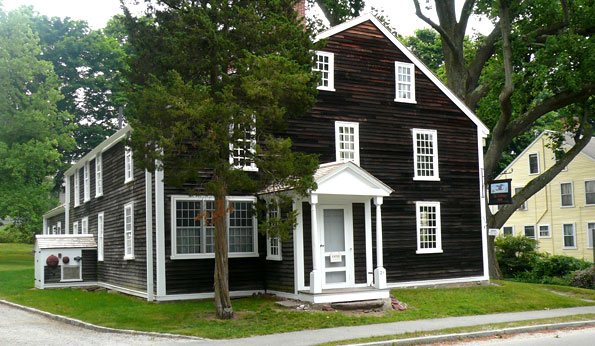
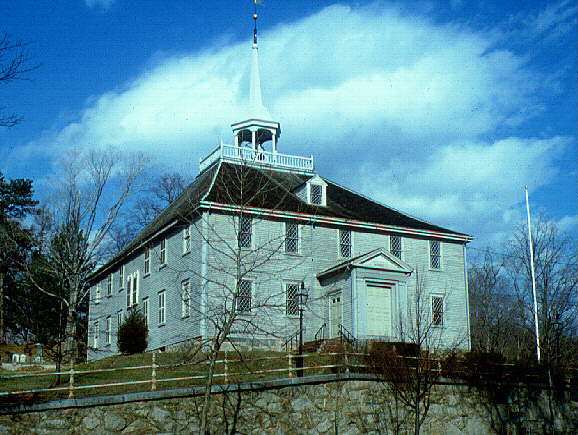
Greek revival architecture was the fashion during the first half of the 19th century, and it sometimes took a more modest form than the Monticello or “Tara” models. Greek-influenced porticos were added to many older New England buildings. In addition to the Thaxter mansion, porticos with columns and a pediment were added to the Old Ordinary itself and (in an architectural mash-up) the English Gothic Old Ship Church.

oldordinary2

hingham
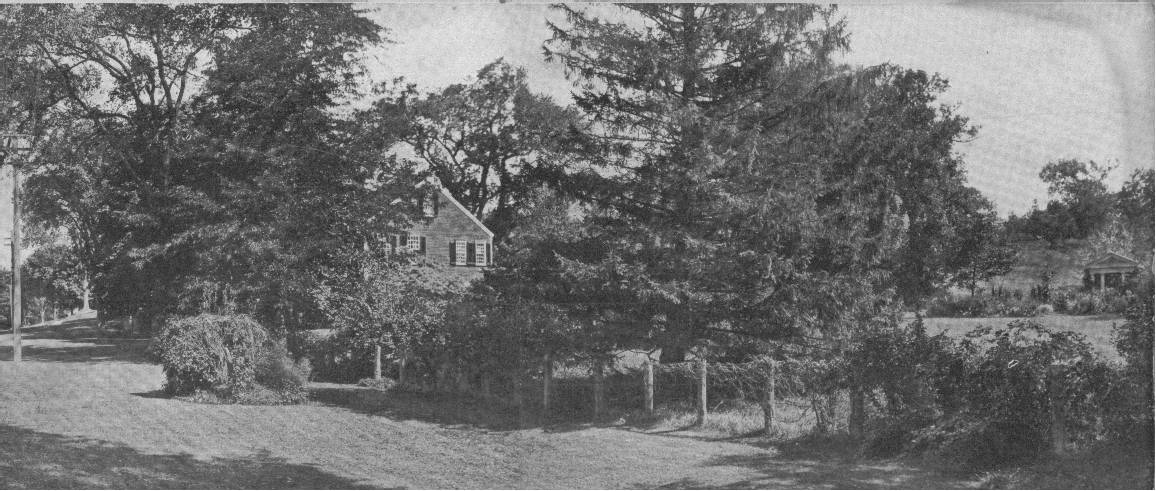
The Thaxter mansion was torn down in 1866 to make way for St. Paul’s Church, but the portico was saved. The story is that it was taken away by Hingham artist W. Allan Gay, but in any event, it was installed in the side yard of the Martin Gay house at 262 South Street, where it began its second life as a summer house or gazebo.

The Martin Gay house and its side yard.  (See the portico at the far right of the photograph.)

The Martin Gay house and its side yard. (See the portico at the far right of the photograph.)

Almost 100 years later, during an expansion of the South Shore Country Club, the garden area the Gay property was sold. The portico, which had fallen into disrepair, was threatened with demolition. The Rev. John M. Gallop, rector of the Parish of St. John the Evangelist, saved the portico from demolition. He sought and received permission to remove it. He installed it in the side yard of St. John’s Rectory, on Main Street next door to the church.

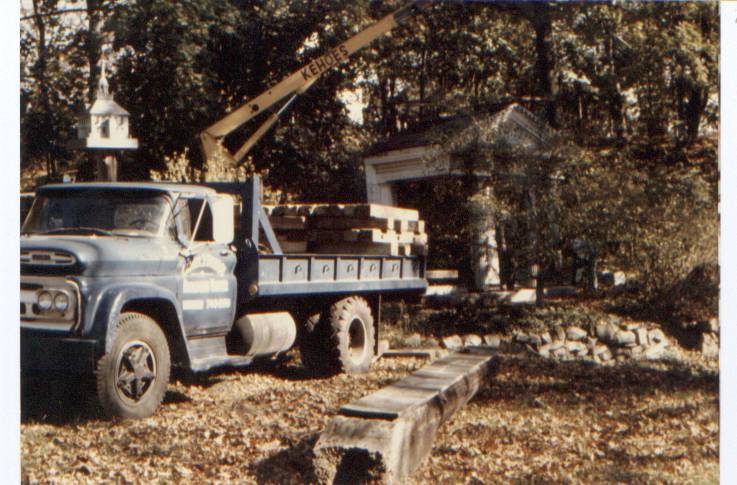
Upon his retirement from St. John’s, Gallop donated the portico to the Hingham Historical Society. The decision was reached to add it to the formal gardens on the grounds of the Old Ordinary. (These gardens have a rich history of their own which would take another post to cover.) Still more preservation work was needed, but thanks to Gallop and many dedicated volunteers at the Society, the portico found a permanent home in 1979, not much further than a football field’s length away from where it was originally built.

Installing the portico in the Old Ordinary's garden (1979)

Installing the portico in the Old Ordinary’s garden (1979)