End of an Era, Easter Day 1902

Much recent attention has been paid to Hingham’s 19th century industrial period, when our town dominated the national woodenware industry, and boxes, buckets, and wooden toys churned out of workshops and factories in South Hingham. Hingham’s former nickname “Bucket Town” is the title both of a recent book and a recent exhibition at Old Sturbridge Village.

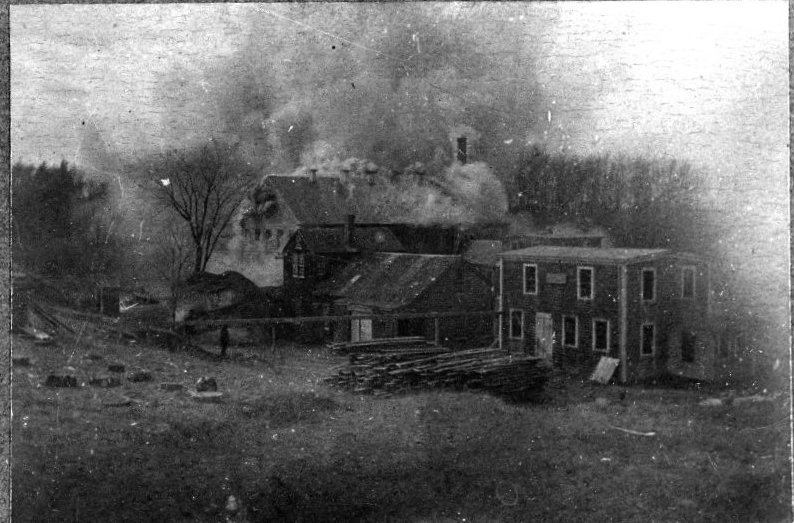
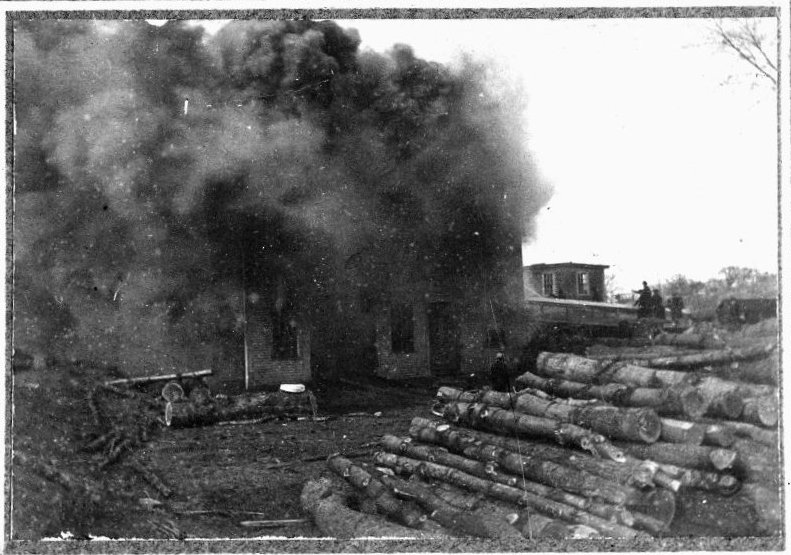
This predominance waned in the later 1800s for a variety of reasons, but the steam-powered bucket factory that the Wilders had built on Cushing Pond in the 1840s came to a spectacular end when it burned down on Easter Day, 1902.

Fire at the Wilder Bucket Factory, Easter 1902. (Photo: Hingham Historical Society)

Fire at the Wilder Bucket Factory, Easter 1902. (Photo: Hingham Historical Society)

Fire at the Wilder Bucket Factory, Easter 1902 (Photo: Hingham Historical Society)

Fire at the Wilder Bucket Factory, Easter 1902 (Photo: Hingham Historical Society)

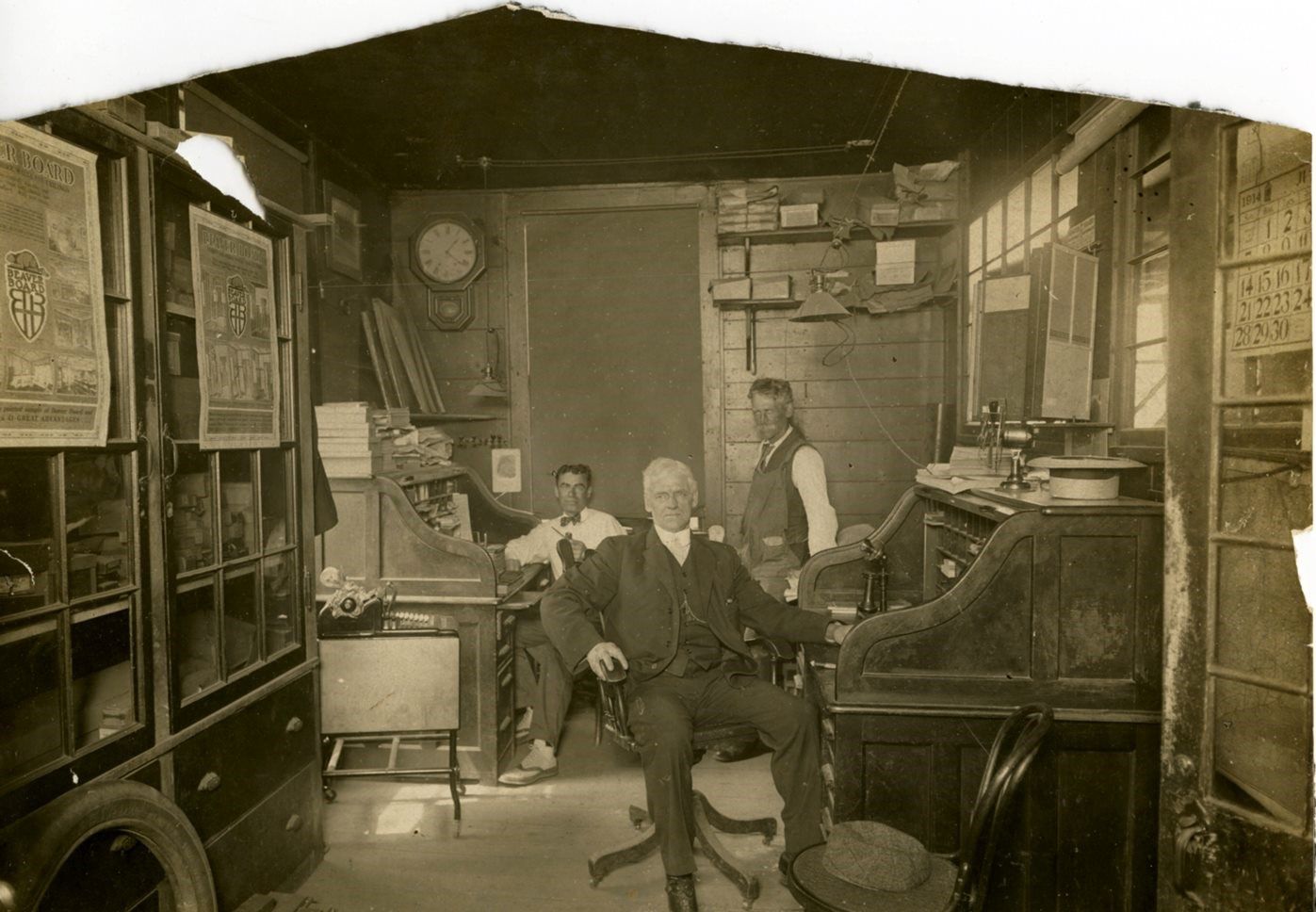
The Back Office in 1914

George E. Kimball Lumber Company 1914.

George E. Kimball Lumber Company, 1914.

This recently donated photograph depicts the interior of the George E. Kimball Lumber Company office on Summer Street near Hingham Harbor. The office perfectly represents the changing times around the start of the 20th century. Taken in 1914—as evidenced by the calendar on the wall to the right—the photo depicts furnishings which are a telling mix of new and old. The bentwood chair, spare tire, and cabinets filled with all manner of supplies, along with the desks themselves, show a company that has been around for years. The telephone, electric fan, and hanging electric lights are representative of a business that is readying itself for the future. Identified in the back of the photo, wearing an apron, is the mustached James M. Kimball. He would help keep the business running for years to come by shipping lumber by boat from Kimball’s Wharf or delivering it by cart to locals residents and builders. To his left is his nephew James H. Kimball. In addition to helping run Kimball Lumber, he was the leader of the Imperial Saxophone Quartet in Hingham and a member of several of Hingham’s earliest baseball teams at the end of the 19th century.  The well-dressed man at the desk presumably is the eponymous George E. Kimball, father of James H. and founder of the firm.

The Hingham Ice Harvest

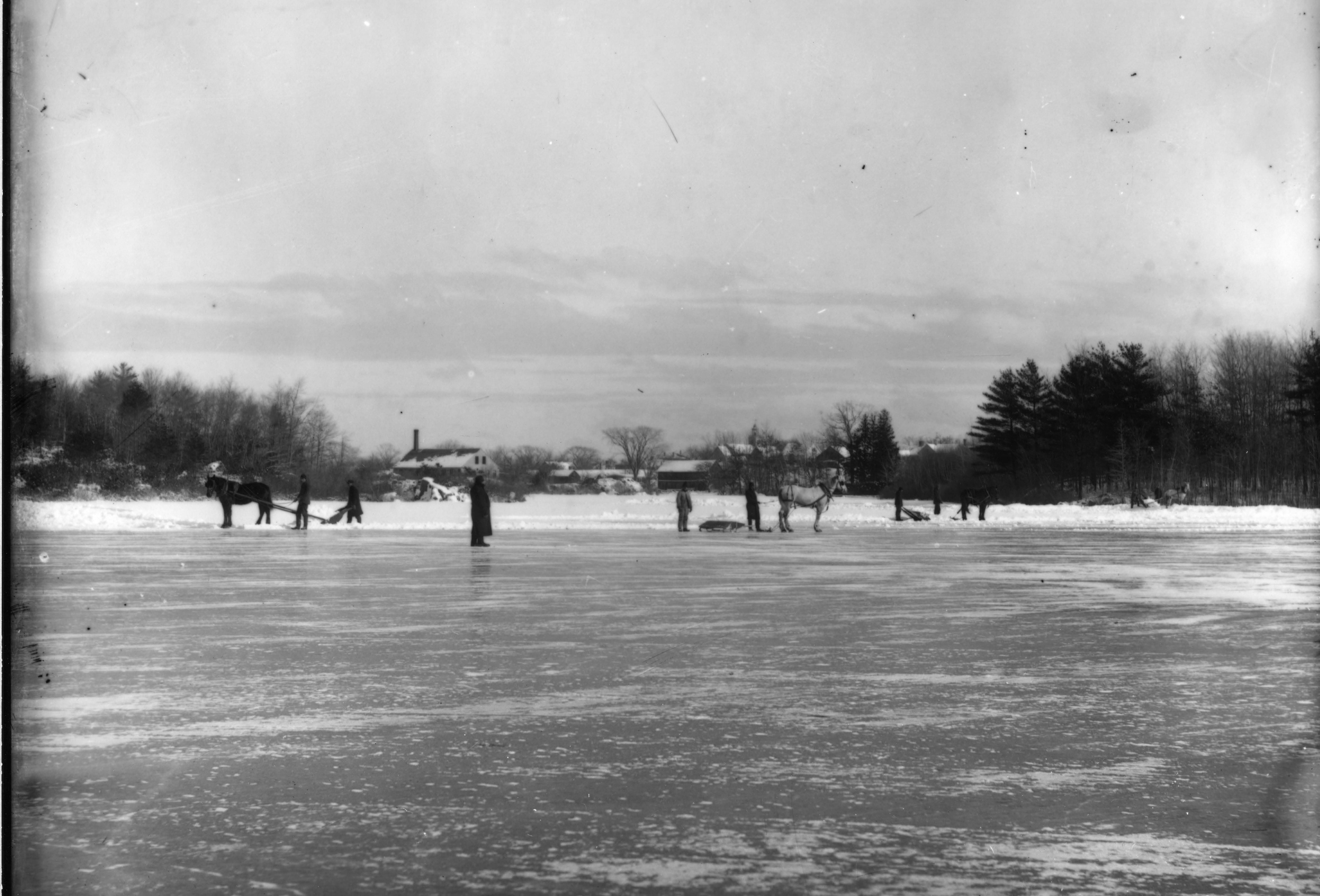
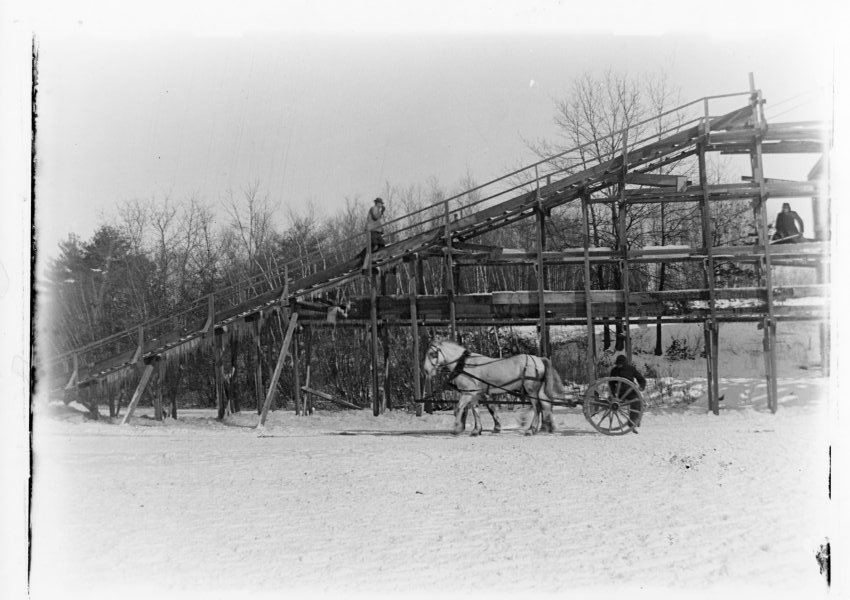
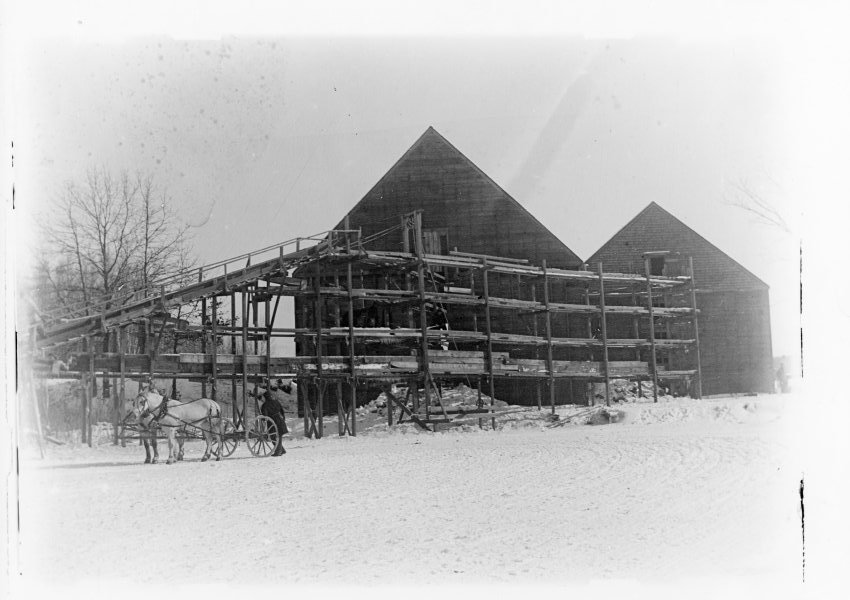
Ice joined the arsenal of food preservation tools in the 19th century, and local business devoted to producing and distributing ice to homes and business grew up.  (An earlier food preservative, salt, was the subject of an earlier post, “The Old Salt Works.”)  Local businesses harvested ice from Hingham’s many ponds, stored it, and sold it during the warmer months.  These photographs from our archives document Charles T. Leavitt’s ice operations on Cushing Pond in South Hingham:

Cutting ice at Cushing Pond

Men with horses and sleds cut ice at Cushing Pond

Ramp to Leavitt's Ice House, January 31, 1898

Ramp to Leavitt’s Ice House, January 31, 1898

Charles Leavitt's Ice House, January 31, 1898

Charles Leavitt’s Ice House, January 31, 1898

Each ice block was hand cut and weighed up to 400 pounds.  Blocks were sledded to shore, carried to the icehouse, and loaded in, so that the ice completely covered the floor space and then was layered until it reached the roof.  Properly piled and insulated, ice would remain frozen throughout the summer and into the following fall.  In Walden, Henry David Thoreau provided a description of the ice storage process:

They divided it into cakes by methods too well known to require description, and these, being sledded to the shore, were rapidly hauled off on to an ice platform, and raised by grappling irons and block and tackle, worked by horses, on to a stack, as surely as so many barrels of flour, and there placed evenly side by side, and row upon row, as if they formed the solid base of an obelisk designed to pierce the clouds. . . .  At first it looked like a vast blue fort or Valhalla; but when they began to tuck the coarse meadow hay into the crevices, and this became covered with rime and icicles, it looked like a venerable moss-grown and hoary ruin, built of azure-tinted marble, the abode of Winter . . . .

They told me that they had some in the ice-houses at Fresh Pond five years old which was as good as ever. Why is it that a bucket of water soon becomes putrid, but frozen remains sweet forever? It is commonly said that this is the difference between the affections and the intellect.

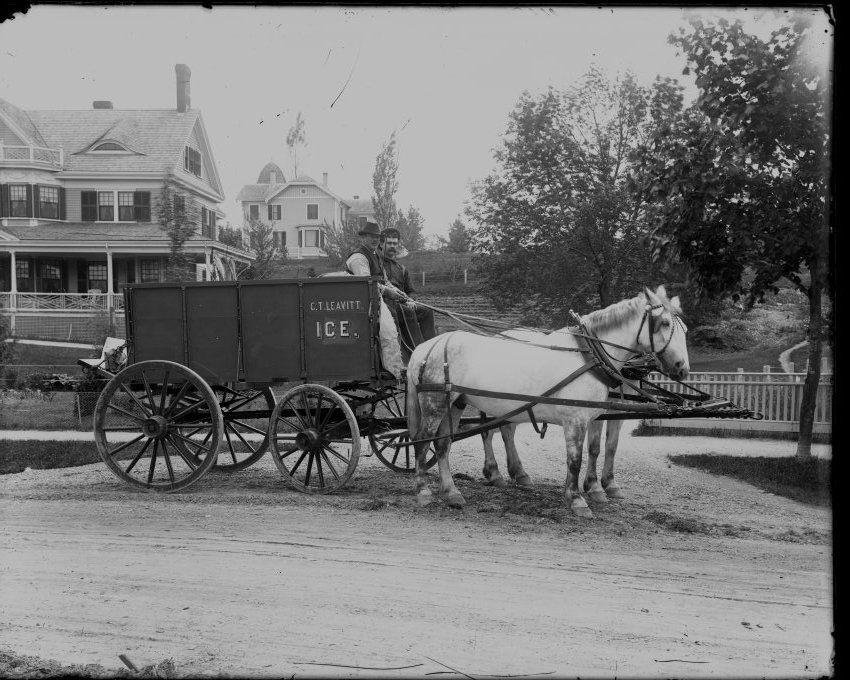
Charles T. Leavitt distributed ice in Hingham and around the South Shore until 1902, when he sold out to George C. Hayward, who continued to sell ice for another twenty or so years.  In January 1914, the Hingham Journal reported :

Mr. George C. Hayward, Hingham’s popular iceman, began Monday morning on cutting his ice for the season of 1914 at Cushing’s Pond, South Hingham. He has good clear ice of ten inch thickness.

By the second World War, however, most people in this area had electric refrigerators, and the days of the icebox and ice delivery were over.

"C.T. Leavitt Ice" Delivery Truck on South Street, Hingham

“C.T. Leavitt Ice” Delivery Truck on South Street, Hingham

The Old Salt Works

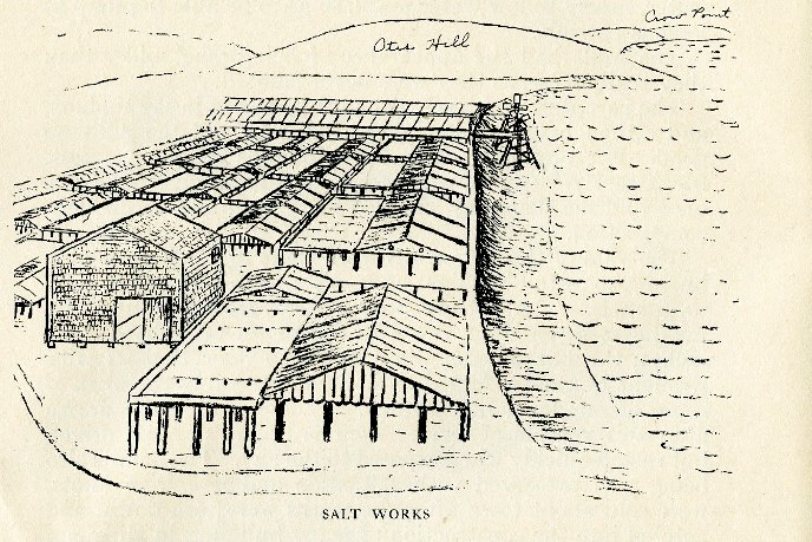
Illustration from "The Old Salt Works," Hingham Historical Society Publication No. 1 (1916)

Illustration from “The Old Salt Works,” Hingham Historical Society Publication No. 1 (1916)

The manufacture of salt in Hingham commenced at Broad Cove around 1812.  Buoyed by the rapid growth of Hingham’s fishing industry in the early years of the 19th century, several salt works were built, both at the easterly end of the harbor, near the steamboat landing, and on the salt meadows at Broad Cove.  Salt manufacture, “one of the old industries of Hingham,” was the subject of a paper presented to the Hingham Historical Society at its January 24, 1916 meeting, by Orin Brewster Sears, “a son of the proprietor of the [salt] works.”   The salt works owned and operated by Orin Brewster Sears’ father, also named Orin Sears, were built in the salt meadow along Otis Street, accessed by Fearing Road.  They were the last salt works to operate in Hingham.

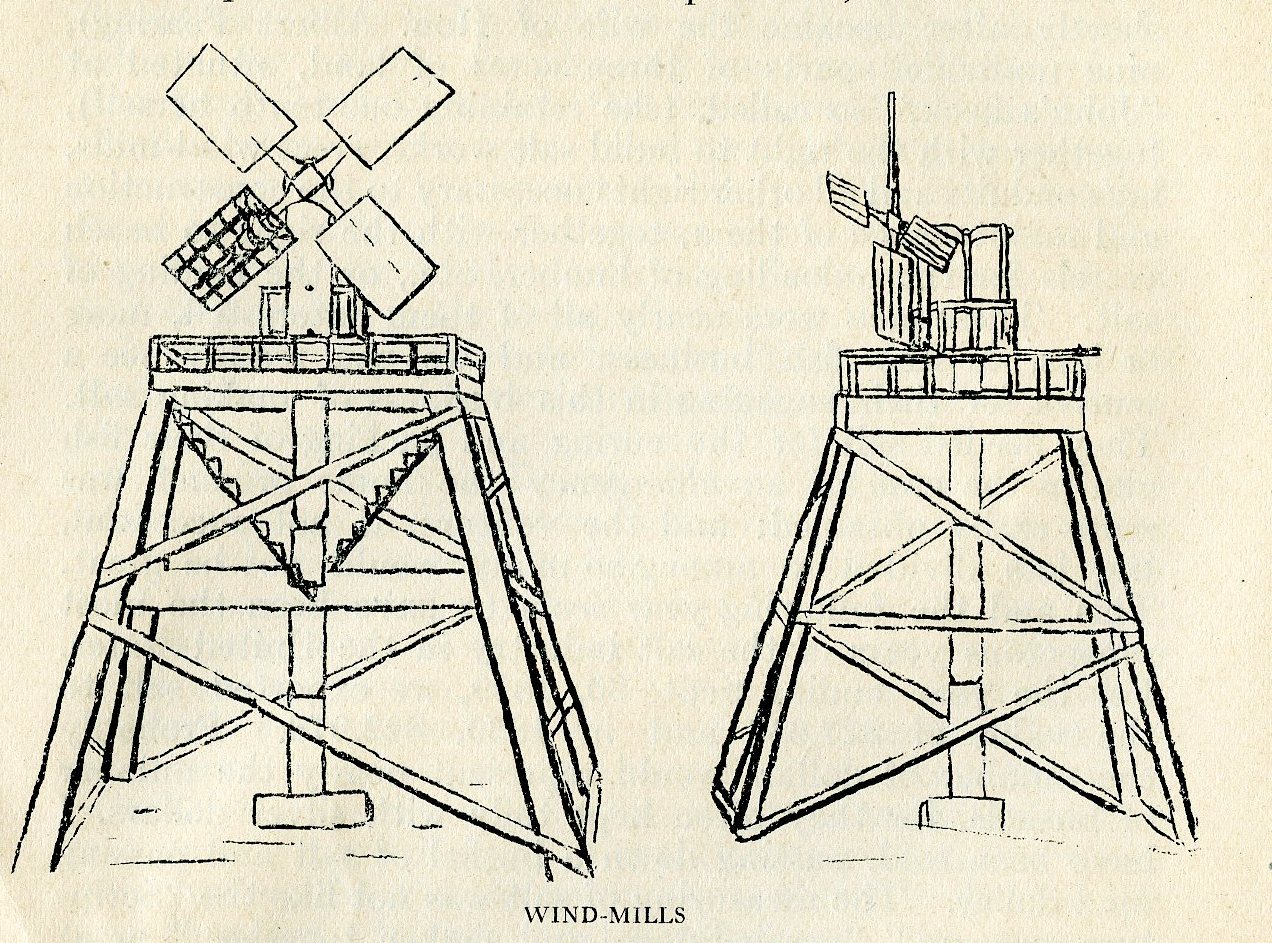
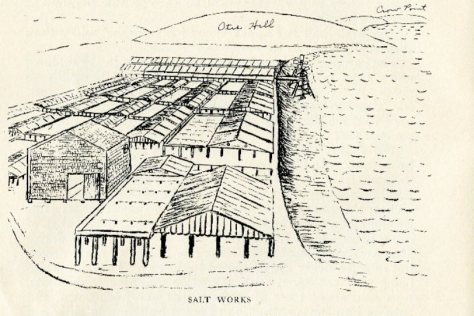
In his paper, “The Old Salt Works,” published in 1916 as “Hingham Historical Society Publication No. 1,” Sears described the method of extracting sea salt by solar evaporation.  Salt water was pumped from the harbor into two long rows of vats around 200 feet long, called the “water rooms,” which ran up from the harbor at the westerly end of the salt meadow.  The pumps used to fill the water rooms were powered by a pair of windmills.  The water sat in the vats, evaporating, until it began to deposit lime, at which point it was drawn, through a system of hollow logs, to the “pickle rooms.”  There, as evaporation continued, lime and other unwanted constituents of sea brine were separated from the salt and water and salt crystals began to form.  The liquid would then be drawn, again through hollow logs, to another set of vats in the “salt rooms.”   Here, as the salt crystals increased in size, they dropped to the bottom of the vats and were raked together, drained, and carried to the “salt house” to dry.  The entire process took around three weeks.
Illustration from "The Old Salt Works," Hingham Historical Society Publication No. 1

Illustration from “The Old Salt Works,” Hingham Historical Society Publication No. 1

The Sears family was instrumental in the development of New England’s salt industry.  Pre-revolutionary colonists imported salt from England.  The war-time embargo created a crisis on Cape Cod, where salted fish was a staple food and primary export.  Captain John Sears of Dennis is credited with having invented the method of sea salt extraction by solar extraction described above.  Well suited to New England’s climate, it was adopted across the Cape as our domestic salt industry grew, aided by tariffs imposed by the young United States government.  It was also the system used in Hingham.  Orin Sears moved to Hingham from Dennis in 1846, motivated by “the desire to keep his boys from going to sea,” then “the only lucrative business on the Cape.”  He purchased the salt works described in the Historical Society paper, although the heyday of the local salt industry had already passed.  Between the mid-1830s and the mid-1850s, as the result of the decline of its fisheries and the development of alternate domestic sources of salt, Hingham’s salt production declined from over 20,000 bushels a year to fewer than 2,000.

The Historical Society’s early interest in Hingham’s “old industries” went hand in hand with the early 20th century belief in progress.  Sears waxed philosophical in his talk about the disappearance of the old ways:

It may seem strange to some of us in this day of development, with mines of rock salt, salt lakes, and salt springs almost everywhere, that our fathers should have been obliged to procure their supply from the ocean; no less so that with our country filled to overflowing with petroleum, they should have been obliged to brave the dangers of the whale fishery, for oil for illuminating purposes.  Those of us who have lived to watch the transition from tallow candle to the electric light, from the lumbering stage coach over rough roads to the automobile on the modern oiled stone boulevards or swifter steam express trains, from the messenger to the wireless telegraph, have reason to thank God that we live in the twentieth century.