Carl Burr’s Hingham, Part 2

As discussed in Part 1, the diaries of Carl Burr (1884-1861) provide a glimpse of how Hingham was changing from a largely rural community to the suburb of today during the first half of the twentieth century. As with transportation, the entries chronicle changes seen in how the town valued and used its open spaces.

Carl Burr was an avid outdoorsman. His year was measured by the fishing and hunting seasons. His entries through the 1910s and 1920s spend much time describing many places in Hingham available for hunting and fishing. He mentions hunting pheasant and quail on Turkey Hill, rabbits near Popes Lane and Pleasant Street, foxes in the High Street area and spending early mornings in Septembers in blinds awaiting the chance to shoot ducks in the Home Meadows.

Home Meadows as seen in 1888
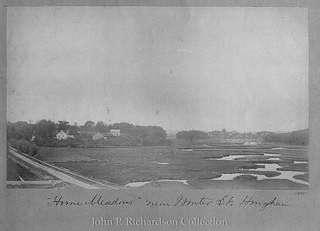
Home Meadows near Winter Street

In the Spring he spent time fishing for trout and mackerel at Triphammer and Accord Ponds or casting a line off of the Leavitt Street bridge over the Weir River near his home.

A view of a hunting cabin at Triphammer Pond in 1911
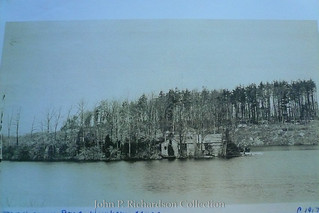
Triphammer Pond
He helped found the Hingham Sportsmen’s Club (HSC) in April 1932, which held monthly meetings at the G.A.R. Hall along with shooting contests and field days in many farms in town.

GAR Hall on Main Street in the early 20th Century
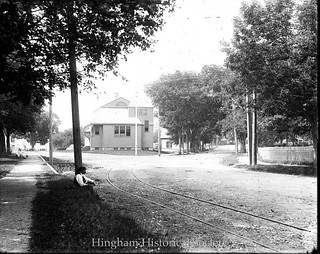
GAR Hall with Trolley Tracks
But even before the Club was founded, his journal entries reflect a change in both the rural nature of the community and the types of wildlife available and allowed to hunt. Many of his entries refer to the lack of luck in finding anything during local hunting trips, particularly birds on trips up Turkey Hill. He stops referring to duck hunting in the Home Meadows after 1923 and instead goes on hunting trips to places on Cape Cod or in New Hampshire instead. With the town evolving into suburbia, regulations were put in place banning hunting in most areas. An entry on April 7, 1949 says he marked the 50th anniversary of his first bird hunt by taking the gun given to him by his father down to the Weir River though he notes shooting anything has been illegal there for the past 10 years.

Looking across the Leavitt Street Bridge over the Weir River in 1941

Standing on Leavitt’s Bridge
By the late 1930s fish are becoming so scarce in Hingham’s streams that he helps raise funds for the HSC to purchase trout and other fish from local fish farms to stock Hingham’s rivers. This only solved the problem in the short-term and the practice was discontinued by 1950. In November 1960, Carl Burr was one of several owners of land in the Home Meadows who sold their acreage to the new town Conservation Commission to help preserve the land as open space.

View of the Home Meadows near Water Street in 1958
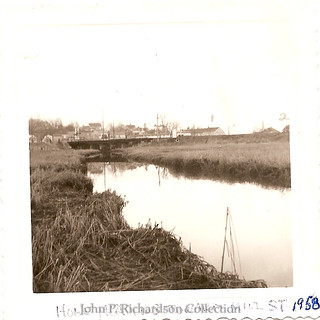
Home Meadows Estuary

Open space changes in Hingham can also be summed up by the use of the Hingham Agricultural and Horticultural Society’s properties across from his house.

Agricultural Hall and Fairgrounds around 1900

Agricultural Hall
Agricultural Hall was built in 1867. Early in his life he attended the many events that took place there including agricultural exhibitions and sporting events on the fairgrounds by local amateur and school teams, including games of the Breezy Hill baseball club, the ‘home’ team from Hingham Center:

Breezy Hill Baseball Club, 1915
As the years passed, however, fewer agricultural activities took place on the grounds, amateur town teams disbanded and school teams moved to the fields used today. To follow baseball, he becomes a fan of the Boston Braves, attending many their games in Boston, or listens to them on the radio (and later television). By the time he became custodian of the Hall in the 1950s, the grounds were largely abandoned and only town elections and a few other civic events occurred in the building. The Hall was torn down a few years after his death in May 1961, replaced by the Hingham Public Library.

Carl Burr’s Hingham, Part 1

Thanks to the generosity of Hingham resident Gerry Bennett, the Historical Society has recently been loaned the diaries of Carl Burr (1884-1961), a seventh generation Hingham resident who lived his entire life at the family homestead at 61 Leavitt Street, across from today’s Hingham Public Library. I have just completed cataloging these diaries to make them accessible to researchers and others interested in this local history resource. Click on the link to read the full Carl Burr Diaries Finding Aid.
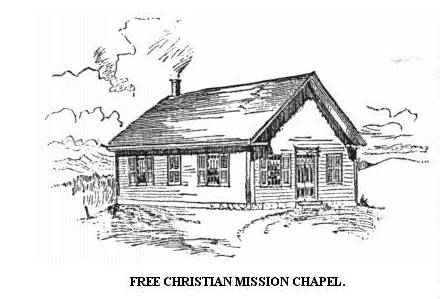
Photo of the Burr Homestead on Leavitt Street in 1885 and beyond. Taken by Charles Marble from the roof of Agricultural Hall:

Burr Homestead in 1885

Carl Burr was the eleventh child of Elisha Burr (1839-1909) and Mary Pratt Burr (1842-1940). He married Esther (Essie) M. Snyder (1889-1975) of Cohasset on June 15, 1910 and they raised two children, Alston P. Burr (1910-1979), who after 1940 lived next door at 67 Leavitt Street, and Constance (Connie) Burr Talbot (1915-1989) who spent her married life in Darien, Connecticut. He kept a daily diary for most of his adult life. The entries provide a window on a Hingham that was changing rapidly from a rural farm town in the early 1900s to the suburban community it is today. Changes that are evident through his diary’s descriptions of modes of transportation and use of open space.

Transportation
Carl Burr never owned a car. He didn’t have to travel far to visit family. Carl’s younger brother, noted decoy maker Russ Burr (1887-1955), lived next door at 55 Leavitt Street until his death in 1955, older sister Mary (May) Burr Ripley (b. 1878) and her husband William (Bill) Ripley (b. 1876) lived two doors up at the corner of Leavitt and Spring Streets.

Burr Homestead houses along 57, 61 and 67 Leavitt Street, 5/2/15

Burr Homestead houses along 57, 61 and 67 Leavitt Street. Photo taken May 2, 2015 by Robert H. Malme.

He was within walking distance of stores in both Hingham Center and Hingham Square. In his early years he was a plumbing and heating contractor and his entries list his extensive use of the local street railway system to visit clients throughout Hingham and neighboring communities.

Hingham Street Railway Car on Main Street near Pear Tree Hill:
Hingham Street Railway Company Car, Pear Tree Hill

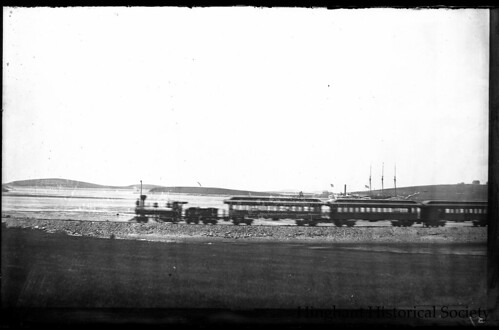
He used the Nantasket and Old Colony railroad lines to take off-hour excursions to Nantasket Beach and Paragon Park or to travel to Cohasset to visit his future wife.

Nantasket Beach Railroad Train c. 1900 Nantasket Railway train heading towards Hingham near the Weir River around 1900, courtesy of the Hingham Historical Society.

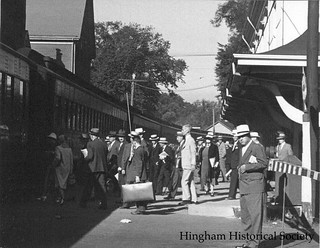
Through connecting rail lines in other towns, he could travel far from home. He writes on August 15, 1909 traveling to Providence, RI via ‘the electrics’ for a dinner. In the 1920’s he became maintenance supervisor to buildings in Boston and started daily commutes via the Old Colony Railroad into South Station often returning home in the early afternoon. And like this past winter season, he noted several times when severe snowstorms prevented the trains from running.

Passengers board Old Colony Railroad train at Hingham Square Depot around 1930:

Hingham Square Train Station

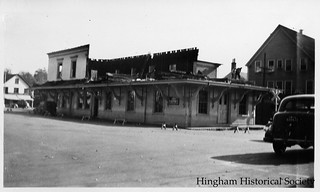
As the years went on, particularly after World War II, however, the railroad started to give way to the popularity of the automobile. His entries refer to rail service starting to get cut back. On April 3, 1948 he notes he can no longer take a 12:30PM trip back to Hingham from Boston, but must now take a train to Quincy and then a bus. By the late 1940s, any late evening work would require his son Allston picking him up in his car from Quincy or the ‘rapid transit’ station at Columbia, today’s JFK-UMass station. After he stopped working in Boston in 1951, he started to rely totally on family, or friends, to transport him around town or elsewhere. Toward the end of his life, on September 8, 1959 he noted traveling on the new Southeast Expressway, its opening causing the end of railroad service in Hingham for nearly 50 years.

Hingham Square Train Depot being demolished in 1949:
Demolition of Hingham Square Train Station

Part two will discuss the changes the diaries chronicle in Hingham’s open spaces.

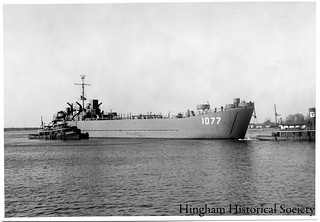
LST-1077

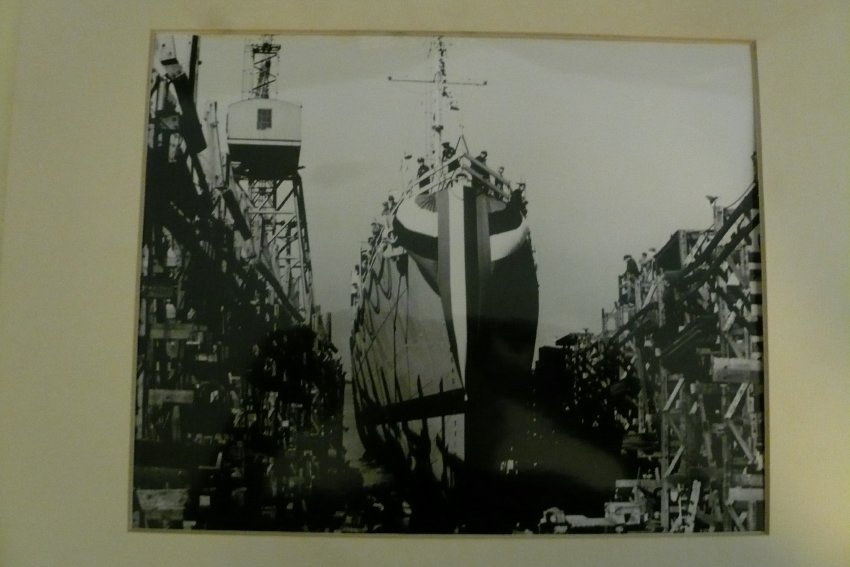
In December 1941, the Bethlehem Shipbuilding Company started to build a shipyard on 150 acres of land at Hewitts Cove in Hingham. By June 1942, the first ship, a destroyer escort, was completed and launched from the Bethlehem-Hingham Shipyard. The Shipyard built 132 destroyer escorts before turning to the construction of tank landing ships in 1944.

Tugboat “Venus” Escorting Tank Landing Ship LST-1077

This photo shows LST-1077, one of the last of the 165 tank landing ships launched from Hingham in 1944 and 1945. It is making its way out to sea–perhaps near Hull Gut–guided by the tug “Venus,” on April 19, 1945.

LST-1077 only arrived in time for the tail end of World War II, entering Pearl Harbor on July 19, 1945 and remaining there until August 29, 1945, when she ferried U.S. troops to Japan for the post-war occupation. In the Korean War, she served the Pacific Fleet from 1950 through 1955. In that year, she was finally given a name—the U.S.S. Park County.

After a substantial refit in 1965, the U.S.S. Park County supported the United States forces in Vietnam from 1966-1971. The Navy sold her to the Mexican government in 1978. Rechristened the A.R.M. Rio Panuco, she served the Mexican Navy as a landing ship.

At the end of her useful days, the Mexican Navy used LST-1077 as a target ship during military exercises. Her final service, then, is as an artificial reef off Mexico, where she provides a habitat for marine life.

Quite a journey, which all started at the Hingham Shipyard.

Derby Day, Then and Now

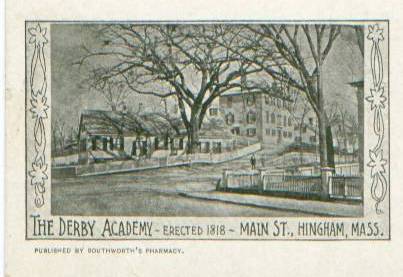
Old Derby Academy, see from the North.  Postcard collection at the Hingham historical Society

Old Derby Academy.  (Hingham Historical Society)

Hingham residents know to watch for the early June procession through Hingham Square that kicks off Derby Academy’s graduation ceremonies. Boys in chapel dress and girls in white dresses march from the current Derby campus on Burditt Avenue down Fearing Road to New North Church, where the day’s ceremonies are conducted.  This tradition is almost as old as the Academy itself. Ever since the New North meetinghouse was erected in 1806, at least part of Derby’s end-of-year ceremonies have taken place in it.

Of course, the walk wasn’t always so long: when Old Derby Academy was the schoolhouse (from 1818 until the 1960s), the procession started on Main Street in Hingham Square.

New North Church, Hingham

New North Church. (Hingham Historical Society) 

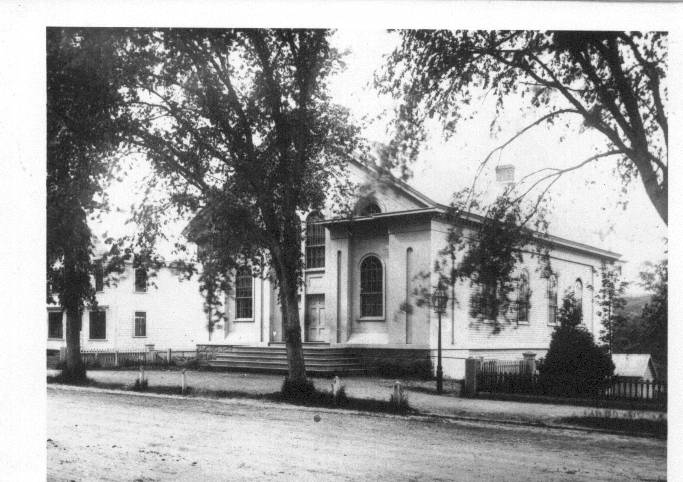
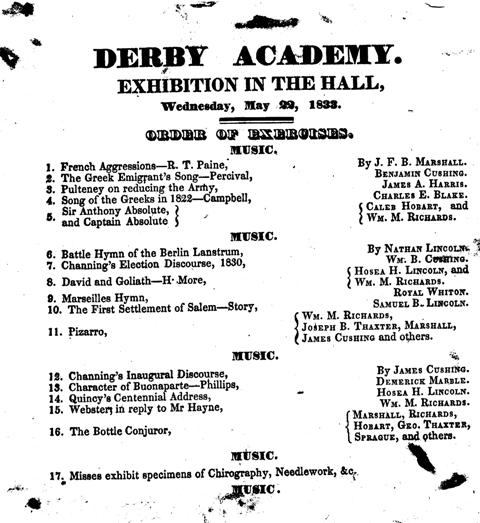
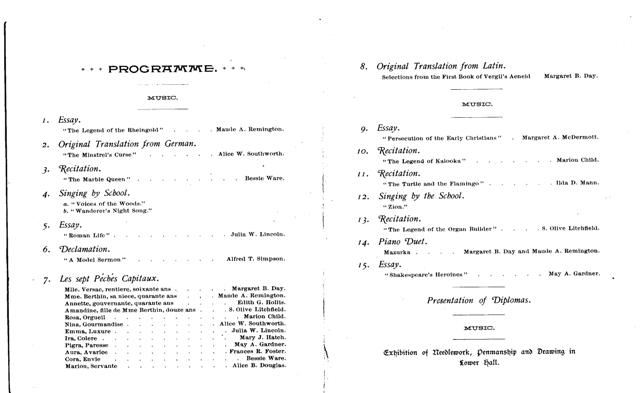
A Hingham Journal article from 1861 describes what was the “annual exhibition” held partly in New North and partly in Loring Hall. In those days, the focus was not on the graduating class but rather on the progress made by the student body as a whole. “Scholars” of all grades demonstrated the fruits of a year’s hard work by presenting dialogues, original oratory, dramatic performances, and, of course, music. A needlework display in the basement of Loring Hall showcased the girls’ handiwork.  Exhibition programs from the 1833 and 1892 exhibitions, reproduced at the bottom of this post, differ in detail but not in overall conception or scope.

Loring Hall, Main Street, HIngham.   From the photograph collection at the HIngham Historical Society

Loring Hall. (Hingham Historical Society)

The Journal described the 1861 Derby Exhibition as “one of the most agreeable [days] of the season,” and it was truly a major social event. Derby Academy was Hingham’s only secondary school for much of the 19th century, and it continued to dominate our educational landscape for years afterward. The exhibition day was not just a chance for parents to see what their children had learned or for the oldest scholars to say goodbye in style: it was an opportunity for the entire community to come out, celebrate the onset of summer, hear a few interesting lectures, and listen to some good music.

Did the ’61 Journal have any complaints? “If we were disposed to criticize,” it remarked, “the speaking would have been more effective had it been less rapid.” However, “the music was excellent, the hall packed to the utmost,” and we can catch a modern-day echo of the buzz and bustle of this celebration when the Derby students make their way through the Square next week.

Derby Exhibition 1

Order of Exercises, Derby Academy Exhibition, May 22, 1833. (Hingham Historical Society)

Order of Exercises, Derby Exhibition, 1892  (Hingham Historical Society)

Order of Exercises, Derby Exhibition, 1892 (Hingham Historical Society)

Holy Ghosts

Former First Church of Christ Scientist, Hingham.  From the collection of the Hingham Historical Society

First Church of Christ Scientist, Hingham. Collection of the Hingham Historical Society

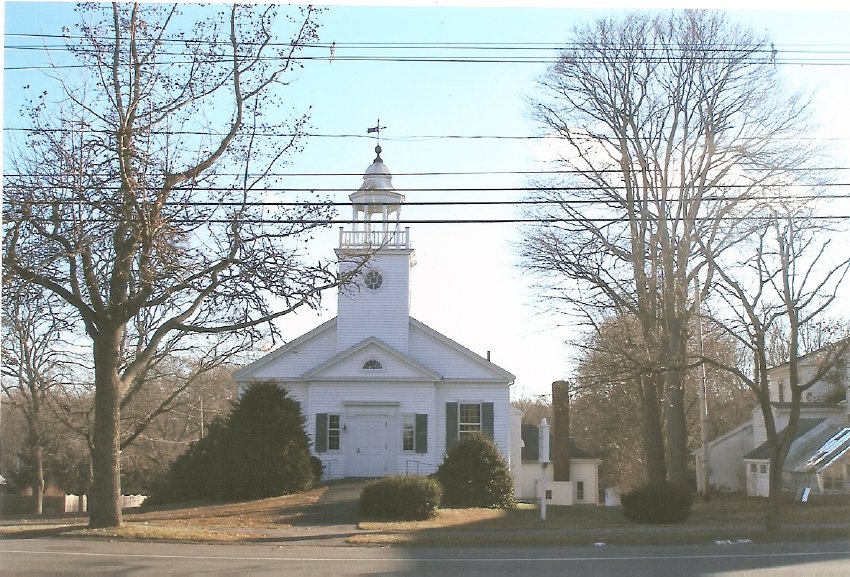
The recent sale of the First Church of Christ, Scientist building on Main Street and its conversion to a secular use is nothing Hingham hasn’t seen before.  Other former Hingham houses of worship remain in our midst, repurposed as private homes and office buildings. The First Universalist Church and Society, the Free Christian Mission, and the United Social Society of South Hingham have all, over the years, slipped from our consciousness, but their architectural ghosts remain on North Street, High Street, and Gardner Street.

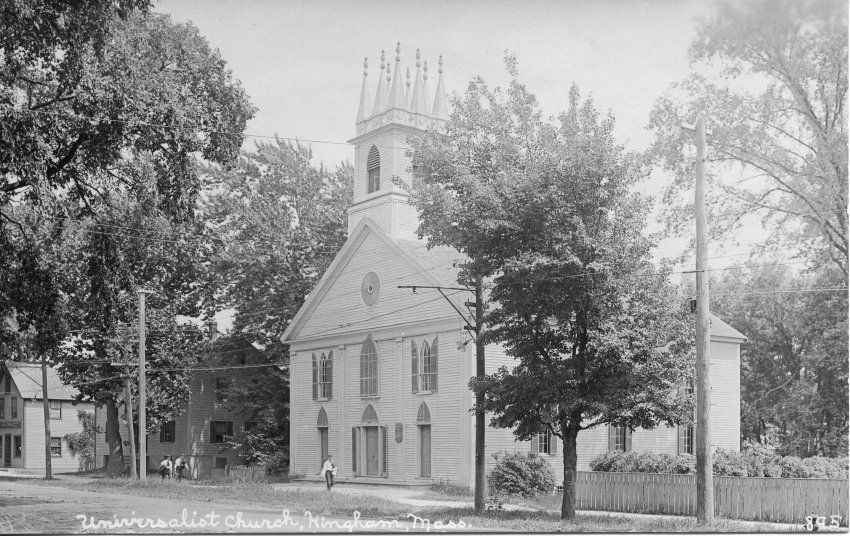
First Universalist Church and Society.  From the collection of the Hingham Historical Society

First Universalist Church and Society in Hingham.  Collection of the Hingham Historical Society

In 1829, the First Universalist Church and Society of Hingham erected a meetinghouse on North Street. Universalists were liberal Protestants whose name reflected a central tenet of their faith:  unlike their Puritan forefathers, they believed that God granted salvation to all human beings.  (In 1961, the Universalist Church of America merged with the American Unitarian Association, forming the Unitarian Universalist (“UU”) Assocation, to which Hingham’s Old Ship Church belongs.)

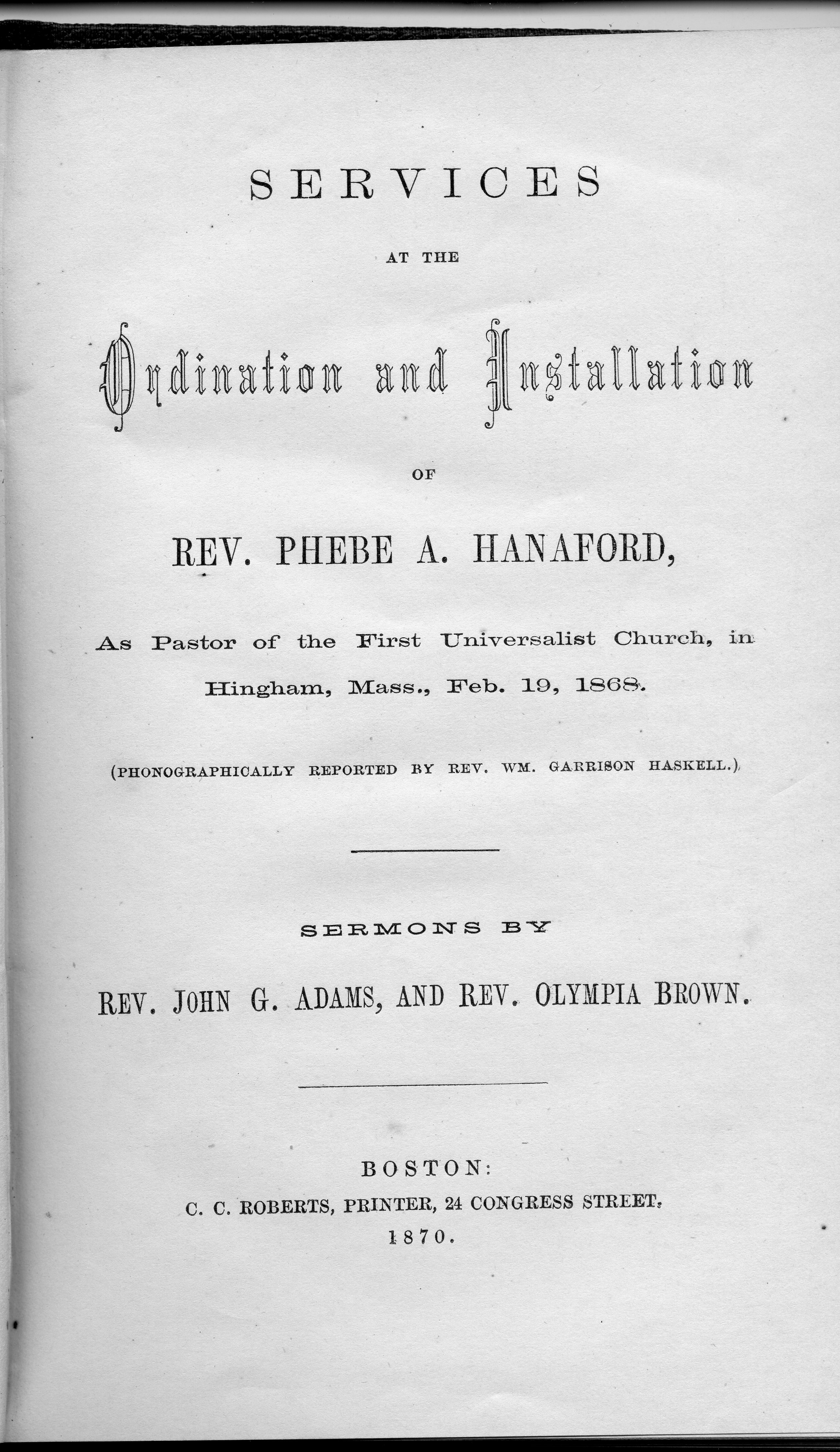
The history of Hingham’s Universalist Church and Society is linked with the 19th century women’s movement. In 1868, Phebe A. Hanaford, its pastor, became the third woman to be ordained to the ministry in the United States—in the Universalist church on North Street. The ordination was performed by the Rev. Olympia Brown, the first woman in the United States to be ordained to the ministry and the pastor of the First Universalist Society of Weymouth.

Ordination of the Rev. Phebe A. Hanaford.  Collection of the Hingham Historical Society.

Ordination of the Rev. Phebe A. Hanaford. Collection of the Hingham Historical Society.

When Hanaford left the Hingham church to accept the Universalist pulpit in New Haven (and increase her abolitionist and suffragist activity), she was succeeded by the Rev. Daniel Livermore.  Livermore’s wife was the prominent abolitionist, suffragist, and reformer Mary Ashton Livermore.  Although the couple resided in Melrose, Mary Livermore, a sought-after speaker once dubbed “The Queen of the American Platform,” spoke from the Universalists’ North Street pulpit and elsewhere in Hingham in support of women’s rights and temperance.

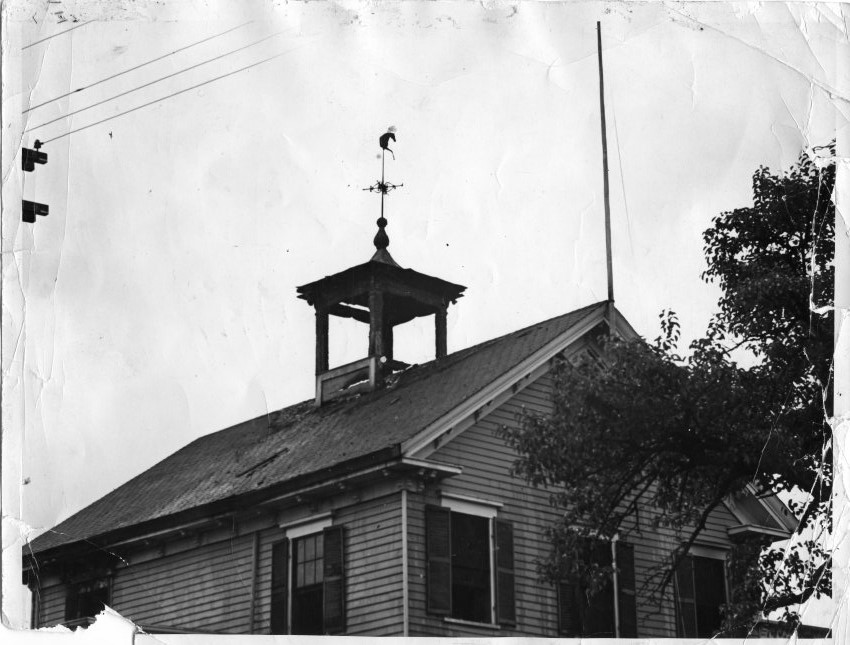
Hingham’s Universalist Church disbanded in 1929.  After several commercial uses in the early and mid-20th century, the building still stands as a private residence.

Illustration from Bouve, et al., History of the Town of Hingham (1893)

Illustration from Bouve, et al., History of the Town of Hingham (1893)

In 1872, the Town of Hingham voted to allow the Free Christian Mission to build a chapel at the corner of High Street and Ward Street. The Free Christian Mission was a religious society formed by families of color who lived in and near what was often referred to as the village of “Tuttleville.”  After meeting in private homes  for a year, John Tuttle and others petitioned the Town of Hingham to allow them to build a chapel on vacant, town-owned land on the corner of High Street and Ward Street.  In 1872, a special Town Committee recommended that the Town allow the petition, in words with a ring of paternalism:

The advantages which follow an attendance upon public worship are apparent to nearly every candid and thinking person. A community is not only improved in intelligence, virtue, and happiness thereby, but with those characteristics come a more earnest recognition and maintenance of law and order, as well as an increased interest in the prosperity and general welfare of society. . . .

At the present time a number of our fellow citizens desire to establish another church. With their associates they number about one hundred persons, the majority of whom reside on Ward and High Streets, or in the vicinity. They have held meetings during the past year at their residences, and these meetings have been very well-attended . . ..

Photograph of the Free Christian Mission.  From the collection of the Hingham Historical Society

Undated photograph of the Free Christian Mission. From the collection of the Hingham Historical Society

The Free Christian Mission, at some points also called Mt. Zion Chapel, embraced the covenant of the “Second Advent” or imminent second coming of Christ. Adventism, an evangelical branch of Protestantism, grew in popularity after the Second Great Awakening of the early 1800s.

The Free Christian Mission disbanded in the early 20th century.  As with the Universalist Church, the building was put to  a succession of secular uses.  It was for some time an antiques store and is currently a dentist’s office.

While “Liberty Plain” and the South Hingham neighborhoods along Gardner, Whiting, and Derby Streets were formally part of Hingham’s Second Parish, it was a long trip up Main Street for services.  In 1891, two sisters, Sara Chubbuck and Anna Belcher, were instrumental in the formation of the United Social Society of South Hingham, which ran a Sunday School and offered worship services to families in this southernmost part of Hingham.  After the Society spent a year in an unheated woodenware factory on Gardner Street, it erected a chapel at the corner of Gardner and Derby Streets for Sunday School and worship services.  This building, too, survived its congregation; it is now a private residence on lower Gardner Street near Farm Hill Lane, not far from its original location.

Glimpses of Huit’s Cove

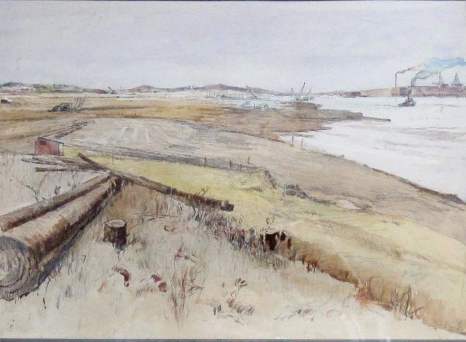
Courtesy of George and Linda Luther Watt, the Society recently acquired a pair of watercolor drawings of Huit’s (or Hewitt’s) Cove—the site of the Hingham Shipyard—in early 1942.

Huit's Cove, in watercolor and pencil, by Beatrice Ruyl, January 23, 1942. Hingham Historical Society

Huit’s Cove, in watercolor and pencil, by Louis Ruyl, January 23, 1942. (Hingham Historical Society)

The earlier drawing, dating from January 1942, shows part of the area prior to construction of the Bethlehem Shipyard. Hingham artist Louis Ruyl slipped into the area only weeks before construction began and captured a weedy winter landscape where only a few months later would stand an enormous industrial complex on almost all of the site’s 150 acres.

“Slipways” Watercolor and pencil picture by Louis Ruyl of the start of construction of the Bethlehem-Hingham Shipyard. May 2, 1942.

The second picture dates from May 1942, when construction of the shipyard was well underway. The artist titled it “Slipways.” There are cranes, tugboats, and, In the distance across the Cove, the Bradley Fertilizer Works.  Within a very short period, the shipyard was up and running.

Launch of a destroyer Escort, Bethlehem-Hingham Shiphard, 1944 or 1945. (Hingham Historical Society)

Launch of a destroyer escort from Bethlehem Hingham Shipyard, 1944 or 1945. (Hingham Historical Society)

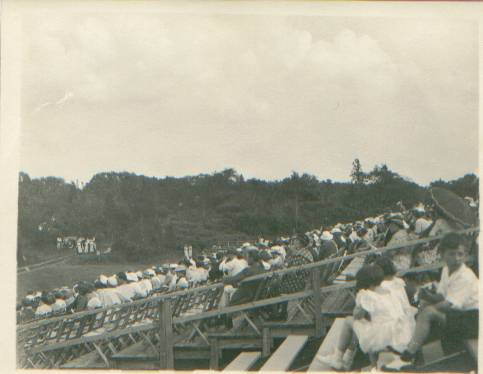
Fewer than 10 years earlier, Huit’s Cove had been the site of an enormous costume pageant to celebrate Hingham’s 300th anniversary. Nearly 1,000 residents participated.

pbaggerph289

The cast of one scene in the Tercentenary Pageant–the “Ordination Ball”-in colonial costumes. June 1935. (Hingham Historical Society)

pbaggerph301

Spectators in bleachers built at Huit’s Cove for the Hingham Tercentenary Pageant, June 27-29, 1935 (Hingham Historical Society)

Prior to to that, a short-lived airfield called Bayside Airport occupied the site.

Biplane in a hangar at Bayside Airport, Huit's Cove, Hingham. (John Richardson Collection, Hingham Historical Society)

Biplane in a hangar at Bayside Airport, Huit’s Cove, Hingham. (John P. Richardson Collection, Hingham Historical Commission/Hingham Historical Society)

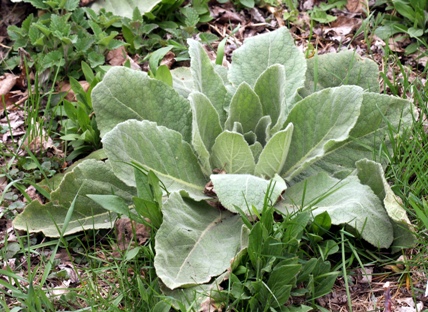
Going further back, into the 18th century, Patience Pomatuck was said to have gathered native and naturalized plants from Huit’s Cove, which she used for medicinal, herbs, dyes and other household uses. Patience made a living selling these plants to her English neighbors in Hingham. We have no record of which plants grew in the Cove’s many acres, but among them would probably have been rushes, which could be formed into baskets and rush lamps; wild gentian, for use as an emetic; and mullein, used as cough medicine.

Common_Mullein

Common Mullein

Fringed Gentian

Wild Gentian

End of an Era, Easter Day 1902

Much recent attention has been paid to Hingham’s 19th century industrial period, when our town dominated the national woodenware industry, and boxes, buckets, and wooden toys churned out of workshops and factories in South Hingham. Hingham’s former nickname “Bucket Town” is the title both of a recent book and a recent exhibition at Old Sturbridge Village.

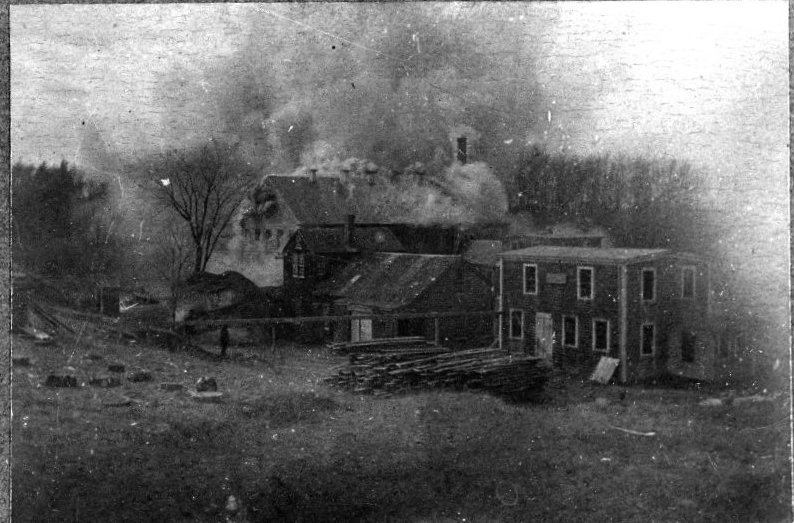
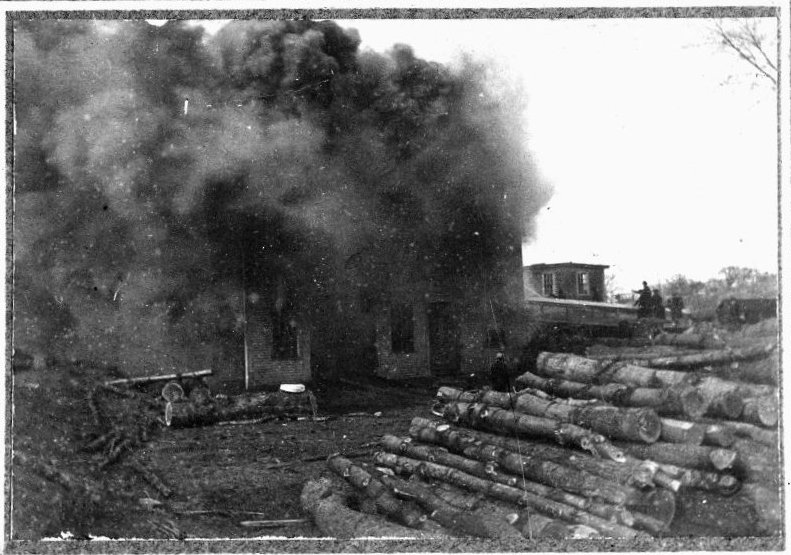
This predominance waned in the later 1800s for a variety of reasons, but the steam-powered bucket factory that the Wilders had built on Cushing Pond in the 1840s came to a spectacular end when it burned down on Easter Day, 1902.

Fire at the Wilder Bucket Factory, Easter 1902. (Photo: Hingham Historical Society)

Fire at the Wilder Bucket Factory, Easter 1902. (Photo: Hingham Historical Society)

Fire at the Wilder Bucket Factory, Easter 1902 (Photo: Hingham Historical Society)

Fire at the Wilder Bucket Factory, Easter 1902 (Photo: Hingham Historical Society)

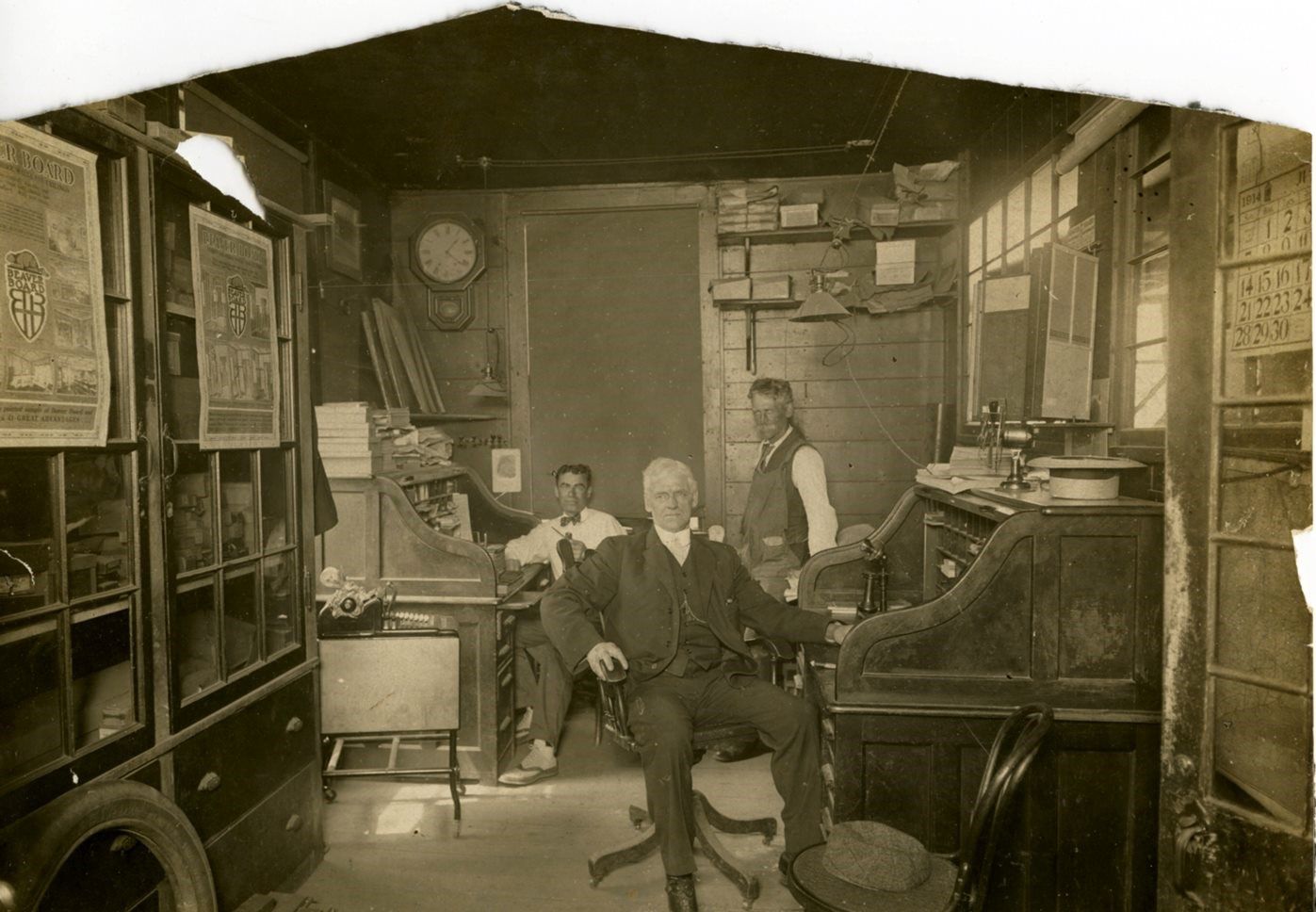
The Back Office in 1914

George E. Kimball Lumber Company 1914.

George E. Kimball Lumber Company, 1914.

This recently donated photograph depicts the interior of the George E. Kimball Lumber Company office on Summer Street near Hingham Harbor. The office perfectly represents the changing times around the start of the 20th century. Taken in 1914—as evidenced by the calendar on the wall to the right—the photo depicts furnishings which are a telling mix of new and old. The bentwood chair, spare tire, and cabinets filled with all manner of supplies, along with the desks themselves, show a company that has been around for years. The telephone, electric fan, and hanging electric lights are representative of a business that is readying itself for the future. Identified in the back of the photo, wearing an apron, is the mustached James M. Kimball. He would help keep the business running for years to come by shipping lumber by boat from Kimball’s Wharf or delivering it by cart to locals residents and builders. To his left is his nephew James H. Kimball. In addition to helping run Kimball Lumber, he was the leader of the Imperial Saxophone Quartet in Hingham and a member of several of Hingham’s earliest baseball teams at the end of the 19th century.  The well-dressed man at the desk presumably is the eponymous George E. Kimball, father of James H. and founder of the firm.
Hingham Artists to Know: Franklin Whiting Rogers

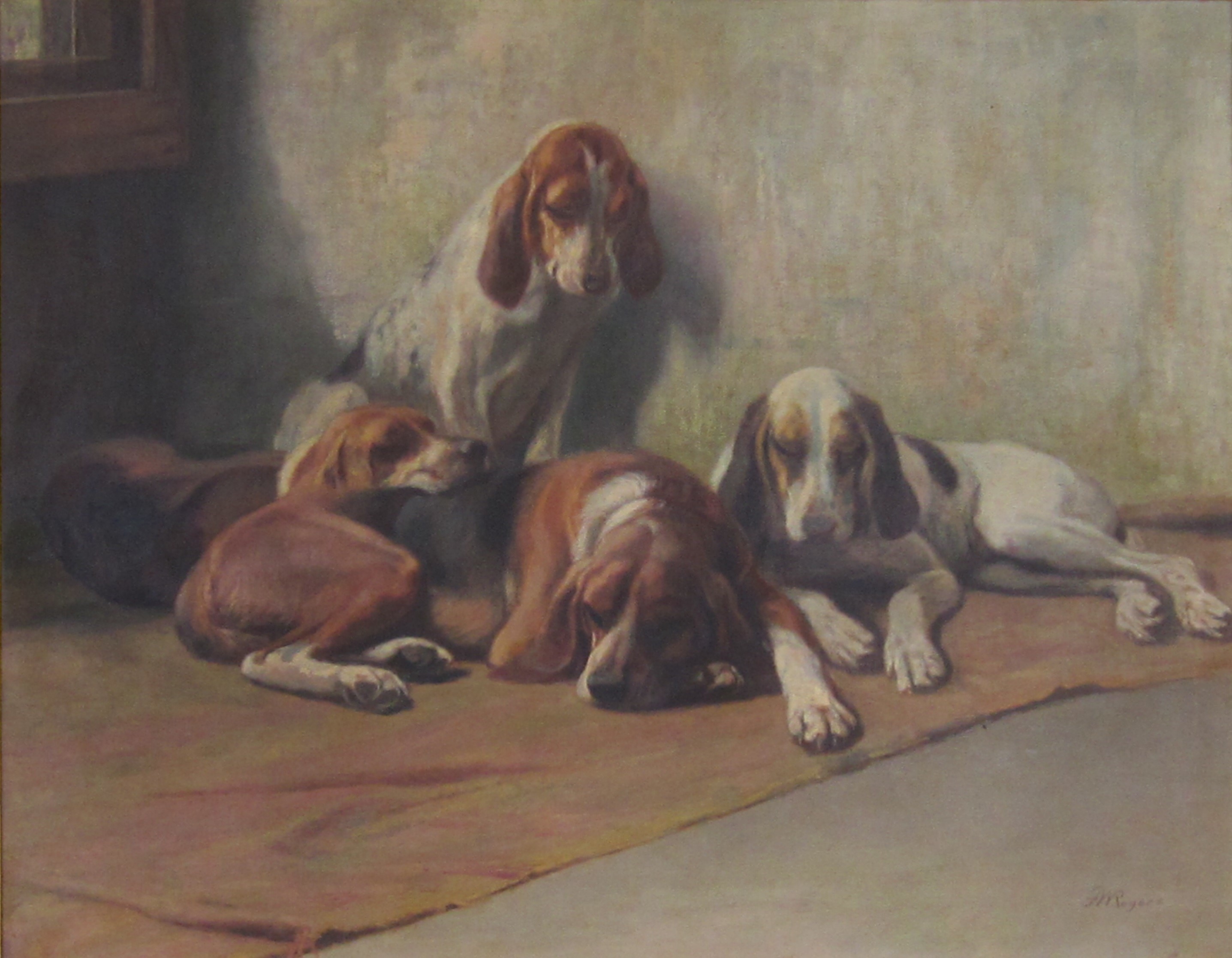
In the ballroom of Old Derby hangs a grand, late 19th-century masterpiece of canine portraiture titled Sisters or Four Hounds. It was painted by Franklin Whiting Rogers (1854-1917), who lived in Hingham most of his life. He painted from his studio and home on Free Street for most of a long career which spanned the post Civil War years until 1917.

Sisters or Four Hounds, c. 1880. This work of animal portraiture is unusual for its nearly life-size depiction of a group of dogs rather than a single animal proudly posed to display its best features.

Sisters or Four Hounds, c. 1880. This work of animal portraiture is unusual for its nearly life-size depiction of a group of dogs rather than a single animal proudly posed to display its best features.

The somnolent dogs, piled together on an old rusty brown rug, are painted life-size and up close. The painting is so evocative it almost breathes the scent and sighs of warm sleepy dogs who are resting after the hunt and have just enjoyed the reward of a big meal.

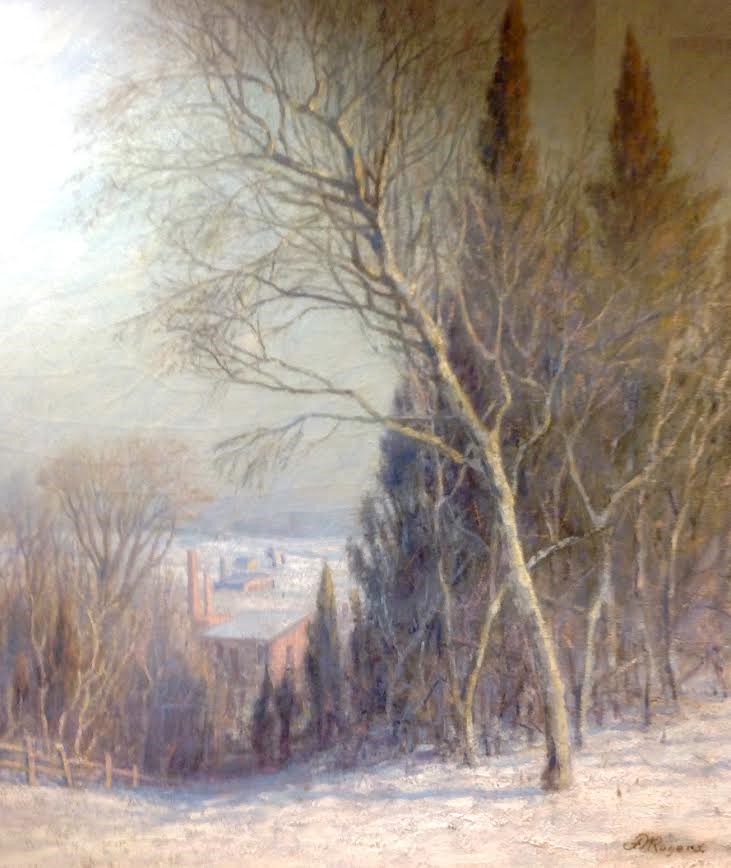
Detail of a landscape from Turkey Hill, c. 1880

Detail of a landscape from Turkey Hill, c. 1880

There is a large snowy landscape by Rogers that hangs in Hingham’s Town Hall by a second floor meeting room—you can see it on the way to a hearing or meeting. Broadly painted and bathed in sunshine, the snowy scene is a sweeping view from Turkey Hill, according to family lore. Down the hill behind treetops is an unidentified building with a tall stack—perhaps an old shingle mill. The painting captures the frosty atmosphere of sky and subtle color shifts of snow.

These two paintings have long been available for us to see but probably few know much about the artist, who was raised in Hingham and became a talented and successful painter. Both works exemplify his success at painting subjects much in demand by Boston art collectors during the 19th century: rural landscapes and portraits of pets and livestock.

Country landscapes infused with atmospheric light became very popular after Boston artist William Morris Hunt introduced and promoted French Barbizon-style paintings to New England in the 1850s. American artists were quick to fulfill the public’s taste.

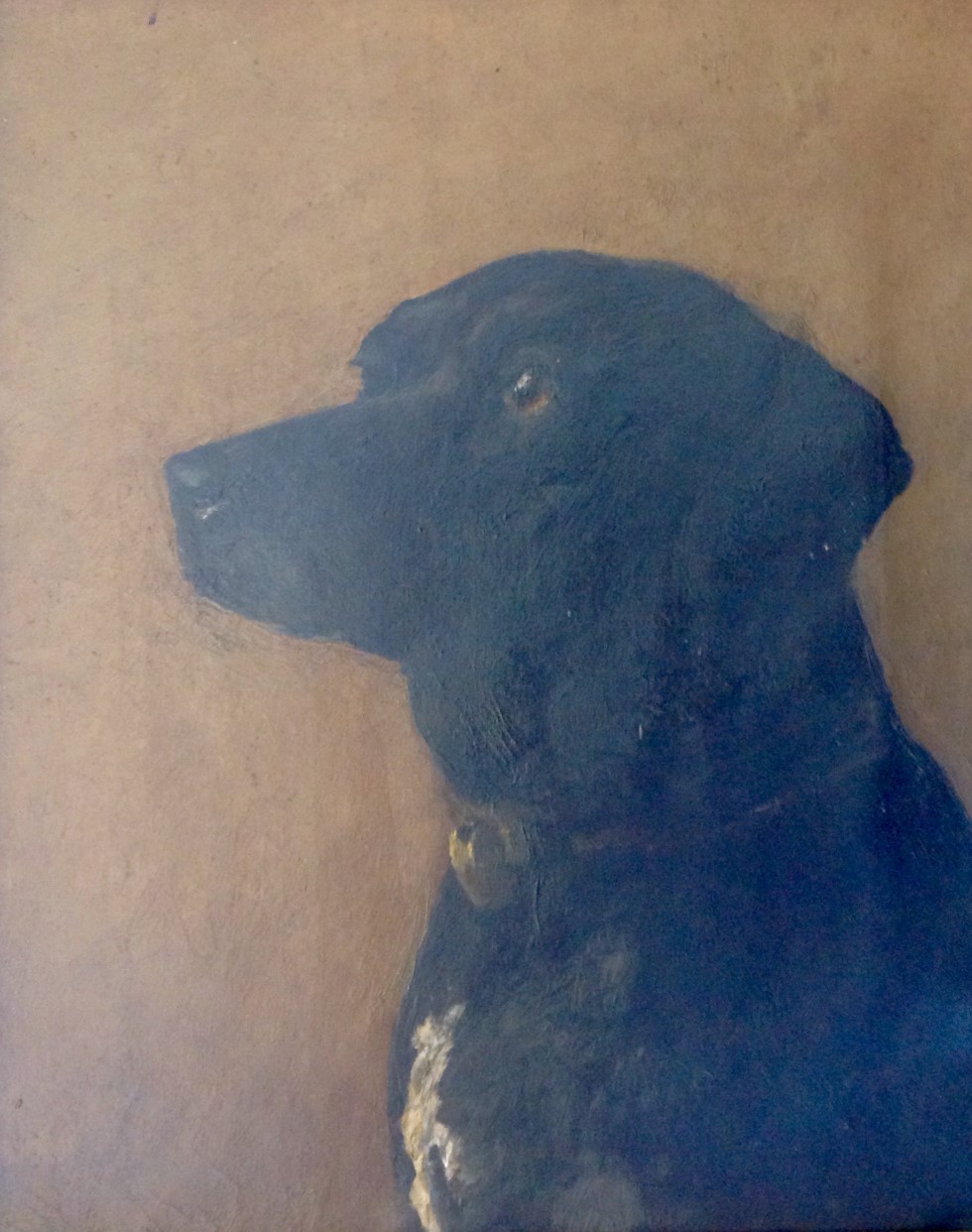
His Dog Bruno, c. 1890

His Dog Bruno, c. 1890

Canine portraiture had a long tradition in Britain and the fashion carried “across the pond.” Wealthy dog fanciers and sports-men would commission portraiture for their home or perhaps to lend masculine décor for a men’s club. Rogers’ dog portraits were forthright, sincere and unsentimental. He found a niche and it was said, “his connection with animals was almost uncanny. . . . [M]any a model posed for him as if it were a pleasure.”

During an era when Boston was considered a premier art center and “The Athens of America,” Rogers exhibited widely, was well connected, and was highly respected by his peers. His 1917 obituary praised him as an artist “endowed with a strong personality and rare gifts.” Rare gifts indeed for keen observation, technical expertise and the ability to convey his love for nature and animals:

As he studied animals so he studied trees and truly grasped their character. He was ever fond of nature. A long life spent in the woods and fields along the shores of this and neighboring towns filled his mind with knowledge and love of the more subtle and delicate aspects of landscape.

Whether painting landscape or animals, Rogers’ sensitive empathetic nature enabled his work to be expressive of an individual character, not just a generic likeness. Throughout life Rogers owned many dogs and painted them with love and respect. His Dog Bruno is an endearing portrait of a black mixed breed that hangs in our Historical Society archives.

Due to eye problems in his last years, Rogers turned to painting “en plein air.” His difficulties did not prevent him from continuing to be a prolific and talented painter.
[To be continued]

Our Autograph Albums

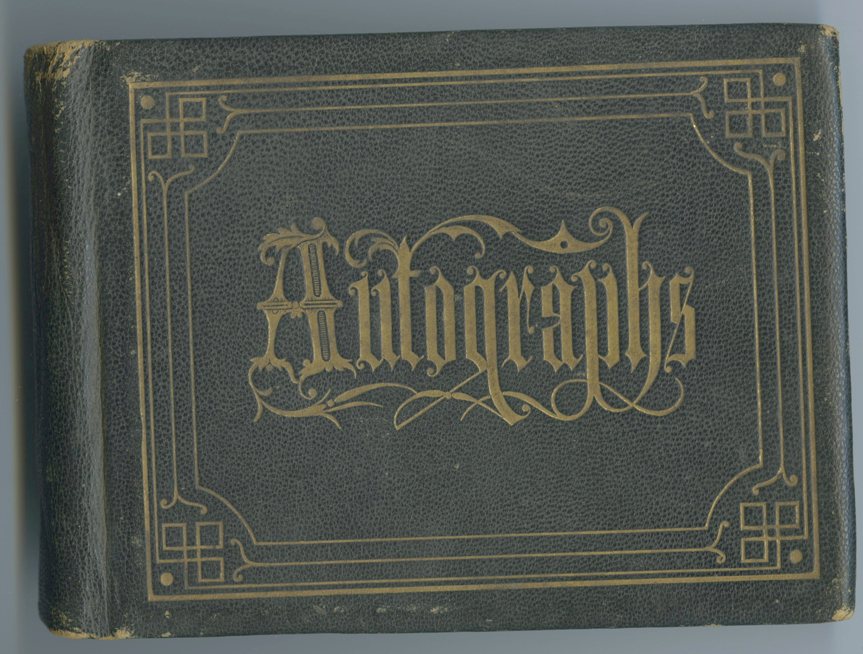
Autograph albums were all the rage in mid-19th century America—and Hingham was no exception.  We have a collection of the small books in which Hingham boys and girls exchanged signatures, messages, and verse during the 1860s and 1870s.  The albums themselves came in all shapes and sizes–the boys’ albums more conservative  and the girls’ more elaborate, with illustrations, decorations, and fanciful covers.  Willie Leavitt’s album was compact and business-like,

Willie Leavitt's Autograph Album

Willie Leavitt’s Autograph Album

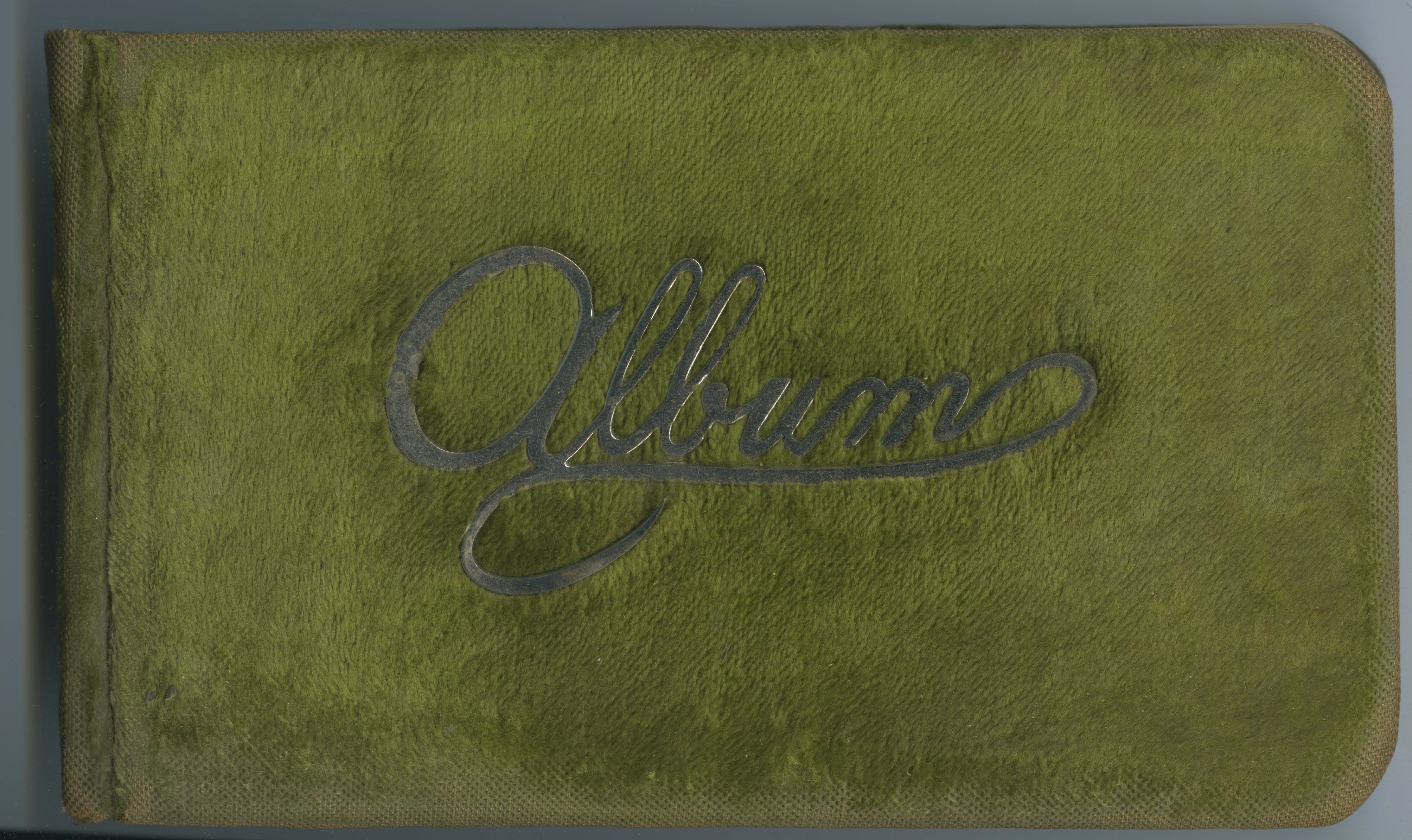
but the photograph below does not do justice to Minnie F. Burr’s autograph album, which was covered with deep-pile, chartreuse green velvet with the word “Album” inlaid in shiny celluloid letters.

Minnie F. Burr’s Autograph Album

Some boys and girls (mostly boys) simply signed their names in their friends’ albums but many penned a few lines of poetry or prose.  As would later be the case with high school yearbook inscriptions, there must have been some pressure to write memorably, and to meet this need, collections of autograph album inscriptions were published.  The Album Writer’s Friend, a copy of which is in our archives, helpfully asked,

Who among the readers of this preface has not been invited to write a few words of sentiment in the Albums of a friend? As an aid to the many thousands who have received this invitation and have not known what to write, we offer this collection of choice verse and prose . . . embracing sentiment, affection, humor, and miscellany . . . .

Its offerings ranged from the florid–

Our lives are albums, written through
With good or ill—with false or true—
And, as the blessed angels turn The pages of our years,
God grant they read the good with smiles
And blot the bad with tears

to the light-hearted–

In the storms of life
When you need an umbrella
May you have to uphold it
A handsome young fellow

The young people of Hingham did not appear to have needed much help, and the entries they made in their friends’ albums sound original and genuine, whether penned in verse (like Maud Cushing’s entry in Lizzie Hersey’s album, April 8, 1876),

AR120_074

Lizzie Hersey’s Autograph Album

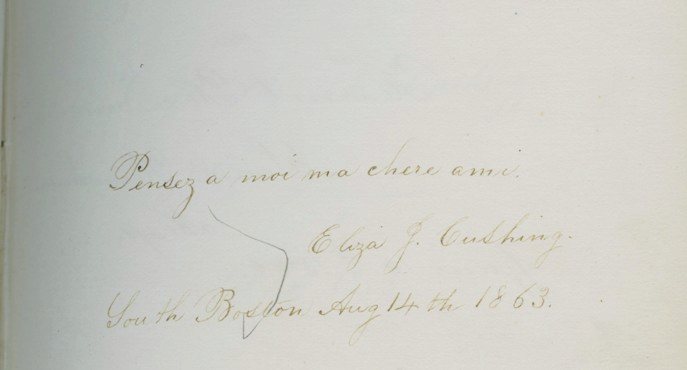
or with a touch of sophistication (like Eliza Cushing’s perfect French in Hattie Cushing’s album, August 14, 1863).

"Pensez a moi, ma chere amie"

“Pensez a moi, ma chere amie” — Hattie Cushing’s Autograph Album

Otis Remington’s humor, penned in Minnie Burr’s album on April 23, 1879, is corny but funnier than The Album Writer’s “humorous” suggestions:

AR120_073

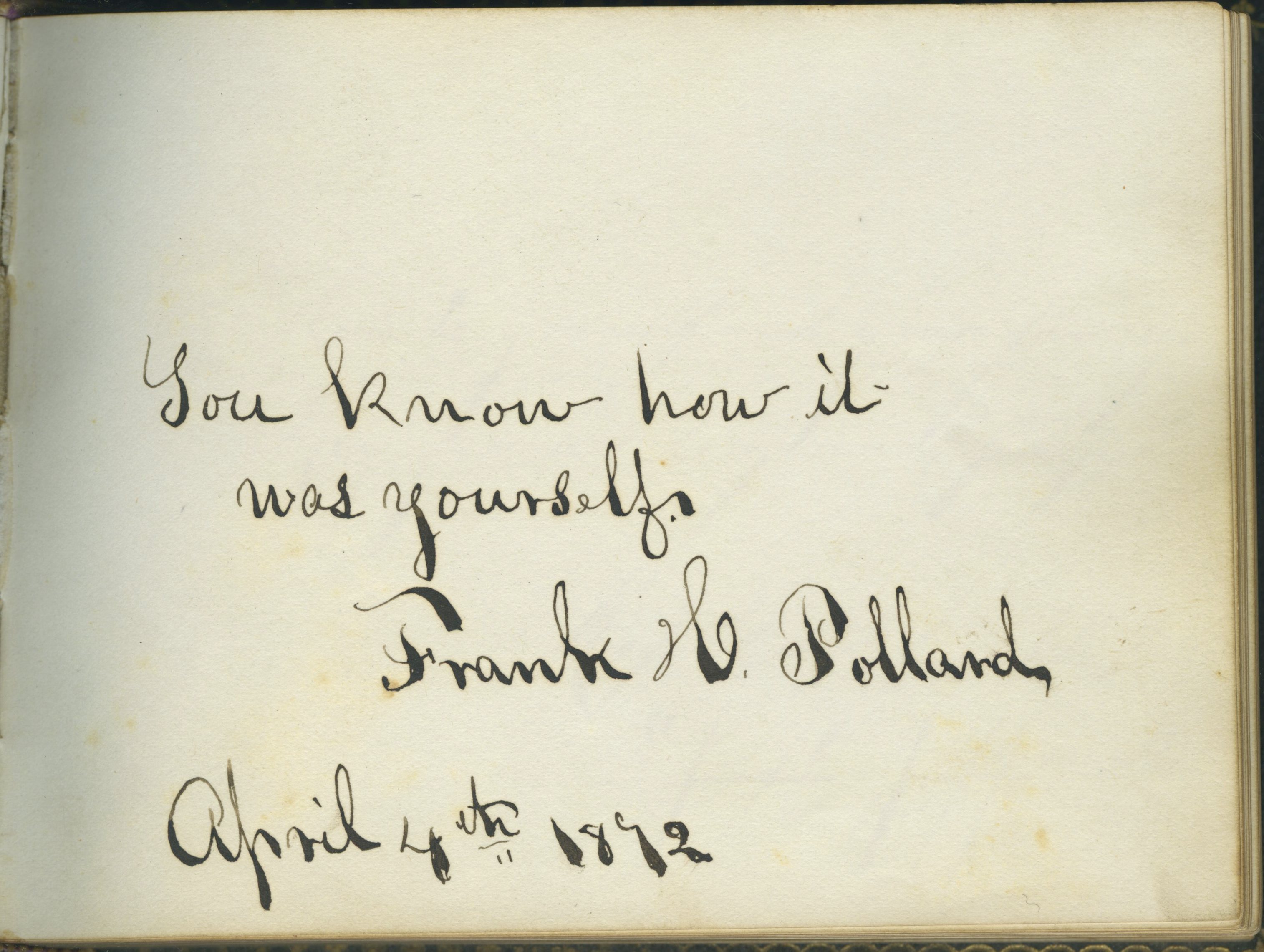
And inside jokes must have been as prevalent then as they are now:  who knows what Frank Pollard meant by this vaguely ominous note made on April 4, 1872 in Willie Leavitt’s album?

AR120_071
These Hingham young people left often-endearing reminders of their daily life and friendships in their autograph albums.  They never imagined that their schoolroom would become an historical society’s archives or that these notes exchanged among themselves would survive as “artifacts.”